
Anaheim
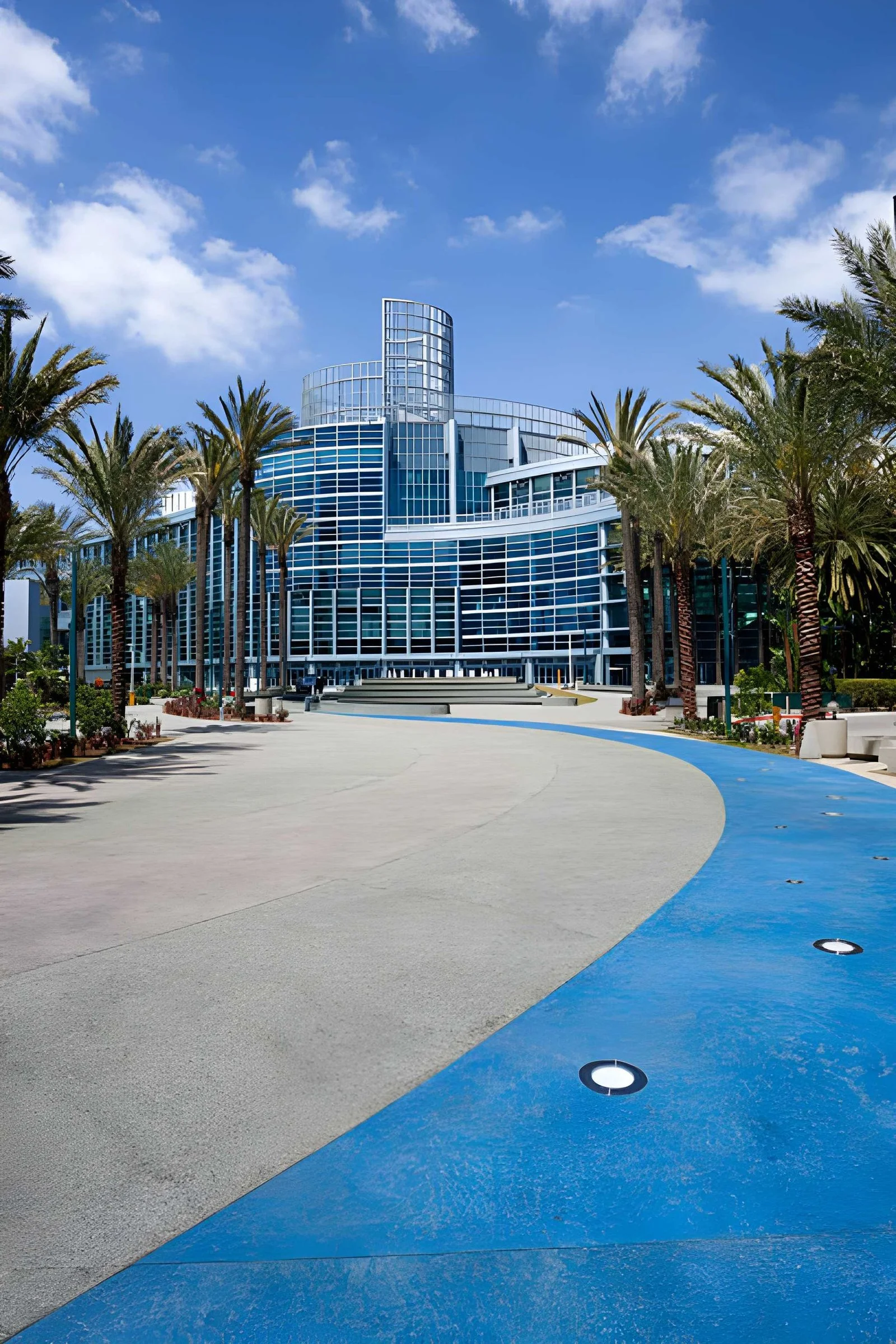
Anaheim Rental Trends You Should Know
Anaheim is one of the most active ADU investment markets in Orange County — and one of the most technically specific. The city has its own development standards that differ in meaningful ways from neighboring cities: tiered size rules, a required 10-foot separation between the main house and a detached ADU, and a height cap that is more restrictive than the state default. Investors who know these rules before they buy are in a completely different position than those who figure it out after.
On the demand side, Anaheim has structural advantages that most OC cities cannot match. The Disneyland Resort, the Honda Center, Angel Stadium, and the Anaheim Convention Center create a permanent workforce of hospitality, healthcare, and event industry employees who rent year-round — not seasonal, not volatile. Add Anaheim's central location on the 5 and 57 corridors and you have a tenant pool that is broad, stable, and consistently competitive for well-located units.
Why Anaheim Works for ADU Investors
Anaheim's median home price sits around $850,000 — meaningfully below coastal cities but above Santa Ana — which places it in a middle tier that often works well for investors who want the stability of a well-established OC city without the $1.2M+ entry point of Costa Mesa or Irvine.
The rent picture is strong for ADUs specifically. While average apartment rents in Anaheim run $2,100–$2,500/month across the board, a purpose-built detached ADU — private entrance, full kitchen, dedicated parking — commands a significant premium over apartment stock. Detached ADUs in Anaheim consistently rent for $2,800–$3,400/month depending on size, finishes, and location. That premium over apartment comps is what makes the ADU build math work in a city at this price point.
South Anaheim and the Platinum Triangle area near the 57/5 interchange are the strongest ADU rent submarkets in the city, driven by proximity to the resort district and major employment anchors. East Anaheim runs slightly lower but has been trending up. West Anaheim and the Colony District offer lower acquisition prices with rents only modestly below the city average — which can actually produce the strongest cash-on-cash returns for investors willing to look past the more obvious neighborhoods.
Who Benefits Most from an ADU
Dylan helps Anaheim homeowners maximize the benefits of ADUs. First-time buyers ease mortgage stress with rental income. Investors gain stable monthly returns through high-demand units. Home sellers increase property value and appeal. Families enjoy adaptable living spaces that fit their needs. With the right ADU builder in Anaheim, CA, every home can become a versatile asset.
Great For
First-time buyers seeking income support
Investors needing steady cash flow
Home sellers increasing resale value
Families looking for flexible spaces
Our Listed Properties in Anaheim
Search :
Is Anaheim a good city for ADU investment? Yes. Anaheim combines a below-coastal acquisition price point (median around $850,000) with strong, year-round rental demand driven by the resort district, healthcare employment, and major sports and convention venues. Detached ADUs rent for $2,800–$3,400/month — a meaningful premium over general apartment stock. The city has its own tiered ADU code with specific rules around unit size and building separation, so knowing the standards before you buy matters more here than in most OC cities.
What are the setback requirements for a detached ADU in Anaheim? Side and rear setbacks are 4 feet. The front setback requires that a detached ADU be positioned no closer to the front property line than the front-most wall of the main house — garage conversions are exempt from this rule. Eaves and roof overhangs must maintain at least 12 inches from the property line. No additional setbacks apply when converting an existing permitted structure.
Does Anaheim require a 10-foot separation between a detached ADU and the main house? Yes — but only for detached ADUs over 800 square feet. ADUs at or under 800 sq ft have no building separation requirement. This is one of the most consequential rules in Anaheim's ADU code: investors building larger detached units need to confirm the lot geometry supports 10 feet of clearance between structures before finalizing a floor plan. On tighter lots, designing to stay under 800 sq ft eliminates the requirement entirely.
What is the maximum ADU size in Anaheim? For detached ADUs, the maximum is 1,200 sq ft. For attached ADUs, the maximum is 850 sq ft for studios and 1-bedroom units, and 1,000 sq ft for 2-bedroom-or-larger units — not to exceed 50% of the primary dwelling's floor area. Junior ADUs are capped at 500 sq ft and must be built within the existing structure.
What is the height limit for a detached ADU in Anaheim? The maximum height for a detached ADU is 18 feet, with up to 2 additional feet permitted to accommodate roof pitch — or the height of the main dwelling unit, whichever is greater. This applies to both the under-800 sq ft and over-800 sq ft tiers.
How much rent can I expect from an ADU in Anaheim? Detached ADUs in Anaheim rent for $2,800–$3,400/month. Larger detached units (900–1,200 sq ft) in south Anaheim and the Platinum Triangle area can reach the upper end of that range. Junior ADUs converted from existing space rent for $1,800–$2,200/month. Attached ADUs run roughly $200–$400/month below comparable detached units.
How much does an ADU add to home value in Anaheim? A permitted detached ADU in Anaheim typically adds $300,000–$400,000 to resale value. South Anaheim and resort-adjacent neighborhoods command the upper end. The stronger investment case in Anaheim is rental income — a detached ADU at $3,200/month generates $38,400/year gross, which drives investor buyer demand and increasingly qualifies as income for lender underwriting at acquisition.