Most LA Investors Get Into Escrow Before Checking SB9 Eligibility — Here's the Free 60-Second Fix
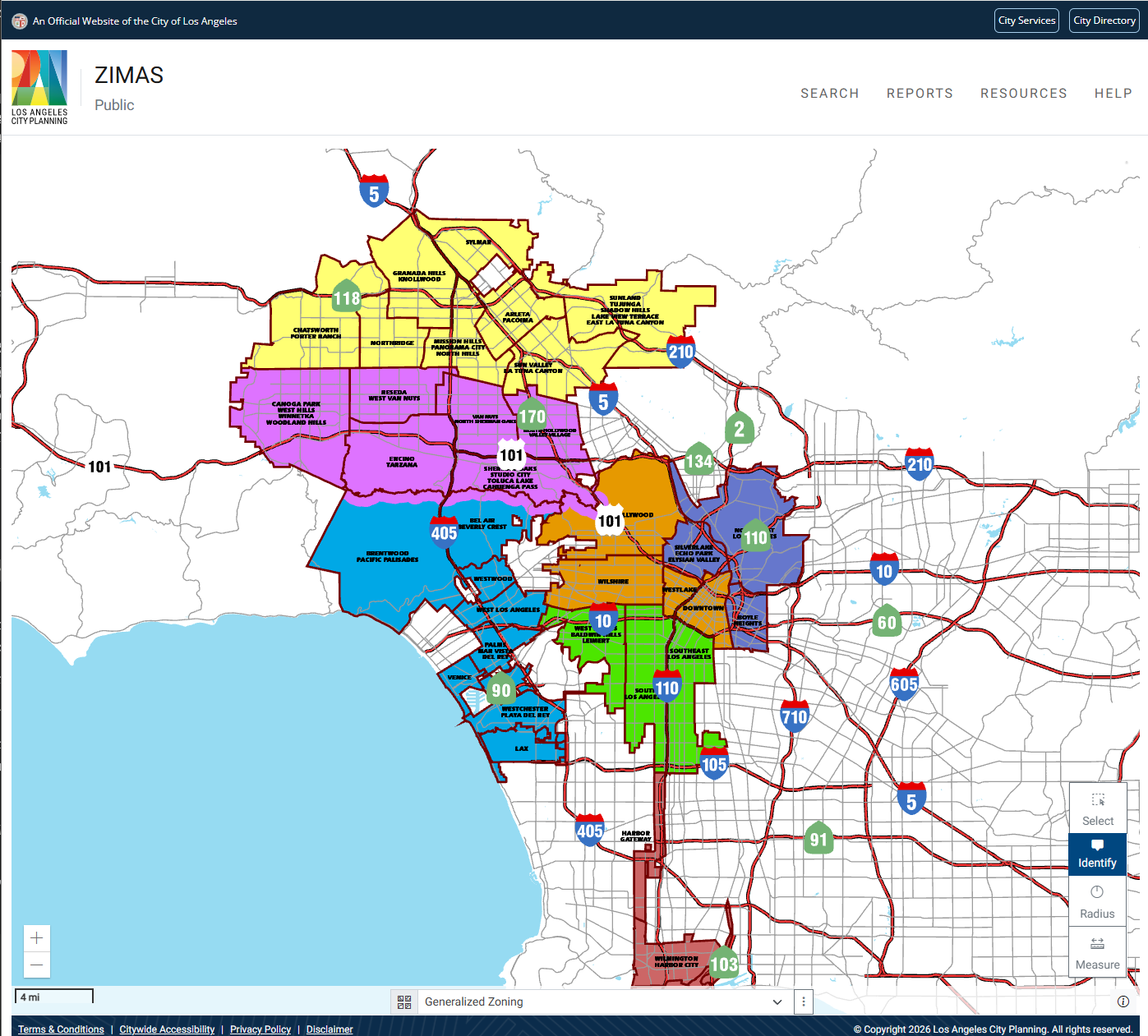
If you're looking for SB9 opportunities in Los Angeles, ZIMAS is the first tool you need to learn. It's free, it's public, and it tells you in about sixty seconds whether a property qualifies for Senate Bill 9 — before you ever write an offer.
Most investors skip this step. They find a property they like, get into escrow, and then discover the lot doesn't qualify. That's a waste of everyone's time. Here's how to avoid it.
What Is ZIMAS?
ZIMAS (Zoning Information and Map Access System) is the City of Los Angeles's free online zoning tool. It lets you search any property in the city and pull up its zoning designation, overlays, specific plan areas, and — most importantly for our purposes — its SB9 eligibility status.
Think of it as the property's zoning report card. You type in an address, and ZIMAS tells you everything the city knows about what you can and can't build there.
Why SB9 Eligibility Matters Before You Buy
SB9 allows you to add a second primary unit onto a single-family lot — and unlike an ADU, that second unit is valued as a primary residence, not an accessory. That distinction matters at appraisal and resale.
But not every single-family lot qualifies. The property has to meet specific criteria under state law, and the fastest way to check is ZIMAS.
Step-by-Step: How to Check SB9 Eligibility on ZIMAS
Step 1: Go to ZIMAS
Open your browser and navigate to zimas.lacity.org. You'll see a map of Los Angeles with a search bar at the top.
Step 2: Search the Property Address
Type in the full street address of the property you want to check. ZIMAS will zoom into the parcel and display a summary panel on the left side of the screen.
Step 3: Open Planning and Zoning
In the left-side panel, look for the section labeled Planning and Zoning. Click to expand it. This is where the city stores all the zoning overlays, specific plans, and eligibility flags for the property.
Step 4: Find "SB 9 Eligibility"
Scroll down within the Planning and Zoning section until you see SB 9 Eligibility. Next to it, there's a View link. Click it.
Step 5: Read the Checklist
ZIMAS will display a checklist with four to five criteria. Each one will show a yes or no answer. The checklist covers:
Zoning designation — The property must be in a single-family residential zone. In the City of Los Angeles, the eligible zones are A1, A2, RA, RE, RS, R1, RU, RZ, and RW. If the property sits in R2, RD, C1, M1, or any other zone, it does not qualify.
Transit proximity — The property must be within half a mile of a major transit stop or a high-quality transit corridor.
Hazard zones — The property cannot be in a protected hazard area such as wetlands or a floodway. Note that properties in a Very High Fire Hazard Severity Zone or earthquake fault zone may still qualify depending on the specific overlay.
Historic designation — Properties listed in the State Historic Resources Inventory, designated as a Historic Cultural Monument, or located within a Historic Preservation Overlay Zone (HPOZ) are not eligible.
If every criterion passes, the property qualifies for SB9 development. If even one fails, it does not.
What to Do After ZIMAS Says "Yes"
A passing ZIMAS checklist means the property is eligible — but it doesn't mean you should automatically buy it. You still need to evaluate the deal the same way you would any ADU investment property: lot size, site plan feasibility, rental income projections, and total capital required.
Here's my recommended sequence after confirming SB9 eligibility:
Run the rent comps. Don't use the listing agent's projected income. Pull actual rents from the same neighborhood. When I evaluated an SB9 property on Hedda Street in Lakewood, the listing projected $12,800 per month. The real comps came in closer to $11,200 — a $1,600 per month difference that completely changes the cap rate math.
Check which SB9 path makes sense. There are two options: SB9 with a lot split and SB9 without a lot split. The lot split version requires you to intend to reside in one of the units for at least three years and typically takes about a year to process. The no-lot-split version keeps the parcel intact and usually takes around six months. If you want to understand how this pairs with ADUs, the City of LA memorandum (ZA Memo 143) lays out how combining SB9 with ADUs can get you up to four units on a single lot.
Get a feasibility report during escrow. I always have my ADU designer pull a feasibility study before we close so we know exactly what's buildable. This is especially important with SB9 because the unit placement, setbacks, and access requirements are stricter than a standard detached ADU build.
Common Mistakes Investors Make with ZIMAS
Assuming county properties work the same way. ZIMAS only covers the City of Los Angeles. If the property is in unincorporated LA County, you need to check LA County Planning's SB9 page instead. Different jurisdiction, different process.
Ignoring the hazard overlays. A property can sit in a single-family zone and still fail SB9 eligibility because of a wetland overlay or floodway designation. Always check every line of the checklist, not just the zoning.
Skipping the income verification. ZIMAS tells you if you can build. It doesn't tell you if you should. I've seen investors get excited about SB9 eligibility on a property where the numbers don't pencil out once you run honest rent comps. The income approach is how appraisers value these properties, and inflated projections will catch up with you at resale.
The Bottom Line
ZIMAS is the fastest free tool for checking whether a Los Angeles property qualifies for SB9. It takes sixty seconds, it's publicly available at zimas.lacity.org, and it should be the first thing you check before touring any potential SB9 investment property in the city.
If you're evaluating SB9 opportunities in LA and want help running the actual numbers — rent comps, cap rate analysis, and build feasibility — reach out on Instagram or grab my ADU Buyers Guide to get started.
