Long Beach Arts & Crafts Manor Market Update — July 2026: Why These Properties Often Sell Above What the Income Says They're Worth
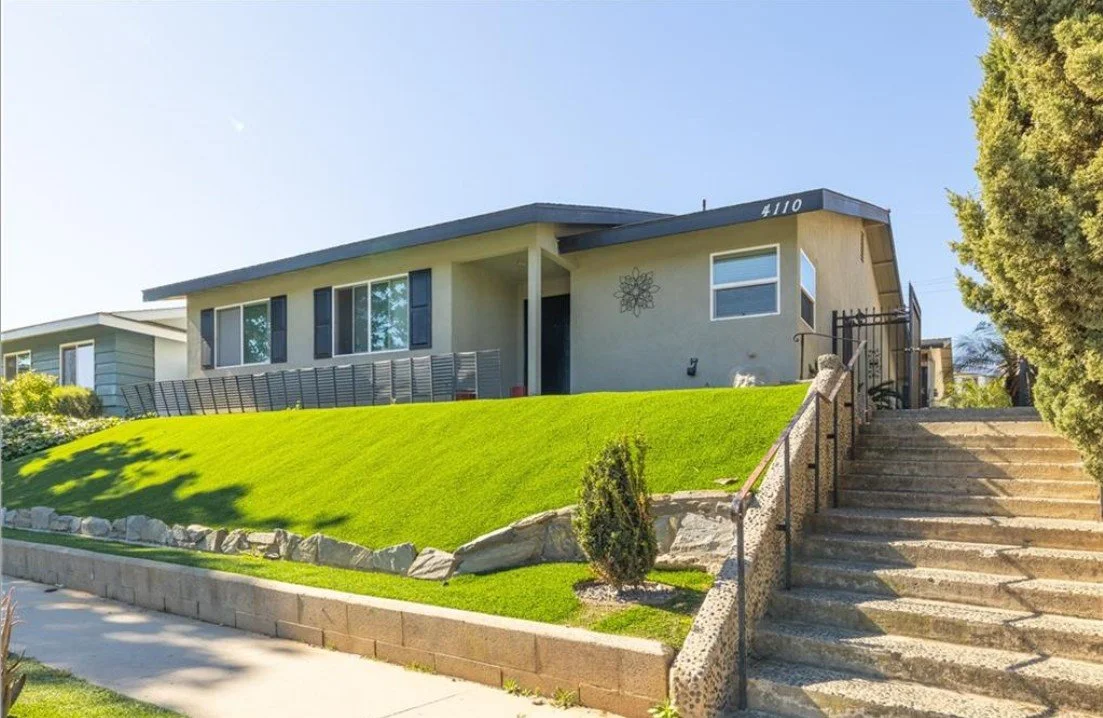
If you own a Craftsman or Arts & Crafts multi-unit in Long Beach — a duplex in Rose Park, a triplex in Bluff Heights, a bungalow court in Belmont Heights — you're sitting in one of the more interesting valuation environments in all of LA County right now. And the core reason comes down to a single concept that most sellers and buyers in this market don't fully understand: these properties don't trade on income. They trade on comps.
That distinction matters more than almost anything else when you're trying to understand what your property is worth, what a buyer will pay, and why the number that comes back from an appraiser might be meaningfully higher than what a pure income analysis would suggest.
What's Happening in the Market Right Now
Long Beach's July 2026 ADU and multi-unit market is showing the same split you see across most of LA County: the right properties at the right price are moving decisively, while anything mispriced or under-documented is sitting. Median days to contract on properties that are actually selling is running under 30 days. The actives that aren't selling are pushing 60.
In the Craftsman and Arts & Crafts neighborhoods specifically — Rose Park, Bluff Heights, Carroll Park, Belmont Heights, portions of the East Arts Village — inventory has stayed relatively thin. These neighborhoods don't turn over fast. When a property does come to market, it draws a different buyer pool than a standard income property in, say, North Long Beach or the 90805.
That buyer pool is the reason valuation works the way it does here.
Two Ways to Value an Income Property — and Why One Dominates Here
When you own a multi-unit, there are two ways an appraiser can approach valuation:
The income approach builds value from the bottom up. It looks at your gross rents, subtracts vacancy and operating expenses, and arrives at a net operating income (NOI). That NOI is then divided by a market cap rate to produce a value. If your property generates $60,000 in NOI and the market cap rate is 5%, the income approach puts you at $1.2 million. If rents are low or expenses are high, the number suffers.
The sales comparison approach — the comp approach — sets value based on what similar properties have actually sold for in the market. It looks at recently closed transactions: the same neighborhood, similar unit count, similar square footage, similar condition. The appraiser makes adjustments for differences and arrives at a value anchored to real buyer behavior, not a cap rate formula.
For standard investment properties — apartment buildings in functionally rental-only neighborhoods, commercial multi-units — the income approach carries the most weight. Buyers there are purely income-focused. Their underwriting is NOI-driven. Fannie Mae's appraisal guidelines reflect this: for one-to-four unit properties, the sales comparison approach is required and typically the primary driver — but the income approach runs alongside it, especially for investor-purchased properties.
In Long Beach's Arts & Crafts and Craftsman corridors, the comp approach wins. And the comps have been running ahead of what income math would produce on the same assets.
Why the Comp Approach Produces Higher Numbers in These Neighborhoods
A few things are converging.
Owner-occupants are in the buyer pool. A Craftsman duplex in Bluff Heights isn't being evaluated only by investors running cap rates. It's also drawing buyers who want to live in one unit and rent the other — house-hackers, people drawn to the architecture, buyers who want the neighborhood and are willing to accept a thinner return in exchange for living there. Owner-occupants don't underwrite cap rates. They look at what they can afford and what the neighborhood is worth to them. That expands what a willing buyer will pay.
Architectural character has standalone value. The Craftsman bungalow is essentially Long Beach's official home style — the dominant architectural form in the city's historic residential corridors. A well-maintained Craftsman duplex in a desirable Long Beach neighborhood carries value that a plain 1970s stucco duplex does not, even if the rents are identical. That value shows up in comps. It doesn't show up in NOI.
Rents in these neighborhoods are often below what the properties trade for. This is the key dynamic sellers need to understand. A Craftsman duplex with two units renting at $2,200 and $1,800 — $48,000 gross annual rents — might have an income value of $900,000 to $1.1 million at current cap rates. But if closed comps in that micro-market are running $1.3 to $1.5 million for similar properties, the appraiser is going to land closer to what the market is actually doing. The income approach doesn't control the outcome — the comp set does.
This is meaningful for sellers. Your property's value is not capped by what your tenants are paying. It's anchored to what buyers have been willing to pay for comparable assets in your neighborhood.
What This Means If You're Buying
If you're an investor evaluating an Arts & Crafts multi-unit in Long Beach purely on income metrics, you're going to struggle to make the numbers pencil — and you should understand why before you walk away from a deal or offer less than a seller is likely to accept.
The cap rates on these properties are often running 4% to 5% on current rents. At today's rates, that's not a cash-flow-from-day-one investment at standard down payments. But that's not the full picture. The three SoCal property benefits that stack quietly behind every income property — principal paydown, appreciation, and depreciation — are all running. And in neighborhoods like Bluff Heights or Carroll Park, the appreciation component has been consistent precisely because comp-based demand doesn't evaporate when cap rates compress.
Buyers who are going to win in this pocket are the ones who understand they're buying into a comp market, not an income market. That means underwriting the hold, not just the day-one return. It also means doing the full pre-offer checklist — permit status on any ADU or secondary unit, utility configuration, rent roll verification — because an unpermitted unit doesn't just affect the income; it affects what the appraiser can give value to in the comp approach as well.
For buyers using DSCR financing, the underwriting is tied to the property's actual rental income. On a Craftsman duplex where rents are below market, DSCR can get tighter than expected — which is one more reason to understand the income picture before you're in escrow.
The ADU Layer
Long Beach's official ADU development guidelines allow ADUs in all residential zones, with no owner-occupancy requirement — meaning you can add a unit and rent it without living on the property. In Craftsman neighborhoods where lots often have garages, rear structures, or underutilized space, the ADU potential can change the income picture materially.
A Craftsman duplex that currently generates $48,000 in gross rents with an attached permitted ADU renting at $1,800 is now generating $69,600. That shifts the income approach upward. But more importantly, it adds a third comparable data point — and in a market where ADU-equipped properties have been closing ahead of non-ADU equivalents, it shifts the comp approach too.
How a property with an ADU is valued when you sell comes down to whether the unit is permitted, separately metered, and generating documented income. In the Arts & Crafts corridors of Long Beach, a permitted, documented ADU is additive in both approaches — and the comp market is increasingly reflecting that. The HCD ADU Handbook covers what qualifies under state law, which is relevant if you're weighing whether an existing secondary structure can be legalized.
What doesn't help is an unpermitted conversion that a buyer's appraiser can't count. That's where the gap between seller expectation and appraised value tends to show up — and it's a consistent pattern in Long Beach's older housing stock. What to look for in a 1940s multi-unit in Long Beach covers exactly this issue — the Craftsman-era buildings in these neighborhoods often have additions and conversions with complicated permit histories.
The Bottom Line for Sellers
If you own a Craftsman or Arts & Crafts multi-unit in Long Beach, don't let a cap rate analysis talk you into underpricing. Your property is trading in a market where comparable sales — not income math — set the ceiling. Buyers who understand these neighborhoods know that. The ones who don't will offer less and lose to the ones who do.
The inventory in these micro-markets stays thin for a reason. When a well-maintained Craftsman duplex or triplex comes to market priced correctly and documented properly, it moves. What your multi-unit is actually worth and how to price it right — the process applies directly to Long Beach sellers navigating the same comp-versus-income valuation question.
If you want to talk through where your property sits in this market — what the comp set looks like, what an ADU addition might do to both your income picture and your exit value — reach out directly.
Dylan Serna is an ADU specialist agent serving Long Beach, LA County, and Orange County. For a property-specific valuation analysis, contact Dylan at adurealtor.net.
Ready to Get Started?
Book a Multi-Unit Buyer Consultation with Dylan Serna
Whether you're trying to figure out what a property is actually worth, how it'll appraise, or whether the numbers make sense for your situation — I'll walk through it with you.
Call or text Dylan directly at (714) 860-2868
