Buying a Long-Term Investment Property in Buena Park: The 2026 PITI Break-Even Guide (Real Rents, Real Numbers)
If you've been searching for long-term rental opportunities in Buena Park, you're not alone — and this guide is built specifically for what people searching that term actually need to know. Not marketing copy. Not generic "OC real estate is great!" content. The actual numbers: what homes cost right now, what they rent for, what your monthly PITI looks like, where the break-even point sits, and why an ADU is the variable that changes everything.
All figures in this post come directly from closed MLS lease comps and active MLS sales data in Buena Park as of July 2026.
What the Buena Park Rental Market Actually Looks Like Right Now
Twenty closed residential leases from 2026 tell a clear story. Buena Park is a genuine renter's market — vacancies are competitive, lease-up times are short, and landlords are not negotiating hard on rent.
Here's the actual spread across 3-bedroom properties:
Entry floor: $2,670/mo (756 sq ft, 3/2 — this is a very small home and an outlier)
Typical 3BR range (1,000–1,400 sq ft): $3,490–$4,295/mo
Mid-point for a standard 3/2 SFR: roughly $3,750–$3,900/mo
Top of market (2,000+ sq ft, premium finishes): $4,500–$4,700/mo
The closed comps back this up with real addresses. 8031 San Huerta (3/2, 1,090 sq ft) closed at $3,750/mo. 7049 Fillmore (3/2, 1,354 sq ft) closed at $3,895/mo. 6052 Marshall (3/2, 1,335 sq ft) closed at $4,100/mo. These aren't asking prices — these are executed leases, 12-month terms, unfurnished.
The ADU signal in the lease data is also worth noting. At least three of the twenty closed leases involve properties with ADU activity: one lists a garage as an ADU in the property description, one explicitly discloses a "private detached ADU" that remains separately occupied, and a third notes "future plans to build an ADU in the large backyard." This isn't coincidence — Buena Park's lot sizes and zoning make it one of the more ADU-friendly pockets in North Orange County.
What You'll Pay to Buy in Buena Park Right Now
Twenty-five-plus active SFR listings show a clear price structure:
Fixer/distressed entry: $780,000–$800,000 (e.g., probate sales, deferred maintenance, non-standard layouts)
Standard move-in ready 3/2 (1,000–1,400 sq ft): $850,000–$950,000
Representative mid-range:$875,000–$925,000
4BR or larger / premium finishes: $949,000–$958,000+
One listing worth noting for investors: 8591 Greenleaf Ave is listed at $788,888 with JADU plans already approved by the Buena Park Planning Department. That's not a future possibility — the entitlement work is done. Another listing at 10460 Lorinda Ave ($899,000) notes "plenty of room for an ADU" in the description, and 8049 Coral Bell ($948,000) explicitly flags ADU potential in the remarks.
The HOA situation: only one active listing in the current Buena Park SFR inventory carries an HOA, at $200/month. For the rest, this line item doesn't exist — which matters for your operating cost math.
The PITI Reality: What Owning a Buena Park Investment Property Actually Costs
Let's work backward from the number that actually matters: what down payment do you need to break even on PITI with real Buena Park rents?
Representative purchase: $875,000 (standard 3/2 SFR, move-in ready, no HOA)
Interest rate: 7.0% (current 30-year fixed, July 2026)
Market rent (3BR SFR): $3,800/mo (midpoint of closed lease comps)
Two costs don't change regardless of how much you put down — taxes and insurance:
Fixed monthly costAmountProperty Taxes (1.2% effective, Orange County)$875Homeowner's Insurance$130Fixed non-P&I total$1,005
To break even at $3,800/mo rent, your P&I payment can be at most $2,795/mo. At 7%, that requires a loan balance of roughly $420,000 — meaning you'd need to put down $455,000, or 52% of the purchase price, just to break even on PITI with a single rental unit.
Here's how different down payment levels stack up:
Down paymentLoan amountP&ITotal PITIvs. $3,800 rent20% — $175,000$700,000$4,657$5,662-$1,862/mo30% — $262,500$612,500$4,075$5,080-$1,280/mo40% — $350,000$525,000$3,493$4,498-$698/mo52% — $455,000$420,000$2,795$3,800$0 — break-even
No matter how you structure the down payment, you cannot reach break-even on a single-unit Buena Park SFR without committing over half the purchase price in cash — and even then you're flat, before maintenance or vacancy.
Before you write off Buena Park entirely, understand what changes this math — and it's a single variable.
Why ADU Potential Is the Whole Investment Thesis in Buena Park
An ADU — a permitted accessory dwelling unit, whether a garage conversion, detached structure, or junior unit — adds a second income stream to a property that already has one. And that second income stream is what makes the PITI math work.
Here's the same scenario, restructured around a property with ADU income:
Main house rent (3BR SFR): $3,800/mo
ADU rent (1BR garage conversion or small detached): $1,800–$2,000/mo
Combined gross income: $5,600–$5,800/mo
Monthly PITI: $5,662
Net position with ADU income:-$62 to +$138
That's the break-even zone. Not spectacular positive cash flow — but a near-neutral position where your tenant base is largely covering the mortgage, the taxes, and the insurance, while you hold an appreciating asset in a supply-constrained North OC market. When you add principal paydown and the three SoCal property benefits that stack quietly behind income properties — depreciation, appreciation, and equity build — the full wealth picture looks very different from the monthly cash flow number alone.
California's state ADU law, governed by the California Department of Housing and Community Development, has systematically lowered barriers to ADU construction. Ministerial approval, reduced setback requirements, and the prohibition on HOA restrictions on ADUs (in most cases) all apply. For Buena Park specifically, the active MLS inventory already shows Planning Department-approved JADU plans on one listing, confirming the city is processing these applications.
The ADU-Ready Properties in the Current Buena Park Market
Four active listings in Buena Park's current MLS inventory are specifically flagged for ADU potential:
8591 Greenleaf Ave — $788,888
This is the most advanced ADU opportunity in the current inventory. JADU plans have already been approved by the Buena Park Planning Department. The entitlement risk — often the most time-consuming part of the ADU process — is already behind you. At $788,888, this is also below the median for the market, putting the total all-in basis (purchase + ADU build) at a more manageable figure.
10460 Lorinda Ave — $899,000
Listed with "plenty of room for an ADU" noted in the listing description, backed by a 1,356 sq ft 3/2 main house. A standard lot with strong lot depth is what makes detached ADU construction viable — not the main house square footage.
8049 Coral Bell — $948,000
4/3 at 1,602 sq ft. The listing explicitly notes "potential to add an ADU." At this price point, PITI runs closer to $6,100/month — which puts more pressure on the ADU income to close the gap.
8359 San Clemente Way — $949,000
A detached garage that "may offer future ADU potential" per the listing remarks. Garage conversions are often the lowest-cost ADU path — no additional foundation, existing structure — though permitting still requires full compliance with current building code.
If you're evaluating any of these, what to check before buying a property with an existing or potential ADU covers the due diligence framework in detail — permit status, utility setup, setback compliance, and how ADU type affects your eventual exit.
How Lenders Count ADU Income — and Why It Matters for Your Offer
Before you build your investment model around a projected ADU income of $1,800–$2,000/month, understand how lenders count ADU rental income when you're qualifying for a mortgage. The short version: if the ADU doesn't exist yet, most conventional lenders won't count the projected income at underwriting.
Fannie Mae's current ADU income policy allows rental income from an existing, permitted ADU to be counted toward qualification — but the unit must be separately addressed and the income documented. A planned ADU doesn't qualify. This means that on a purchase where the ADU is still future-state, you're qualifying on your primary income only. Plan accordingly.
If your personal income creates a DTI ceiling that limits your offer range, DSCR loans designed for ADU and investment properties in California underwrite based on the property's income rather than your personal W-2 or tax returns — which changes the picture significantly once an ADU is in-place and generating documented rent.
The Full Break-Even Picture: Three Scenarios
ScenarioPurchase PricePITIMonthly IncomeNet PositionStandard rental (no ADU)$875,000$5,662$3,800-$1,862/moFixer entry + planned ADU$790,000$5,118$3,700 (house only)-$1,418/mo pre-ADUADU-ready property (ADU operational)$875,000$5,662$3,800 + $1,900~$38/mo positive
The entry fixer scenario at $790,000 drops PITI to around $5,118/month (20% down, $632,000 loan at 7%). Once the ADU is built and operational, combined income of $5,600/month gets you to roughly $482/month positive cash flow at that price point — a meaningfully better position than the mid-range scenario. This is why the $780,000–$800,000 tier, despite requiring renovation work, attracts experienced investors.
What to Look for as a Buyer in Buena Park Right Now
Lot size and configuration. A standard Buena Park lot with rear yard access is what makes a detached ADU or garage conversion viable. Look for at least 5,000 sq ft of lot with a driveway or side yard that provides separate access.
Existing garage structures. A detached two-car garage with a flat roof and standard ceiling height is a conversion candidate. The Buena Park Planning Department has been issuing ADU approvals, and the city's processing times are reasonable compared to some other OC jurisdictions.
Permit status on anything that looks like a second unit. If a property already has a converted garage or a structure in the backyard, verify permit status before you make an offer. An unpermitted ADU gets treated very differently at appraisal and can create lender complications that kill deals or reduce your financing options.
Tenant-in-place situations. Two of the closed lease comps show properties with ADUs that are separately occupied. If you're buying a property where the ADU tenant is already in place, California tenant protections apply — understand the lease terms and your rights before you close. What to check before buying an investment property in OC or LA covers this in the pre-offer checklist.
The Bottom Line
Buena Park's rental demand is real. The MLS lease data confirms it — 20 closed 3BR leases in 2026, virtually no vacancy, rents holding in the $3,750–$4,100 range for typical SFR product. The problem isn't the demand side. The problem is that at current purchase prices of $875,000–$925,000 and a 7% rate, a single-unit investment doesn't pencil.
The investors who are making Buena Park work in 2026 are not buying single-unit rentals and hoping the numbers hold. They're buying properties with ADU potential, running the break-even math with two income streams, and treating the ADU construction phase as the investment thesis — not an afterthought.
That changes the acquisition criteria entirely: you're not looking for the nicest 3/2 in move-in condition. You're looking for the right lot, the right structure, and the right permit pathway.
If you want to run the break-even numbers on a specific active listing — or want to see the full closed comp data for Buena Park — reach out directly. This is what I look at every week, and Buena Park is one of the markets worth being early in.
Ready to Start Your Investment Property Search
Book an investment consulatation call with Dylan Serna through text or call at (714) 860-2868
Why Buena Park Is One of Orange County's Best-Kept Secrets for Long-Term Real Estate Investors
If you're looking at Orange County investment markets and you're not looking at Buena Park, you're probably paying more somewhere else for the same fundamentals — or less somewhere else and not seeing the same rental demand.
Buena Park doesn't get the press that Anaheim or Garden Grove get in investor circles. That's exactly why the numbers here still work.
The Market Data Is Speaking Clearly
Let's start with what the June 2026 numbers actually say.
Median sold price in Buena Park is $947,500 — with homes selling at 100.2% of list price and sitting on market for just 14 days. Months of supply is 2.29, firmly in seller's market territory. Median estimated property value sits at $921,330, up 1.3% just from last month.
This is not a market that's softening. Prices have been on a consistent upward trajectory since 2020, and the chart shows Buena Park tracking above the broader USA median while remaining below Orange County's peak — which means there's still a meaningful runway before it catches up to the county average.
When homes are closing above ask in 14 days, you're not in a speculative bubble — you're in a market with a real supply-demand mismatch. That mismatch is the engine for long-term rent growth.
Freeway Access Is the Rental Demand Driver Most Investors Overlook
Buena Park sits at one of the best freeway intersections in Orange County. The 91, 5, and 605 all converge in or near this city, which means a renter here can reach Anaheim, Downtown LA, Long Beach, and the South Bay without adding more than 15–20 minutes to a typical commute window.
That's not a minor amenity. For working renters — nurses, logistics workers, construction crews, service industry employees — proximity to a freeway hub is a top-three location criteria. It's often more important than school ratings or walkability scores when you're talking about the SoCal workforce housing segment.
What this translates to: low vacancy, fast lease-up, and consistent year-over-year rent pressure. When the renter pool is deep and the supply is constrained, landlords don't negotiate on price. Turnover costs you money but Buena Park's renter demand means units don't sit.
This is a structural advantage, not a cycle-dependent one. The freeway access doesn't go away when rates go up.
The Lot Stock Here Is Built for ADU Investment
Here's what separates Buena Park from some of the tighter North OC markets: the lots are bigger.
Buena Park was largely built out in the 1950s–1970s, and that era of development produced deeper lots with real backyard setbacks — the kind of lot that can accommodate a detached ADU without touching the primary structure, often without variance requests or complex setback negotiations.
Under California's current ADU law, most single-family lots in Buena Park qualify for at minimum one ADU and one Junior ADU (JADU). That's three units on a standard SFR parcel — the main house, an attached or converted JADU, and a detached ADU in the rear yard. For an investor purchasing a single-family home in the $900K–$1M range, that's potentially two additional income-producing units with no new land cost.
The lot stock also positions Buena Park well for SB 9, which allows qualifying single-family parcels to be split into two lots — each of which can then carry two units. On the right parcel, that's a path to four residential units on what you purchased as a single-family home. Not every lot qualifies, and the city's specific implementation matters, but Buena Park's lot characteristics put more parcels in play than you'd find in, say, a densely subdivided post-1990 suburb.
If you're buying an investment property in Orange County, the first thing I check on any Buena Park property is lot depth and existing setbacks — because that determines whether the ADU or SB 9 play is actually available, or just theoretical.
Real Numbers: One Investor's $10,000/Month on a Single SFR Lot
This isn't hypothetical.
I worked with an investor who purchased a single-family home in Buena Park on a lot with enough rear yard depth for a detached ADU. After permitting and building out the ADU, here's what the income stack looks like today:
Main house rental: ~$3,200–$3,500/month
Detached ADU rental: ~$2,200–$2,400/month
JADU (converted garage): ~$1,500–$1,800/month
Combined gross rental income: over $10,000/month — from a property that was purchased as a standard single-family home.
That's not a commercial building. It's not a multifamily acquisition with a 5-cap going in. It's a well-located SFR in Buena Park with a lot that supported density, executed under California ADU law on a standard permit timeline.
The key variables that made this work: a deep enough lot for a detached unit, an existing garage that converted cleanly to a JADU, and a city building department that processes ADU permits without dragging the timeline out beyond reason. Fannie Mae's current ADU income guidelines also made it possible to count that rental income at underwriting for the investor's next purchase — which is the compounding move most first-time ADU investors don't plan for.
This is exactly the kind of income profile you want to understand before you write an offer. How ADU rental income is counted by lenders changes the math on what you can buy next.
Why Long-Term Rentals in Buena Park Make More Sense Than Short-Term
Buena Park has Knott's Berry Farm in its backyard, which makes some investors immediately think short-term rental. That's usually the wrong move for a long-term wealth-building strategy here.
Orange County municipalities are tightening STR regulations, and the management overhead, seasonality risk, and platform dependency of vacation rentals eat into the income consistency that makes a long-term hold work.
Long-term rentals in Buena Park produce something more valuable: predictable, compounding income with low management cost. A working family or commuter household signed to a 12-month lease costs you almost nothing to manage after move-in. They pay rent, the property appreciates, and you're building equity on three tracks simultaneously — appreciation, principal paydown, and (if you set it up right) depreciation.
Those three wealth-building levers — appreciation, principal paydown, and depreciation — are what separate real estate from most other asset classes. In a market like Buena Park, where freeway access drives tenant quality and retention, the long-term rental model compounds quietly and efficiently.
What to Look for When Buying in Buena Park as an Investor
Not every Buena Park SFR is an ADU play. Here's what separates the properties worth targeting from the ones that look like deals but aren't:
Lot depth matters more than lot size. A wide, shallow lot might have the square footage but not the rear yard setback needed for a detached ADU. Target properties with at least 120–150 feet of lot depth where possible.
Utility connections. A detached ADU needs its own electrical service (and ideally separate water/sewer metering) to command top rent and satisfy most lenders. How an ADU is valued at sale in Orange County depends heavily on whether it's permitted and separately metered — that setup maximizes both your rental income today and your exit value when you sell.
Existing permits. If there's an existing garage conversion or granny flat, verify the permit history before you close. What to know before buying a property with an existing ADU is a critical step — unpermitted units carry liability and income you can't fully count.
DSCR financing options. At the $900K–$1M price point with two or more income-producing units, DSCR loans can let the property's rental income qualify the loan rather than requiring your personal income to carry the full debt service. That expands what's possible for investors whose tax returns don't reflect their real financial capacity.
Buena Park vs. The Alternatives
Why Buena Park over Anaheim or Garden Grove right now?
Anaheim has more competition and, in some pockets, more institutional buyer activity. Garden Grove has strong ADU comps and consistent demand but slightly less lot depth on average. Buena Park sits in between — less bidding war pressure, comparable rental demand driven by the same freeway infrastructure, and a lot stock that's genuinely more ADU-accommodating than parts of Garden Grove or south Anaheim.
The $947,500 median sold price with 2.29 months of supply tells you this market is moving. It's not priced like a discovery play anymore — but it's not fully valued relative to its income potential either, especially on ADU-eligible lots.
That gap is the investment thesis.
The Bottom Line
Buena Park is a freeway-connected, renter-driven market with a lot stock that was built for ADU density before ADU density was a strategy. The $947,500 median closed price with 100.2% sold-to-list and 14 median days on market tells you the demand is real. And the $10,000/month income stack from a single SFR lot tells you what the upside looks like when you buy the right property and execute the ADU build correctly.
Long-term rentals here are not a bet on appreciation alone. They're a cash flow vehicle, a loan offset, a tax shield, and a compounding wealth position — all running simultaneously.
If you want to look at what's available in Buena Park right now and run the ADU potential on a specific parcel, reach out. I pull the lot data and run the income projections before any offer goes in.
Ready to Start?
Schedule an investor consultation call with Dylan Serna by texting him or calling - (714) 860-2868
Top Reasons Anaheim Multifamily Homes Don't Sell — And How to Fix It
If your Anaheim duplex, triplex, or fourplex sat on the market and never sold, you're not alone. Expired multifamily listings are more common in Orange County than most sellers realize — and the reasons usually aren't what you'd expect. It's rarely the property itself. More often, it comes down to three avoidable mistakes made before the listing even went live.
1. The Price Was Wrong — And Your Agent Prepared You With the Wrong Number
Overpricing is the #1 reason multifamily listings expire, but the problem runs deeper than just "the price was too high." It comes down to how your agent prepared you in the first place.
Most sellers of single-family homes are used to comparable sales — what did the house down the street sell for? That works fine for owner-occupied properties. But multifamily real estate is different. It can be valued two ways, and a good agent needs to understand both.
Method 1: Comparable Sales (the "comps" approach) This looks at what similar duplexes, triplexes, or fourplexes have actually sold for in Anaheim recently, adjusted for size, condition, and location. It's straightforward and familiar.
Method 2: Income-Based Valuation (the investor lens) Investors — who make up the majority of multifamily buyers — care deeply about the income a property generates. They look at metrics like the Gross Rent Multiplier (GRM) and Cap Rate to decide what a property is worth based on the rent it produces. A building generating below-market rents may appraise lower through this lens, even if the comps suggest a higher price.
Here's where sellers get burned: if your agent only used comps and ignored the income approach (or vice versa), you may have been priced out of the market for the exact buyers most likely to purchase. A savvy multifamily agent reconciles both methods and prices accordingly — not just to look good on paper, but to actually close.
2. The Property Was Marketed to the Wrong Buyer
Not every multifamily buyer is the same. Anaheim attracts a mix of:
Owner-occupants who want to live in one unit and rent out the others to offset their mortgage
Local investors building or maintaining a portfolio in Orange County
1031 exchange buyers looking to roll proceeds from another sale into a replacement property
Out-of-area investors who shop purely on yield and need a property that pencils
Each of these buyers has different priorities, different financing options, and different thresholds for what makes a deal attractive. If your listing was marketed generically — just thrown on the MLS with standard language — it likely didn't speak to any of them clearly.
The right agent identifies who the most likely buyer is before the listing goes live, then crafts the pricing, marketing copy, and outreach strategy to reach that person specifically. For example, a fourplex in Anaheim with strong rental income and a value-add unit should be positioned very differently than a duplex with a long-term tenant and below-market rent.
3. The MLS Data Was Wrong — Especially in the Income Section
This one is underrated and it costs sellers real money.
The MLS has a dedicated section for multifamily listings that includes fields like current rents, gross income, vacancy rate, operating expenses, and net operating income. Many agents who primarily list single-family homes don't know how to fill these fields out correctly — or skip them altogether.
For an investor buyer, these fields aren't optional. They're the first thing a serious buyer's agent checks to decide whether to schedule a showing. If the income data is blank, estimated incorrectly, or doesn't match the actual leases, it undermines trust immediately. It also means your property won't show up in filtered searches investors use to find properties within their return criteria.
Common mistakes include:
Leaving income fields blank
Using estimated rents instead of actual collected rents
Failing to list unit mix correctly (e.g., 2 bed/1 bath vs. 1 bed/1 bath counts)
Not disclosing Section 8 tenancy or month-to-month lease status
Getting this right isn't just about accuracy — it's about credibility with the buyers who are most likely to close.
What to Do If Your Listing Expired
If your Anaheim multifamily property expired, don't re-list it with the same strategy and hope for different results. Take a step back and evaluate honestly: Was the price based on income, comps, or both? Was the listing targeted at the right buyer pool? Was the MLS data complete and accurate?
These aren't small tweaks — they can be the difference between sitting on the market for another 90 days and getting multiple offers.
Talk to an Expert in Anaheim Multifamily Sales
Dylan Serna specializes in multifamily and ADU properties across Orange County. If your listing expired or you're thinking about selling a duplex, triplex, or fourplex in Anaheim, reach out for a no-pressure consultation.
📞 Call or text Dylan at (714) 860-2868
He'll walk you through how your property should be priced using both valuation methods, who the right buyer is, and what your listing needs to succeed this time around.
How Much Does a Long Beach ADU Rent For? 2026 Closed Comps Broken Down by Neighborhood and Bedroom Count
If you own a Long Beach property and are trying to figure out what your ADU is worth on the rental market — or if you're shopping for investment properties and need to know what the income side actually looks like — this post gives you real numbers from real closed leases.
These aren't estimates. These are 17 closed MLS comps from Long Beach ADUs leased between January and June 2026, pulled directly from CRMLS. Here's what the market is actually paying.
1 Bedroom / 1 Bath ADUs: $1,600–$2,500/Month
The spread in the 1BD/1BA category is wider than most people expect, and it comes down almost entirely to neighborhood and finish quality.
At the bottom of the range, a 400 sq ft standalone cottage in Downtown Long Beach's Willmore District leased for $1,600/month (128 W 9th St). It's new construction (2025-built), well-finished, and comes with a private patio and off-street parking — but Downtown Long Beach commands a discount relative to the Eastside and South neighborhoods, and the size keeps the rent anchored low. For investors running pure yield math, that's actually a useful data point: smaller units in walkable but transitional corridors still pencil at the right purchase price.
In the middle of the range, a remodeled 576 sq ft unit in Westside/North of Willow leased for $2,300/month (2115 W 29th #A). It had a full remodel, enclosed backyard, and included gardener, gas, and water — the utility inclusions matter more in this price band than people realize because they allow landlords to command a premium even on older stock in working-class neighborhoods.
The upper end of the 1BD category tells a cleaner story. A 2023-built ADU on the Eastside's Circle Area (3617 E Esther) with quartz counters, walk-in shower, private patio, private yard, and 2 tandem driveway spaces leased at $2,400/month. A heavily upgraded 420 sq ft Imperial Estates South unit with a spa-like bathroom, tankless water heater, farmhouse sink, and a genuinely premium fit-out leased at $2,500/month (8130 E Topia #A). South of Conant's 463 sq ft ADU also hit $2,400/month (5337 E Brittain #1/2) in June 2026.
1BD/1BA range: $1,600–$2,500/month. Expect $2,200–$2,400 for a well-finished unit in a mid-tier Long Beach neighborhood; push above that in South of Conant, Imperial Estates, or the Eastside if the finishes justify it.
2 Bedroom / 1 Bath ADUs: $1,700–$2,700/Month
This is where neighborhood premiums show up most clearly. The same bedroom count can produce a $1,000/month spread depending on where the unit sits on the map.
North Long Beach sits at the bottom of this range. A brand-new 600 sq ft 2/1 in North Long Beach (4966 Oregon Ave #D) leased for $1,700/month in January 2026 — a 2025 build with recessed lighting and A/C, no parking, no W/D. That's the floor for a new ADU in this corridor. The tradeoff is investor math: at North Long Beach purchase prices, the cash-flow math pencils more easily than in any other Long Beach pocket.
Artcraft Manor (near Los Altos) came in at $2,300/month for a remodeled 768 sq ft duplex front unit on Grand Ave (2293 Grand Ave). Remodeled electrical, new appliances, new bathroom — functional but not high-end. Closed April 2026 after a price reduction from $2,500.
Rose Park delivered a brand-new 2025-built ADU at 796 Cherry Ave at $2,050/month — notably lower than what you'd expect for a new build in that neighborhood. The listing notes "max 2 persons" and no pets, which may have created friction on tenant demand and compressed the closing rent.
The East Long Beach and Alamitos Heights pocket shows what the market will pay for a well-finished, well-located 2/1. A new-construction ADU at 625 Orizaba Ave #5 in Alamitos Heights leased at $2,275/month in June 2026. Same building's second unit (#6, slightly upgraded position in Bluff Park) leased at $2,625/month in May 2026 — a $350/month spread between two essentially identical units on the same parcel, driven by unit position and possibly move-in timing.
South of Conant's 2/1 (5943 E Adderley #B, 780 sq ft, brand-new, shaker cabinets, quartz, mini-splits, washer/dryer in unit) leased at $2,700/month in May 2026 — the top of the 2/1 comp set, and a strong data point for what the established East Long Beach residential neighborhoods will support.
2BD/1BA range: $1,700–$2,700/month. Best comps cluster around $2,275–$2,625 for East-side and South of Conant neighborhoods; North Long Beach is a meaningful discount.
2 Bedroom / 2 Bath ADUs: $2,490–$2,950/Month
Adding a second bathroom consistently bumps the rent, and the comps confirm it.
A 2022-built 655 sq ft 2/2 in Long Beach's Zaferia neighborhood (2598 E Spaulding #C) with private bath in the primary, solar panels, mini-split HVAC, and quartz throughout leased at $2,490/month (down from a $2,595 ask — took 104 days, which is the longest absorption in this comp set by far). No W/D connections was the note that likely hurt demand here.
At 748 Newport Ave in the Eastside, two brand-new 2/2 units at 750 sq ft each leased simultaneously at $2,650 (unit #5) and $2,725 (unit #6) in late March 2026. Same building, 24-day absorption, new construction with solar, W/D in-unit, private deck/patio. The $75/month spread between the two units is likely a floor vs. upper-floor difference.
North Long Beach's top 2/2 comp (5496 Lime Ave #A, 800 sq ft, private yard, garage, patio, skylight, new kitchen, washer/dryer, tankless water heater) leased at $2,950/month in May 2026 — the strongest rent-per-square-foot argument for North Long Beach in this set. Rent includes electricity and gardener, which explains some of the premium.
2BD/2BA range: $2,490–$2,950/month. New construction with W/D and covered parking consistently closes at the high end of this band.
3 Bedroom ADUs: $3,300–$3,715/Month
The 3BD comp set is small but useful.
A 3/1 at 2370 Pine Ave in the Wrigley area (1,127 sq ft, vaulted ceilings, W/D included, driveway parking) leased at $3,300/month in April 2026. New construction with an open concept layout — the 129-day absorption suggests the Wrigley corridor required more time to find a qualified tenant at this price point, and the final rent met the original ask.
A new 3/2 in California Heights (3636 Gardenia #A, 1,300 sq ft, open plan, vaulted ceilings, walk-in closet, en-suite, private laundry, Google thermostat, water/sewer included) leased at $3,500/month in March 2026 — down from a $4,200 original ask. The 66-day absorption and $700 price reduction from ask are the honest signal: 3BD ADUs in California Heights have real demand but a narrower qualifying tenant pool, so pricing correctly the first time matters.
The outlier is 162 E Adair in North Long Beach (763 sq ft, 3/2, large backyard, full appliances, washer/dryer hookups, central A/C) at $3,715/month closed in March 2026. Three bedrooms in 763 square feet is a tight configuration, and that rent is notably high relative to the square footage and neighborhood — which suggests strong family demand for 3BR units specifically in that part of North Long Beach, even at a size premium that doesn't fully show up in the price-per-square-foot.
3BD range: $3,300–$3,715/month. Expect longer absorption in this category; price at market from day one rather than starting high.
What Drives the Spread: A Quick Framework
Looking at all 17 comps together, the biggest rent drivers in order are:
1. Neighborhood. A 650 sq ft 2/1 in Alamitos Heights leases $600+/month higher than the same configuration in North Long Beach. Location premium is real and durable.
2. Finish quality. Quartz counters, W/D in-unit, private outdoor space, and covered parking consistently push rents to the top of their respective ranges. These aren't nice-to-haves — they're the difference between $2,275 and $2,625.
3. Parking. Several units in this set have no parking and absorbed slowly. Long Beach's limited street parking in walkable corridors makes off-street parking genuinely valuable to tenants.
4. Utility inclusions. Units that bundle water, gas, or electricity into the rent command higher gross rent and often attract more qualified tenants faster.
5. Absorption vs. price. The two units that absorbed longest (Zaferia 2/2 at 104 days; Wrigley 3/1 at 129 days) both had factors that narrowed the tenant pool — no W/D in the Zaferia unit, higher price point in Wrigley. Positioning matters.
The Income Side of the Investment Equation
If you're underwriting a Long Beach ADU purchase, this comp set suggests a reasonable range of $2,000–$2,800/month for a 2-bedroom ADU in a mid-tier Long Beach neighborhood, depending on configuration and finishes. A well-positioned new-construction 2/2 in the Eastside or South of Conant will support the top of that range; a basic 2/1 in North Long Beach will land at the bottom.
At $2,400/month — roughly the midpoint of the 2BD set — that's $28,800 in annual gross rental income. Using that ADU rental income to qualify for your mortgage is a specific calculation that varies by lender and loan type, and it affects how much you can offer. Understand that math before you're in contract, not after.
How much down you actually need to cash-flow an SFR with ADU in Long Beach is the right model to run before you start shopping — today's rates make the break-even down payment higher than most buyers expect.
If You're Selling a Long Beach Property with an ADU
Documented rental history at the rates above is one of the most powerful tools in a Long Beach ADU listing. Buyers — especially investor buyers — are underwriting the income story, and how your home gets valued when an ADU is involved comes down in part to whether an appraiser can apply the income approach. That requires a permitted unit and documentation. Get those in order before you list.
If you have an unpermitted unit or a garage conversion, the three real options for Long Beach sellers in 2026 lay out exactly how to approach it — the answer isn't always to legalize, and it's not always to disclose as-is. The right path depends on your timeline, budget, and buyer pool.
For a full breakdown of where Long Beach's ADU market stands right now for sellers and buyers, the Long Beach ADU Market Update for July 2026 covers what's moving and what the current rate environment is doing to buyer demand.
How to Actually Find Cash-Flowing Properties in Los Angeles County in 2026
Most people who go looking for cash-flowing properties in Los Angeles County come back empty-handed. Not because cash flow doesn't exist here — it does — but because they're shopping the wrong property type with the wrong down payment target.
Here's what the math actually looks like, and where the real opportunity is sitting right now.
The SFR + ADU Problem
The most common play buyers pitch themselves in LA County is the single-family home with an ADU. Buy the house, rent the ADU, offset the mortgage. In theory, it works. In practice, at current rates and prices, it usually doesn't — not at 20% or 25% down.
A $900,000 SFR with a permitted ADU in Long Beach might generate $2,800/month in combined rents across both units. At 7% on a $720,000 loan (20% down), your principal and interest alone is around $4,792/month — before taxes, insurance, and maintenance. You're cash-flow negative from day one, and that ADU income is the only thing keeping the gap from being catastrophic.
How much down you actually need to cash flow an SFR with ADU property in Long Beach breaks this math down precisely. The short version: 25% minimum gets you closer to flat, but it's not the vehicle for investors who want real positive monthly cash flow.
The Multi-Unit Difference — and Why 35% Changes Everything
Here's where LA County gets interesting for serious income investors: multi-unit properties — duplexes, triplexes, and fourplexes — run a fundamentally different income equation than SFR-plus-ADU.
A duplex where both units are rented generates full market rent on both sides, not owner-occupied rent on the primary with ADU income as an offset. A triplex or fourplex stacks three or four rent streams against one mortgage.
The magic number for cash flow on a multi-unit in LA County is closer to 35% down.
That's not a hard rule — it depends on the specific property, the rents, and the purchase price — but when you start modeling duplexes and triplexes in the $800K–$1.3M range in markets like Long Beach, Hawthorne, Inglewood, or the San Gabriel Valley, 35% down is typically the threshold where the numbers flip from negative or flat to genuinely positive monthly cash flow.
At 35% down on a $1,000,000 duplex ($350,000 down, $650,000 loan at 7%), you're looking at P&I of about $4,326/month. If both units generate $2,600/month each — $5,200 total — you're running a $874/month surplus before operating expenses. Add in vacancy reserve and maintenance and you're in the range of $400–$600/month in real cash flow. That's not wealth-changing income on its own, but paired with the three property benefits that stack quietly behind income properties in Southern California — principal paydown, appreciation, and depreciation — the full picture changes dramatically.
Why LA County Specifically Makes This Work
The reason LA County multi-units pencil at 35% when the same property in a lower-rent market wouldn't: rents are structurally high here, and rental demand doesn't soften much.
LA County's vacancy rate has consistently run below 4% for the past several years. Markets like Long Beach are on pace to surpass 800 ADU permits in 2026 — which tells you the city's own data reflects how serious demand has gotten. Tenants competing for limited units in well-located neighborhoods are willing to pay. That's the engine.
The math also benefits from California's ADU law, which since January 1, 2026 permanently eliminated owner-occupancy requirements under AB 976. That means you can own and rent every unit on a multi-unit or ADU property as a pure investor — you don't have to live there. The restriction that used to complicate purely investor-held ADU properties is gone.
Multi-unit properties also have a distinct advantage at the financing layer. Fannie Mae's ADU income policy allows rental income from permitted units to count toward mortgage qualification, and on a duplex or triplex with documented leases, lenders can typically count 75% of market rents toward your income — which expands your qualifying power on the next deal.
Where to Look in LA County Right Now
Not every LA County market makes sense for the 35%-down cash flow play. You need rents that are high enough and purchase prices that aren't so elevated that even 35% down leaves you underwater.
Long Beach is the most active market for this strategy right now. The North Long Beach ADU pocket in particular offers lower land cost, genuine rental demand, and a lot base that accommodates permitted adds — buyers who moved in early are now carrying income-producing properties with meaningful equity on top. The mid-tier neighborhoods around Bixby Knolls and Los Altos are also producing duplexes where the numbers pencil at the 30–35% threshold.
The San Gabriel Valley — cities like El Monte, Baldwin Park, and Azusa — runs lower per-door purchase prices than coastal markets, with rents that have climbed meaningfully over the past three years. Duplexes in the $750K–$950K range exist here, and 35% down on those numbers is a significantly different capital outlay than a coastal Long Beach deal.
Inglewood and Hawthorne have both seen rent appreciation outpace price appreciation since the SoFi Stadium and LAX expansion activity picked up. Three- and four-unit properties in these markets are generating rent rolls that weren't possible four years ago.
Before you write an offer on any of these, here's what I check first before buying an investment property in OC or LA — the pre-offer checklist matters more than most buyers realize.
The Financing Side of the Equation
One thing buyers shopping multi-units need to understand: the loan structure matters as much as the down payment.
For investors who don't want their personal income to be the qualifying factor — which becomes relevant fast when you're looking at properties in the $900K–$1.2M range — DSCR loans designed for ADU and investment properties in California underwrite based on the rental income the property generates, not your W-2 or tax returns. The property pays for itself on paper, and the loan is sized against that. DSCR products are particularly useful for multi-unit deals where in-place rents are documented and the debt service coverage ratio is above 1.0.
Conventional financing on 2–4 unit properties follows Fannie Mae's appraisal and income guidelines, which require full income documentation but allow rental income from occupied units to count toward qualification. If you're using ADU rental income to help qualify for your mortgage, understanding how your lender specifically counts it — whether they require an existing lease, an appraisal-confirmed rent, or projected market rent — is critical before you get into escrow.
The Bottom Line
Cash flow in LA County in 2026 is real — but it's not happening at 20% down on a single-family home in a coastal zip code. The buyers making it work are putting 35% into multi-unit properties in the right markets, running in-place rents against a conservatively sized loan, and holding for the full income stack: monthly cash flow, principal paydown, depreciation, and long-term appreciation.
If you want to see whether a specific property or market fits this model, reach out. I specialize in ADU and income properties across LA County and Orange County, and I can run the actual numbers with you before you decide whether a deal makes sense.
Dylan Serna | ADU Specialist | DRE #02217359 adurealtor.net | Book a Buyer Strategy Session
LA County's 2026 ADU Ordinance Amendment: What Changed and Why It Matters
If you own property in unincorporated Los Angeles County — or you're looking to buy there — the 2026 ADU Ordinance Amendment from LA County Planning is worth understanding before you make your next move.
Here's the honest version: this amendment is still in draft evaluation as of July 2026. The Board of Supervisors has not formally adopted it yet. Community outreach wrapped up after a May 21 webinar, and the project team is evaluating feedback before scheduling public hearings. So nothing here carries the force of law today — but the framework being proposed will shape how ADU projects get permitted in unincorporated LA County once it does pass.
What it proposes matters. Especially for property owners sitting on single-family lots who want to maximize what they can legally build.
Who This Actually Applies To
Before anything else: this amendment applies only to unincorporated Los Angeles County. That means it does not apply to cities within LA County — not Long Beach, not Pasadena, not Torrance, not Compton. If your property is inside a city limit, your city's ordinance governs. The California HCD ADU guidelines set the statewide floor that all jurisdictions must meet, but your city's specific rules are the ones that govern permitting.
If you're not sure whether your property falls inside an incorporated city or unincorporated LA County, the easiest check is the county assessor parcel map.
The Big Clarification: Up to Four Units on a Standard Lot
For most single-family property owners who are not subdividing their lots, the amendment doesn't take anything away — it actually clarifies how much you can potentially add.
According to LA County Planning's Single-Family Home Guide for this amendment, a single-family lot with one primary dwelling can potentially support four accessory units under the proposed framework:
One State-Exempt JADU — up to 500 sq ft, created entirely within the walls of the existing or proposed primary home.
One State-Exempt Interior ADU — located within the existing home or converted from an attached accessory structure like a garage. Existing attached structures being converted can expand up to 150 sq ft to accommodate ingress and egress.
One State-Exempt Detached ADU — a standalone structure, capped at 800 sq ft of interior livable space, with a 16-to-20-foot height limit and 4-foot side and rear setbacks.
One Local ADU — attached or detached, up to 1,200 sq ft of interior livable space. The height limit is determined by the underlying zoning regulations, capped at 25 feet, with at least 16 feet allowed for detached units (up to 20 feet near high-quality transit).
The practical implication of this is significant. Owners of standard single-family lots in unincorporated LA County could potentially be sitting on a four-unit income stack — if the lot configuration and setbacks support it. That's a completely different conversation than most property owners are having right now, because most people still think of an ADU as a singular add-on.
Understanding how lenders count that rental income when you're qualifying for a mortgage is the natural next question — the rules change depending on whether each unit is permitted, separately addressed, and already tenanted.
What Changed for Property Owners Subdividing Under State Law
Here's where the amendment creates real restrictions — and where investors pursuing lot-split strategies need to pay close attention.
SB 9 lot splits (2021): If you're using the SB 9 urban lot split process, development on each newly created parcel is limited to a maximum of two dwelling units. Those two units can be two primary dwelling units, or one primary dwelling unit plus one ADU, or one primary dwelling unit plus one JADU. The flexibility is there, but the ceiling is two units per parcel.
SB 1123 subdivision pathway (2024): This is the stricter rule. ADUs and JADUs would be prohibited on parcels created through the SB 1123 up-to-10-unit subdivision pathway. If you're pursuing this strategy in unincorporated LA County, the proposed amendment would block you from layering ADUs on top of those parcels.
For investors running density strategies, this distinction is critical. The subdivision pathway you choose determines what you can build after the split — and the HCD ADU Handbook lays out the statewide framework that underlies all of this.
What Didn't Change
Three things the amendment explicitly does not touch:
Owner-occupancy rules. ADUs don't require owner-occupancy — state law prohibits local agencies from imposing that requirement. JADUs that share sanitation facilities with the primary dwelling still require owner-occupancy; JADUs with their own separate bathroom do not. This has been the rule, and the amendment leaves it alone.
Parking. Outside of Very High Fire Hazard Severity Zones, no parking is required for ADUs. Inside VHFHSZs, one off-street space per ADU is required — though state law still carves out exemptions for transit proximity, historic districts, and car-share access.
Short-term rentals. ADUs, JADUs, and units created via SB 9 cannot be used as short-term rentals. Rental terms must exceed 30 days. This is consistent with the statewide restriction and applies across unincorporated LA County regardless of this amendment.
Why This Matters for Buyers and Sellers Right Now
Even in draft form, this amendment signals where the county is heading — and that's toward clearer, more predictable pathways for ADU development on standard single-family lots.
If you're buying in unincorporated LA County and evaluating a property's income potential, the proposed four-unit framework is the ceiling to work with. Get your permit count right before you underwrite the deal. How your ADU gets valued at sale depends heavily on permit status — and that dynamic applies in LA County just as much as it does in Orange County markets like Garden Grove, where separate-meter, permitted ADUs are consistently closing faster and at higher prices than anything unpermitted.
If you're selling and your property in unincorporated LA County has an ADU — permitted or not — understanding how this amendment positions your asset matters for how you price and present it. Properties with a clear permitted ADU story sell differently than those with permit questions, especially if an unpermitted unit gets flagged at appraisal.
If you're evaluating a density play or lot split strategy, the SB 1123 prohibition on ADUs is the rule to understand before you build your model. The DSCR loan math that works on a standard two-unit ADU setup looks completely different on a subdivided parcel where ADUs are off the table.
Where Things Stand
The draft is under evaluation. LA County Planning's Housing Policy Section is the contact point for project-specific questions: (213) 974-6417 or housing@planning.lacounty.gov. No public hearings are scheduled as of this writing, and existing state and county regulations govern all current ADU permits.
The amendment page on the LA County Planning website has the full draft documents and the May 21 webinar recording if you want to go deeper on any of this.
For owners and investors with property in unincorporated LA County — or buyers evaluating it — the framework being proposed here is the clearest signal yet of where the county intends to land on ADU density. The direction is more units, clearer rules, and predictable pathways. That's worth building into your investment thesis now, before the formal adoption vote.
If you are looking to buy a property with adu potential using this strategy - text Dylan - (714) 860-2868 to schedule a consultation.
Dylan Serna is an ADU specialist agent serving Orange County and Los Angeles County. Schedule a seller consultation or download the free ADU Seller Kit to see how your property fits in this market.
North Long Beach Is the Hidden Cash Flow Capital of LA County — Here's What the Numbers Actually Look Like
July 3, 2026 | Multi-Unit Market Update | 90805
Most investors chasing multi-unit deals in LA County are looking in the wrong places. They're watching Mid-City, hovering around Inglewood, getting priced out of Culver City. Meanwhile, a completely different story is unfolding in North Long Beach — where active listings are showing 6–7%+ cap rates, ADU stacking is turning older buildings into cash flow machines, and value-add plays still exist at price points most LA investors haven't seen in years.
Here's exactly what the market looks like right now, pulled directly from live MLS data.
What's Active Right Now
There are currently 14+ active multi-unit listings in North Long Beach (90805) ranging from a 2-unit ADU setup at $995,000 all the way up to a fully renovated 12-unit with retail-to-residential conversions at $3,395,000. That price spread — and the unit count variety — gives investors at almost every buy point a legitimate entry.
A few properties worth knowing about:
The entry-level value-add play: 350 E South St is a 3-unit listed at $599,000. The units may qualify for legalization under AB2533 — California's amnesty program for unpermitted ADUs — which means a buyer could potentially bring these units into compliance and unlock a true income approach at appraisal. That's the kind of upside that doesn't show up in the list price. If you're not familiar with how the state's ADU amnesty program works, this is worth understanding before you underwrite anything with unpermitted units.
The pure income play: 1216 E 56th St is a 4-unit quadplex listed at $1,199,999 with a 7.48% cap rate and NOI of $89,790. It hit the market July 3. For reference, a 7%+ cap rate in LA County in 2026 is rare enough that institutional buyers track these deals in real time. This one won't sit.
The stabilized cash cow: 5529 Dairy Ave is a 10-unit that has been fully renovated — three new ADUs added, 100% occupied, master-leased. Listed at $3,350,000 with a 7% cap rate and NOI of $231,960. This is a turnkey income asset, not a project.
The big upside bet: 6068 Atlantic Ave is a 12-unit at $3,395,000 with a 7% cap rate and NOI of $237,711. What makes it interesting is what comes next — the property has approved plans for 8 additional detached ADUs on the lot. If those units get built, the seller's pro-forma puts the cap rate at 10.3%. That projection deserves scrutiny, but even at 8–9%, you're looking at a fundamentally different asset than you bought.
The Cap Rate Story Is Real
A 6–7%+ cap rate in LA County isn't normal. In the beach communities, you're underwriting at 3–4% and betting on appreciation. In South Bay, you might find 4.5% on a good day. North Long Beach is consistently delivering cap rates that would be considered strong in markets like Phoenix or Dallas — and it's doing it inside one of the largest metro areas in the country, with deep rental demand and zero vacancy risk for well-managed properties.
From the current active inventory:
489 E 55th St — 4-unit, $1,499,000, 6.36% cap, NOI $95,347
1651 E South St — 9-unit, $1,295,888, 6.93% cap, NOI $89,851 (rents below market — more on that below)
46 E Plymouth — 8-unit, $2,195,000, 6.08% cap at current rents / 8.37% at market rents
473 E 55th St — 10-unit, $2,925,000, 6.04% cap, with 8% annual rent increases permitted (not subject to LA City rent control)
1216 E 56th St — 4-unit, $1,199,999, 7.48% cap, NOI $89,790
These are not cherry-picked numbers. This is what the current active inventory looks like. If you've been watching how much down you need to actually cash flow in LA County, you know how hard 6%+ cap rates are to find — and North Long Beach is sitting on a cluster of them.
ADU Stacking Is Changing the Math
The most interesting development in North Long Beach's multi-unit market isn't the existing buildings — it's what investors are doing to them. Several of the active listings have had new permitted ADUs added to existing multifamily lots, creating a forced appreciation play that's unique to this pocket.
496 E 52nd St is a classic Spanish front home paired with two brand-new ADUs built in 2026 — listed at $1,265,000 as a 3-unit with a 5.57% cap rate and NOI of $70,412. The ADUs are new construction with market rents from day one. No deferred maintenance, no lease-up risk.
473 E 55th St is a 10-unit with two new ADUs already added, non-rent controlled, allowing 8% annual rent increases. Listed at $2,925,000.
5529 Dairy Ave went further — a 10-unit that added three new ADUs during a full renovation, now fully occupied and master-leased at $3,350,000.
And then there's 6068 Atlantic Ave, the 12-unit that converted four commercial/retail units to residential apartments, added two new ADUs, and still has approved plans for eight more detached units on the lot. The lot is doing real work here.
The ADU pocket in North Long Beach has been building toward this for a couple of years — lower land cost relative to the rest of Long Beach, multifamily-zoned parcels with real lot depth, and a city ADU program that has been consistently investor-friendly. The result is that some of these buildings are generating cap rates that look like Phoenix but are located 15 minutes from the Port of Long Beach.
The Value-Add Plays Are Still Real
Not everything in NLB is stabilized. Some of the best opportunities in the current inventory are properties where the rents haven't caught up yet.
180 E 55th St is the clearest example. It's a 3-unit triplex listed at $750,000, and the current rents are $670–$995 per unit. The pro-forma at market rents is $1,845 per unit each. That's not a small gap — that's a 2x rent increase sitting inside an existing building, waiting for turnover. An investor who buys this today and captures just one unit at market rents changes the income picture materially. Capture all three and you've nearly doubled the gross schedule income.
46 E Plymouth offers a similar story at scale. The 8-unit is listed at $2,195,000 with a 6.08% cap at current rents. At market rents, the cap rate jumps to 8.37%. That spread — from 6.08% to 8.37% — represents a significant increase in asset value as leases turn over naturally.
1651 E South St — the 9-unit at $1,295,888 — is explicitly listed with rents below market. At a 6.93% cap on current income, that's already a solid yield. The upside is whatever the delta to market looks like as units turn.
Before you underwrite any of these, verify rent control applicability carefully. Some North Long Beach properties fall under LA City's Rent Stabilization Ordinance, which limits annual increases — and some don't. The distinction matters enormously for your value-add timeline.
Rent Control: Know What You're Buying
This is worth spelling out clearly because it affects the entire underwriting picture.
Most buildings in North Long Beach built before 1978 fall under LA City's Rent Stabilization Ordinance. That means annual rent increases are capped — currently at a small percentage set by the city each year — and vacancy decontrol is what gets rents back to market. For value-add investors, vacancy decontrol (each unit resetting to market when a tenant voluntarily vacates) is how you capture the upside in buildings like 180 E 55th.
The exception is worth noting: 473 E 55th St is explicitly listed as non-rent controlled, with 8% annual rent increases allowed. At a 6.04% cap on current income and 8% contractual annual increases, this is a different risk profile than a standard LA City RSO building. It's priced accordingly at $2,925,000 for 10 units, but the trajectory is different.
Understanding this distinction is foundational. How to get more cash flow on your next Long Beach investment property covers this and other factors that materially affect what a building actually yields vs. what the listing says it yields.
The Deals That Already Closed
Two recent closed comps show that investor demand in this pocket is real and moving:
5552 Lewis Ave — closed at $795,000
5623 Lemon Ave — listed at $849,999, closed at $880,000 — over asking.
5623 Lemon Ave selling above list price matters. It signals competition, not just activity. Buyers in this pocket aren't waiting for discounts. When a deal pencils at the list price, offers are coming in. That's the floor you're working off of for anything you're underwriting today.
For more on how the Lewis deal actually pencils at these numbers, there's a full breakdown here.
Who This Market Is Built For
North Long Beach's multi-unit inventory right now fits a few buyer profiles specifically:
The cash-flow-first investor priced out of OC and Beach Cities who needs a building that actually generates income at today's rates. The 6–7% cap rate inventory in 90805 is the answer to that search.
The 1031 exchange buyer who needs to deploy capital into an income-producing asset and doesn't have time to wait for the perfect deal to emerge in a compressed cap rate market. NLB has enough active inventory and enough unit-count variety to absorb exchange money at multiple price points.
The ADU-aware investor who understands that adding permitted units to an existing multifamily property is one of the most reliable forced appreciation plays remaining in California. Several active listings here were built exactly by that playbook — and they're selling at proof-of-concept prices.
The 5+ unit buyer who understands how DSCR financing works and wants to let the building qualify itself rather than fighting with personal income documentation. The NOI figures in North Long Beach — $89K to $237K across current active listings — support DSCR underwriting at multiple price points.
The three benefits that stack into real wealth creation in SoCal — principal paydown, appreciation, and depreciation — all run simultaneously on these assets. At North Long Beach price points and cap rates, they just run more efficiently than almost anywhere else in the county.
What I'd Watch Right Now
If you're actively shopping, a few specifics:
The 1216 E 56th quadplex at 7.48% cap is the number that stands out at the smaller price point. A $1.2M quad with nearly $90K in NOI is a deal you don't walk past without running the full underwrite.
The 46 E Plymouth 8-unit is the value-add comps that pencils best on a long hold — the spread between current cap (6.08%) and market cap (8.37%) is where the real upside lives.
And the 6068 Atlantic Ave 12-unit is the swing-for-fences play. If the additional 8 ADUs get built to the approved plans, this asset's income profile changes fundamentally. That's a construction execution bet on top of a real estate bet, so underwrite it accordingly — but the ceiling is genuinely high.
The Bottom Line
North Long Beach is producing cap rates, NOI figures, and value-add opportunities that don't exist at comparable price points anywhere else in LA County. Investors who moved here two years ago built meaningful equity. Investors who understand what's in the current inventory and move decisively will likely say the same thing two years from now.
If you want to talk through any of these specific listings — or run numbers on what a particular deal looks like at your financing structure — I track this inventory month to month and do the analysis before anyone writes an offer.
If you are in a postion of considering purchasing a multi unit property, Dylan Serna specializes in investors acquiring multiunits. Schedule your consultation call through call or text: (714)860-2868
The 6-Unit That Disappeared in 4 Days: Inside the California Heights Multi-Unit Market (July 2026)
Most people researching Long Beach multi-units don't put California Heights at the top of their list. It's historic. The homes are old. The streets are quiet.
And then a 6-unit lists on a Sunday and goes under contract by Wednesday.
That's what just happened at 953 E Carson Street — and it tells you almost everything you need to know about where this submarket is headed.
This is a full look at what's active, what just went under contract, and what's closed in California Heights right now.
What's on the Market Right Now
3581 Cherry Ave — $950,000 | Duplex (2/1 + 2/1)
A 1945-built duplex in the heart of California Heights, 1,499 sqft on a 5,503 sqft lot. One unit is occupied at $1,688/month — well below the $2,900 pro forma market rent. The second unit is vacant.
The seller notes the occupied tenant has indicated a move-out at or near the end of July 2026. If that holds, a buyer could potentially have both units vacant at close, opening the door to owner-occupancy or a full market-rate reset on both sides.
No rent control. Two-car garage. Gross scheduled income of $20,256/year on the current rent roll, with a combined pro forma of $5,400/month once both units are at market.
This is a value-add play. The below-market rent on the occupied unit is a known drag, but if you're buying for cash flow upside — and you understand how to navigate tenants during a sale — the numbers post-turnover are compelling.
List price: $950,000 | Price per sqft: $633.76
1540 E Wardlow Rd — $950,000 | Mixed-Use (SFR + 3 Commercial Spaces)
This is the strangest listing in the batch — in a good way.
A 1956 Spanish-style building at the corner of Wardlow and Walnut that combines a fully renovated 2-bed/2-bath residence with three commercial spaces: a small retail front (153 sqft, currently a Hawaiian shaved ice shop), a larger interior suite (424 sqft, newly built-in counter with double sinks), and a loft space (458 sqft, currently a brow salon) with a separate entrance off Walnut.
The house has a new 200-amp panel, 50-amp generator hookup, 240V W/D circuit, Cat6 ethernet throughout, new plumbing on the commercial side, and a recently re-coated roof. It is, by every measure, move-in ready.
The residential component carries a pro forma of $3,250/month. The commercial spaces are generating income now, though the listing doesn't specify current rents. Worth noting: this property is subject to Long Beach's rent stabilization protections on the residential side — buyers should review applicable rules before underwriting.
This is a genuinely rare configuration. You won't find another property in California Heights that lets you live in a turnkey Spanish home while three commercial tenants help pay your mortgage. Originally listed at $995,000; now at $950,000.
List price: $950,000 | Price per sqft: $601.27
3711 Lemon Ave — $1,600,000 | Triplex (3/2 + 1/1 + 3/2)
Three standalone residences on nearly 10,000 square feet. That's the headline. No shared walls — each unit is genuinely separate, which is increasingly rare and increasingly valuable in a market where tenant privacy commands rent premiums.
The primary front house is 1,886 sqft with original hardwood floors, a fireplace, and a den. The carriage house above the three-car garage is a 3/2 with updated kitchen and granite counters. The garden cottage is a 1/1 with vaulted ceilings and a private yard.
Current rents: $3,203 + $1,158 + $2,055 = $6,416/month combined. Pro forma: $4,600 + $2,100 + $3,700 = $10,400/month. That's a 62% gap between what's being collected now and what market supports — which is exactly why this property is interesting.
Gross schedule income: $76,992/year. NOI: $55,130/year after $21,862 in annual expenses.
This was listed at $1,800,000 in March. It dropped to $1,600,000 on June 29th — a $200,000 reduction. The seller is motivated. No rent control. For a buyer willing to work through the rent-roll transition, this is a rare chance to acquire a standalone-unit triplex in a historic district at a price that has already been corrected once.
List price: $1,600,000 | Price per sqft: $490.95
What Just Went Under Contract
953 E Carson St — $1,605,000 | 6-Unit Apartment Building
Listed June 29th. Under contract July 1st.
Four days.
This is the data point that explains the broader California Heights multi-unit market better than any cap rate or price-per-unit metric. A six-unit building in Long Beach's Bixby Knolls/California Heights corridor — priced at $1,605,000 with a 5.28% cap rate — was absorbed almost immediately. No concessions listed. The listing agent is from Marcus & Millichap.
The property is a 1948 construction with period details (hardwood floors, built-ins) and select interior upgrades. Mix: three 2-bed/1-bath units and three 1-bed/1-bath units. Four single-car garages. Community laundry.
Here's what made buyers move fast: current rents are 20% below market. The listing explicitly notes it as "meaningful upside potential." Gross scheduled income is $134,760/year on the current roll. The neighborhood median household income exceeds $137,000 — a strong indicator of tenant quality and ability to absorb market-rate rents as units turn.
Subject to rent stabilization. But even with the RSO constraints, investors clearly did the math quickly.
If you want to understand what pencils in Long Beach right now, this post breaks down the cash flow math across different down payment scenarios — the same framework applies to small multi-units.
List price: $1,605,000 | Cap rate: 5.28% | Days on market: 4
Recent Closed Sales
509 E 37th St — $995,000 | Duplex (2/1 + 2/1)
Closed June 5th at full list price. Cash buyer. No concessions.
A 1954 single-story duplex in the Los Cerritos/Bixby Knolls pocket — 1,976 sqft on a 6,767 sqft lot, each unit with its own one-car garage. Tree-lined street, quiet block, walking distance to SteelCraft, Nonna Mercato, and the 405 in five minutes.
NOI: $41,600/year. Gross scheduled income: $60,000/year on a market rent basis. Subject to rent control.
The cash sale at full list, with zero days of price reduction, tells you what serious investors think about this corridor. Nobody is waiting for a deal here.
Close price: $995,000 | Price per sqft: $503.54 | Buyer financing: Cash
3305 Brayton Ave / 1251 E 33rd St (Signal Hill) — $1,050,000 | Detached Duplex
Technically Signal Hill, but on the California Heights border and frequently included in the same comp pool. A fully renovated detached duplex — two separate structures, no common walls — with new HVAC, panel upgrades, sprinklers, tile floors, and fresh interior/exterior paint on both units.
Pro forma: $3,200 + $2,900 = $6,100/month. Vacant at close and ready for new tenants.
Listed originally at $1,250,000 in March. Reduced to $1,100,000, then closed at $1,050,000 after 83 days on market. The renovation premium got tested here — buyers acknowledged the work but still negotiated. The comp is useful for sellers thinking a full renovation automatically justifies top-of-market pricing in this submarket.
Close price: $1,050,000 | Price per sqft: $629.50 | Days on market: 83
The Thing Most People Miss About California Heights
Most investors focus on the cash flow math. A few look at the neighborhood walkability. Almost nobody talks about what actually protects values in California Heights long-term.
It's one of Long Beach's largest designated historic districts, first established by local ordinance in 1990 and expanded in 2000. The designation covers roughly 1,500 properties — predominantly Spanish Colonial Revival homes built between the 1920s and 1950s — and it comes with architectural review standards that govern new construction and major renovations.
Here's what that means for multi-unit investors: the thing most people think of as a constraint is actually a moat.
Historic districts restrict the kind of cheap infill and architectural mismatch that erodes rents in nearby neighborhoods. The California Heights design guidelines keep the streetscape intact, which keeps the neighborhood desirable, which keeps tenants willing to pay premium rents. You don't get that protection in Bixby Knolls proper, or in North Long Beach, or in most of the submarkets where the same dollar buys you more units.
That's not a widely discussed data point. But it's a structural reason why well-maintained multi-units in this pocket hold value and attract quality tenants over time.
For a broader look at what's moving across Long Beach's multi-unit and ADU market right now, the July 2026 market update covers more of the city's active inventory.
What This Market Is Saying
A 6-unit that sells in 4 days at a 5.28% cap rate. A $200K price cut on a triplex that still hasn't moved. A cash buyer who paid full list on a rent-controlled duplex with no concessions. A mixed-use corner property with a shaved ice shop and a brow salon and a renovated Spanish home all on one parcel.
California Heights doesn't give you easy cash flow right out of the box. Rents are below market on almost every active listing. But the upside potential — in a historic district, with strong household incomes, in a submarket that serious investors are clearly watching closely — is real.
The question isn't whether the neighborhood is worth investing in. The question is which of these opportunities fits your hold strategy.
If you want to talk through any of these listings, or want to know what your Long Beach multi-unit is worth in today's market, reach out directly.
Dylan Serna is an ADU and investment property specialist serving Long Beach, Orange County, and greater LA County. DRE #02217359.
What You Need to Know Before Buying a Property with an Existing ADU
Buying a property that already has an ADU feels like a shortcut — the unit is built, the income is potentially in place, and you're skipping the permit timeline and construction headaches. That's all true. But an existing ADU comes with its own set of variables that don't show up on the listing sheet, and if you don't run them down before you write an offer, they'll find you in escrow.
Here's what actually matters when you're evaluating a property with an existing ADU in Orange County or LA County.
1. Permit Status Is the First Thing You Check
Not every ADU you encounter is permitted, and the difference matters more than most buyers expect.
A permitted ADU — one that was built with city approval, inspected, and issued a certificate of occupancy — gives you a unit that lenders will finance against, appraisers can value using the income approach, and future buyers will pay full price for. An unpermitted ADU gets treated very differently at appraisal — it typically can't be included in the appraised value the same way, and conventional lenders generally won't count unpermitted rental income toward your mortgage qualification.
Ask the seller's agent directly: Is the ADU permitted? Can you provide the permit records and certificate of occupancy? If the listing says "unpermitted" in the private remarks, that's not automatically a dealbreaker — California's AB 2533 created a legalization pathway for certain existing unpermitted ADUs — but you need to verify whether that path is realistic for the specific unit before you write an offer, not after. Your home inspection will cover the ADU as well, but for older conversions specifically, ask to see the final inspection sign-off, not just the original permit — those aren't always the same thing.
California's HCD ADU guidelines set the statewide floor for what cities must allow and what qualifies as a legal ADU. If you're trying to figure out whether an unpermitted unit can be brought into compliance, start there and then call the local planning department.
2. Understand How the ADU Affects Your Financing
This is where a lot of buyers get surprised. The way an existing ADU is set up — permitted or not, separately metered or not, with or without a separate address — directly affects what a lender will do with it.
Permitted ADU with separate address and separate meters: Best-case scenario for financing. A conventional lender can count a portion of the rental income toward your qualifying income, the appraiser has a path to value it using the income approach, and you're not fighting the bank at underwriting.
Permitted ADU on shared meters: Still a permitted unit, but shared utilities can complicate how ADU rental income gets counted when you're qualifying for a mortgage. Some lenders will still work with it; others will require the income to be excluded. Know this before you're relying on that rental number to hit your debt-to-income ratio.
Unpermitted ADU: Income from an unpermitted unit generally cannot be counted toward mortgage qualification under Fannie Mae's ADU income policy. This affects both what you can afford to offer and how you can finance it. It also affects what a future buyer can do — which affects the resale price you'll eventually get.
3. Check the Utility Setup
Separate gas, electric, and water meters are a significant detail — not a minor one. Separately metered units are easier to rent independently, cleaner to manage with tenants, and create less friction at appraisal and underwriting. They also protect you from disputes about shared utility costs with whoever is living in the ADU.
Shared meters aren't unusual, especially on older conversions, but they add friction at multiple points in the transaction and in ongoing management. Factor that in when you're evaluating the price.
4. Know What Type of ADU You're Looking At
Not all ADUs are created equal. California recognizes three types:
Detached ADU: A fully independent structure separate from the main home. Generally the highest value, most rental flexibility, and best lender treatment.
Attached ADU: An addition to the main home with its own entrance. Can be strong, but the income contribution at appraisal depends on how well it functions as an independent unit.
Junior ADU (JADU): A unit carved out of the existing square footage of the primary residence — typically 500 sq ft or under. JADUs have restrictions on independent rental (in some configurations, the owner must live on-site) and they cap out your income floor. A 300 sq ft JADU renting for $1,100/month is a different asset than a 800 sq ft detached ADU renting for $2,800/month. How the ADU type affects value when you eventually sell is something worth thinking about from the day you buy.
5. Find Out If There Are Existing Tenants
This is one of the most practical things to confirm early. If the ADU is currently rented, you need to know:
What is the lease term, and when does it expire?
What is the current rent? Is it at or below market?
Is the tenancy month-to-month or under a fixed-term lease?
Are there any pending disputes or maintenance issues?
California tenant protections — including local rent control ordinances in some OC and LA cities — can significantly limit your ability to change rent or remove a tenant after you close. If you're buying with the intention of renovating the unit, moving a family member in, or adjusting the rent to market, find out what your actual rights are under the applicable local law before close. In some cities, a tenant who has lived in a unit for more than 12 months has substantial protections regardless of what your purchase contract says.
6. Don't Skip the Title Search
Confirm that the ADU, as built, is consistent with what the title and city records show. Discrepancies between what's on title, what's permitted with the city, and what's physically on the property create problems at resale and sometimes during ownership. A title company will run this as part of a standard transaction, but it's worth flagging the ADU specifically to your escrow and title officer.
7. Think About the Exit Before You Buy
Every property you buy, you'll eventually sell. The questions worth asking at purchase: Will this ADU be a selling point or a liability to a future buyer? Is the permit status clean? Are the utilities set up in a way that a future buyer's lender can work with? Is the rental income documented in a way that shows up correctly on the appraisal?
How a home with an ADU gets priced when it's time to sell in Orange County depends on all these variables. The decisions you make at purchase — on permit status, utility setup, and tenant management — directly affect the number you walk away with years later.
Buying a property with an existing ADU is one of the better moves you can make in the OC or LA market right now — the income offsets carrying costs in a way few other property types can match. But the due diligence matters. Know what you're buying before you close.
If you want to walk through the details on a specific property, schedule a buyer strategy session or check out the ADU Buying Guide.
Dylan Serna is an ADU specialist agent serving Orange County and Los Angeles County. DRE #02217359.
Lakewood's New Construction Triplex Market Has 4 Active Listings and a 207-Day Overhang — Here's What That Means for Buyers
Four new-construction triplexes are sitting active in Lakewood right now, all priced within $50,000 of each other. One just hit the market July 1st. One has been sitting 207 days. The only closed comp in the past 90 days was a 1944 duplex fixer that sold at $825,000 — a completely different product type, a completely different buyer.
Here's what's actually happening.
What's Active
6118 Amos St. | $1,950,000 | 207 DOM
This one started at $1,999,900 in December 2025 and took a $49,900 cut in April. It's been on the market the longest of any active triplex in Lakewood right now — 207 days — and that's worth paying attention to. The product is legitimately impressive: three fully new-construction units (a 4/3 front home, an SB9 upper 3/2, and an ADU 3/2 on the ground floor), 4,053 square feet across two buildings, solar panels paid off on all three units, EV charging outlets at each, heat pump HVAC, Hansgrohe fixtures, 10mm glass shower enclosures, quartz counters. This is not a spec flip — it's a high-quality owner-operator build priced at $481/sqft.
Pro forma rents: $4,700 (front), $3,900 (SB9), $3,900 (ADU) — $12,500/month, or $150,000 annually. At $1.95M, that's a 13 GRM on pro forma. The listing claims "13 GRM or better" as a selling point, which tells you the seller is marketing to investors running income metrics.
The 207-day sit is the story. Either the market is telling you $1.95M for a new triplex in Crest Gardens/Mayfair needs more time, or the right buyer hasn't shown up yet. Given that three similar listings hit at the same price point starting in May, Amos is now competing with fresher product.
5919 Arbor St. | $2,000,000 | 60 DOM
The only listing priced above $1.95M in the current Lakewood active inventory. Arbor has two occupied units generating $7,550/month ($3,700 + $3,850) with a vacant front house — which means a buyer can set the front unit to market rate or owner-occupy. Pro forma on the front is $4,800/month, putting total income potential at $12,350/month.
NOI is listed at $140,400 — the strongest of any active listing in this set. Operating expenses run $9,060 annually (trash $2,160, insurance $4,500, water/sewer $2,400), and it has three gas meters with a shared water meter. Lakewood Park neighborhood, easy 605/91 access, turnkey. No rent control.
The $2M price with two verified rents in place and one vacant unit to optimize makes this one of the cleaner investor arguments in the current inventory. The 60-day sit isn't alarming given the price point.
6025 Bellflower Blvd. | $1,950,000 | 60 DOM
The strongest current-income story in the batch. All three units occupied: $4,800/month (3/2 front, 1,244 sqft), $3,500/month (3/2 ADU lower), $4,000/month (3/2 ADU upper). $12,300/month, $147,600 annual gross. NOI: $139,800.
At $1.95M with $139,800 NOI, that's a 7.17% cap rate on paper — though the $7,440 operating expense figure looks light (no maintenance or management factored in; your real-world number will be higher). Even with normalized expenses, the income story is real.
One thing to note: this one is fully occupied, which means a buyer is taking on three existing tenants. That affects financing, due diligence access, and exit optionality. Whether you want tenants in place when you buy — or sell — a multi-unit depends entirely on your strategy, and Bellflower is the case study for why that question matters before you open escrow.
5711 Rocket St. | $1,950,000 | 2 DOM — NEW
Just listed July 1st. Three units, 3,654 sqft, built 2026. Two rear townhome-style units at $3,900/mo (occupied, verified) and $4,200/mo, plus a 1,454 sqft front house at $4,200/mo. The listing reports a GRM of 14.2 and a cap rate of 5%, with NOI of $109,125 on a $151,200 gross schedule.
The expense load here is meaningfully higher than the other listings: $42,075 annually, including $26,863 in new taxes — the 2026 reassessed property tax basis baked in. This is the most transparent expense disclosure of any listing in the set, and it's probably the most realistic NOI figure as a result. A 5% cap rate on $1.95M in the Mayfair submarket for a brand-new 2026-built triplex is a legitimate data point. Two days on market — watch this one.
The Only Closed Comp: 4312 Andy St.
Listed at $895,000, cut to $849,900, closed at $825,000 on June 9, 2026. A 1944-built duplex, 1,536 sqft on a 7,260 sqft lot, as-is trust sale. Both tenants stayed with the property at closing. Current rents: $1,385/unit — well below market, which is exactly why it traded at a fixer discount.
This is not a comparable for the new-construction triplexes above — different product type, different buyer, different underwriting. But it tells you something: the sub-$1M duplex market in West Lakewood is still clearing. Andy St. went under contract April 22nd after 36 days and closed at $537/sqft on a severely underrented basis.
For a developer or patient investor, the West Lakewood duplex lot is the real takeaway here. What's actually possible on a single-family or duplex lot in LA County under current state law — using ADU law, SB9, and standard entitlements — is a question worth running with the Lakewood Planning Department before you assume the density ceiling.
What SB9 Is Doing to This Market
Three of the four active listings use an SB9 unit as a core component of their income stack — a second primary residence built on what was previously a single-family lot. This is the structure that makes a three-unit configuration legal in Lakewood without a rezoning or conditional use permit.
SB9 allows property owners in single-family zones to add a second unit by right, subject to objective standards. Combined with California's ADU law, it's what enables the primary residence + SB9 unit + ADU triplex configuration on a sub-6,000 sqft Lakewood lot. California's HCD ADU guidelines set the floor that Lakewood must follow — and the current Lakewood inventory shows exactly what builders are doing with that floor.
The configurations here — new construction, separate utilities, separate electric meters on all three units — are designed to maximize financing optionality and appraised value under the income approach. A permitted, separately-metered triplex is underwritten differently than a single-family with a bootleg garage conversion, and that difference shows up in the buyer pool, the available financing, and the price.
How the Financing Math Works
At $1.95M with 25% down, you're at roughly $1.4625M financed. At a 7% 30-year conventional rate, that's approximately $9,750/month in principal and interest. Add operating expenses — $7,440 to $42,075 annually depending on the property — and you need gross rents in the $12,000–$14,000/month range to break even before your own return expectations.
The current listings are right at that threshold on pro forma. Bellflower is delivering it today on actual rents.
Using multi-unit rental income to qualify for your mortgage — including how lenders handle projected vs. existing rent — is a separate conversation from whether the property cash flows. Both matter, and Fannie Mae's current ADU income policy governs how much of that rent your lender will actually count at underwriting.
For investors who want to avoid DTI constraints on a $1.95M purchase, DSCR loans are the alternative path — the lender underwrites the property's income rather than your personal income, which changes what's possible at this price point.
How Lakewood Compares Right Now
The $1.95M price point for a new-construction triplex in Lakewood lands differently than similar product in Anaheim or Long Beach. In Long Beach, comparable new triplex-equivalent income assets are trading in a similar range but with tighter lot configurations — the Lakewood product tends to be larger sqft for the dollar. The income math in Lakewood at current rents is genuinely competitive: $12,000–$12,500/month gross on a $1.95M purchase lands at roughly a 7.4–7.7% gross yield before expenses.
That's tighter than it was in 2023, but it's real income from real tenants in a no-rent-control jurisdiction with 605/91 freeway access and a strong renter base. For investors weighing whether to stack multiple income streams on a single lot vs. other LA County strategies, the new-construction Lakewood triplex is one of the cleaner answers in the current market.
What I'm Watching
Amos St. has the best product quality in the batch and the longest sit. If it drops again, it becomes compelling on spec.
Bellflower is the strongest current-income argument — fully occupied, $12,300/mo delivered today — but the three-tenant-in-place factor is real and needs to be underwritten carefully.
Arbor offers the best blend of verified income and vacant upside: two rents locked, one unit to optimize.
Rocket St. is brand new, two days in. The transparent expense disclosure and the verified $3,900 market rent make it worth watching closely.
If you're running a multi-unit investment analysis on any of these properties — or trying to figure out where your Lakewood property fits relative to this comp set — call or text. I run these numbers every month.
Orange ADU Market Update – July 2026: What's Active, What's Closed, and What the Data Is Showing

The City of Orange runs a wider market than most people give it credit for. You have $1.1M mid-century closes near the 55 corridor, Chapman University corridor investor plays generating $5,100 to $8,600 per month in gross rents, and equestrian estates in Orange Park Acres approaching $4M — all within the same city limits. The ADU layer touches all of it differently.
Here's what the current inventory and recent closings actually show.
What's Active Right Now
1200 W Sycamore, Orange 92868 — $1,499,000
The clearest income-ready listing in Orange right now. The front house is leased at $6,600/month through 6/30/27, and the detached 2025-built ADU at 1202 W Sycamore generates an additional $2,000/month on the same schedule. That's $8,600/month gross with zero lease-up risk between now and next summer. Both units sit in one of Orange's most sought-after rental corridors near Chapman University, which has historically driven above-market rental demand. For a buyer evaluating cash flow, this is about as turnkey as the current Orange market offers — though understanding your real down payment target before you underwrite breakeven is the right place to start before you write an offer at this price point.
1103 W Maple Ave, Orange 92868 — $1,249,000
Less than a mile from Chapman University and downtown Orange. The main home is a 3BR/1BA, and the property includes both a studio rental opportunity with a full bath inside the main house and a separate 1BR/1BA ADU on the north side of the detached garage (built 1998). Listed as a fixer through a trust and priced accordingly — 21 days on market at the time of this writing. For investors willing to carry renovation work, the location and income potential are real. Shared utility meters across both units, fixer condition, and trust sale terms are the pricing variables buyers need to run before writing.
390 N Milford, Orange 92867 — $1,650,000
Price was reduced $15,000 on 6/24 after sitting on market since April. The ADU here is a Junior ADU at 462 sq ft — smaller than the standalone units driving the strongest closings in Orange. The property is five bedrooms across two levels with owned solar, and the main house is well-finished. The JADU configuration limits the ADU's income floor and contribution at appraisal relative to a standard detached unit, which likely explains why this one hasn't moved despite reasonable pricing overall.
11061 Meads Ave, Orange 92869 — $1,775,000 (Coming Soon, showing 7/6)
Orange Park Acres equestrian property on nearly one acre. The 890 sq ft ADU above the three-car detached garage is listed as unpermitted in the private remarks, and is included in the total 2,981 sq ft footprint. Sellers are selling as-is with no repairs or credits. The equestrian setting, lot size, and lifestyle appeal are the main draw — but buyers need to go in clear-eyed on permit status, because an unpermitted ADU above a garage carries a different risk profile than a ground-level unit when a conventional lender is underwriting the deal.
Under Contract
Three Orange properties with ADUs went under contract in June, and the spread tells a story.
178 N Monterey Rd, Orange 92866 — $1,895,000 went under contract 6/18 after 113 cumulative days on market (originally listed at $1,995,000). The property is a sprawling 4BR/4BA ranch home with an 830 sq ft workshop/ADU structure attached to the garage. The standout detail isn't the ADU — it's the assumable VA loan at 2.25% with approximately $600,000 remaining. That's a rare financing angle in this rate environment, and it almost certainly drove a serious buyer off the sidelines. Assumable low-rate mortgages are underwritten differently than a conventional purchase, and this is a case study in how creative financing can unlock a deal that looks stale by DOM alone. Note: a large down payment is required to assume — you don't have to be a veteran, but you do have to qualify.
634 E Adams Ave, Orange 92867 — $1,995,000 went under contract 6/12 after 114 days on market. Fully permitted, detached 683 sq ft ADU built in 2022 on a 9,100 sq ft lot near Chapman. The property was operating as a licensed short-term vacation rental — the listing discloses it explicitly — and the buyer will need to verify future licensing eligibility with the City of Orange. The main house is a 5BR/6BA with paid solar, EV charging infrastructure, and a resort-style pool backyard. A longer runway to contract on a well-priced permitted ADU property signals that the Chapman corridor buyer pool has a ceiling, not that the asset class doesn't move.
10845 N Meads, Orange 92869 — $3,895,000 went under contract 6/15 after 152 days on market (originally $4,250,000). Orange Park Acres equestrian estate on 1.06 acres with a 6BR/6BA main house and a Junior ADU. This sits in a completely different buyer segment from the Chapman corridor — the horse facilities, the panoramic views, and the estate scale are the product here. The price reduction from $4.25M to $3.895M was the unlock.
What's Closed
826 N Orange, Orange 92867 — Listed $1,250,000 / Closed $1,310,000 (closed 6/19, 21 DOM)
Went $60,000 over asking in 21 days. 3BR/2BA main house plus a detached studio generating $1,600/month, with total rental income of $5,100/month between both units. Walking distance to Chapman and the Old Towne Orange Circle. Near-zero vacancy history. This is the Chapman corridor income play in its clearest form — buyers who understood the rental demand moved fast and paid over list for documented cash flow.
130-132 S Lime St, Orange 92868 — Listed $1,699,900 / Closed $1,700,000 (closed 6/1, 49 DOM)
Two-on-a-lot with a 2021-built detached ADU (972 sq ft, 3BR/1BA) generating $4,050/month, plus the front house renting for approximately $4,950/month. That's $9,000/month in gross potential on a $1.7M purchase. The listing cited approximately a 4.78% cap rate and a 15.74x GRM — useful benchmarks for how Old Towne-adjacent income properties are being underwritten right now. Sold essentially at list, cash buyer. For buyers evaluating whether using that ADU income to qualify for a mortgage is an option on a deal like this, the 2021-built, separately addressed ADU is the right starting point — lenders can actually count it.
914 N Sacramento, Orange 92867 — Listed $1,100,000 / Closed $1,120,000 (closed 6/1, 10 DOM)
Over asking in 10 days. The ADU here is 644 sq ft and listed as unpermitted in the private remarks — with the note that it "should qualify for AB 2533 Safe ADU Legalization Program." That detail matters. AB 2533 created a low-cost pathway to permit certain existing unpermitted ADUs under California law, and properties where that path is realistic are no longer penalized the way a purely unpermitted unit used to be. Buyers who understood the legalization pathway moved fast. This is one of the cleaner examples in the current Orange market of an unpermitted ADU that didn't crater a deal because the buyer could see a permitted exit.
1402 E Rose Ave, Orange 92867 — Listed $1,549,000 / Closed $1,530,000 (closed 5/12, 12 DOM)
Fully permitted 426 sq ft ADU at 1404 E Rose (converted 2023) with separate water and electric meters — the cleaner utility setup for long-term rental and lender treatment. Sold $19,000 under list in 12 days. Tight result on a well-configured property near Chapman with a legitimately permitted, separately metered unit. California's HCD ADU guidelines establish the minimum standards cities must allow; the separate meter setup here reflects the kind of execution that holds up at underwriting.
2225 E Grove Ave, Orange 92867 — Listed $1,300,000 / Closed $1,325,000 (closed 4/17, 7 DOM)
Junior ADU (500 sq ft, attached) sold over asking in 7 days. The JADU is smaller than a standard detached unit and carries more restrictions around independent rental, but the permit status was clean and the property was move-in ready. A 7-day result at $1.325M says the Orange market will absorb permitted product fast when the price is right.
What the Data Is Telling You
Most Orange ADU closes are going over asking. Of the five market-rate residential closings in this dataset, four sold at or above list price. The exception — 1402 E Rose at $1.53M — came in $19K under on a $1.549M ask. The over-asking properties moved in 7, 10, 12, and 21 days. This is not a patient seller's market.
The Chapman University corridor doesn't sit. Properties generating documented rental income within walking distance of Chapman are moving in under three weeks, consistently. The near-zero vacancy track record the listing for 826 N Orange described isn't marketing language — it's the reason buyers are moving fast and paying over list. Compare this to Anaheim's Chapman-adjacent corridor, where similar university-proximity dynamics are driving comparable velocity at lower price points.
Permitted ADUs are doing the expected work. The 1402 E Rose ADU had separate meters. The 130 Lime St ADU was 2021-built with a separate address. The 826 N Orange studio isn't flagged as unpermitted. These are the units that close without friction. The AB 2533 situation at 914 Sacramento is a different category — a buyer who understood the legalization pathway moved in 10 days on a technically unpermitted unit. But the default for buyers using conventional financing is still: unpermitted means a harder conversation at underwriting. Fannie Mae's ADU income policy is clear that income from unpermitted units cannot be counted toward mortgage qualification, which affects both what a buyer can offer and how they can finance it.
The JADU gap is real. The 390 Milford property with a 462 sq ft JADU has been sitting since April with a price cut. The 2225 Grove JADU sold fast — but at the right price, and in 7 days. Junior ADUs cap your appraisal contribution and limit your income floor. A standard detached ADU is a meaningfully different asset in terms of how it gets valued at sale and what a buyer pool will underwrite.
Orange Park Acres is its own market. The equestrian properties on Meads are not comps for Chapman corridor investor plays. The buyer profiles, financing structures, lot basis, and hold strategies don't overlap. Don't conflate the price points — a $3.9M horse property with a Junior ADU and a $1.1M mid-century with a 644 sq ft ADU near Collins Ave are answering completely different buyer questions.
Assumable debt is an active tool. 178 N Monterey sitting 113 days and then going under contract at $1.895M is almost certainly an assumable VA loan story, not an ADU story. As rates stay elevated, properties with below-market assumable mortgages are doing the same kind of underwriting work that permitted ADUs do — they expand the pool of buyers who can make the numbers work.
If you're selling a property in Orange with an ADU — permitted or not — or evaluating what your next purchase looks like across this market, reach out directly. The comps above are the live data. The strategy behind how to price, position, or underwrite any one of these deals is a separate conversation worth having before you move.
Dylan Serna is an ADU specialist agent serving Orange County and Los Angeles County. Schedule a seller consultation or download the free ADU Seller Kit to see how your property fits in this market.
Garden Grove ADU Market Update — July 2026: What's Active, What Just Closed, and What the Numbers Are Telling Us

Garden Grove is one of the most active ADU markets in Orange County right now, and the summer numbers are making the case. Over the past few months, ADU properties here have been selling fast, selling near asking, and in at least one case, selling over asking. That's not noise — that's a market telling you something.
Here's a full breakdown of what's active, what's pending, and what just closed in Garden Grove, pulled directly from MLS data.
What's Active Right Now
14061 Parson St — $1,480,000 (Coming Soon, showing starts 7/21) This is the one to watch. A 3-unit setup on a 7,707 sqft lot with 2,625 sqft of total living space. Unit 1 is 1,876 sqft (3bed/2bath) bringing in $3,700/month. Unit 2 is a standard ADU at 749 sqft (2bed/2bath, built 2023) with separate meters at $2,750/month. Unit 3 is a 1bed/1bath add-on at $1,050/month. Total gross income: $7,500/month. At $1.48M, that's a compelling entry into a three-income-stream property. Offers go to michelle.luxuryrealestate@gmail.com.
11771 Mac Murray — $1,249,000 (Active, 37 DOM) A 5bed/3bath detached SFR at 1,681 sqft on a 7,276 sqft lot with a 609 sqft detached ADU (2bed/1bath, rented). The ADU has no parking, which limits its lender-qualifying flexibility — something worth understanding before you put in an offer. At 37 days on market, there may be room to negotiate. Cash or conventional only.
13611 Glenhaven Dr — $1,728,000 (Active, Auction — bidding opens 7/10) A true triplex estate: primary 3bed/2bath at ~1,200 sqft (rented $3,400/mo), a 4bed/2bath ADU built 2023 at 1,200 sqft (rented $3,800/mo), and a studio at $1,400/mo. Total: $8,600/month in gross income. The property has been sitting 98 days, which is why it's going to auction — the list price is the starting bid and the final price may differ. Separate gas and electric meters, shared water. If you're considering this one, read the auction terms carefully and verify all income figures with leases in hand.
What's Pending
9282 Marietta — $1,699,000 (Pending at 16 DOM) A rare legacy property in the Nichols Manor neighborhood — three units on a 14,303 sqft lot. Main house is 4bed/2bath at 2,324 sqft, there's an upstairs JADU (2bed/1bath, 550 sqft) above a new 2-car garage, and a detached ADU (2bed/1bath, 693 sqft, recently renovated). The lot size and three-unit configuration make this one of the more versatile holdings that's come to market this year. Went pending in 16 days — priced right for what it offers.
12081 Bangor St — $1,199,000 (Pending at 19 DOM) A 3bed/2.5bath home at 1,246 sqft with a permitted 800 sqft ADU under construction (2bed/2bath, separate address and utilities, built 2026) and SB9 plans already approved by the city. This is the play for buyers who want to force equity and add a third unit after closing. Went pending in 19 days. That speed tells you what happens when you price an ADU-under-construction property correctly.
What Just Closed
Here's where it gets interesting. Fourteen properties with ADUs have closed in Garden Grove over the past several months. I'll focus on the ones worth paying attention to.
11246 Mac St — Sold $1,350,000 (Listed $1,300,000, 4 DOM, closed 6/10) The headline comp. This property sold $50,000 over asking in four days with conventional financing. A 6bed/5bath home with a 799 sqft detached ADU (built 2020, separate address), a pool, and a 3-car garage. That's demand. If a well-priced ADU property in Garden Grove isn't getting multiple offers quickly, something is off — price, condition, or ADU status.
9022 Marlene Ave — Sold $1,455,000 (Listed $1,498,000, 8 DOM, closed 6/22) Two detached homes on one lot near Magnolia and Lampson. Front home is 4bed/2bath at 1,358 sqft (remodeled 2024, Section 8 rent ~$4,500/mo). Back home is a 2024 ADU at 748 sqft (2bed/2bath, separate utilities, fully paid solar, estimated Section 8 rent ~$3,000/mo). Combined potential: ~$7,500/month. Went in 8 days at 97% of list. This is what a properly set up, recently built ADU with separate meters looks like at sale.
9642 Orangewood Ave — Sold $1,575,000 (Listed $1,650,000, 15 DOM, closed 6/22) Two homes on a huge 12,632 sqft lot (over ¼ acre) near Brookhurst. Main house is ~2,000 sqft (6bed/4bath, remodeled 2021, pool, solar), ADU is 800 sqft built 2020 (rented). Shared meters — which affects how a lender counts ADU income and likely influenced the negotiation off list. Still sold in 15 days at 95% of ask.
11131 Mac Murray St — Sold $1,750,000 (Listed $1,799,000, closed 7/1) The top of the market for this pull. A 6bed/6bath home at 3,478 sqft on a 10,989 sqft corner lot with a 2026-built JADU, 4 master bedrooms with separate entrances, new solar (2025), and claimed rental income over $10,000/month. Sold for cash after 78 days on market — the days reflect the price point, not the property quality. At $503/sqft, it's the highest total-dollar sale in this data set.
13631 Hope St — Sold $1,495,000 (Full price, 24 DOM, closed 5/5) A fully remodeled 4bed/3bath at 1,893 sqft with a 2020-built ADU (2bed/2bath, 712 sqft) featuring Bosch appliances and high-end Thermador in the main kitchen. Sold at full ask in 24 days with conventional financing. When a property is truly move-in ready with a quality ADU, buyers don't negotiate much.
11662 Stephanie Ln — Sold $1,335,000 (Listed $1,398,000, 29 DOM, closed 6/5) A 5bed/4bath at 2,024 sqft with a 2022 detached ADU (2bed/2bath, 800 sqft, rented $3,000/mo, paid-off solar). Sold at 95% of ask with conventional financing. The ADU rental income at $3,000/month and paid solar are strong selling points that held the price up.
10082 Bonser Ave — Sold $1,320,000 (Listed $1,350,000, 18 DOM, closed 4/27) A 6bed/3bath at 1,989 sqft with a private-entry ADU (2bed/1bath, 710 sqft, garage access). Solar included. The ADU had no separate address and no individual meters — two factors that limit lender options. Still sold in 18 days at 98% of list for cash.
11552 West St — Sold $1,180,000 (Listed $1,200,000, 9 DOM, closed 4/1) A 4bed/2bath front house (1,320 sqft, renovated 2019) with a 2022-built ADU (2bed/2bath, 780 sqft, rented $2,500/mo). Each unit has separate water, gas, and electric meters — that's what drives fast closings. Sold in 9 days at 98% of list for cash.
11131 Stephanie (earlier comp for reference) — 13631 Hope (see above)
The outliers to understand:
11222 Anabel Ave — Sold $1,200,000 (Listed $1,399,000, closed 4/29) Two homes on a big lot — front house (3bed/2bath, remodeled) and a newly completed 3bed/3bath ADU at 1,200 sqft with solar. Listed at $1,499,000, reduced twice, sold for $1.2M — $199,000 under original asking. The appraisal gap on large ADUs is real. Oversized ADUs that can't be comp'd correctly create pricing challenges, and buyers price in that risk.
13291 Fairview St — Sold $1,150,000 (Listed $1,349,000, closed 6/29) Another two-home setup — 925 sqft front house (3bed/2bath, remodeled) and a newly built 1,200 sqft ADU (3bed/2bath, paid-off solar). 72 days on market and a $199,000 cut from original list to close. Again, large ADU on a modest lot struggled to hit appraised value with conventional financing.
11341 Jacalene Lane — Sold $1,000,000 (Listed $1,075,000, 135 DOM, closed 4/22) The entry-point comp and the slowest sale in this data set. A 5bed home with a 300 sqft Junior ADU — the smallest ADU type available under California's ADU laws. A JADU at 300 sqft renting for modest money is a fundamentally different income play than a standard detached ADU. Buyers discounted accordingly, and it sat for 135 days before finding a conventional buyer.
What This Means for Buyers and Sellers
If you're selling: The properties clearing fast — 4 to 19 days — share a few things: separately metered ADUs, recent construction (2020-2024), and pricing that reflects actual comp support rather than income hopes. The biggest mistake ADU sellers make is pricing off income potential when appraisers price off comparable sales. If your ADU is large (1,000+ sqft) or recently built with limited closed comps, that gap will show up at appraisal.
If you're buying: The $1.2M–$1.5M range is where Garden Grove ADU properties are moving fastest. Properties with separate utilities and a newer detached ADU are outperforming everything else. Be careful with shared meters — it affects what lenders can count toward your qualifying income. And if you're looking at DSCR or investor financing, Garden Grove's gross rents ($2,500–$3,800/month for standard ADUs) pencil reasonably well at current rates.
The Quick Numbers
Active: 3 properties, $1,249,000–$1,728,000
Pending: 2 properties, $1,199,000–$1,699,000
Closed (recent): $1,000,000–$1,750,000, median around $1,335,000–$1,455,000 in recent months
Fastest close: 4 days (11246 Mac — over asking)
Typical ADU size: 609–800 sqft (standard detached)
Typical ADU rent: $2,500–$3,000/month; up to $3,800 for larger/newer units
Properties that sold over or at full ask: 3 of the last 8 closes
If you have a Garden Grove ADU property and want to know what it's worth in this market, or you're looking to buy into this area before inventory tightens further, reach out — I work these comps every month.
Dylan Serna | ADU Realtor | DRE #02217359 adurealtor.net | 📞 Schedule a call: adurealtor.net/adu/buyerstrategysession
Stanton ADU Market Update – July 2026: What's Active and What the Numbers Say

Stanton doesn't come up in most ADU conversations. It's a small city — about 38,000 people, 3.1 square miles, tucked into North Orange County between Garden Grove, Anaheim, and Buena Park. There's no dominant real estate narrative around it the way there is around Anaheim or Costa Mesa. But that's exactly what makes a deal like 11307 Jane Way worth paying attention to.
This is the only active ADU property in Stanton's current MLS inventory — and the configuration is genuinely strong for what the market is asking.
What's Active Right Now
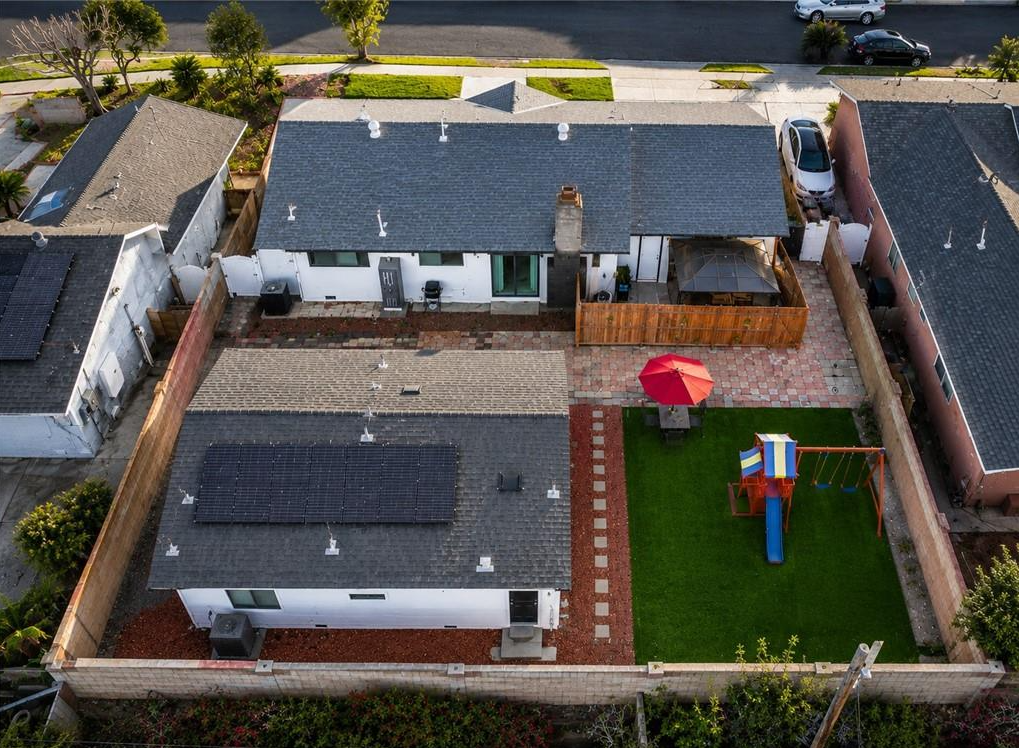
11307 Jane Way, Stanton 90680 — $1,479,000 | Active
Two homes on one 7,309 sq ft lot. The front house is a 3-bed/2-bath, approximately 1,064 sq ft single-story SFR, fully remodeled — open floor plan, quartz countertops, designer backsplash, stainless steel appliances, gas fireplace, central A/C, and an attached 2-car garage with a large driveway. The ADU is a brand-new 2024-built detached unit: 2 bedrooms, 2 bathrooms, 1,000 sq ft, full kitchen with quartz countertops, central A/C, and in-unit laundry. Each unit has its own entrance and its own private outdoor space. Separate electric meters. Paid-off solar system ($12,000 value) on the property.
The listing has been active since June 13th, with a price reduction from $1,499,000 to $1,479,000 on June 28th. Being sold as-is. 1031 exchange eligible. No HOA.
A few things stand out here.
The ADU is 1,000 sq ft. That's the top end of what California state law allows for a detached ADU under California's current ADU statutes, and it's a meaningful size — two real bedrooms, two full baths, a full kitchen. This is not a studio conversion or a JADU. It's a second home on the lot.
It was built in 2024 with permits. This matters more than most buyers initially realize. A permitted, detached ADU unlocks the income approach at appraisal — meaning an appraiser can apply a rent multiplier to the income the unit generates, which is where the bulk of ADU value gets captured. How that appraisal math works for a permitted vs. unpermitted unit is a significant difference — one that directly affects both what a lender will fund and what a future buyer will pay.
Separate address, separate electric meter. This is the configuration lenders and appraisers want to see. It treats the ADU as a functionally independent unit, not an afterthought attached to the main house. Under Fannie Mae's appraisal guidelines, this setup is what supports the income approach — and Fannie Mae's ADU income policy is what allows a conventional buyer to count that ADU rent toward mortgage qualification.
The Rental Income Math
A 1,000 sq ft, 2-bed/2-bath detached ADU in Stanton is realistically renting in the $2,000–$2,400/month range on a long-term lease, based on comparable inventory in West Anaheim and Garden Grove — the immediately adjacent markets.
At those figures, the ADU alone generates $24,000–$28,800 per year in gross rental income. If you're the owner-occupant living in the front house, that income is offsetting a meaningful portion of your mortgage. If you're an investor running both units, the combined rent picture looks quite different — the front 3/2 would likely command $2,400–$2,800/month depending on how it's presented.
Using that ADU rental income to qualify for your mortgage has specific rules depending on your lender and loan type. Fannie Mae allows rental income from a permitted ADU to count toward qualification when it's documented on the appraisal — which this property supports. Know that math before you write an offer.
Stanton's short-term rental rules limit STR activity in the city, so the default income assumption here is long-term tenancy — which is the right assumption regardless. At current rates, short-term rental math rarely pencils better than a qualified long-term tenant when you factor in vacancy and management overhead.
Stanton's ADU Rules
Stanton administers ADU rules through Ordinance No. 1108 (an amendment to Municipal Code Section 20.400.330), which aligns with California's statewide framework. As with every city in OC, California's HCD ADU guidelines set the floor for what Stanton must allow — the city cannot restrict beyond what state law permits.
Key parameters for single-family properties in Stanton:
Detached ADU: Up to 1,200 sq ft, minimum 4-ft side and rear setbacks
JADU: Up to 500 sq ft, conversion of existing space within the primary residence
Parking: Generally one space per ADU, with state law exemptions for transit proximity and existing structure conversions
Permit timeline: Cities must act within 60 days of a complete application; Stanton Planning can be reached at (657) 295-0918
Jane Way's ADU at 1,000 sq ft was built right in the heart of what's allowable — large enough to command real rent, within the parameters the city will permit.
How This Compares to Neighboring Markets
Stanton sits between Anaheim and Garden Grove — two markets where comparable ADU configurations have been trading in the $1.1M–$1.55M range for properties with smaller ADUs, and up to $1.55M+ for detached 2/2 setups with separate meters.
The Jane Way listing at $1,479,000 — with a 1,000 sq ft 2/2 ADU and a fully remodeled front house — is priced in line with how those comparable markets are moving for this ADU configuration. The difference is land cost: Stanton's smaller footprint keeps land basis lower, which is part of what gets you a large permitted ADU at this price point. A comparable 2/2 detached ADU deal in West Anaheim is trading in the same zip code range for similar or higher numbers — and Anaheim's market is moving fast on the right units (the 802 S Cinda property with a 900 sq ft 2/2 ADU closed at full list price in 23 days last month).
What Stanton offers that some of those other markets don't: location. Jane Way is within reach of Disneyland, Knott's Berry Farm, Little Saigon, and Korea Town — which is not a minor detail for long-term tenants looking for accessibility, or for owner-occupants who want to live in the area without paying Anaheim Hills or Costa Mesa prices.
What the Price Reduction Tells You
The listing came on at $1,499,000 on June 13th. The price dropped $20,000 to $1,479,000 on June 28th — after 15 days. That's not a distressed signal; it's a seller recalibrating to where the market is sitting. The as-is condition adds some friction for conventional buyers who want turnkey, but the bones of the deal — permitted 2024-built ADU, separate meters, full solar — are exactly what buyers should be looking for.
The as-is disclosure also creates negotiation room that a polished, staged listing wouldn't offer. Understanding how a property like this gets priced at appraisal — and specifically how the ADU income approach factors into the appraised value — is the right starting point for any offer strategy here.
If You're Thinking About Selling an ADU Property in Stanton
There isn't a lot of Stanton-specific ADU comp data to pull from — it's a thin market. But thin markets work both ways. A well-positioned, permitted ADU property stands out clearly when there's limited inventory, and the buyer pool for this kind of two-unit configuration in North OC remains active.
How your home gets valued when an ADU is involved comes down to permit status, ADU size, income documentation, and how the listing positions the income story. Get those variables right before you list — not after a buyer's lender flags something in escrow.
If you're considering a sale, download the free ADU Seller Kit or schedule a seller consultation before you go to market.
Data reflects CRMLS and publicly available market data through July 2026. Market data should be independently verified. This is not financial or legal advice.
Questions? Call or text Dylan Serna directly at (714) 860-2868.
Dylan Serna | ADU Specialist | adurealtor.net
Write Stanton ADU July 2026 blog post
stanton-adu-market-update-july-2026.md
Scratchpad
Uploads
stanton_market update.pdf
Connectors
Web Search
Skills
adu-blog-enhancer
Fullerton ADU Market Update — July 2026: What's Active, What's Closed, and What the Numbers Are Telling Us

Fullerton is one of the more nuanced ADU markets in North Orange County right now. The price spread is wide — from sub-$1M JADUs near Troy High to $3M+ equestrian estates — and the data from active and recent closed sales tells a clear story about where ADU value is actually landing in mid-2026.
Here's the full breakdown: what's live, what just closed, and what buyers and sellers should take away from each.
What's Active Right Now
1012 Maertin Ln — $999,900 | 92831 | Active
A 5-bed/3-bath, 2,169 sq ft home with a 394 sq ft JADU completed in 2025. Troy High School district, which puts it in the most competitive submarket in Fullerton. At $999,900 this is the most attainable entry point in the current market for a Fullerton ADU property — and the Junior ADU is already built and permitted.
2016 E Santa Fe Ave — $1,099,888 | 92831 | Active (Reduced)
Also in the Troy High district. A 4-bed/3-bath with a 325 sq ft JADU. Price was reduced from $1,150,000 — it's been sitting 29 days. At the right number, this is a clean buy: proven school district, permitted JADU, and a seller who's shown willingness to move on price.
422 W Amerige Ave — $1,450,000 | 92832 | Active
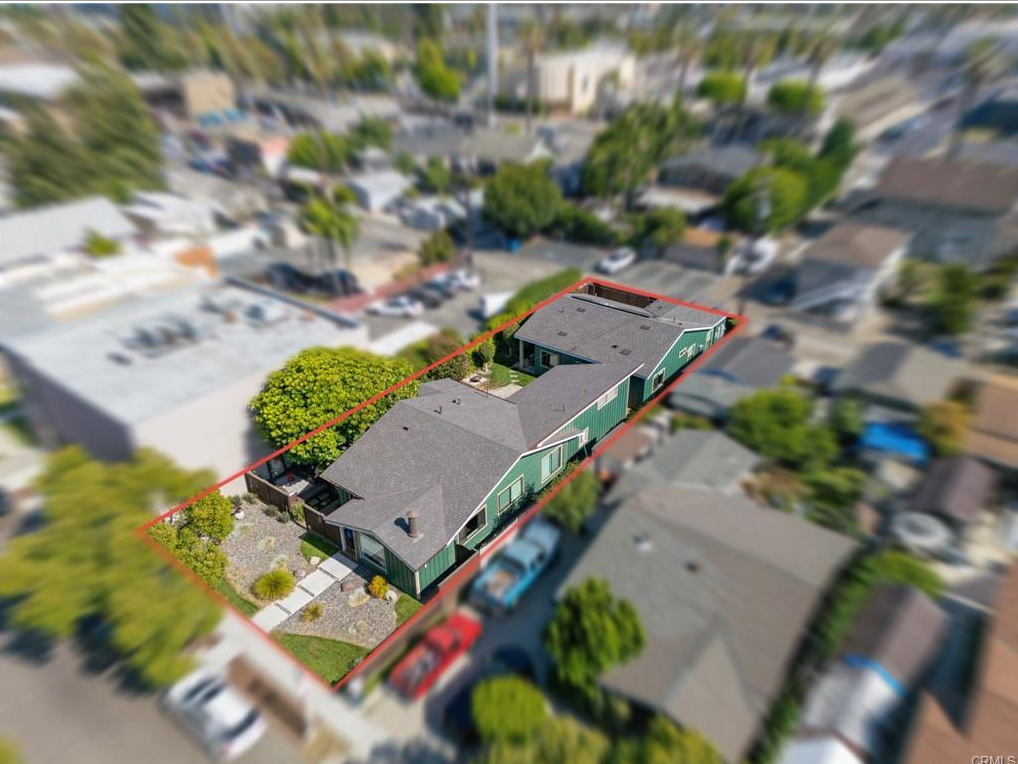
A 5-bed/4-bath property in the Downtown Fullerton area with a large Standard ADU — 1,000 sq ft, built in 2026 — currently renting for $3,000/month. At $1.45M with $3,000/month in rental income already in place, this one has a real income story attached to it. How lenders count that ADU rental income when you're qualifying for a mortgage is worth understanding before you write the offer — a 2026-permitted ADU with an established tenancy qualifies differently than a projected rent number.
2501 Santa Ysabel Ave — $1,580,000 | 92831 | Active
Troy High district. A 6-bed/4-bath with a 1,075 sq ft Standard ADU built in 2026. Been on the market 42 days. The combination of a brand-new large ADU and Troy High proximity puts this in the premium tier — but 42 days suggests the market is still price-sensitive even when the fundamentals are strong.
539 W Amerige Ave — $2,550,000 | 92832 | Active (Back on Market)
This one is the investor play of the current active inventory. An 8-bed/7-bath, 3,456 sq ft property on an R3 lot with two ADUs — 963 sq ft renting at $3,500/month and 916 sq ft renting at $3,650/month. Combined rents of $7,150/month on the ADUs alone. This is back on market, which means a deal fell through — but the R3 zoning and dual ADU income stream are the kind of setup that serious income investors look for. California's state ADU law gives R3 properties additional flexibility for units beyond what single-family lots can support, which makes the zoning here as important as the ADUs themselves.
520 W Hermosa Dr — $2,560,000 | 92835 | Active
Sunny Hills Estates — premium north Fullerton neighborhood. A 5-bed/5-bath, 2,928 sq ft home with a Studio ADU (370 sq ft), pool, and RV access. This is more of a luxury primary residence with an ADU than a pure income play, but the Sunny Hills Estates location and amenity package make it competitive at that price.
1419 N Richman Knoll — $3,299,000 | 92835 | Active (Back on Market)
The top of the Fullerton ADU market right now. A 6-bed/4.5-bath, 4,351 sq ft equestrian estate with two guest suites (592 sq ft and 371 sq ft). Back on market after 150 days — the buyer pool at $3.3M in Fullerton is naturally narrow, and this property is specific enough that it needs the right buyer.
Active Under Contract
436 E Truslow Ave — $2,195,000 | 92832 | Active Under Contract
This one tells an interesting story. A 4-unit property with 12 beds/8 baths across 4,500 sq ft, with two additional ADUs at 800 sq ft each — each renting for $2,650/month. Gross rents of $13,390/month. It sat for 272 days before going under contract.
The long DOM reflects the realities of selling a heavily-tenanted multi-unit at $2.2M — the buyer pool is smaller and the underwriting is more complex. But it's under contract now, which is the outcome. The 3 SoCal property benefits that stack quietly behind income properties — principal paydown, appreciation, and depreciation on top of cash flow — are exactly why patient investors are still chasing multi-unit deals like this one even when the timeline to contract is long.
Pending
2830 Anacapa Dr — $2,995,000 | 92835 | Pending (as of 6/30/26)
A 7-bed/5-bath, 5,105 sq ft home in the Laguna Lake area with two detached guest residences (660 sq ft and 551 sq ft). Went pending June 30th. At nearly $3M this is the highest-priced property currently pending in Fullerton's ADU market — the buyer didn't wait long once the deal made sense.
What's Closed (Recent Sales)
This is where the real data lives.
2535 Balfour Ave — Listed $999,000 / Closed $1,278,000 | 92831 | Closed 6/4/26
This is the standout comp in the entire dataset. Listed at $999,000, closed at $1,278,000 — $279,000 over asking, or 28% above list price. Days on market: 4.
The property had a new 499 sq ft ADU built in 2026. The bidding war wasn't random — it was a direct response to a permitted, newly built ADU at the right price point in the right part of Fullerton. Four days and $279K over asking is what happens when the supply of well-priced, permitted ADU properties in Fullerton can't keep up with buyer demand.
660 Green Acre Dr — Listed $2,390,000 / Closed $2,625,000 | 92835 | Closed 3/26/26
The other standout: $235,000 over asking, closed in 3 days. A 586 sq ft ADU on a premium Sunny Hills Estates property. Three days on market and $235K over list — same pattern as Balfour, different price tier. How a home with an ADU is valued when you sell in Orange County explains why permitted ADU units drive premiums that appraisers can actually support — the income approach is only available to permitted units, and that's what puts buyers in competition.
959 Rodeo Rd — Listed $3,000,000 / Closed $3,000,000 | 92835 | Closed 5/26/26
Full list price, 13 days on market, 700 sq ft ADU. At $3M in Fullerton, closing at asking without concessions is a strong signal. The buyer didn't negotiate — which tells you the pricing was right and the property (and ADU) supported it.
128 S Citrus Ave — Listed $1,450,000 / Closed $1,400,000 | 92833 | Closed 3/17/26
A 1,196 sq ft ADU built in 2025 — one of the larger ADUs in the closed comp set. Combined rental income of $7,650/month. Closed $50K under asking in 18 days. At $1.4M with $7,650/month gross rents, the income story here is real.
600 S Brookhurst Rd — Listed $1,475,000 / Closed $1,475,000 | 92833 | Closed 1/14/26
Full list price on a 3-unit with a 750 sq ft ADU. $9,200/month in total gross rents. 43 days to close. Multi-unit income properties with strong in-place rents are closing at list when priced correctly — tenants and income documentation doing the work at the negotiating table.
725 San Ramon Dr — Listed $1,449,000 / Closed $1,449,000 | 92835 | Closed 2/27/26
Full list price, 744 sq ft ADU, 8 days on market. Another sub-10 day contract with full price — the Sunny Hills area continuing to reward well-positioned ADU properties.
151 N Lincoln Ave — Listed $1,350,000 / Closed $1,290,000 | 92831 | Closed 4/27/26
A duplex with a 1,095 sq ft ADU, closed with FHA financing at $1,290,000 after 17 days. FHA on a duplex with an ADU — worth noting for buyers who assume these deals require all-cash or conventional financing. Fannie Mae's ADU income guidelines and FHA rules are distinct, but both allow the ADU income story to work for qualifying buyers.
124 N Princeton Ave — Listed $1,150,000 / Closed $1,100,000 | 92831 | Closed 2/4/26
A duplex with a 685 sq ft ADU renting at $2,600/month. Closed $50K under asking in 10 days. Clean comp for duplex-plus-ADU in the 92831 pocket at this price point.
521 W Whiting Ave — Listed $1,599,000 / Closed $1,488,000 | 92832 | Closed 1/16/26
A 634 sq ft ADU dating to 1928 — a historic unit, not a new build. Closed $111K under list after 26 days. Historic ADUs trade differently than 2025–2026 builds: condition, legal compliance, and documentation all affect the buyer pool. Knowing how an ADU gets treated at appraisal — especially older units with complicated permit histories — helps sellers set realistic expectations before they list.
139 Ramona Dr — Listed $1,360,000 / Closed $1,343,000 | 92833 | Closed 4/23/26
ADU-style lower unit, cash buyer, closed $17K under list. Cash buyers on ADU properties typically close with less friction but negotiate harder — the speed premium usually costs something on price.
What the Numbers Are Telling Us
A few patterns stand out when you look at Fullerton's ADU market as a whole.
New 2026 ADUs are getting bid up hard. The Balfour comp ($279K over asking, 4 days) and Green Acre Dr ($235K over asking, 3 days) are not flukes. Both had newly built, permitted ADUs. Buyers in Fullerton are pricing permitted ADU potential aggressively — and they're competing for it. For sellers considering whether to build an ADU before listing, these comps make the math easy.
The Troy High School district acts as its own submarket. Three active listings in the 92831 zip — Maertin, Santa Fe, and Santa Ysabel — are all positioned around the Troy High premium. Buyers willing to pay for that district are a specific buyer pool, and the ADU is an additional driver on top of the school district pull. The combination is one of the stronger value stories in North Orange County right now.
Multi-unit and R3 properties command patience. The Truslow 4-unit sat 272 days before going under contract. The Richman Knoll estate has been back on market. These properties aren't wrong — they're specific. The buyer who wants $13,390/month in gross rents on a $2.2M Fullerton property exists; they just don't show up every week.
Fullerton compares favorably to nearby ADU markets.Anaheim's June ADU market showed solid comp velocity in the $900K–$1.3M range. Fullerton's closed comps cluster in the $1.1M–$1.5M band with stronger ADU square footage — the city's larger lot sizes in north Fullerton in particular support more ambitious ADU builds than you'll see in denser Anaheim pockets.
AB 976 matters for investor buyers. As of January 1, 2026, California permanently eliminated owner-occupancy requirements for ADUs — the change codified by AB 976. For properties permitted after that date, an investor can own and rent both the main home and the ADU without ever living on site. That's a meaningful shift for the income-property math on deals like the Amerige Ave R3 listing or the Truslow multi-unit. It removes a compliance question that used to complicate purely investor-held ADU properties.
Fullerton city permits are accessible. The City of Fullerton's permits and licenses page covers ADU permitting pathways — useful context for buyers evaluating active listings with recently built ADUs and for sellers considering adding a unit before listing.
Thinking About Buying or Selling an ADU Property in Fullerton?
The comps above show that Fullerton rewards sellers who bring well-positioned, permitted ADU properties to market — and punishes overpricing on properties that need the right buyer. Buyers who move quickly on new-build ADU properties are the ones capturing the premiums.
If you're evaluating a specific property or planning to list, call or text Dylan Serna directly at (714) 860-2868. He specializes in ADU properties across Fullerton and North Orange County and can walk you through what the data means for your specific situation before you make a move.
Or download the free ADU Seller Kit to get started on your own.
Data from CRMLS. Active/pending/closed status as of 7/2/2026. Market data should be independently verified. This is not financial or legal advice.
How to Search for ADU Potential Properties in Orange County

When I'm helping a buyer search for an ADU investment property in Orange County, I'm not just looking at the house — I'm looking at the lot. The lot is where the real opportunity lives, and most buyers (and agents) skip right past it.
Here's exactly how I think through the search.
Start Here: Filter for 800 Sq Ft Homes
The first thing I do is filter by home size — 800 square feet and up, on the smaller end of that range. Most buyers see a small house and scroll past it. I see a lower entry price point and, more importantly, a lot that still has room to work with.
Think about it. An 800 sq ft house on a 6,500 sq ft lot means the existing structure is only covering a fraction of the land. That leaves you room to build a large ADU — potentially 850 to 1,200 square feet — that can easily out-earn the main house in rent. Under California's current ADU guidelines, you can build a detached ADU up to 1,200 sq ft on most single-family lots, regardless of the size of the existing home.
So while the smaller house might look like a liability, it's actually the signal that the ADU can be the main breadwinner of the property. You're buying in at a lower price point precisely because the market hasn't priced in what you're about to build behind it.
Then Check Lot Size: 6,000 Sq Ft Is the Sweet Spot
Once I find a small home, I check the lot. I'm targeting 6,000 square feet and above — that's the threshold where you have enough room to position a detached, independent ADU with real separation from the main house.
Why does "independent" matter? Because a detached unit with its own entrance, address, and privacy commands meaningfully higher rent than an attached conversion. It also photographs better, attracts better tenants, and holds its value better at resale. When you're pricing a home with an ADU in Orange County, that detached-vs-attached distinction shows up in the comps.
Don't Dismiss 5,000 Sq Ft Lots
Five thousand square feet can absolutely work — but you have to look at how the lot is shaped, not just the size.
What I'm checking: Is there usable side yard? Is the backyard deep enough to pull the unit away from the main structure? California state ADU law requires a minimum 4-foot setback from rear and side property lines, so a 5k lot with a narrow house footprint can give you more buildable area than a 6k lot where the house eats up the whole thing.
Pull up the assessor parcel map, not just the MLS photos. The photos will almost never show you what you need to see.
What This Looks Like in the Numbers
Markets like Garden Grove and Anaheim have a solid supply of this exact property type — older, modest main homes on larger lots — and they're still priced at a discount relative to the income they can produce once the ADU is built out. That's the window.
The buy here isn't about the existing house. It's about what you can put behind it.
How Lenders Count ADU Income
Before you get too deep into the math, know that how lenders treat ADU rental income varies depending on whether the unit is permitted, whether it's already renting, and what loan product you're using. This matters a lot for qualifying — and for how aggressively you can price the offer.
If you're buying with the intention to build, DSCR loans are worth understanding — they underwrite based on projected rental income rather than your personal income, which can open up deals that conventional financing would choke on.
The Summary: What I'm Filtering For
When I'm searching for ADU potential in Orange County, the parameters are:
Lot size: 6,000+ sq ft preferred, 5,000+ acceptable if the layout supports a detached unit
Home size: 800 sq ft or under — lower entry point, more lot left to work with
Lot shape: Side yard and rear yard depth matter more than raw square footage
Unit independence: Can you position a truly separate ADU with its own entrance?
If all four line up, that's a deal worth running the numbers on. For a deeper look at what I check before writing an offer on an OC investment property, that post covers the full pre-offer checklist.
If you are looking for adu potential properties and the help in the whole process to connect with adu contractors- Dylan Serna specializes in this. Contact Dylan through text or call at (714) 860-2868 to schedule an consultation.
Santa Ana ADU Market Update — July 2026: Live Comps, Income Stacking, and What's Actually Moving
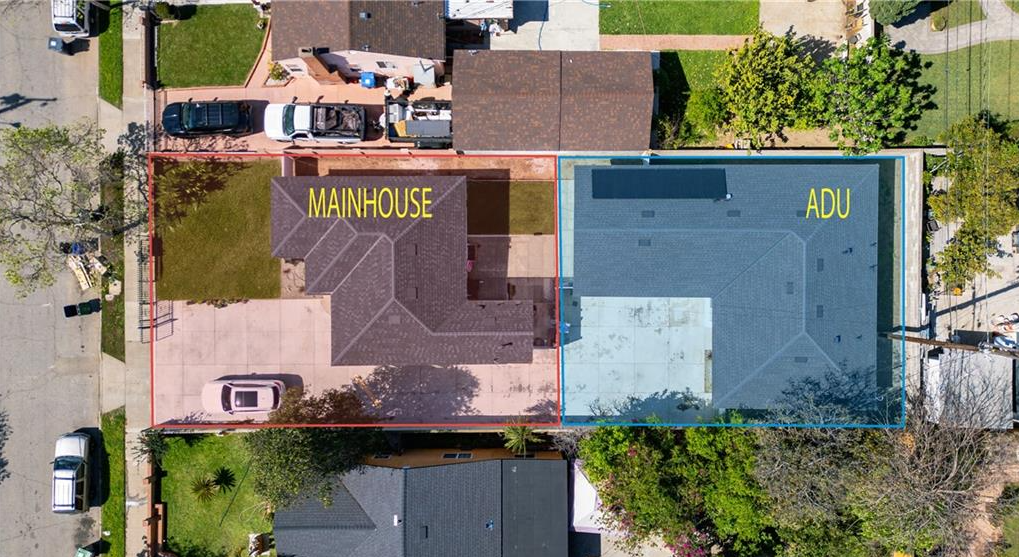
Santa Ana has always had a different feel than the other ADU markets in Orange County. The lots are bigger, the income potential is higher, and the buyers tend to be more serious about cash flow. July's MLS data reflects all of that — we've got properties hitting the market with genuine three-unit income stacks, 2026-built ADUs already rented, and closed sales showing that well-priced, permitted ADU properties are still moving fast.
Here's everything active, under contract, and closed — pulled directly from MLS.
Active Listings
4721 W Oakfield Ave — $1,680,000
This is the most interesting listing in the current Santa Ana pool. Three residential units on a single lot: the main home, a 500 SF JADU (built 2025), and an 800 SF detached ADU — all currently tenanted at $8,500/month combined ($3,600 main + $2,000 JADU + $2,900 ADU), with tenants paying their own utilities. There's also a two-car garage with ADU conversion potential still on the table. At $687/SF on a 7,200 SF lot, this is income stacking at its ceiling for Santa Ana. The challenge for buyers: this is complex to finance and appraise — three-unit income properties require careful underwriting. If you're not sure how lenders count ADU rental income, that's worth understanding before you make an offer.
1246 S Baker St — $1,245,000
Strong income play near Mater Dei. The main house is a 3-bed/2-bath and the 2023-built ADU is 1,000 SF with 2 beds and 2 baths — pulling $6,650/month total. Paid-off solar is included. At $590/SF this is priced like a true investment property, not just a primary with a bonus unit. Permit year (2023) matters here — newer ADUs tend to appraise more cleanly and qualify for conventional financing more readily.
1411 W 7th St — $1,375,000 (Under Contract)
Already in escrow, but worth knowing this one moved. Two full homes on one lot — main is 3-bed/2-bath at 991 SF, and the ADU (built 2026) is 3-bed/2-bath at 990 SF — nearly identical. Combined income: $7,240/month. It sat 91 days before going under contract, which suggests buyers are taking their time running numbers, not that demand is soft. At this price point, you're paying for genuine two-household income potential.
408 S Flower St — $999,999
3-bed/2-bath main at 1,148 SF plus a 2021-built 1-bed/2-bath ADU at 574 SF, delivered fully vacant. Separate electric and gas meters. At $580/SF, this is the rare Santa Ana ADU property where a buyer gets to set market rents from day one instead of inheriting existing tenants. The separate utilities are a meaningful operational detail — easier management, no utilities disputes with tenants.
1205 S Flower St — $975,000
The entry-level ADU play in Wilshire Square. Main is 2-bed/1-bath at 901 SF, detached ADU is 1-bed at 400 SF. Walk Score 97 — this is genuinely walkable in a city where walkability is a real rental driver. At $749/SF it's priced tighter than neighboring properties, but the location and the ADU size make it an accessible starting point.
1621 S Diamond St — $1,135,000
The front house is a 5-bed and the detached ADU (800 SF, 2-bed/2-bath) was completed in 2026 and is already rented at $2,600/month. The main house is renting at $3,450/month. All-in: $6,050/month at a $455/SF basis — one of the better price-per-SF buys in the active market. The 2026 build year is a plus for financing.
2031 S Center St — $1,199,999
3-bed main plus a 416 SF attached JADU (built 2020) near South Coast Plaza. At $764/SF this is premium for the area. One detail that matters: the listing includes a rent control disclosure, which means if a tenant is in place, rent increases are capped at 3% annually under Santa Ana's local rent control ordinance. That cap has real implications for long-term income projections — if you're investing in Santa Ana, that 3% ceiling deserves a hard look. Back on market as of 6/30.
813 E Chestnut Ave — $1,024,900
4-bed/3-bath main at 1,445 SF plus a 120 SF studio ADU. The ADU is small — too small to be meaningful rental income, but it works for a multigenerational setup. Major system upgrades throughout on a 7,516 SF lot. At $709/SF, buyers are paying for the primary home, not the ADU income here.
1815 N Westwood Ave — $1,025,000
West Floral Park — billed as the lowest-priced listing in the neighborhood. Main is a 2-bed/2-bath at 1,545 SF on a 9,228 SF lot. There's also a 267 SF studio ADU — but it's unpermitted. That's the conversation buyers need to have before closing. What happens to an unpermitted ADU at appraisal — and what lenders will do with it — is different depending on the loan type, the appraiser, and whether the seller has disclosed it. The lot size is the real asset here; the ADU is a question mark.
122 N Bewley St — $1,200,000
R2-zoned lot with a 4-bed main (1,551 SF) and a brand-new 2025-built ADU (783 SF, 2-bed). Just dropped from $1,275,000. At $513/SF the price cut makes it worth another look — R2 zoning with a new-construction ADU already permitted is a combination that gives investors more flexibility than a typical R1 lot.
1825 W 2nd St — $1,100,000
Main house (832 SF) plus ADU (800 SF) — nearly equal in size. ADU rented at $2,200/month. Not many details on the listing, but at this price point you're getting close to a 50/50 house/ADU square footage split, which is the sweet spot for income-plus-living situations.
1922 Meriday Ln — $999,999
3-bed/2-bath at 1,469 SF on a 6,324 SF lot in North Santa Ana. Currently single-family — no ADU built — but the listing notes ADU/JADU potential (buyer to verify). At $680/SF, a buyer would need to model whether the ADU construction cost pencils out post-purchase. This is a land-play with income upside, not a turnkey cash-flow property.
North Tustin/East Santa Ana Premium Tier
Four listings in the 92705 zip code (North Tustin-adjacent, Santa Ana Hills area) round out the upper tier:
18861 Fairhaven Ave — $1,850,000 | 4-bed main + 980 SF ADU on a 14,110 SF lot | Reduced from $2.1M | $660/SF
13081 Prospect Ave — $2,590,000 | 3-bed main + 250 SF small ADU on a 22,921 SF half-acre | Pool | $1,233/SF
12344 Circula Panorama Dr — $2,698,000 | 5-bed + attached ADU (700 SF) | 3-level, panoramic views | $499/SF
2240 Foothill Blvd — $3,495,000 | Custom Spanish estate with casita ADU (400 SF) | Lemon Heights | $999/SF
These properties serve a different buyer profile — wealth-preservation, estate living with generational income — and aren't directly comparable to the core Santa Ana ADU market below $1.5M.
Under Contract
2521 W Stanford Ave — $780,000
2-bed/1-bath main at 748 SF with a garage that has ADU plans included. Took 91 days to go under contract — longest of any property in this batch — which reflects the buyer hesitancy at the entry level when there's no ADU income yet. This is a value-add play for a buyer who can execute the ADU build.
Closed Sales
614 N Shelton St — $857,000 (Listed at $849,000)
This one sold $8,000 over asking price with a conventional loan in 5 DOM (listed February, closed May 4, 2026). The reason it moved fast and over ask: a new, fully permitted 2024-built ADU (750 SF, 2-bed/1-bath) with solar already installed. This is what a well-documented, permitted ADU does for a sale — it eliminates underwriting risk and lets a conventional buyer compete confidently. How a home with an ADU gets valued when you sell is the question sellers should answer before they list.
1055 W Pine St — $779,000 (Listed at $785,000)
3-bed/2-bath with a 250 SF ADU-style space — but the ADU is unpermitted. Closed at $779K (slight discount) to a cash buyer in 14 DOM (closed June 18, 2026). Cash buyers can waive appraisal contingencies and take on unpermitted space without triggering lender scrutiny. The discount versus Shelton is telling: the unpermitted ADU didn't kill the deal, but it did narrow the buyer pool and cost the seller money. What sellers with unpermitted ADUs in Santa Ana can do before listing makes a real difference in final price.
What the Numbers Are Telling Us
Santa Ana is running two parallel markets right now.
The first is the income-stack market — properties like 4721 W Oakfield ($8,500/month) and 1246 S Baker ($6,650/month) where the ADU isn't an amenity, it's a business. These properties attract investors who are underwriting debt service coverage, not just vibes. If you're looking at these as investment buys, DSCR loans purpose-built for ADU properties are often the right vehicle — they qualify off the rental income, not your personal income.
The second is the permitted-vs-unpermitted split — and the Shelton vs. Pine comp makes it as clear as any data point you'll find. One sold over ask in 5 days with a conventional buyer. The other sold at a slight discount in 14 days to all-cash. Same neighborhood. Same price band. The difference is permit status.
The 91-day under-contract timeline on both 1411 W 7th and 2521 W Stanford suggests buyers are taking longer to move at the higher price points and on value-add plays where the ADU income isn't yet baked in. That's rational — but it also means sellers at those price points need to price correctly from day one rather than expecting quick multiple-offer situations.
The rent control disclosure on 2031 S Center (and any other occupied Santa Ana ADU property) is worth flagging specifically. Under Santa Ana's local ADU development standards, properties built before 2005 with existing tenants may fall under the city's rent stabilization protections. The California HCD's ADU guidance governs state-level ADU rules, but Santa Ana's rent control layer sits on top of that and affects income projections in ways that state law doesn't preempt.
How Santa Ana Compares to Nearby Markets
Santa Ana's price-per-SF range (~$455–$764/SF for permitted ADU properties) is in line with what we've seen in Costa Mesa's June 2026 ADU market and Anaheim's June 2026 numbers, but Santa Ana's lot sizes and income ceilings are generally higher. The 4721 W Oakfield three-unit configuration isn't something that typically surfaces in Costa Mesa or Anaheim's active inventory.
The North Tustin tier ($1.85M–$3.495M) is its own world and doesn't meaningfully inform pricing decisions for the core Santa Ana ADU buyer.
Thinking About Buying or Selling a Santa Ana ADU Property?
If you're a seller, the comps above are the starting point — but the story your property tells (permit status, income documentation, condition of the ADU relative to the main house) shapes your actual outcome more than any single comparable. See what your Santa Ana ADU property is worth or grab the free ADU seller kit to understand the process before you list.
If you're a buyer trying to figure out whether an income property in Santa Ana pencils out, our buyer strategy session for ADU properties is the right first step. We work through the income math, the financing options, and the permit questions before you make an offer — not after.
More Santa Ana ADU resources and market context here.
Data sourced from MLS actives, under-contract, and closed properties in Santa Ana, CA as of July 2026. All figures are as reported; buyer should independently verify permit status, income, and square footage.
Huntington Beach ADU Market Update – July 2026
Huntington Beach is one of the most range-bound ADU markets in Orange County — in a good way. You've got entry-level coastal duplex plays under $1.6M sitting in the same city as $4.9M Huntington Harbour waterfront estates, and the ADU dynamics behind each deal are completely different. What holds across every price point is this: permitted ADUs are commanding premiums, properties with income in place are moving faster than vacant ones, and buyers shopping Surf City are doing serious underwriting before they write offers.
Here's a full look at what's active, what's pending, and what's closed — with the actual comp data behind each one.
What's Active Right Now
1209 Huntington St — $1,790,000 | 92648 | Active | 219 Days on Market
A 3-bed/2-bath, 1,440 sq ft home in West Huntington Beach (Area 15), priced at $1,243/sq ft on the main home. What makes this one notable is the ADU: a detached, fully permitted 838 sq ft unit built in 2022, with separate electric, gas, and water meters and its own alley access. The ADU is currently occupied.
At 219 days on market, this is a long runner — originally listed at $1,850,000 in November 2025 before a price reduction in February. The location is strong (walkable to the beach, Pacific City, and Main Street), and the ADU adds real income potential. What's likely keeping buyers cautious is the lack of garage parking and a 3,078 sq ft lot that leaves limited room for expansion. That said, a 2022-built detached ADU with separate meters in downtown HB is a real asset — how that ADU is treated at appraisal on a financed offer will matter here, and a permitted unit this new is in the best possible position for the income approach.
7736 Sugar Dr — $2,600,000 | 92647 | Active | 61 Days on Market
This one is unlike anything else in the current Huntington Beach ADU market. It's a gated family compound on a massive 22,800 sq ft lot in Northwest HB — three separate structures totaling 7 bedrooms and 5 bathrooms, 4,250 sq ft of living space, and 15 garage spaces. The ADU situation here is unusual: two separate income units, one a 700 sq ft studio currently rented and one a 900 sq ft 2-bed/1-bath unit also currently rented.
At $611/sq ft, this is actually one of the lowest price-per-foot entries in the current Huntington Beach ADU market despite the $2.6M price tag — the sheer square footage, lot size, and income-in-place pull that number down significantly. The seller is open to concessions and accepts FHA, VA, and conventional financing in addition to cash. For a buyer who wants scale, privacy, and dual rental income in a coastal community, the math here is genuinely different from a standard SFR-plus-ADU play. The tradeoff is a 1950 main structure with a 61-day run already, which tells you the buyer pool is specific.
16572 Grimaud Lane — $4,950,000 | 92649 | Active | 149 Days on Market
Huntington Harbour is its own market within a market, and 16572 Grimaud is the cleanest current example of what waterfront ADU property looks like at the top of the range. This is a fully remodeled 5-bed/4.5-bath, 4,238 sq ft home on one of only 22 lots on the prestigious "ocean side" of Grimaud Lane — with a 60-foot waterfront terrace, private boat dock, Wolf/Sub-Zero/Viking kitchen, and a detached casita (Junior ADU, 400 sq ft) currently vacant.
Originally listed at $5,350,000 in January 2026, it's been reduced to $4,950,000 — a $400K cut after 149 days. The JADU at this price point is more of an amenity feature (guest quarters, home office, private studio) than an income-driver, and the shared meter situation reflects that. The HOA is minimal at $12/month, which covers dock access. Cash, cash-to-new-loan, and owner-may-carry are the accepted terms — no conventional financing listed here. This is a patient seller and a narrow buyer pool.
What's Pending
16842–16846 Lucia — Listed $1,599,900 | 92647 | Under Contract as of 6/27/26
This is the most interesting comp in the current Huntington Beach ADU set. A duplex on a 7,425 sq ft lot in Northeast HB — a beautifully remodeled 1,293 sq ft main residence with 3 bedrooms and 2 bathrooms, plus a fully permitted 440 sq ft studio Junior ADU with its own kitchen, bath, laundry, and split A/C. The property also has a resort-style pool and spa, 36 solar panels, and 3 Tesla Powerwall batteries (leased).
It went under contract on 6/26/26 — 40 days after hitting the market on 5/22/26. The listing agent notes the lot could potentially support up to 2 additional units with proper permits, which is the kind of upside that makes investor buyers move. The JADU's income potential combined with a ready-to-use pool home is a strong lifestyle-plus-cash-flow combination. Using ADU rental income to qualify for the mortgage will be a factor for the winning buyer here — especially given that the solar lease carries forward.
121 Alabama St — Listed $2,100,000 | 92648 | Pending as of 6/20/26
A 4-bed/3.5-bath, 2,922 sq ft three-story beach retreat just blocks from the sand and Pacific City in South HB — with a separate loft mother-in-law quarters above the garage that functions as a standard ADU (1 bed, 1 bath, upper level, separate entrance). The ADU is currently vacant.
Originally listed at $1,975,000 in March, it was repriced to $2,100,000 by late May — unusual to see a price increase on a property that came back to market, but the listing notes ocean peek-a-boo views and two fireplaces. It went pending in 34 days from the repriced start. At $718/sq ft, this is a relative value play for the 92648 zip code given its proximity to the pier and Main Street. The ADU's shared meter situation is worth noting on a financed deal — how lenders treat ADU income depends heavily on permit status and meter configuration.
1701 Lake St — Listed $1,850,000 | 92648 | Pending as of 6/29/26
This one moved fast. A zoned R-2 corner lot in the Downtown HB neighborhood — a 1,505 sq ft main home (4 bed/2 bath, built 1954) and a fully detached 1,359 sq ft guest house (2 bed/2 bath, built 1990) on a 5,876 sq ft lot. The ADU here is as close to a full second home as you'll find: separate address, separate meters, its own garage, two levels, upstairs living room with balcony, and soaring ceilings in the primary suite.
Listed on 6/8/26. Purchase contract signed 6/13/26. Five days on market — no price changes, no games. The sellers received a contract in under a week at their original ask. The accepted terms include Fannie Mae financing, which signals a conventional buyer — Fannie Mae's ADU guidelines allow income from a properly documented, separately metered ADU to factor into qualification, and a 1,359 sq ft detached unit with separate meters is positioned as well as anything in this data set for that treatment. Zoned R-2 with potential to add units is the icing.
What's Closed
302 3rd St — Listed $4,495,000 / Closed $4,317,375 | 92648 | Closed 5/29/26
The standout closed comp in Huntington Beach ADU for the quarter. A 2023-built Modern Mediterranean just two blocks from the beach — 4 bed/5.5 bath, 3,747 sq ft, designed by Thomas Price Custom Builders with a fully permitted private ADU (870 sq ft, 1 bed/1 bath, separate address), nearly 1,900 sq ft of rooftop and terrace space, a 2024 Sundance Spa, a built-in outdoor kitchen with pizza oven and kegerator, and a Control4 smart home system throughout.
It sold for $4,317,375 — cash buyer, $177,625 under list after 62 days on market. The buyer conceded $32,380 to cover the buyer broker fee. At $1,152/sq ft, this is the most expensive close in the current Huntington Beach ADU set and one of the highest price-per-foot closes in the 92648 zip code this year. The ADU is included in that price as a built, permitted, ready-to-use unit — which is exactly what distinguishes new construction ADU product at the high end. Compare this to the 1209 Huntington St situation (838 sq ft ADU, 219 days on market): location, build year, and overall presentation all do heavy lifting in where an ADU property ultimately prices.
What the Numbers Are Telling Us
A few things stand out when you look at this data together.
Huntington Beach spans more price range than any other OC ADU market. From the $1,599,900 Lucia duplex to the $4,950,000 Grimaud waterfront, that's nearly a $3.4M spread within a single city. The ADU type, lot size, zip code, and proximity to water are doing most of that work — more so than the ADU itself. Knowing what your home with an ADU is worth in Huntington Beach means understanding which pocket and which ADU configuration you're comparing against, because the comps don't translate across these segments.
Properties with separate meters and separate addresses are moving first. 1701 Lake St (separate meters, separate address, separate garage) went pending in 5 days. 16842 Lucia (shared meters but permitted JADU with separate entrance) went pending in 40. 1209 Huntington St (occupied ADU, separate meters) has sat 219 days — the price and lot constraints are the likely drag, not the ADU itself. Under California's ADU law, separately metered units have always commanded better lender treatment and buyer confidence, and this data reinforces that.
Waterfront and premium coastal product is repricing. Grimaud has dropped $400K from its original list. 302 3rd sold $177K under ask. The high-end buyer pool in Huntington Beach is active but disciplined — they're not chasing, and they're willing to wait for the right price. Sellers at $4M+ need to price into that reality from day one. This is a meaningfully different dynamic than what we're seeing in Costa Mesa's ADU market, where well-positioned mid-range ADU properties are still going under contract in under 10 days.
R-2 zoning and ADU-ready lots are a specific buyer magnet. 1701 Lake St's R-2 designation and the Lucia listing's note about potential additional units both attracted fast contracts. Buyers who understand California's ADU state law and what's possible on zoned lots are underwriting potential — not just current income — which gives those sellers pricing leverage that a standard SFR doesn't have.
How Huntington Beach Compares to Nearby Markets
Huntington Beach currently prices higher on a per-foot basis for coastal and downtown ADU product than Anaheim or Garden Grove — but the cash-flow math is harder to make work at 92648 zip codes. A buyer looking to maximize monthly income relative to purchase price is better positioned in Garden Grove, Anaheim, or the Long Beach corridor. A buyer buying for land, lifestyle, and long-term appreciation trajectory buys Huntington Beach.
The markets where you'd buy for cash flow don't look like this data set. Huntington Beach buyers are generally underwriting a blend — some income from the ADU, significant appreciation upside, and the lifestyle value of coastal Orange County. That's a different profile from a pure income investor, and the deals that move fastest here reflect that buyer's priorities.
Thinking About Selling an ADU Property in Huntington Beach?
The comps above show a wide spread — but the right Huntington Beach ADU property, priced and positioned correctly for its segment, can attract quick contracts and strong outcomes. The Lake St duplex closing in 5 days proves that.
If you're considering a sale, download the free ADU Seller Kit or schedule a seller consultation before you list. Understanding which buyer pool your property is actually targeting — and how your ADU will be characterized at appraisal — makes the difference between a fast close and a 200-day run.
Call or text Dylan Serna directly at (714) 860-2868 to talk through your specific situation.
Data from CRMLS. Active/pending/closed status as of 7/1/2026. Market data should be independently verified. This is not financial or legal advice.
Long Beach ADU Market Update – July 2026
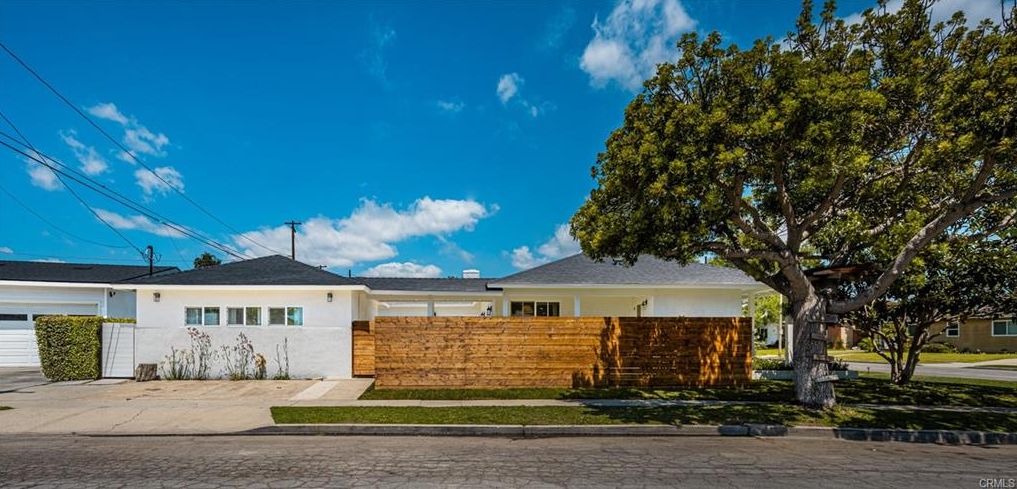
Long Beach is one of the most active ADU markets in LA County — and July's data reinforces why investors and sellers keep a close eye on it. The city is on pace to surpass 800 ADU permits this year, median prices have climbed into the high $800s to low $900s depending on the pocket, and the gap between permitted and unpermitted ADU properties is widening at sale. If you're buying, selling, or holding in Long Beach right now, here's what the numbers are actually telling you.
Where Prices Are Landing
Long Beach came into 2026 with roughly 3.2 months of supply and has tightened further since. Through May 2026, the median sale price across the city was approximately $879,000 — up about 2.3% year over year — with May closes specifically landing near $900,000. Homes are selling in around 56 days on average (down 20% from last year) and closing at roughly 99.5% of list price. That's not a bidding-war market, but it's not a buyer's market either. Correctly priced properties are moving; overpriced ones are sitting.
The ADU layer on top of this matters a lot. A permitted, detached ADU in a well-positioned neighborhood is generating meaningful premiums at sale — both in appraised value and in how fast buyers move. The June 2026 market update covered the live comps in detail; this month, the themes from that data are holding and in some pockets accelerating.
Rental Income Ranges by Neighborhood
Long Beach's ADU rental market is geographically segmented more than most cities in LA County. Where the unit sits — and its proximity to transit, the coast, and downtown — drives the rent ceiling significantly.
Current market rents for ADU-style units in Long Beach by pocket:
Bixby Knolls, Los Altos, Lakewood Village: $2,000–$2,800/month for a 600–1,000 sq ft unit
Belmont Shore, Naples, Bluff Park, California Heights: $2,400–$3,200/month
A Line corridor and downtown-adjacent: $2,600–$3,500/month for a well-finished unit
These are long-term rental figures. Long Beach's Short-Term Rental Ordinance (LBMC Chapter 5.92) permits short-term rentals only in specific zones with a registration requirement — in practice, the default planning assumption for any Long Beach ADU income strategy should be 30-day-or-longer leases unless you've specifically verified STR eligibility for the parcel.
A 750–1,200 sq ft ADU at these rent levels generates $24,000–$42,000+ in annual rental income. Using that ADU rental income to qualify for your mortgage is a separate question — one worth understanding before you write an offer, because Fannie Mae's guidelines on how lenders count that income affect your purchasing power directly.
What Long Beach's ADU Rules Look Like Right Now
Long Beach is currently administering California's state ADU law directly — the city's previous local ordinance (LBMC 21.51.276) no longer applies, and a new local ordinance is still in development. That means HCD's statewide ADU guidelines govern what you can build and where.
Key parameters for Long Beach properties right now:
Detached ADU: Up to 1,200 sq ft, 4 ft setbacks, 16 ft height limit (up to 25 ft in certain configurations with a new primary dwelling)
Attached ADU: Up to 50% of the primary residence floor area
JADU: Up to 500 sq ft, interior conversion of existing space
Parking: Generally required (1 space per ADU), but state law exempts properties within a half mile of public transit, conversions of existing structures, and several other scenarios
Permit timeline: The city must act on a complete application within 60 days per state law — in practice, 30–45 days is common
Single-family and mixed-use properties can add up to three units: one attached ADU, one detached ADU, and one JADU. Multifamily lots can add up to two detached ADUs, plus conversions of non-livable space up to 25% of existing units. That's a lot of runway for well-positioned lots, and it's part of why Long Beach's ADU permit numbers keep climbing.
One program worth knowing about: Long Beach's Backyard Builders loan program recently launched its second round. Eligible lower-income property owners can access up to $250,000 at 2% interest, deferred for 30 years or until the property sells or transfers. If you own a qualifying property and have been hesitating on cost, this program changes the math significantly.
Properties in the Coastal Zone require an administrative Local Coastal Development Permit before building permit submission. Historic district properties face additional design review — typically 2–3 weeks for minor alterations, longer for significant work.
The Permitted vs. Unpermitted Gap Is Real
One of the clearest signals in Long Beach's ADU market right now is how sharply buyers and lenders differentiate between permitted and unpermitted units.
A permitted, detached ADU unlocks the income approach at appraisal — meaning an appraiser can apply a multiplier to the rent the unit generates, which often translates to $300,000–$500,000 in added appraised value for a well-sized, well-finished unit. How that appraisal math actually works is worth reading in full before you price a listing or underwrite a purchase — the difference between how an appraiser handles a permitted vs. unpermitted unit is not subtle.
Under Fannie Mae's appraisal guidelines, income from an unpermitted ADU cannot support the income approach. That limits both your appraised value and your buyer pool. Conventional buyers relying on Fannie Mae or Freddie Mac financing face real friction on unpermitted units — lenders may require the space to be excluded from the appraisal or brought into compliance before funding. FHA and VA buyers face even stricter conditions.
If you're selling a Long Beach property with an unpermitted garage conversion or bootleg unit, the three real options in 2026 lay out exactly how to approach it — from legalization to as-is disclosure to investor-only positioning.
How Long Beach Compares to Nearby Markets
For buyers shopping across LA and OC, Long Beach sits in an interesting middle position right now.
It prices below Costa Mesa and Orange for similar ADU configurations — a new detached ADU deal in Costa Mesa's Mesa Del Mar ran $2.3M in June; the comparable Long Beach deal might be $1.1M–$1.5M depending on neighborhood. The income math pencils more easily at Long Beach prices for investors who are prioritizing cash flow over asset quality.
North Long Beach specifically has emerged as one of the more interesting ADU investment pockets in the county. The case for North Long Beach's ADU pocket — lower land cost, real rental demand, and a lot base that can actually accommodate permitted adds — is playing out in the transaction data right now. Buyers who moved early in that pocket are seeing meaningful equity formation on top of income that works.
Compare that to Anaheim, where ADU deals in the $900K–$1.1M range are moving with similar investor demand but tighter lot configurations. Long Beach's lot depth and mix of multifamily-zoned parcels give it more optionality for investors who want to add units rather than just buy finished product.
If you're running a pure cash-flow model at today's rates, how much down you actually need to break even on an SFR with an ADU in Long Beach is the right place to start — the 25% minimum doesn't get you there at current prices in most pockets, and knowing the real down payment target before you shop saves a lot of wasted time.
What This Means If You're Selling
Long Beach's ADU seller market in July 2026 is rewarding properties that are correctly positioned — permitted units with documented income, strong photos, and a listing strategy that speaks directly to investor buyers. Properties that treat the ADU as an afterthought in the marketing tend to leave money on the table.
How your home is valued when an ADU is involved comes down largely to permit status and whether the appraiser can apply the income approach. Get that right before you list, not mid-escrow.
If you're considering a sale, download the free ADU Seller Kit or schedule a seller consultation before you list.
Data reflects CRMLS and publicly available market data through June/July 2026. Market data should be independently verified. This is not financial or legal advice.
Questions? Call or text Dylan Serna directly at (714) 860-2868.
Costa Mesa ADU Market Update – July 2026
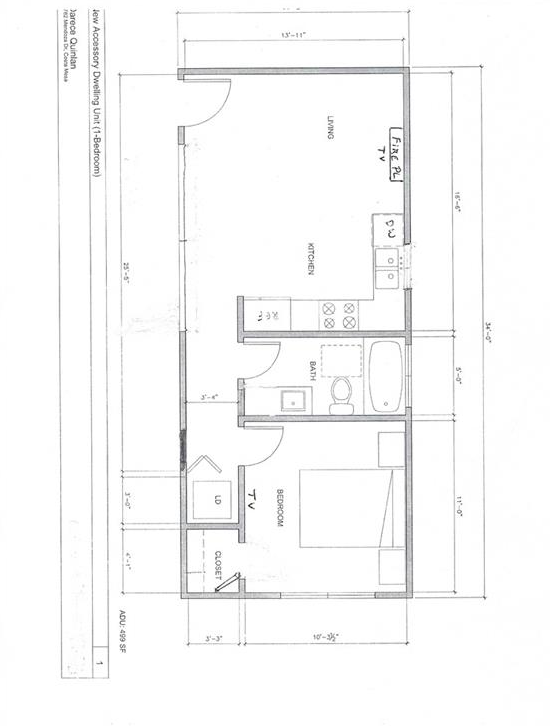
Three properties. Three different ADU configurations. Nearly $1.5M separating the bottom of the market from the top. That's Costa Mesa's ADU market right now — wide, price-sensitive, and moving fast when the unit is right.
Here's what's active, what just went pending, and what closed — pulled directly from MLS as of July 1, 2026.
What's Active
1198 Dorset Ln, Costa Mesa 92626 — Listed at $1,399,900
This is the entry point for Costa Mesa ADU inventory right now. The home is a 5-bedroom, 3-bath, 1,962 sq ft SFR on a private cul-de-sac in the 92626 zip, listed June 19th at $713/sq ft. The ADU is a Junior ADU — 385 sq ft, 1 bed/1 bath, with a separate entrance, private stairway, and its own deck on the second floor. It's attached to the main home and shares utilities.
A few things worth noting here. First, this is a trust sale — the seller has not occupied the property, which typically means less friction on price and fewer emotional comps conversations. Second, the JADU configuration is the most common ADU type you'll see at this price point in Costa Mesa. The unit is currently unoccupied and not rented, which means a buyer gets flexibility on how to deploy it — long-term tenant, family member, or simply extra living space.
The cul-de-sac location near Paularino Elementary (Newport Mesa Unified) and the no-HOA structure add real appeal for families and investors alike. No solar, no pool — straightforward operating costs.
At $1.4M, the income math on a 385 sq ft JADU is modest. You're looking at $1,500–$1,900/month long-term for a junior unit of this size in this zip. That covers roughly $18,000–$23,000/year — meaningful supplemental income, but not a cash-flow engine on its own. The value proposition here is lifestyle flexibility plus appreciation, not pure yield.
What Just Went Pending
2782 Mendoza Dr, Costa Mesa 92626 — Listed at $2,325,000
This one went pending in 7 days. Listed June 12, under contract June 19. That's the number that matters most in this property's story.
The home is a 4-bedroom, 3-bath, 2,014 sq ft SFR in the Mesa Del Mar neighborhood — one of the more established pockets in central Costa Mesa. The standard detached ADU is 499 sq ft, 1 bed/1 bath, built in 2026 with city permits, its own separate address, and a separate electric meter. It sits at the rear of a T-shaped lot with stone pavers, an outdoor fireplace patio, a quartz slab bar, and a built-in BBQ — essentially its own outdoor living environment.
At $1,154/sq ft on the main home, this is pricing at the upper end of Mesa Del Mar. What justifies it: the ADU is brand new (2026-built), fully permitted, detached, and income-ready from day one. The seller will cooperate with a 1031 exchange, which is a clear signal this is being marketed to investors as much as owner-occupants.
Seven days to pending is not luck — it's what a new permitted detached ADU does to a property's buyer pool. Permitted units attract conventional buyers, FHA buyers (this one accepts Cash to New Loan only), and investors who know a lender can actually count the income. Unpermitted units attract a fraction of that pool and take longer — often much longer.
For long-term rental income, a new detached 499 sq ft 1/1 in Mesa Del Mar is realistically $2,200–$2,600/month. That's the income a buyer is underwriting, and Costa Mesa's short-term rental ban means the Airbnb math is off the table — this is purely a long-term income story. If you're using that rental income to help qualify for the mortgage, exactly how lenders count ADU rental income at underwriting is worth knowing before you write an offer.
What Closed
212 E 19th St, Costa Mesa 92627 — Listed at $2,995,000, Closed at $2,915,000
The top of the market, and a useful data point on how Eastside Costa Mesa prices when the ADU is large, new, and fully detached.
This is a 5-bedroom, 4-bath, 2,578 sq ft dual-residence property on an 8,100 sq ft lot in the Eastside Central neighborhood — minutes from the beach, Horace Ensign Middle, and Newport Harbor High. The detached ADU was added in 2025: 938 sq ft, 2 bed/2 bath, full kitchen, separate entrance, and private patio. The property was designed and built by local firm Abode Design + Build, with premium finishes throughout — Calacatta Venato porcelain countertops, wide-plank vinyl flooring, smart-home integration, integrated audio.
It listed at $3,095,000 in January, dropped to $2,995,000 in March, and closed June 1st at $2,915,000 — 97.3% of final list price after 90 days on market. The 90 DOM reflects both the price point and the market's adjustment period following the January list. Cash to New Loan only. Buyer's agent received $87,450 in concessions.
The 938 sq ft two-bedroom ADU in Eastside should rent at $3,000–$3,500/month long-term. That's meaningful income against a $2.9M purchase — though at this price point, buyers are underwriting appreciation and lifestyle as much as yield. How a home like this gets valued at appraisal depends heavily on whether the appraiser applies the income approach — and with a permitted, 2025-built detached 2/2, they can.
What the Numbers Are Telling Us
ADU type is doing the most work on price. The spread from $1.4M (385 sq ft JADU) to $2.9M (938 sq ft detached 2/2) is almost entirely explained by ADU configuration — size, attachment status, bedroom count, permit year, and whether the unit is income-ready from day one. How your home with an ADU gets priced when you sell comes down to exactly these variables.
New permitted detached ADUs move fast. The Mendoza Dr property — new 2026-built detached unit, separate address, separate electric meter — went pending in 7 days. The Eastside property with a 2025-built detached unit sat 90 days, but that's a function of the price point and January list, not the ADU. Permitted units attract a deeper buyer pool and support the income approach at appraisal. Unpermitted units don't.
No HOA on any of these. All three properties carry $0 HOA — a consistent characteristic of the Costa Mesa ADU market that keeps operating costs clean and DSCR loan underwriting simpler.
Long-term rental income only. Costa Mesa's short-term rental ban is in effect across the city. Any income strategy here runs on long-term tenants — which is still strong, but buyers need to underwrite accordingly.
Costa Mesa prices at a premium vs. comparable ADU markets. The Mendoza Dr deal at $2.3M for a new detached 1/1 ADU would run $900K–$1.1M in Anaheim or Garden Grove for a comparable configuration. The land basis, school district (Newport Mesa Unified throughout), and coastal proximity drive that gap. The income math is different, but so is the appreciation story.
If you're buying or selling a Costa Mesa property with an ADU — or trying to figure out where your property fits in this market — I track these comps every month. The June 2026 update has additional context on how permitted ADU potential was priced even before a unit was built. Call or text to talk through the numbers on your specific property.
If you plan on buying or selling ADU potential or already built ADU property - call or text Dylan Serna at (714) 860-2868 to schedule a consultation.
Dylan Serna | ADU Specialist | adurealtor.net
We've Partnered with Starwest Insurance to Help ADU Investors Stop Overpaying on Coverage
If you own a rental property with an ADU in Orange County or LA County, your insurance bill is probably too high — and there's a good chance you don't know it.
I've watched investors run tight on cash flow not because their rents are too low or their mortgage is too high, but because their insurance premiums quietly ate the margin. It's one of those line items that gets set once during escrow and never revisited. And in California's current insurance market, "set it and forget it" is an expensive habit.
That's why I'm excited to announce that ADU Realtor has officially partnered with Starwest Insurance Services LLC.
Why Insurance Actually Matters for ADU Investors
When you're evaluating cash flow on an SFR with an ADU, most of the math is obvious: mortgage, taxes, rent. Insurance tends to get underestimated — or worse, copied over from a standard homeowner's policy that wasn't designed for a rental with a secondary unit.
The problem is that a standard HO-3 policy may not properly cover a rental ADU. And a landlord policy that does cover it might be priced with no shopping done whatsoever. In a market where a few hundred dollars a month in margin can be the difference between a property that pencils and one that doesn't, that gap matters.
For investors in markets like Anaheim, Costa Mesa, and Long Beach — where cap rates are compressed and every dollar counts — proper insurance coverage at the right price is a real part of the investment thesis.
What Starwest Brings to the Table
Starwest Insurance is an independent insurance broker based in Westminster, with an additional office in Irvine — right in the heart of Orange County. They've been insuring California properties since 1995 and work with a wide roster of top carriers including Mercury, Progressive, Nationwide, and Foremost.
That independent broker model is the key distinction: they don't work for one carrier. They shop your property across multiple carriers to find coverage that actually fits your situation — and your price.
For ADU investors specifically, that means:
Landlord policies that cover the ADU unit, not just the main house
Competitive pricing because they're comparing real options across carriers, not just offering you one quote
Faster turnaround — particularly useful when you're in escrow and need a binder quickly
They've already worked with several of my clients on their rental properties here in OC and LA County. The feedback has been consistent: better coverage, lower premiums than what they were previously paying.
Where This Fits in the Bigger Picture
Margins in Southern California rentals are real but they're not fat. Whether you're running a single-family home with a JADU conversion or stacking multiple income streams on a single lot, your insurance line needs to be right-sized — not whatever the first agent quoted you in escrow.
California's insurance market has tightened significantly in recent years. Some carriers have pulled back from the state entirely, which means if you haven't shopped your policy recently, you may be with a carrier that repriced you upward at renewal without you noticing. The California Department of Insurance recommends consumers review their coverage and compare options at each renewal — and with an independent broker like Starwest in your corner, that process is handled for you across multiple carriers at once.
This partnership came together because I kept seeing the same thing: clients would close on a strong ADU property, get their numbers right, and then carry insurance that was either wrong for the property type or simply overpriced. An independent broker relationship fixes that.
How to Connect with Starwest
If you own a rental property with an ADU — or you're in the process of buying one — reach out and I'll make the introduction directly. You can also contact Starwest directly or call their Westminster office at (714) 893-7271.
This is one of those referrals I'm comfortable making because I've seen how they've handled my clients' properties. They're not order-takers. They look at your specific situation, the property type, the tenant occupancy, and find coverage that makes sense.
Protecting your margins isn't just about rents and mortgage rates. It's about every line on that spreadsheet — and insurance is one that most investors leave money on the table with.
Let's fix that.
Dylan Serna is an ADU specialist agent serving Orange County and Los Angeles County. Questions about your ADU investment strategy — or a warm intro to Starwest Insurance — reach out directly.