Why Lakewood Has the Most ADU Potential in LA County Right Now (A Buyer's Guide)
If you're an investor or owner-user looking to buy a property with real ADU upside, Lakewood deserves to be at the top of your list — and most buyers still aren't looking there.
Here's why that's about to change.
The Price Point Opens the Door
The median home price in Lakewood sits right around $865,000–$870,000. For LA County, that's a meaningful entry point. You're getting into a well-established residential neighborhood — one with wide lots, mature streets, and strong rental demand from Long Beach workers and South Bay commuters — at a price that leaves room in your budget to actually build.
Compare that to markets like Culver City, Torrance, or even parts of Long Beach proper, where you're often paying $1.1M+ just for the dirt, and the math on a second unit starts to get thin. In Lakewood, the price-to-rent ratio still pencils. That's rare in LA County right now, and it's exactly the window that serious ADU investors know to move through before it closes.
If you're still figuring out how to search for homes with real ADU potential — what lot characteristics to prioritize and what to pass on — the same framework applies in LA County markets like Lakewood.
The Garages Are the Play
Lakewood was developed in the 1950s as one of California's original planned postwar suburbs. What that era of construction left behind is a gold mine for ADU investors: detached garages.
Most Lakewood single-family homes sit on lots with a freestanding garage at the rear of the property, typically accessed from a side drive or alley. That configuration is exactly what the California ADU laws were designed to unlock.
You have two strong paths here:
Path 1: Convert the existing garage. Garage conversions are one of the fastest and most cost-efficient routes to a permitted ADU. California state law prohibits cities from requiring setback variances or additional parking when you're converting an existing structure — meaning Lakewood cannot require the garage to meet new setback rules just because you're changing its use. That protection alone removes one of the biggest approval obstacles investors face in other cities. We've broken down exactly how setback rules for garage conversions work under state law — and same-footprint rebuilds qualify too.
Path 2: Demo the garage and build a detached ADU. This is often the stronger play. A new construction ADU can be sized more deliberately, built with better insulation and layout, and command meaningfully higher rent than a converted structure. Because Lakewood's detached garages typically sit at the back of the lot with direct alley or driveway access, you're not fighting a cramped, landlocked footprint. The backyard has room to work with.
SB 9 Stacks the Opportunity Further
Here's where Lakewood gets interesting for the investor who wants to go bigger.
SB 9 — California's Urban Lot Split and Duplex law — allows eligible single-family properties in R-1 and R-A zoning to be split into two separate parcels, with new development rights on each. In Lakewood, where many lots are wide enough to accommodate a split, this creates a compelling combination: demo the detached garage, split the lot under SB 9, and build a new unit on the rear parcel with its own legal access from the alley.
That's not a hack or a gray area — that's exactly the scenario the legislature envisioned when it passed SB 9. And because Lakewood's typical lot configuration gives you alley access at the back, you often don't need to carve an easement through the front lot to serve the new one. The infrastructure is already there.
The 3-year owner-occupancy requirement applies to SB 9 lot splits — you need to live on one of the resulting parcels for three years from the recorded date. For owner-users who are buying anyway, this is a non-issue. For investors, it's worth factoring into your hold timeline before structuring a deal around it.
Developers Are Already Moving
One of the clearest signals that a market has real ADU and infill potential is when developers start showing up and getting projects approved. That's already happening in Lakewood.
Builders who know how to work California's ADU and SB 9 frameworks are acquiring lots in Lakewood, getting plans through permitting, and delivering new units at a pace that's noticeably higher than in comparable LA County suburbs. When you see developers competing for the same lots as owner-occupants, it's a reliable sign that the numbers are working — and that city-level approval processes aren't presenting unusual friction.
That's not true everywhere. In some cities, ADU applications get buried in discretionary review or stalled by local ordinances that haven't caught up with state law. California's HCD has the authority to flag non-compliant ordinances and push cities to align with state law — a process that's been driving significant loosening of local restrictions across LA County over the past few years. Lakewood has been part of that wave.
Appreciation Has Rewarded Those Who Got In Early
Lakewood has experienced meaningful appreciation over the past several years. Properties that traded in the low-to-mid $600s a few years ago are now pushing $850K–$900K. That's not a fluke — it reflects genuine demand from buyers who are being priced out of El Segundo, Torrance, and Signal Hill and are landing in Lakewood as a South Bay adjacent alternative.
For ADU investors, appreciation matters for two reasons. The obvious one is equity. The less obvious one is that rising values in a neighborhood attract better tenants, support higher ADU rents, and make lenders more comfortable financing construction. When a neighborhood is on the move, the ADU pitch to a potential buyer or tenant is easier to make.
This is also why acting before the market fully prices in ADU potential is the move. Once the broader buyer pool figures out what Lakewood lots can do, that lower entry price point compresses.
What to Do Before You Write an Offer
If you're seriously considering a Lakewood property for its ADU potential, the due diligence steps matter. You need to know the lot dimensions, whether the existing garage qualifies for conversion or demo-rebuild, where the sewer lateral runs, and what setbacks apply to the specific parcel.
How to verify ADU potential during escrow is worth walking through before you remove contingencies. And if you're buying a property that already has an ADU or converted unit on it, knowing which documents to collect during escrow protects you from inheriting someone else's permitting problems.
The opportunity in Lakewood is real. But like any ADU market, it rewards buyers who do the work upfront.
Ready to Find Your Lakewood ADU Property?
Lakewood lots move fast once the right buyer understands what they're looking at. If you want help identifying properties with real ADU upside — detached garages, rear alley access, SB 9-eligible lot dimensions — I can run a targeted search for you before anything hits the open market.
I'm Dylan Serna, an ADU specialist agent focused on LA County and Orange County. I work exclusively with buyers and sellers who are serious about ADU value.
Let's find your Lakewood property.
Call or text Dylan Serna - (714) 860 - 2868 to schedule consultation call
Or Book from our link below":
📞 Schedule a free ADU buyer consultation
Looking for ADU-ready properties in Lakewood or other LA County markets? Reach out — this is exactly what we specialize in.
Why SB 9 Lots in Los Angeles City Are a Different Beast — ZA Memo 143 Removes the Size Ceiling on Your ADU
Most investors shopping for ADU properties in LA County treat SB 9 lots like a footnote — a nice-to-have zoning detail that gives you an extra unit. That's a mistake. In the City of Los Angeles specifically, SB 9 lots carry a structural advantage that almost nobody talks about: when you combine an SB 9 Two-Unit Development with the City's own Zoning Administrator's Memorandum No. 143 (ZA Memo 143), the city's residential floor area (RFA) limits — the same limits that cap how big you can build on almost every R1 lot in LA — simply don't apply to your state ADU.
That's not a loophole. It's written directly into the memo. And it changes how you should be thinking about SB 9 inventory in LA City.
The Problem With Regular ADU Lots in LA
In most of Los Angeles City's single-family zones, your FAR (floor area ratio) or RFA is the invisible ceiling on everything you build. On a typical R1 lot, you might have a house that already consumes the majority of your permitted floor area. When you go to add an ADU, the math gets brutal fast — the city will tell you that there's only 200 or 300 square feet of RFA remaining, capping your ADU at a size that barely qualifies as a studio.
State law stepped in and said cities can't use that trick to block ADUs entirely — they must allow at least an 800 sq ft detached state ADU regardless of FAR. But for many landlords, 800 square feet is the ceiling, not the floor. If you want a true income-generating unit — one that can rent for real money in LA — size matters.
This is where SB 9 + ZA Memo 143 changes everything.
What ZA Memo 143 Actually Says
[ZA Memo 143](https://planning.lacity.gov/odocument/184600d8-71d7-4d74-baf1-1f9cd2603320/ZA%20Memo%20No%20143-%20Implementation%20of%202019%20ADU%20Ord%20and%20State%20ADU%20Law%20(Updated%20based%20on%202022,%202023%20an.pdf) is the Los Angeles City Planning Department's official implementation memo for California ADU law. It's the document that tells plan checkers and zoning administrators exactly how to apply state ADU statutes to LA City properties.
One of its clearest provisions: RFA limits may not be enforced on state ADUs.
The memo is explicit. A state ADU — meaning an ADU built under California Government Code § 66323 rather than the local ordinance — is not subject to LA City's residential floor area calculation. The city cannot use its FAR math to shrink your state ADU below the minimums the state guarantees. And for attached state ADUs built within an existing or proposed dwelling, the memo shows no stated maximum size.
This has direct consequences for how you size and value an ADU on an SB 9 lot.
SB 9 Two-Unit Development: What You Actually Get
Senate Bill 9, in effect since January 2022, allows homeowners in single-family zones to build a second primary unit — effectively creating a duplex on what was formerly an R1 lot — without discretionary approval. In LA City, the SB 9 implementation memo clarifies exactly how these new units interact with the ADU rules.
On a lot using the SB 9 Two-Unit Development path (not an Urban Lot Split), here's what you can stack:
Two primary units (the SB 9 duplex itself)
Up to two detached state ADUs — each up to 800 sq ft, neither subject to RFA limits
One JADU — up to 500 sq ft carved from existing space
That's potentially five units on a single former single-family lot. And the two detached state ADUs sit entirely outside LA's RFA accounting.
For attached state ADUs proposed within the duplex structure itself, you have even more flexibility — state law sets no explicit maximum square footage, and ZA Memo 143 confirms the city's RFA can't block you. Your limits become practical building constraints — setbacks, height, lot coverage — not the abstract FAR math that kills regular ADU projects.
Why This Is a Bigger Deal in LA City Than Elsewhere
SB 9 is a statewide law, but not every city implements it the same way, and not every city has a ZA Memo 143. Most Orange County cities apply their own ADU ordinances, and while state law still protects minimum size guarantees, the explicit removal of FAR enforcement through a city-issued implementation memo is a Los Angeles City-specific advantage.
In cities like Anaheim or Costa Mesa, you're dealing with each city's own ADU ordinance, which may apply size limits in ways that are harder to navigate. In Long Beach, there's no equivalent administrative memo removing RFA enforcement at the city level. LA City's combination of a detailed planning memo that explicitly strips out RFA for state ADUs — stacked with SB 9's density allowances — creates a playbook that simply doesn't exist in most of the region.
If you're comparing an SB 9 lot in, say, Burbank to an SB 9 lot inside the City of Los Angeles proper, you're not comparing apples to apples. The LA City property is operating under a more investor-friendly interpretation of the law.
What This Means If You're Buying
If you're looking at SB 9-eligible properties in LA City, the analysis changes:
You're not just buying a duplex. You're buying a lot where the city has already published guidance removing RFA as a barrier to your ADU development. The planning infrastructure that stops most ADU projects — the FAR ceiling — has been explicitly addressed.
Your ADU underwriting should reflect real square footage potential, not worst-case RFA math. On a regular lot, an investor might pencil a 600 sq ft ADU because that's all the FAR allows. On an SB 9 lot in LA City, you should be starting from the state ADU minimum (800 sq ft detached) and working upward based on setbacks, lot coverage, and height — not RFA.
The unit count math is real. Five income units on a single-family lot — two SB 9 primary units, two detached state ADUs, one JADU — produces rental income that changes the cap rate story entirely compared to a standard ADU deal.
Before writing off an LA City SB 9 property because the RFA looks tight, verify the ADU potential during escrow — specifically confirming which ADU path (state vs. ordinance) applies to your project. That determination changes everything about the size you can legally build.
One Important Distinction: Urban Lot Splits Are Different
Not all SB 9 projects are the same. The Two-Unit Development path and the Urban Lot Split path operate under different rules, and this distinction matters.
Under the SB 9 implementation memo, lots that use both the Urban Lot Split and the Two-Unit Development path — either together or at different times — cannot add ADUs or JADUs. The unlimited-size advantage being discussed here applies to the Two-Unit Development path only.
If you're evaluating a property where a prior owner already recorded an Urban Lot Split, the ADU calculus changes significantly. Knowing how to search for ADU-potential homes in the first place — including understanding which SB 9 path a property has or hasn't used — is part of doing the deal right.
The Bottom Line
SB 9 lots in Los Angeles City aren't just about adding a second unit. When you layer in ZA Memo 143's explicit removal of RFA enforcement for state ADUs, you get a property type where the standard FAR ceiling — the wall that stops most ADU projects in their tracks — has been officially taken off the table.
The result is a lot where you can build more ADU square footage than the city's own zoning calculator would suggest, stack up to five units total, and operate from a legal framework that other Southern California cities haven't replicated.
That's not a common real estate play. It's a specific advantage baked into how LA City implemented state housing law, and if you're buying ADU investment properties in LA County, it's one worth understanding before you make an offer.
Questions about how this plays out on a specific property? Reach out — evaluating SB 9 potential alongside ADU path eligibility is exactly the kind of analysis that separates good ADU deals from great ones.
There's an Unpermitted ADU on the Home I'm Buying — Should I Use AB 2533 or Just Demo It? (Copy)
You're in contract on a home. The listing mentions an ADU, or maybe you spotted the second structure yourself during the tour. Then your agent or inspector flags it: it's unpermitted. Now you have a decision to make — and the seller probably can't tell you much, because they didn't build it either.
This situation comes up constantly in Orange County and LA County. Before you push for legalization or start talking about demo, you need to understand what you're actually dealing with and what each path really costs.
The Reality: Most Unpermitted ADUs Were Built Before the Current Owner
When a home hits the market with an unpermitted ADU, the current seller typically didn't build it. It was already there when they bought the property — and they've been living with it, renting it out, or quietly ignoring it without ever digging into how it was constructed.
That means there's no permit trail to pull. No inspection records. No contractor name to look up. No way to know whether the work was done by a licensed tradesperson or a weekend crew. As covered in the ADU problem most buyers never hear about until it's too late, the hidden risk isn't just legal — it's structural and mechanical. You're inheriting whatever decisions someone made years ago, with zero documentation.
The Most Common Problem: Plumbing and Sewer
Low-quality construction shows up in a lot of places, but it hits hardest underground. Unpermitted ADUs are notorious for plumbing and sewer issues — improperly connected drain lines, undersized supply pipes, shared sewer laterals that were never engineered for two units, or DIY tie-ins done without a single inspection.
These problems aren't visible during a standard walkthrough. They surface when the line starts backing up six months after you close. A sewer scope is non-negotiable on any property with an unpermitted secondary unit. If you're still in escrow, this is exactly the kind of due diligence that should happen before you remove contingencies — see the full checklist for verifying ADU conditions during escrow.
What AB 2533 Actually Offers
California's AB 2533 went into effect January 1, 2025 and created a real legalization pathway for unpermitted ADUs built before January 1, 2020. Under the law, cities must accept legalization applications without imposing impact fees, retroactive penalties, or demanding full current-code compliance — they can only require corrections for genuine safety hazards.
That's a meaningful protection. Before AB 2533, trying to legalize an unpermitted ADU could trigger a full upgrade to current code, which often cost more than building new. Under the amnesty framework, the city evaluates the unit against a safety checklist only. If it passes, you get a path to a Certificate of Occupancy.
The Catch AB 2533 Doesn't Fix
AB 2533 protects you from bureaucratic overreach. It doesn't protect you from a unit that's actually built badly.
If there are structural deficiencies, improperly connected utilities, or unsafe electrical — those get flagged in the safety review regardless of what the law says. And once you're inside the permit process, every problem that surfaces has to be corrected before the city issues a Certificate of Occupancy. That's where costs climb fast.
Typical legalization costs under AB 2533 run $15,000–$60,000 for units in reasonable condition: permit fees, as-built drawings, and required corrective work. But if the plumbing is wrong, the electrical is a mess, or there are structural concerns, you can approach or exceed $80,000–$100,000 quickly. And unlike a new build, you still end up with an older unit carrying inherited problems you can't fully anticipate until the walls come open.
The Case for Demo and New Build
Here's what most buyers don't stop to consider: a new ADU built from scratch has none of the inherited risk. You know exactly what went into it. It comes with permits, inspections at every stage, and a warranty. Everything is documented. Nothing is a mystery.
Depending on scope, a new detached ADU in Orange County runs $150,000–$250,000. That sounds like a wide gap from a $60,000 legalization. But if legalization is approaching $100,000 for a unit with serious deficiencies, the real gap narrows considerably — and you're still left with an older unit's lifespan and maintenance profile.
A same-footprint rebuild is also worth understanding: rebuilding within the existing ADU's footprint qualifies for the same setback protections as a garage conversion, which means you often don't need to meet current setback requirements from scratch. And when planning where a new ADU could go on the lot, the setback rules for Orange County ADUs are more favorable than most buyers realize.
How to Make the Call
The right answer depends on what a real inspection reveals — not what the seller tells you. Before you decide anything:
Get a sewer scope. This is the single most important inspection on a property with an unpermitted secondary unit.
Have a licensed ADU contractor walk the unit — not a general home inspector. You need someone who actually builds these.
Get an as-built estimate — what would it cost to bring this unit to code under AB 2533, including all required corrective work?
Get a demolition and new-build estimate side by side. Once you have both numbers, the decision is usually obvious.
Legalize if: the unit was built before 2020, the sewer scope is clean, structure is sound, and all-in legalization comes in under $40,000.
Demo and rebuild if: plumbing or structural problems are found, legalization is approaching $80,000–$100,000, the unit was built after 2020 (AB 2533 doesn't apply), or you want clean title with zero inherited risk.
The Bottom Line
Unpermitted ADUs aren't automatic deal-breakers. But they require more due diligence than a standard purchase, and the decision to legalize or demo shouldn't be based on what the seller tells you. It should be based on what a professional finds when they actually look.
AB 2533 is a genuinely useful tool — it strips out the bureaucratic penalties that used to make legalization financially irrational. But it doesn't fix a bad foundation, and it doesn't undo years of unpermitted plumbing. The numbers have to work, and the unit has to be worth saving.
In many cases, building new is the smarter long-term play — especially if you're buying the property as an investment and want a unit that will perform without surprises for the next 20 years.
Working through a deal with an unpermitted ADU in Orange County or LA County? I can help you think through the numbers and what to look for before you commit. Reach out at adurealtor.net.
Need to Sell Your Long Beach Home with an ADU? Here's Your Complete Seller's Guide
Long Beach is one of the most active ADU markets in LA County — and if your property has one, you're sitting on more leverage than most sellers in this city realize. But leverage only converts to money when you know how to use it. Selling a home with an ADU isn't the same as selling a standard single-family. The buyer pool is different, the appraisal conversation is different, and the way you price and market the property determines whether that second unit adds $80,000 to your net or gets ignored in the listing description.
This guide covers everything a Long Beach homeowner with an ADU needs to know before going to market in 2026 — from how lenders underwrite ADU income to the disclosure items that can crater a deal at the finish line.
Why Long Beach ADU Properties Attract a Different Buyer
The typical buyer for an ADU-equipped property in Long Beach isn't shopping for a house — they're buying a financial strategy. That shifts the entire dynamic.
These buyers are usually investor-minded owner-occupants who plan to live in one unit and rent the other to offset their mortgage. In a market where Long Beach ADUs are pulling $1,900–$2,700 per month in rent for a 2-bedroom unit, a buyer can realistically house-hack their way into a property with a net payment that feels closer to renting than owning. That's a compelling pitch, and it draws people who are financially literate and ready to move.
What that means for you as a seller: your buyers will run numbers before they make an offer. They're not falling in love with the kitchen island — they're stress-testing your cap rate. If your ADU's rent potential doesn't pencil, you'll feel it in the offers. If it does, you'll see competition.
Understanding how Long Beach multi-unit investors evaluate cash flow and down payment strategy gives you a real edge when positioning your listing — because you'll understand exactly what your likely buyer is thinking before they walk in the door.
How Lenders Underwrite ADU Income — and Why It Matters for Your Sale
One of the biggest factors in your sale price isn't the market — it's whether a buyer can get financed at the number you want. ADU income complicates conventional underwriting in ways that can kill a deal if neither side understands the rules.
Under Fannie Mae's current ADU income policy, a lender can use ADU rental income to help a buyer qualify — but only under specific conditions. Generally, the unit needs to be documented with a lease or demonstrated rental history, and the income is subject to a vacancy factor before it's counted. This matters because a buyer who can't qualify using the ADU income may offer less, or not qualify at all at a higher price.
What you can do: if your ADU is currently rented, have a clean copy of the lease ready at listing time. If it's vacant, a market rent analysis from a local property manager can support the underwriting conversation. The smoother that documentation, the wider your qualified buyer pool.
Long Beach ADU Rules: What Sellers Need to Know About Their Unit's Status
Long Beach is one of the simpler cities to navigate on ADU compliance — the city follows California state ADU law directly and doesn't layer a local ordinance on top. That's actually good news for sellers, because it means fewer surprises during escrow.
That said, buyers and their agents will still want to verify the unit's permit status. Here's what you need to understand going in:
Permitted vs. unpermitted. A fully permitted ADU can be marketed and appraised as a legal unit. An unpermitted unit built before January 1, 2020 may qualify for Long Beach's amnesty program or state legalization protections — but it needs to be disclosed accurately, and a buyer's lender may treat it differently. If you have an unpermitted ADU, resolve this before listing if at all possible.
Short-term rentals. Long Beach prohibits short-term rentals (stays under 30 days) on ADU properties. If you've been operating a short-term rental, a buyer needs to understand the property can't continue on that model. This isn't a dealbreaker, but it needs to be disclosed and shouldn't be used as a marketing angle in the listing.
Setbacks and size. For detached new-construction ADUs, Long Beach requires a 4-foot rear and side setback. A unit built closer than that — especially if unpermitted — may face complications during an appraisal or inspection.
How Your ADU Gets Appraised — and What Can Go Wrong
Appraisal is where ADU properties most commonly hit turbulence during escrow. If your property is being financed conventionally, the appraiser has to find comparable sales with similar ADU configurations to support the value. In markets with thinner comp data — like parts of North Long Beach or neighborhoods where ADU construction is recent — that search can be difficult.
A few things that affect your appraisal outcome:
Permit status. Lenders and appraisers give full weight to permitted ADUs. An unpermitted unit may not be counted toward value at all, or may be counted at a discounted rate with restrictions on how the buyer can use it.
Rental income documentation. An appraiser may use an income approach to value the ADU contribution. Having a current lease or a market rent analysis from a credible local property manager gives the appraiser the data they need to support the number.
Buyer's loan type. FHA loans have stricter property condition requirements. VA loans have their own appraisal standards. Cash buyers sidestep the appraisal entirely — which is one reason all-cash offers on ADU properties are often worth more to a seller than the face value suggests.
Long Beach's stronger neighborhoods for ADU comp data are areas like Belmont Shore, Los Altos, and Bixby Knolls where the ADU inventory has grown enough to support reliable appraisals. Buyers in neighborhoods with thinner comps may need to come in with larger down payments to manage lender risk — something worth factoring into your pricing conversation.
Contrast this with a market like Costa Mesa, where ADU properties are selling $110K over asking with robust comp data to back it up — it illustrates why comp density matters and why working with an agent who understands ADU appraisal dynamics is critical to maximizing your outcome.
What to Do Before You List
Selling an ADU property is not a list-it-and-watch-offers-come-in situation. There's a short but meaningful checklist that separates sellers who maximize their return from those who leave money behind.
Pull your permit history. Request a copy of all permits from the Long Beach Development Services Department. You want to know exactly what's documented and what isn't before your buyer's agent finds out during escrow.
Document the rental income. If the ADU is occupied, gather the last 12 months of rent receipts or bank deposits and a copy of the lease. If it's vacant, get a written rental analysis from a local property manager before listing — it gives your buyer's lender something to work with and strengthens your pricing position.
Assess the condition of both units. Your buyer is buying two structures. Deferred maintenance on the ADU — a dated kitchen, an aging water heater, roof issues — will show up in inspection and in offers. A modest investment in the ADU's condition often yields returns well beyond the cost.
Know your utility setup. Does the ADU have a separate meter? Is it on the main home's utilities? This affects what a landlord buyer can charge and how they'll manage the property. Know the answer before it comes up in due diligence.
Pricing Strategy for ADU Homes in Long Beach
Pricing an ADU property correctly is more nuanced than running comps on similar square footage. You need to price it in a way that reflects the income asset, attracts the right buyer type, and survives the appraisal.
The standard approach is to price from both angles simultaneously. First, look at comparable single-family sales in your neighborhood — this gives you a floor. Then layer in the ADU value by looking at what buyers have paid for similar ADU configurations in Long Beach recently. The gap between those two numbers is your ADU premium, and it varies significantly by neighborhood, unit size, and permit status.
A useful benchmark: in well-comped Long Beach submarkets, a permitted 2-bedroom ADU generating $2,300/month in rent can add $100,000–$175,000 in buyer-perceived value over a comparable non-ADU property. That range widens if the unit is newly built, narrows if it's older or unpermitted.
For context, look at what's happening in markets with even stronger ADU infrastructure. The Buena Park ADU market and Fullerton multi-unit market have shown consistent buyer competition on income-producing properties across LA and OC — and Long Beach, as the largest city in LA County with a dense renter population, carries its own version of that demand.
Overpricing is the most common mistake ADU sellers make. The buyer pool is financially literate — if your price doesn't pencil against comparable rents, they'll move on. The right price is the one that maximizes your net after holding costs, not the highest number you can print on a sign.
Disclosure Requirements Every ADU Seller Needs to Know
California requires sellers to disclose all known material facts. For ADU properties, that list includes items that don't show up in a standard residential disclosure:
Permit status of the ADU — whether it was built with or without permits, and whether any work was done without permits after the fact
Short-term rental history — if you've operated a short-term rental and the buyer plans to continue that use, they need to know it's prohibited under Long Beach's current rules
Any code violations or open permits — if the city has flagged anything or if there are open permits from prior work
Utility configuration — shared vs. separate meters, shared water heater, shared laundry, etc.
HOA restrictions, if applicable — some HOAs restrict rental activity even where state law allows ADUs
Hiding or failing to disclose any of these can expose you to liability after closing. The right approach is to disclose fully, price accordingly, and let the market determine value. Buyers who understand what they're buying close with confidence.
The Biggest Mistakes Long Beach ADU Sellers Make
Marketing it like a regular house. If your listing description doesn't prominently feature the ADU — rental income potential, unit size, permit status — you're filtering out your most motivated buyers before they even call.
Skipping pre-listing permit verification. The worst time to discover an unpermitted issue is during escrow when a lender's underwriter flags it. Resolve this before you list.
Underestimating inspection complexity. A buyer's inspector will inspect both units. Any deferred maintenance on the ADU comes back as a repair request or a credit demand. Know what's coming before they do.
Working with an agent who doesn't understand ADU comps. Pricing an ADU property requires understanding income-producing comp methodology, not just square footage. The wrong agent can cost you six figures in either direction — underpricing to move it fast, or overpricing until it sits and stigmatizes.
Ready to Sell? Here's How to Get This Right
If you have an ADU on your Long Beach property, you have something most sellers don't — a built-in income asset that the right buyer will pay a significant premium for. But unlocking that premium requires knowing how to position the property, who to market it to, how to navigate the appraisal, and how to price it against income-producing comps, not just residential ones.
That's where I come in. I'm Dylan Serna, The ADU Realtor — I specialize in exactly this type of property across LA County and Orange County. I know how buyers underwrite ADU income, what appraisers are looking for in Long Beach, and how to get your property in front of the investors and house-hackers who will compete hardest for it.
Book a free seller consultation and let's look at your numbers. I'll pull the live comps for your specific neighborhood, review your ADU's permit status and income potential, and give you an honest pricing range before you list. No pressure, no obligation — just a clear picture of what your property is worth and how to maximize it.
👉 Book your free Long Beach ADU seller consultation
Whether you're ready to list now or just starting to think about timing, the earlier we talk, the better position you'll be in. ADU sellers who come in prepared close faster and net more — let's make sure that's you.
AB 2533 Explained: Orange County's Inspection Checklist for Legalizing an Unpermitted ADU
If you have a garage conversion, a backyard cottage, or a converted spare room that was finished before 2020 without permits, California gave you a real path to make it legal — and Orange County Public Works has published the exact checklist that determines whether your unit passes.
Here's what the law says, who qualifies, and exactly what an inspector will look at when you apply to legalize your unpermitted ADU or JADU under AB 2533.
What AB 2533 Actually Does
AB 2533, effective January 1, 2025, requires local jurisdictions to offer a streamlined path to legalize ADUs and JADUs built without permits — as long as the unit was constructed before January 1, 2020. Orange County is now compliant, and OC Public Works has released its official inspection checklist.
The key trade-off: instead of requiring full code compliance (which could mean opening walls to upgrade electrical, plumbing, or structural elements to current standards), the law only requires that the unit pass a substandard housing inspection under California Health and Safety Code Section 17920.3. That's a meaningfully lower bar — focused on genuine life-safety hazards rather than modern code perfection.
If you've been sitting on an unpermitted unit, this law is worth understanding before you list the property or refinance. As I've covered before, buying a home with an unpermitted addition creates serious ADU complications — AB 2533 gives sellers and buyers a cleaner path through.
Who Qualifies
To use this pathway in Orange County, your unit needs to meet three threshold conditions:
It must be an ADU or JADU — a detached backyard structure, a garage conversion, an attached addition, or an interior junior unit created within the main home's existing footprint.
It must have been constructed prior to January 1, 2020. The law is explicit: units built on or after that date don't qualify and must go through the standard permitting process.
It must be located on a property where an ADU or JADU is otherwise permitted. Orange County's unincorporated areas follow state ADU law, which allows ADUs on virtually all residential lots. If your property is in an incorporated city — Anaheim, Costa Mesa, Garden Grove, and others — verify that city's specific ADU rules apply before starting.
Note for investors: This pathway applies to ADUs and JADUs on single-family properties. JADUs specifically cannot be built on multifamily properties under California law, and that restriction doesn't change under AB 2533.
The Orange County Inspection Checklist
OC Public Works' checklist is organized into five categories. A County Building Inspector or a licensed third-party inspector you hire must evaluate every item. Here's what each section covers — and where properties typically run into trouble.
1. Smoke Alarms ✅ Easy fix
Operational and installed in every sleeping room
Installed outside each separate sleeping area in the immediate vicinity — hallways
Installed on every level of the dwelling unit, including basements
2. Carbon Monoxide Alarms ✅ Easy fix
Operational and installed outside each separate sleeping area in the hallway, on every occupiable level including basements, and in bedrooms with fireplaces
If there is an attached garage opening into the unit, or a fuel-fired appliance or fireplace, alarms are required on each level of the dwelling
Smoke and CO alarms are low-hanging fruit. They're inexpensive, take an hour to install, and failing them on inspection is entirely avoidable.
3. Emergency Egress Windows — Sleeping Rooms ⚠️ Common failure point
Emergency egress windows are provided in every sleeping room
Minimum clear opening width: 20 inches; height: 24 inches
Minimum net clear opening: 5.7 sq ft (5.0 sq ft for ground-floor windows)
No bars, grilles, or security devices that would impede escape or rescue
Watch out: Egress windows are one of the most common failure points in older converted spaces. Garage conversions and basement bedrooms often have small windows that don't meet minimums. If yours fall short, you'll need to cut larger openings before inspection — typically the most expensive single fix.
4. Inadequate Sanitation
Proper water closet, lavatory, and bathtub or shower in the dwelling unit
Proper kitchen sink with hot and cold running water
Adequate heating
Proper operation of required ventilating equipment
Natural light (minimum 8% of floor area) and ventilation (minimum 4% of floor area) in habitable rooms
Habitable rooms at least 70 sq ft and at least 7 feet in any horizontal dimension (kitchens are exempt)
Required electrical lighting is provided
No signs of dampness, visible mold growth (beyond minor surface moisture accumulation), insect infestation, or vermin
Connection to required sewage disposal system
Proper garbage and rubbish storage and removal facilities
5. Structural Hazards ⚠️ High stakes
Adequate foundations — inspectors may require exposing a section to verify
Adequate flooring or floor supports of sufficient size to carry imposed loads safely
No walls, partitions, or vertical supports that split, lean, list, or buckle due to defective material or deterioration
No ceilings, roofs, or horizontal members that sag, split, or buckle, and none of insufficient size to carry loads safely
No fireplaces or chimneys that list, bulge, or settle due to defective material or deterioration
No inadequate exit facilities, and fire-resistive construction or fire-extinguishing systems where required
No inadequate structural resistance to horizontal forces (seismic)
6. Nuisance Conditions — Systems & Exterior
All wiring is in good and safe condition and working properly
All plumbing is in good condition, working properly, and free of cross-connections and siphonage between fixtures
All mechanical equipment including vents is in good and safe condition and working properly
No faulty weather protection: no deteriorated or crumbling plaster, ineffective waterproofing, broken windows or doors, lack of exterior paint, or broken/buckled roof or wall coverings
No fire hazards: no combustible waste, apparatus, or vegetation constituting a fire or explosion risk
No accumulation of weeds, junk, debris, rodent harborages, stagnant water, or similar conditions constituting fire, health, or safety hazards
What Happens If the Inspector Finds a Violation
Items flagged as violations but not immediate threats will need to be remediated before a permit is issued. You'd correct the issue, reschedule inspection, and proceed.
If the inspector identifies a condition posing an immediate threat to health and safety, they have authority to require removal of that portion of the structure — meaning a wall, a room, or a section could be ordered demolished rather than simply repaired.
This is why OC Public Works recommends hiring a licensed California contractor or engineer for the third-party inspection. Going in blind with a serious structural issue and a county inspector is the worst-case outcome. A licensed contractor who walks the space first can identify problems and help you decide whether remediation makes financial sense — or whether legalization isn't viable for this particular unit.
What to Do Before You Schedule Inspection
Walk every sleeping room and measure egress windows. If any fall short of the 20" × 24" minimum or the 5.7 sq ft net opening, get a window bid first — it's likely your most expensive single fix.
Install smoke and CO alarms in every required location before the inspection date.
Look for visible mold, moisture staining, or insect evidence and address it. These are easy violations to eliminate with basic remediation before a county inspector ever arrives.
Verify all mechanical systems work — HVAC, range hood, bathroom exhaust fans. If they don't, get them serviced.
Review your foundation. If the inspector is likely to ask you to expose foundation, you want to know what they'll find before they do. A licensed contractor can assess this without a formal inspection.
If you're considering selling a property with an ADU you'd like to legalize first, the timeline matters — legalization isn't a weekend project. Verifying ADU potential during escrow is one thing; completing legalization post-inspection is another, and the process could take several months depending on what remediation is required.
The Big Picture
AB 2533 is genuinely good policy. It acknowledges the reality of California's housing stock — hundreds of thousands of unpermitted units exist throughout the state, many of them perfectly habitable — and creates a practical pathway to bring them into the legal supply.
For Orange County property owners, a legalized ADU or JADU is a meaningfully different asset than an unpermitted one. It affects your financing options, your ability to list the property with an active tenant, your insurance, and ultimately your sale price. The inspection checklist isn't a gotcha — it's the minimum bar California decided was fair to require in exchange for full amnesty from prior permit violations.
If you have a pre-2020 unit and want help thinking through whether legalization makes sense before listing, the answer depends on the condition of the unit, the cost of any required fixes, and what legalization adds to the property's value in your specific OC market.
Questions about your property's ADU situation? Reach out directly.
Source: OC Public Works — Substandard Housing Inspection Checklist, effective January 1, 2025 (AB 2533 / HSC 17920.3)
Multi-Unit Investing in Los Angeles: What Every First-Time Investor Must Know
If you're new to real estate investing and looking at Los Angeles, multi-unit properties — duplexes, triplexes, and fourplexes — deserve a serious look. The fundamentals are different from buying a single-family home, and if you don't understand those differences going in, you'll either overpay, underestimate your expenses, or get blindsided by your first vacancy.
Here's what you actually need to know before you buy.
Why Multi-Units Make Sense in Los Angeles
The core argument for multi-unit investing comes down to income and risk management — and in a market like LA, both matter.
With a single-family rental, you're entirely dependent on one tenant. When they move out, your vacancy rate hits 100%. You're covering the full mortgage, taxes, and insurance out of pocket until someone new is in. That's a brutal position to be in, especially in a high-cost market where mortgages on investment properties are rarely small.
A fourplex changes that math entirely. If one of your four tenants vacates, you're only 25% vacant. The other three units keep paying rent, which means your property is still covering most of its own costs while you find a replacement. That buffer is one of the biggest reasons experienced investors in Los Angeles gravitate toward multi-units over single-family rentals.
The income potential is the other side of this equation. With a multi-unit, you can generate meaningful rental income off a single purchase — and in parts of Los Angeles, you can acquire these properties with as little as 35% down when buying as a pure investment. That leverage, combined with multiple income streams under one roof, is what makes the math work in a market where purchase prices are high but so is renter demand.
One more thing worth knowing before you buy: if adding units is part of your long-term strategy, California's 2026 rules allow ADUs on many multifamily properties — meaning a fourplex on the right lot could eventually become a five- or six-income property. It's worth understanding the rules upfront so you're not leaving that potential on the table.
CAP Rate: The Number That Tells You If the Deal Makes Sense
If you're new to income property investing, the capitalization rate — "CAP rate" — is the first metric you need to understand. It tells you what return a property generates on its value, before financing enters the picture.
The formula is simple:
CAP Rate = Net Operating Income ÷ Purchase Price
Net Operating Income (NOI) is your total rental income minus all operating expenses — maintenance, management, insurance, property taxes, and a vacancy allowance — but before mortgage payments. The CAP rate strips out financing so you can compare deals apples-to-apples, regardless of how you're funding the purchase.
In Los Angeles, multi-unit CAP rates in 2026 are running between 5.0% and 5.7% across the metro, with the metro average sitting around 5.1% as of Q1 2026. Numbers vary by submarket: Hollywood, Northeast LA, Silver Lake, and Echo Park trade in the 5–6% range; South LA and parts of the San Fernando Valley can get into the 5.5–7.5% range. The Westside compresses to 4.7–5.5% because purchase prices are high relative to rents.
What does a 5.5% CAP rate mean in practice? On a $1,000,000 purchase, it means the property generates approximately $55,000 in net operating income per year — before your debt service. Whether that works for you depends on your financing costs and your investment timeline.
One important caution: sellers almost always present CAP rates using optimistic income projections and understated expenses. Always request trailing twelve months of actual income and expense statements, not pro formas. Build your own expense model from scratch. Los Angeles landlords typically face higher-than-average insurance, property management fees, and maintenance costs — and those need to be in your numbers before you make an offer.
Utilities: Understand Who Pays What Before You Close
One of the most overlooked due diligence steps for first-time multi-unit buyers is understanding how utilities are set up on the property. This directly affects your operating expenses, and the answer varies significantly from building to building.
Gas and Electricity
The cleanest situation is a property where each unit is individually metered — separate gas and electric meters billed directly to each tenant. In that case, tenants pay their own utilities and you're only responsible for common areas: exterior lighting, shared laundry power, hallway outlets, and similar. Your utility exposure is minimal and predictable.
Many older LA buildings — especially those built before the 1960s — have a single master meter. In that setup, the landlord pays the utility bill and typically factors it into the rent. This isn't automatically a problem, but it is an expense you must account for precisely. Tenants who don't see their own electric bill tend to use more electricity.
Some landlords in this situation use RUBS (Ratio Utility Billing System) to allocate utility costs back to tenants proportionally by square footage or unit count. Be aware that California's AB 1248, effective April 2026, introduced new restrictions on RUBS arrangements — worth understanding before you buy any property where RUBS is currently in place.
Water and Sewer
Water is where things get more complicated. In Los Angeles, unpaid water bills can become a lien on the property — meaning if a bill goes unpaid, you as the new owner could be on the hook for it. For this reason, many LA landlords keep the water account in their own name and include it in the rent, especially in older buildings where individual unit water meters don't exist.
When evaluating any multi-unit property, find out exactly which utilities are in the landlord's name versus the tenants'. Request the last 12 months of utility bills on any costs the seller is currently paying. Those numbers go directly into your NOI calculation.
The bottom line: A property where tenants pay all their own utilities is meaningfully cheaper to operate than one where the landlord covers water and a master-metered electric account. Don't assume — ask, verify, and model it accurately before you make an offer.
Building Age: Why 1940 and 1980 Are Two Very Different Properties
In Los Angeles, you'll encounter multi-unit properties from every decade going back to the 1920s. The year a building was constructed affects almost everything: its physical condition, which systems are likely to need replacement soon, and even how it's regulated.
Pre-1960s Buildings (1940s Construction)
A 1940s fourplex in Los Angeles can look charming and be fully occupied — but it carries real risk if you're not prepared for what's inside the walls. Buildings from this era commonly have galvanized steel plumbing, undersized electrical panels, and deferred seismic work — all of which represent significant future capital expenditure. Galvanized plumbing corrodes from the inside over decades and eventually fails. Electrical panels from this period often need a full upgrade to handle modern loads. And LA's seismic retrofit requirements for older structures are real — if the work hasn't been done, it may be coming.
There's also a regulatory dimension that matters a great deal. Virtually all LA multi-unit buildings constructed before 1978 fall under the city's Rent Stabilization Ordinance (RSO). RSO significantly limits annual rent increases for existing tenants and governs the conditions under which you can remove a tenant. If you're buying a 1940s building with long-term occupants paying well below market rent, the RSO is a major part of understanding the true income ceiling of that property.
None of this makes a 1940s building a bad investment — many are purchased specifically for value-add purposes, where investors renovate and reposition over time. But go in knowing what you're buying.
1980s Construction
A multi-unit property built around 1980 is in a materially different position. The plumbing and electrical systems are far more modern and far less likely to require urgent capital investment. Copper plumbing, updated panels, and more recent building standards all reduce the deferred maintenance risk.
Just as importantly, buildings constructed after 1978 are not subject to LA's RSO. They fall under California's statewide rent cap (AB 1482, which limits annual increases to 5% plus local CPI), but not the stricter city-level rent control rules. That difference in regulatory exposure is meaningful for investors who want more flexibility managing rents over time.
Questions to ask on every building regardless of age:
When was the roof last replaced?
What type of plumbing is in the walls — copper, PVC, or galvanized?
When was the electrical panel last upgraded?
Is there one central water heater or individual units per apartment?
Has any seismic retrofitting been completed?
A professional inspection is non-negotiable on any multi-unit purchase. But knowing what to probe for before you walk the property puts you in a better position from the start.
One More Layer: The ADU Angle
If you're purchasing a multi-unit property in Los Angeles and are even remotely curious about adding a unit in the future, there are two things worth doing before you close. First, understand what documents to request during escrow so you know the full picture of what's already permitted and built on the lot. Second, verify ADU potential while you're still in contract — lot size, setbacks, and city-specific rules all factor in, and it's far better to know before closing than after.
Also worth noting: JADUs cannot be built on multifamily properties under California law — but a standard detached or attached ADU may still be an option depending on the lot.
Multi-unit investing in Los Angeles is one of the more reliable paths to building long-term real estate wealth in a high-demand market — but the fundamentals matter. Know your CAP rate going in, understand your utility exposure before you close, and don't let a charming vintage exterior distract you from what's inside the walls.
How to Prepare Your Multi-Unit Property in Anaheim for Sale
If you own a duplex, triplex, or small apartment building in Anaheim and you're thinking about selling — or even just starting to explore it — there's a lot more that goes into it than putting a sign in the yard. Multi-unit income properties are a different animal than single-family homes, and how you prepare for the sale can have a real impact on what you walk away with.
Here's what to think through before you list.
Step 1: Know What Your Property Is Actually Worth
This sounds obvious, but a lot of multi-unit owners either overestimate or underestimate their value because they're not thinking about it the way a buyer will.
There are two main ways income properties get valued, and you need to understand both.
The Income Approach
This is the primary method buyers and their lenders use for multi-unit properties. It comes down to one question: how much income is this property producing, and how does that compare to other income properties that have sold in the Anaheim area?
Buyers are looking at metrics like the gross rent multiplier (GRM) and the cap rate. The GRM is basically your annual gross rent divided into the purchase price — the lower the GRM, the better the deal looks to a buyer. Cap rate is your net operating income divided by the property value. These numbers will be compared against what else has traded in the market, so your income — not just your square footage or finishes — is what's driving your price.
This is also why rent levels matter so much. If your units are significantly under market rent, that's showing up directly in your valuation.
The Comparable Approach
The comparable approach looks at actual sales of similar properties nearby — similar unit count, similar condition, similar location. This method is more practical to work through with a realtor who specializes in income properties, because they'll know which sales actually compare to your specific situation. Not every multi-family sale that closed in your zip code is a true comp — unit mix, condition, lot size, and whether a property has an ADU or additional structures all affect what the right comparison is.
The combination of both approaches — income and comparable — is what gives you and your agent a defensible number going into the sale.
Step 2: Have Your Exit Strategy Figured Out Before You List
One of the biggest mistakes sellers make is getting deep into the sale process before they've decided what happens next. Do you plan on doing a 1031 exchange and rolling the proceeds into a replacement property? Or are you cashing out entirely?
This matters a lot, and the timing is strict. Once escrow closes, you have 45 days to identify a replacement property and 180 days to close on it. If you're going to do a 1031, you need to be working with a qualified intermediary before the sale closes — you cannot touch the proceeds directly. None of this is something you want to figure out after you've already accepted an offer.
If you're planning to buy something else after the sale, the same principle applies: have a general game plan for your next move before you're in escrow. Anaheim and the broader Orange County market moves fast, and the last thing you want is to be under pressure to find a replacement property while simultaneously navigating the close of escrow on your current one.
If you do a 1031, knowing what you're looking for — another income property, a different asset class, a specific city — gives you a head start. Talk to your agent and your CPA early.
Step 3: Increase the Valuation Before You List
Once you know your numbers and have your exit strategy in place, the next question is: is there anything you can do before you list to push that valuation higher? In most cases, yes.
Increase the Rent
Since multi-unit valuation is tied directly to income, rent levels are one of the most direct levers you have. If any of your units are month-to-month or coming up on a lease renewal, it's worth looking at whether you can bring rents closer to market before you list.
Even a few hundred dollars a month per unit adds up quickly when it gets multiplied out through a GRM calculation. A buyer paying a 12x GRM, for example, values $500 in additional monthly rent at $6,000 in purchase price. Across two or three units, that's real money.
Just make sure any rent increases are done properly and in compliance with any applicable local rent regulations.
Do Value-Add Renovations
Not every renovation makes sense before a sale, but targeted value-add improvements can help. Fresh exterior paint, updated lighting, and clean common areas make the property more attractive to move-in-ready buyers who don't want to immediately start a project.
You don't need to gut anything — it's more about making the property feel well-maintained and cared for. A buyer who walks a property that looks clean and updated is going to feel more comfortable at a higher price than one who starts mentally tallying a deferred maintenance list.
If your property has the lot space or configuration for it, it's also worth checking whether adding an ADU to your multi-unit property is possible under California's current rules. A permitted additional unit adds both income and valuation. This isn't a quick move — ADU permitting takes time — but if you're thinking about selling 12 to 18 months from now, it could be worth looking into.
Sell with One Unit Vacant
This one is a little counterintuitive, but it's worth thinking about strategically. If you can time the sale so that one of your units is vacant, you open up the buyer pool significantly.
A vacant unit means an owner-occupied buyer can move into the property themselves, which changes who can compete for your listing. Owner-occupant buyers typically have access to better financing terms than investors — lower down payment requirements, lower interest rates — and because they're buying a home they intend to live in rather than purely analyzing it as an investment, they're often willing to pay more than a straight investor would.
Investors buying multi-units are almost always running the math hard on yield. Owner-occupants have emotional reasons to buy too, which tends to mean they stretch a little further. If you have a tenant who's month-to-month or a lease ending soon, it's worth having a conversation with your agent about whether timing the vacancy works in your favor.
Final Thought
Selling a multi-unit income property in Anaheim isn't complicated, but it does reward preparation. Knowing your valuation, having your next move figured out, and making a few strategic moves before you list can meaningfully change what you walk away with.
If you're thinking about selling your income property in Anaheim or anywhere in Orange County, feel free to reach out. Happy to walk through the numbers with you and give you a realistic read on where your property stands.
Need Help?
If you are looking for guidance to see if it even makes sense to sell, reach out for a no-obligation consultation for our multi unit seller’s consult.
Call or Text Dylan Serna at (714) 860 -2868 to schedule your Consult
Selling Multiple Investment Properties in Los Angeles as a Package Deal? Dylan Serna Can Help
Looking to sell multiple investment properties in Los Angeles as a package deal? Whether you own two duplexes, a handful of small apartment buildings, or a scattered portfolio of SFRs with ADUs across different neighborhoods, Dylan Serna can help you move them — either by sourcing a qualified buyer off the market, or by organizing the full package on the market for a clean, coordinated sale.
Why Investors Are Selling Portfolios Right Now
It's not just you. Rising overhead costs are pushing a wave of small landlords out of the LA market — property taxes, insurance premiums, maintenance, and regulatory pressure have stacked up, and for a lot of owners, the math on holding just isn't there anymore. Selling as a package deal — rather than offloading one property at a time — is often the cleaner exit. You avoid months of staggered closings, reduce carrying costs, and give yourself real negotiating leverage with serious buyers who want scale.
Off-Market: The Faster, Quieter Path
If you'd rather skip the public listing process entirely, Dylan works with a network of multifamily investors actively looking for off-market deals in LA. These are buyers who are pre-capitalized, experienced with multi-property transactions, and motivated — they're often willing to pay a premium specifically because they're getting exclusive access before anything hits the open market.
Off-market works especially well when the properties have deferred maintenance, tenant situations that complicate showings, or when you simply don't want the world to know you're selling. A direct buyer introduction keeps things tight and moves faster.
On-Market: Organized for Maximum Exposure
If going on-market is the better play for your situation, the key is packaging and positioning the portfolio so it reads as an opportunity — not a mixed bag. Dylan uses live comp data to price the package competitively and attract the right buyer pool. The same fundamentals driving Costa Mesa ADU-attached properties to sell $110K over asking apply here: when a portfolio is priced correctly and the story is tight, qualified buyers show up fast.
The LA market has active demand in the right submarkets. Understanding where buyers are penciling deals — and what cap rates they're underwriting to — is what separates a listing that stalls from one that closes.
Know Your Numbers Before You List
Before any conversation about price or strategy, you need to know what each property actually cash-flows. That calculation is what drives buyer interest and determines how the package gets valued. For a quick look at how investors think about down payment structure and cash-on-cash returns, this breakdown for Long Beach multi-unit buyers walks through the logic that the same buyer looking at your portfolio will be running on their end.
Don't Forget the 1031 Side of This
If a 1031 exchange is part of your exit plan, the sale structure matters from day one. California's 1031 exchange rules have seen meaningful changes heading into 2026, and getting the identification period and timeline right on a multi-property package sale is not something to wing. This shapes how you structure the deal — and how you sequence closings if you're selling more than one property.
1031 Into a Delaware Statutory Trust — The Fully Hands-Off Exit
Here's what a lot of LA portfolio sellers don't know about: you can do your 1031 exchange into a Delaware Statutory Trust (DST) instead of buying another active property — and that means zero landlord duties on the other side. No tenants. No maintenance calls. No property management headaches. Just passive income from an institutional-grade asset.
A DST is a fractional ownership structure that the IRS recognizes as qualifying replacement property for a 1031 exchange. When you sell your portfolio, your proceeds go to a Qualified Intermediary. From there, you have 45 days to identify a DST and 180 days to close — same deadlines as a traditional 1031. Once you're in, the DST sponsor manages everything: the asset, the tenants, the debt. You hold a beneficial interest and collect your share of distributions.
The properties inside a DST are typically institutional-grade — think large multifamily complexes, industrial warehouses, net-lease retail — professionally managed and diversified across markets you'd never be able to access on your own as a direct buyer.
It's the right move for sellers who are done being landlords but still want real estate in the mix. The trade-off is liquidity — DST interests are generally illiquid and designed to be held long-term, so this isn't a short-term parking spot. But if the goal is to cash out of an active LA portfolio, defer the capital gains tax, and never deal with a tenant again, a DST 1031 is worth a serious conversation with your CPA before you close.
What Markets Are Moving in LA County Right Now?
For sellers trying to benchmark what buyers will pay, the current multi-unit data in adjacent markets is telling. Buena Park's July 2026 market update and Fullerton's July 2026 multi-unit numbers show where buyers are drawing the line on pricing and what's actually closing — useful context if you're trying to set realistic expectations before going to market.
Ready to talk through your portfolio? Dylan Serna works with investment property sellers across Los Angeles and Orange County and can help you figure out whether an off-market deal or an organized on-market sale is the right move for your situation. Reach out and let's start with the numbers.
Book Consult Call with Dylan Serna at (714) 860 - 2868
What an ADU on an RV Access Lot Actually Looks Like (A Stanton Example)
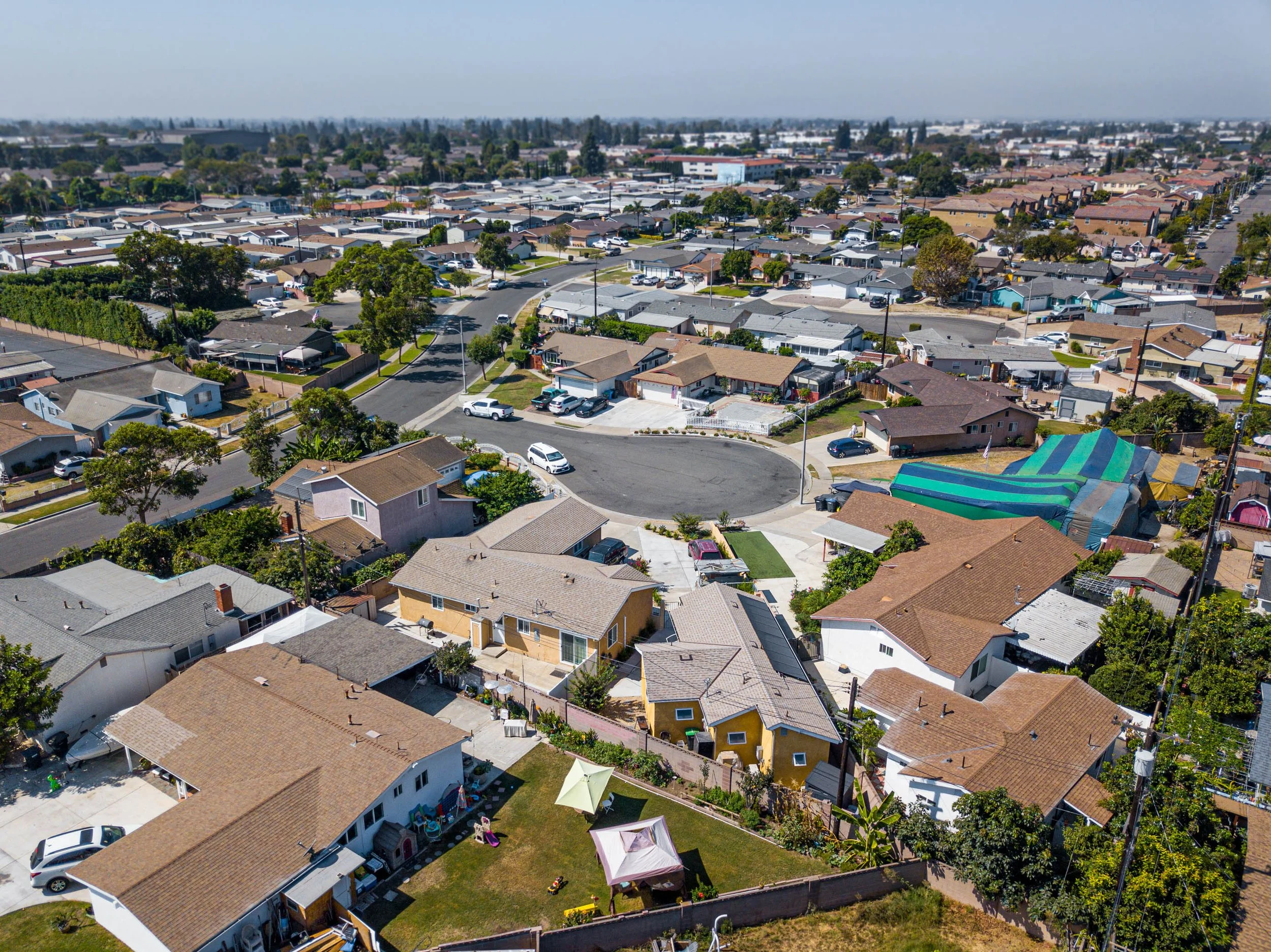
Most buyers scan right past RV access in a listing. They see extra concrete, maybe a place to park a trailer. Investors who know what they're looking at see something else entirely: a future ADU site.
That's exactly what happened on one property in Stanton. The lot originally had RV access — a wide side corridor running alongside the house toward the rear. Instead of parking a boat there, the owner built a 2-bedroom, 2-bathroom ADU on that exact footprint. The driveway was extended all the way back to the unit, giving the ADU its own dedicated access point. A vinyl fence was installed between the ADU and the main house, creating a clean, private separation between the two households.
On paper: a 2 bed/2 bath, 750 square foot ADU at the back of the lot where the RV pad used to be.
In practice: two fully functional households on one parcel, each with its own entrance, its own parking, and their own sense of independence.
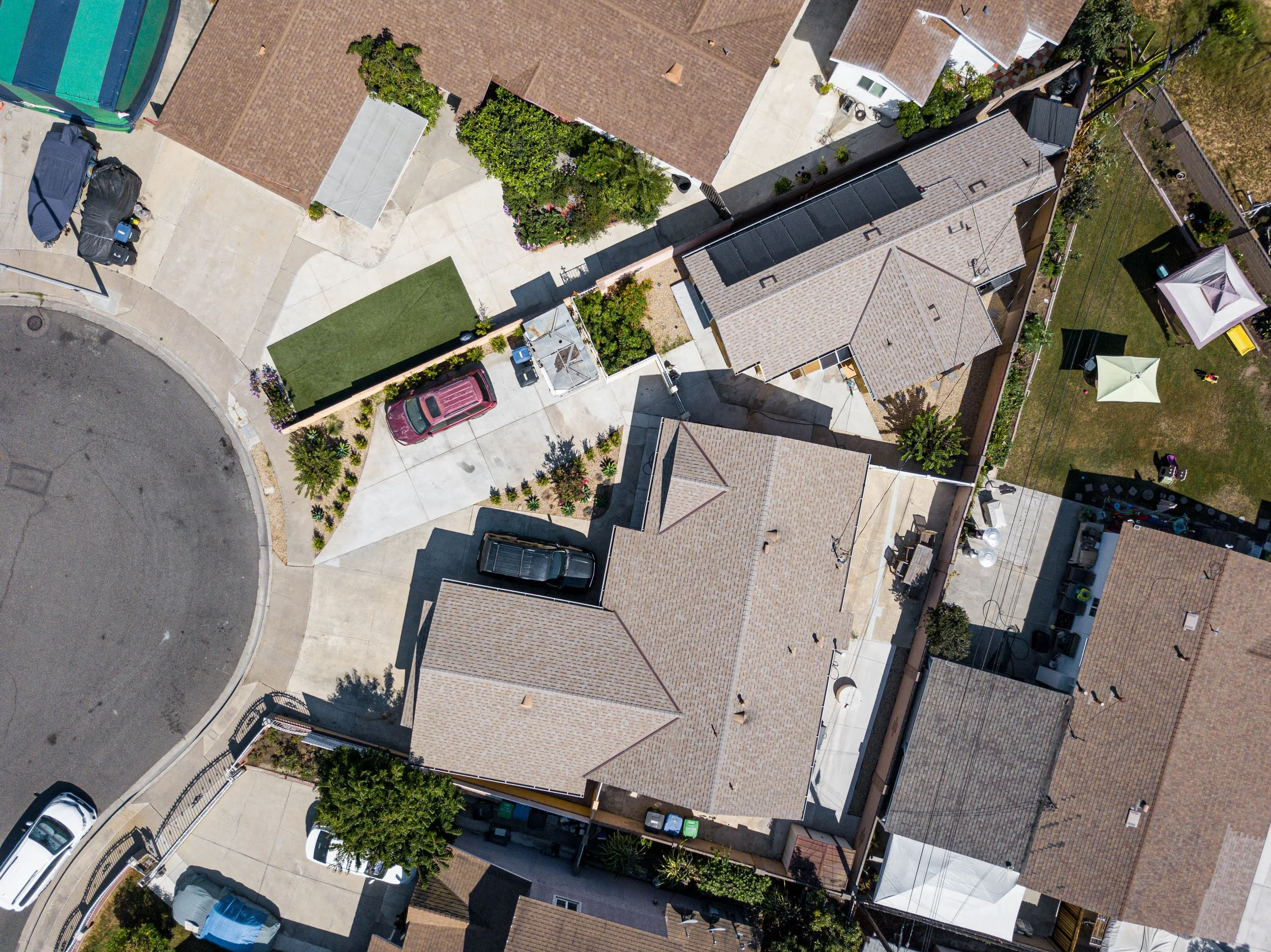
The Layout: What It Looks Like on the Ground
The front of the lot works the way you'd expect any single-family home in Stanton to. The main house faces the street, has its own front yard, and its entrance is completely separate from the ADU.
Move toward the side of the property — where an RV might have sat — and the driveway continues. It runs alongside the house and extends all the way to the back where the ADU sits. Tenants pull in, park at the end of the extended driveway, and enter through their own front door. No walking through the main house, no shared entryway, no awkward proximity.
The vinyl fence running between the two units does several things at once: it creates clear visual separation, gives both households genuine privacy, and defines what's whose. Both sides feel like their own space. Nothing about the setup feels temporary or improvised.
Why RV Access Lots Are Worth a Second Look
RV access is one of those listing features that reads differently depending on who's looking. For a family storing a fifth-wheel, it's convenient. For an ADU-focused investor, it's often a signal that the lot has the width and rear depth to support a second unit.
California's ADU framework, administered through the state's Department of Housing and Community Development, was specifically designed to reduce barriers to exactly this kind of development. Stanton has aligned its local ordinances accordingly — the city's Community Development FAQ outlines the ADU standards adopted under Ordinance No. 1108, with 4-foot side and rear setbacks for detached units. A lot that previously accommodated RV access typically already has the clearance needed to meet those requirements.
That's not a guarantee. But it's worth running the numbers before you pass on a listing.
The Numbers on a 750 Sq Ft ADU in Stanton
A 2/2 at 750 square feet is a real rental unit. Not a studio, not a converted garage — a place a family or working couple can genuinely live in. In the current north Orange County rental market, a unit like this rents somewhere in the $1,800–$2,200/month range depending on condition and finishes.
For a buyer who purchases the whole property — main house plus ADU — that back unit's rent is often what makes the deal pencil when it otherwise wouldn't. If you've looked at how cash flow works on OC multi-unit properties, the principle is the same in Stanton: the ADU unit closes the gap between what the property costs you and what it earns you every month.
Stanton doesn't attract the same investor attention as Garden Grove or Costa Mesa, but that's part of what makes it interesting right now. Inventory is thin. There's currently only one active ADU listing in Stanton, and it's been sitting — which means buyers who do their homework have real leverage.
What Makes the Vinyl Fence the Right Call
It's a small detail that matters more than it looks like it does. Vinyl fencing is low-maintenance, clean, and holds up in Southern California's climate without the warping or splitting you get with wood. When you're separating two households on one parcel, you want a boundary that reads as intentional and permanent.
It also protects both tenancies. The main house side gets privacy. The ADU tenants feel like they have their own yard and space. Both are more likely to stay longer, which means lower turnover — which matters more than most landlords account for when they're running projections.
If you're configuring a lot with an ADU, vinyl or block wall is the call. Chain link is functional but signals you didn't think it through. Wood looks fine for two seasons, then it doesn't.
Is This the Right Property Type for You?
If you're running searches in Stanton and you see RV access in the listing features, don't scroll past. Look at the lot dimensions. If the rear or side corridor is deep enough — and under current California law, the threshold is lower than most people realize — you might be looking at a two-income property that's only marketed as one.
That's the whole idea behind how to find and evaluate ADU properties in Orange County: spotting the potential that's already sitting there, just waiting for someone to see it.
What Documents Should You Get During Escrow on an Already-Built ADU Property?
The escrow period is your window to fix that before it becomes your problem. Here's exactly what documents you should be requesting — and what each one tells you.
1. The Building Permit for the ADU
This is the starting point. Every legally constructed ADU in California should have a building permit on file with the city or county — California's ADU law makes the permitting pathway mandatory for all jurisdictions, and cities cannot block or unreasonably delay a ministerial permit. You can pull permit records from the city's public records portal or ask your agent to request them through escrow.
What you're looking for: a permit that specifically covers the ADU — not just a general remodel permit for the main house. The permit should describe the scope of work that matches what's actually there. If the seller says it's a "permitted ADU" and the only permit you find is for a bathroom addition from 2009, that's a red flag.
Some cities in Orange County make this easy. Others require a public records request that takes a few business days. Start early.
2. Approved Plans (City-Stamped)
When a permit is issued, the city approves a specific set of plans. Those stamped plans become the legal record of what was supposed to be built. If you can get them, you can compare them to what's actually on the property during your inspection.
This matters more than people realize. An ADU might have a permit, but if the builder deviated from the approved plans — different square footage, moved a wall, changed the entry location — that work may not have been re-inspected or re-approved. You're buying what's on the ground, but the city's records describe something else.
Ask the seller for these. If they don't have them, the city should have them on file.
3. Final Inspection Sign-Off (or Inspection Records)
A permit being issued isn't the same as a permit being finaled. Many homeowners pull a permit, do the work, and never call for a final inspection — and as explained in what to check when you're verifying ADU potential during escrow, this open-permit problem is one of the most common issues buyers discover too late.
Ask for the inspection history, not just proof that a permit was pulled. You want to see that every required inspection phase was completed — framing, electrical, plumbing, and final. If the permit shows a series of inspections but no final, that's an open permit. An open permit is a problem you'll inherit.
Some lenders won't fund a loan on a property with open permits. Even if yours will, it limits your future options when you go to sell or refinance.
4. Certificate of Occupancy for the ADU
The Certificate of Occupancy — often called a CO or C of O — is the document the city issues at the end of a successful final inspection. It says the structure is safe and legal to occupy. This is the single most important piece of documentation you can get on a built ADU.
Not every jurisdiction issues a separate CO for an ADU on an existing single-family lot. Some cities in Orange County use the final inspection card as the equivalent. The HCD ADU Handbook outlines what a properly finaled ADU looks like from a state standards perspective — useful context when a city's local records are unclear. One nuance worth knowing: as covered in this post on ADU certificates of occupancy in Orange County, COs for new detached ADUs and COs for the primary residence are sometimes handled differently, and the rules vary by city.
If the seller can't produce this and the city has no record of it, you're likely looking at an unpermitted unit — even if the seller doesn't describe it that way.
5. Preliminary Title Report — and What to Look For
Your title company will generate a preliminary title report early in escrow. Read it, or have your agent walk you through it. Specifically, look for:
Easements that affect the ADU footprint. If there's a utility easement running through the area where the ADU sits, that's a structural issue that may affect insurability or lender approval.
Recorded liens or violations. Some cities record code enforcement violations or unpermitted structure notices on title. These show up here.
How the property is described. If the assessor's records describe the lot as a single-family residence and make no mention of a secondary unit, that's worth investigating. It may indicate the ADU was built without the city or county's knowledge.
6. Property Tax Records and Assessor Data
After an ADU is built legally, the county assessor typically adds it to the property's assessed value at the time of permit finalization. Pull the current assessor's records and see how the property is described.
If the main home is 1,400 square feet and the ADU is 600 square feet, the total living area on the assessor's records should be close to 2,000 square feet. If it shows 1,400, the ADU may not have been disclosed to the assessor — another sign of unpermitted construction.
This is also useful for understanding what you're actually paying for from a tax perspective going forward.
7. Utility Documentation — Meters and Service
Find out how utilities are set up. Is the ADU on a separate electric meter? A separate gas meter? Is water shared or split?
This affects two things: how you'll manage the rental and whether a lender will count the ADU's income. Separately metered units are easier to manage as rentals and are viewed more favorably by underwriters. If everything is on one meter, that's not a dealbreaker, but you'll need a system in place for handling utility splits with your tenant.
Also confirm that the ADU has its own address or unit number assigned by the city. This matters for mail delivery, tenant identification, and sometimes for rental income documentation.
8. Existing Lease Agreement (If Tenant-Occupied)
If the ADU already has a tenant, get a copy of the lease during escrow — not after closing. You need to know the lease term and expiration date, the monthly rent (and whether it's at or below market), whether the lease is month-to-month or fixed-term, and any special provisions like pets, parking, or utilities included.
California law protects tenants significantly. As covered in selling an ADU property with an active tenant in Orange County, a tenant can remain through the end of their lease term even after a sale closes. If they're month-to-month, different rules apply depending on how long they've lived there. Understanding who you're inheriting before you close is critical.
9. Rental Income History (If You're Using It to Qualify)
If your lender is factoring the ADU's rental income into your loan qualification, they're going to need documentation. Typically that means 12 to 24 months of bank statements showing rent deposits, tax returns (Schedule E) showing rental income from the property, or a signed lease and an appraiser's market rent analysis if the unit is currently vacant.
Fannie Mae's 2026 ADU guidelines now allow single-unit properties to have up to three ADUs — a change that also expanded how lenders can factor rental income into underwriting. Your lender will tell you what they need specifically, but gather everything you can during escrow so you're not scrambling at the end.
10. Any HOA Documents (If Applicable)
ADUs in HOA communities are a complicated area. California state law prohibits HOAs from banning ADUs outright, but HOAs can still impose design and approval requirements. If the property is in an HOA, request the CC&Rs, any HOA approval letters for the ADU construction, and meeting minutes where the ADU was discussed if available.
You want to confirm the ADU was built in compliance with HOA rules — or at least that the current HOA isn't going to come after you for something the previous owner did.
The goal of collecting all of this during escrow isn't to scare you away from the deal. It's to make sure you know exactly what you're buying. A fully permitted, CO-bearing ADU with a tenant in place and documented rental history is a genuinely valuable asset. But the only way to know you have that — rather than a well-built structure with no paperwork — is to do the work during escrow, while you still have the leverage to negotiate.
If you're looking at ADU properties in Orange County and want help knowing what to ask for and when, reach out. This is what I do.
Can You Build an ADU on a Multi-Unit Property in California? (2026 Rules for Orange County)
Here's something a lot of investors don't realize: if you own a duplex sitting on a large lot, you may already be sitting on the best value-add play in Orange County.
Not a renovation. Not a cash-out refinance. Adding doors — detached ADUs — right in your backyard, at a fraction of the cost of buying another multi-unit property.
Here's how it works, and what the rules actually say in 2026.
The State Law: What California Now Allows on Multi-Unit Properties
Thanks to SB 1211, which took effect January 1, 2025, the rules for ADUs on multifamily properties got a major upgrade. Under California's current ADU law, owners of multifamily properties can now build one detached ADU per existing unit, up to a maximum of eight.
That means:
A duplex (2 units) → 2 detached ADUs allowed
A triplex (3 units) → 3 detached ADUs allowed
A fourplex (4 units) → 4 detached ADUs allowed
The "accessory" in ADU is key here — the number of ADUs you're permitted is directly tied to how many primary units already exist on the lot. The HCD ADU Handbook (updated March 2026) spells this out clearly and is worth bookmarking.
This is why investors who are specifically hunting for duplexes and triplexes on larger lots are doing so with a very specific plan in mind: buy the multi-unit, add the ADUs, and significantly increase monthly income without paying multi-unit prices for the additional doors. It's the same strategy behind how investors are stacking income toward $10k/month on a single OC parcel.
Why R-2 Zoning Matters — and What It Limits
State law sets the floor. Local zoning sets the ceiling.
In most OC cities, R-2 zoning means you can legally build 2 residential units on the lot — typically a duplex. Because state law now ties ADU allowances to existing unit count, an R-2-zoned duplex lot qualifies for 2 detached ADUs.
But before you start drawing up plans, there's a critical constraint that trips up a lot of investors: floor area ratio (FAR) or lot coverage limits.
Most R-2-zoned cities in Orange County cap total square footage at around 40% of the lot area across all structures. Here's what that looks like in practice:
10,000 sq ft lot → ~4,000 sq ft of total allowable building area (all structures combined)
8,000 sq ft lot → ~3,200 sq ft of total allowable building area
So if your existing duplex already takes up 2,400 sq ft of floor space, you've got roughly 1,600 sq ft left to work with across two ADUs. That might mean two 800 sq ft units — which is still a very strong play.
Here's the catch most people miss: cities don't always calculate square footage the same way. Some measure only interior livable area. Others include exterior walls in their calculation, which can eat 100–150 square feet per unit out of your budget before you break ground. Always pull the zoning code for your specific city and confirm how square footage is defined before hiring a designer. The Orange County Zoning Code is publicly available and is the right place to start if you're in unincorporated OC — but remember that incorporated cities like Anaheim, Garden Grove, and Fullerton each have their own separate codes.
The Value-Add Math: Why This Strategy Works
Let's put some numbers on it.
Say you buy a duplex in Garden Grove or Anaheim on a 9,000 sq ft lot. You're paying a market price for 2 doors, which isn't cheap in OC.
You identify that the lot supports 2 additional detached ADUs under SB 1211, and your lot coverage analysis shows you have room for two 750 sq ft units. Build costs in OC right now are running $250,000–$325,000 per detached unit depending on complexity.
Now you have 4 doors on one parcel. In Garden Grove and Anaheim, well-built ADUs in the 700–800 sq ft range rent for $1,700–$2,200/month depending on bedroom count. Add that income to your existing two duplex units and you've built a cash-flowing 4-unit portfolio at a per-door cost that would be nearly impossible to replicate by buying a fourplex outright in today's market.
That's the play — and it's one more investors in OC and LA are running right now. When you add up the income streams, it's also the kind of setup behind the SoCal property benefit stacks that generate $68k/year — most investors only see one layer of that at a time.
What to Look For When You're Buying
Not every multi-unit lot qualifies. Here's what I look for when evaluating a multi-unit property for ADU potential:
Lot size. A duplex on a 5,000 sq ft lot often has nothing left after the main structure. You generally want at least 7,500–8,000 sq ft to have a realistic path to meaningful ADU square footage. Bigger is obviously better.
Existing structure footprint. A two-story duplex packs its square footage vertically, leaving more land coverage available. A sprawling single-story duplex can eat through your lot coverage fast.
How the city calculates square footage. This is huge and non-obvious. Some cities calculate only interior livable area; others count exterior walls. Pull the zoning code before you make an offer — not after.
Setback requirements. ADUs typically need to observe 4-foot side and rear setbacks. On a smaller or oddly shaped lot, setbacks can eat into your buildable area more than you'd expect.
Parking situation. Under SB 1211, you are not required to replace parking spaces displaced by new ADU construction. This opens up underused driveways, carports, and detached garages as potential ADU sites — which is a real advantage on lots where the footprint is tight.
Before you go under contract, run all of this by your city's planning department — or work with someone who already has. I walk through exactly what I check on every investment property in this post.
Financing the Build
Once you've confirmed the deal pencils, the next question is how to fund the construction.
The most common paths are a construction loan, a HELOC against the existing property, or a DSCR-based product that underwrites the future rental income. If you're buying the multi-unit specifically for the ADU play, DSCR loans are often the cleanest fit because they underwrite on projected cash flow rather than your personal income — and when you've got 4 doors worth of rent to point to, the numbers tend to work. For a full breakdown of construction financing options side by side, this post on DSCR loans, HELOCs, and construction loans covers it in detail.
The Bottom Line
Multi-unit properties with ADU potential are one of the most underpriced value-add plays in Orange County right now. The law is on your side — SB 1211 is clear that a 2-unit property qualifies for 2 detached ADUs. The constraint is the lot, the FAR, and knowing exactly how your city measures square footage.
If you're looking at duplexes or triplexes in OC with this strategy in mind, I can help you identify which properties actually have the room to execute it — before you're under contract.
Reach out here and let's run the numbers.
How to Search for Homes with ADU Potential in Orange County (Without Wasting Time on the Wrong Lots)
Most buyers searching for ADU investment properties in Orange County are asking the wrong question. They're searching for properties that already have a second unit when the real opportunity is in finding a property where you can add one.
A property with an existing ADU has already been priced for it. The seller knows what they have, the listing agent knows what they have, and every investor who ran the same search saw the same listing. You're competing on price for a known quantity.
A property with strong ADU potential and no existing unit is a different story. The value isn't visible yet. It shows up in lot dimensions, city zoning, garage placement, and a handful of other signals that most buyers scroll right past — because they don't know what they're looking for.
Here's what they're missing.
Why the MLS Won't Find This for You
There is no filter for ADU potential. Zillow and Redfin let you search by beds, baths, square footage, and price. None of that tells you whether a lot can support a meaningful detached ADU. None of it tells you how deep the backyard runs, whether the garage faces the alley, or whether the setbacks leave room for a standalone structure.
Keyword searches for "ADU" or "guest house" find properties that already have a second unit. That's a useful search if an existing unit is what you want, but it won't surface the properties where a sophisticated buyer sees potential that the listing price hasn't accounted for yet.
The search for ADU potential is almost entirely off-MLS. It happens in satellite views, permit databases, city zoning maps, and lot dimension fields that most buyers never open.
What You're Actually Looking For in a Lot
Once you understand that the opportunity is in the lot, you start looking at listings differently. Here's what actually matters.
Lot size and shape. Under California state ADU law, cities must allow ADUs on any lot with an existing single-family home — but what you can actually build depends on usable square footage after setbacks and existing structures are accounted for. A lot under 5,000 square feet gets tight quickly. The sweet spot for most investors is between 6,000 and 9,000 square feet — enough room for a meaningful detached unit without the complexity that comes with larger irregular parcels. That range is worth understanding in detail before you get deep into a search, because it drives not just what you can build but what layout actually pencils.
Lot depth. Square footage can be misleading. A 7,000 square foot lot that's 100 feet wide and 70 feet deep leaves almost nothing behind the house after setbacks. A 7,000 square foot lot that's 50 feet wide and 140 feet deep might be exactly what you need. Pull the lot dimensions, not just the total square footage.
Corner lots. These are disproportionately valuable for ADU purposes and investors who know this compete hard for them. A corner lot often has more usable side yard, a second street-facing frontage that can give a future tenant independent access, and in some cases additional flexibility on placement under local ordinance. When a corner lot goes under contract quickly, it's usually because someone ran this analysis and moved fast.
Garage placement and orientation. A detached garage that faces an alley is one of the easiest garage conversion candidates in Orange County. A garage that faces the street and eats into the front setback is a much harder conversion. Both show up in listings as "detached 2-car garage." You have to look at the aerial view to know which one you're dealing with.
What's already consuming the backyard. Open a satellite view before you schedule a tour. Pool, covered patio, large workshop, storage structures — anything back there is competing with your ADU footprint. A listing that reads well can show a backyard that has nothing left to build on.
City Makes or Breaks the Plan
Even if a lot looks right, the city it sits in determines whether your ADU plan is realistic or a multi-year headache.
Anaheim has a tiered ordinance that catches buyers off guard. The rules vary based on lot type and zoning classification in ways that aren't obvious from a listing, and the SB 9 self-certification process in Anaheim has its own complications worth understanding before you make an offer. Garden Grove and Lakewood process ADU permits more straightforwardly and tend to be better starting points for investors who want to build and move. Coastal Commission cities — Newport Beach, Seal Beach, parts of Huntington Beach — add a layer of environmental review that can delay or kill a project that would sail through in an inland city.
Before you get attached to a specific property, run the city's ADU ordinance. What's the maximum unit size for this lot? What are the setback requirements? Does the garage face the right direction to convert? These are answerable questions that take about twenty minutes and can save you from a six-month dead end.
Once you know a market makes sense, understanding what the completed ADU will actually rent for is part of building the investment case. Orange County ADU rents by unit size give you a more grounded baseline than what any listing agent will quote you.
Watch Out for Existing Unpermitted Units
Some properties you'll find during this search already have an unpermitted structure out back — a converted garage, a detached studio, a room addition that was never permitted. This can seem like a bonus, but it often complicates your plan.
If you're buying a property specifically to add a legal, permitted ADU, an existing unpermitted structure creates a problem you need to understand before you close. Depending on how it's situated on the lot, it may occupy the space you were planning to build on. More importantly, buying a property with an unpermitted addition can create a catch-22 where the city requires you to address the existing unpermitted work before issuing a permit for the new unit.
California created a path to legalize certain unpermitted units built before 2020, and in some cases that changes the calculus. But whether the city can still deny legalization depends on when the unit was built and how the local ordinance is written. Know what's on the property before you're in escrow.
How a Focused Agent Changes the Search
A generalist agent runs you a search by beds, baths, and price. An agent who works ADU investment properties regularly filters by lot size, pulls lot dimensions, flags corner lots, and cross-checks city zoning before sending you anything. That's a shorter list of better properties instead of a long list of listings you'll spend weekends filtering through.
The more specific you can be about your criteria — minimum lot depth, target city, acceptable setback configuration, build budget — the tighter the search gets. Most buyers come in with a price range and a bedroom count. The investors who move quickly have a real buy box.
Before You Schedule a Tour
Run these checks on any property before you spend time on it.
Pull the lot dimensions from the county assessor or the MLS detail sheet. Square footage alone doesn't tell you whether the lot actually works for what you're planning to build.
Open a satellite or aerial view and look at the backyard honestly. How much clear space is behind the existing structure? Where does the garage sit? Is there a pool, covered patio, or existing outbuilding taking up your future ADU footprint?
Look up the city's permit portal and check whether any permits have been pulled on the property. Permitted additions are straightforward. Unpermitted structures that aren't in the listing description are worth a direct conversation with your agent before you go further.
Run the city's ADU ordinance for this specific zoning classification. State law sets the floor, but city rules sit on top of it, and the answer to "can I build a 900 square foot detached ADU here" is not the same in every OC city.
Getting those four things done before you schedule a showing cuts the dead ends out of your search.
Frequently Asked Questions
Is there a way to search for ADU-potential lots on Zillow or Redfin?
Not directly. Neither platform has a filter for lot depth, garage orientation, or ADU buildability. The most useful thing you can do on those platforms is filter by minimum lot size — 6,000 square feet is a reasonable starting threshold for detached ADU potential — and then pull the detailed lot dimensions on anything that looks right. The real filtering happens off-platform, in satellite views, county assessor data, and city zoning lookups.
What lot size do I need to add a detached ADU in Orange County?
State law doesn't set a minimum lot size, but practical buildability does. Once you account for the existing home's footprint, setbacks, parking requirements, and any existing structures, lots under 5,000 square feet leave very little room for a meaningful detached unit. Lots between 6,000 and 9,000 square feet tend to offer the most flexibility. Lot shape and depth matter just as much as total square footage.
Are corner lots actually worth the premium?
For ADU-focused investors, usually yes. The additional side yard, potential for independent tenant access, and sometimes greater placement flexibility make corner lots disproportionately useful. Whether the premium in listing price is justified depends on how much ADU income the completed project adds, but investors who are running the numbers seriously tend to prioritize corner lots when they can get them at reasonable prices.
Which Orange County cities are most straightforward for adding an ADU?
Garden Grove and Lakewood are two of the more investor-friendly options for buyers who want to permit and build without a drawn-out process. Santa Ana offers lower acquisition costs that can make the numbers work even with today's rates. Anaheim can work well but requires a closer read of the ordinance before you commit. Coastal Commission cities add a layer of review that's worth pricing into your timeline before you buy.
Where do I start if I'm ready to build a real search around this?
Start with your buy box — price range, target city, minimum lot dimensions, build budget — and use that to filter rather than browse. The ADU Deal Desk includes a custom buy box intake and a done-for-you property search setup built around ADU investment criteria.
What Lot Size Do You Actually Need to Add an ADU in Costa Mesa?

There's a belief floating around Costa Mesa that you need a certain minimum lot size before you can even think about adding an ADU. Homeowners hear it from neighbors, from contractors, sometimes even from people who should know better. And it stops them from exploring an option that might have been completely available to them all along.
Here's the truth: Costa Mesa does not have a hard minimum lot size requirement to build an ADU. What actually matters is whether you have enough usable space in your backyard to physically fit the unit you want to build.
The Myth vs. the Reality
The lot size myth likely comes from older zoning rules that used to tie ADU eligibility to minimum parcel sizes. Those restrictions have been largely eliminated under California state law, which now limits how much cities can restrict ADU development. Costa Mesa's current ordinance falls in line with state law on this point — there's no minimum lot size threshold you have to clear just to be eligible.
What determines whether you can build — and what size you can build — is how much open space you actually have to work with after setbacks are applied.
If you're thinking about how lot size intersects with layout options, the post on the 6,000 vs. 9,000 square foot decision for Orange County lots is worth reading alongside this one.
The 4-Foot Setback Rule
Under Costa Mesa's ADU ordinance, a detached ADU must maintain a minimum 4-foot setback from the side and rear property lines. That means your ADU's walls can't be placed right up against your fence — you need to leave 4 feet of clearance on each applicable side.
Why does this matter for lot size? Because the setbacks effectively shrink the footprint you have to work with. On a narrower lot, those 4 feet on each side add up quickly and limit how wide your ADU can be. On a lot with a deeper backyard, you have more room to play with depth and overall square footage.
The practical question isn't "is my lot big enough?" — it's "after I account for setbacks and my existing structure, how much buildable area is left in the back?"
How ADU Size Factors In
Costa Mesa caps detached ADUs at 1,200 square feet for a single unit on a property. That's the state maximum as well, and California's ADU law guarantees you the right to build at least an 800 square foot ADU regardless of other local zoning constraints.
So the sizing question works in both directions. A smaller backyard pushes you toward a smaller ADU — a studio or one-bedroom in the 400–600 square foot range. A more generous lot with good depth might support a full 1,200 square foot two-bedroom unit. Neither requires you to own some threshold acreage — it's about the geometry of your specific property after setbacks.
If you're evaluating what a finished ADU would actually rent for in Costa Mesa's market, the Orange County ADU rental income guide by square footage breaks it down by unit size so you can project returns before you commit to a design.
Costa Mesa's Specific ADU Rules
Beyond setbacks and size, there are a few other Costa Mesa-specific details worth knowing:
Parking: In most cases, one off-street parking space is required for the ADU. However, there are exemptions — if the property is within a half mile of public transit, or if the ADU is created from an existing space like a garage conversion, the parking requirement is waived.
Height: ADUs generally follow standard residential height limits. For detached units in residential zones, that typically means a cap of 16 feet, though the specifics can vary depending on the design and whether there's a second story involved.
Second-story ADUs: These come with additional setback requirements and must be positioned at least 25 feet from the front property line. The underlying zone standards also apply.
Pre-engineered ADUs: Costa Mesa has a pre-engineered ADU program that can streamline permit approval. If you're looking for a faster path to construction, it's worth asking the planning department whether your project qualifies.
For the full picture, the Costa Mesa ADU planning page is the authoritative source. Regulations do get updated, and what applied a year ago may have changed.
What About Unpermitted Structures?
One thing that does complicate ADU eligibility — and this one catches people off guard — is existing unpermitted construction on the property. If you have a shed, a room addition, or a covered patio that was never permitted, that square footage can affect your setback calculations and potentially your overall project. It's worth sorting out before you get too far into planning.
That scenario is covered in detail in the post on buying a property with an unpermitted addition and what it means for adding an ADU.
The Costa Mesa ADU Market Right Now
Costa Mesa is one of the stronger ADU markets in Orange County. Rental demand is consistent, and the city's mix of single-family and multi-unit properties means there are a lot of properties where an ADU either already exists or makes strong financial sense to add. If you want to see what's currently trading and what investors are paying for ADU properties here, the August 2026 Costa Mesa multi-unit market update has the current numbers.
Ready to Figure Out What Your Property Can Support?
If you own a home in Costa Mesa and you've been wondering whether your backyard can fit an ADU, the answer is probably yes — and the next step is figuring out what size makes sense for your specific lot.
I'm Dylan Serna, an ADU specialist agent in Orange County. I help property owners understand exactly what's possible on their lot, what it'll cost, and what the rental income looks like on the other side. Reach out and let's take a look at what you're working with.
Fetch blog inventory from adurealtor.net/blog
Fetch Costa Mesa ADU official rules
Write enhanced blog post with internal + external links
costa-mesa-adu-lot-size.md
Connectors
Web search
Skills
adu-blog-enhancer
Can You Sell an ADU Property with an Active Tenant in Orange County?
Yes — and it happens more often than most sellers expect. If you own a single-family home in Orange County with an ADU that has an active tenant, you can absolutely list and sell that property. The tenant doesn't have to leave before you close escrow. But there are real legal requirements, buyer pool considerations, and pricing dynamics that will shape how the sale plays out — and most sellers don't fully understand them going in.
Here's what you actually need to know.
First: What "Tenant in Place" Means for Your Sale
When you sell a property with an active tenant, the lease doesn't disappear at closing. The new owner inherits it — meaning they step into your shoes as landlord and must honor whatever lease agreement is in place. That's true whether the tenant is in the ADU, in the main house, or both.
This matters because it immediately affects who can buy your property. An owner-occupant who wants to move into the main house can still purchase — but they'll need to address the ADU tenant situation, either by waiting out the lease or negotiating a move-out. An investor buyer, on the other hand, may actually prefer a tenant already in place. Depending on what the ADU is currently renting for relative to market rate, a tenant in place can be a feature, not a liability.
The Lease Type Changes Everything
The single biggest factor in a tenant-in-place sale is whether your tenant is on a fixed-term lease or a month-to-month agreement.
Fixed-term lease: The incoming buyer must honor the lease through its end date. There's no legal way to accelerate that termination just because the property sold. If the ADU tenant has eight months left on their lease, the new owner waits eight months — or negotiates directly with the tenant.
Month-to-month: Under California law, once escrow closes and the property transfers to a new owner who intends to occupy it, the new owner can serve a 60-day notice to vacate. If the tenant has lived there less than one year, that drops to 30 days. But — and this matters — if the new buyer is an investor with no intent to occupy, that notice right doesn't automatically apply.
If you're not sure which situation applies to your ADU tenant, pull out the lease agreement before you list. The lease terms will dictate what buyers can and can't do, which directly affects your buyer pool and the price you'll get.
Does AB 1482 Apply to Your SFR?
AB 1482 — California's statewide rent cap and just-cause eviction law — is one of the first things sophisticated buyers will ask about. The good news for most Orange County SFR owners: single-family homes are generally exempt from AB 1482, as long as the owner provides the required written notice to the tenant.
What that means in practice: your SFR with an ADU typically isn't subject to the AB 1482 rent cap or just-cause eviction protections — but only if the property qualifies for the exemption and the tenant was properly notified. If you never delivered that written notice, the exemption may not hold up.
Before you list, confirm with your attorney or agent that the AB 1482 exemption notice is in place. A buyer's agent who knows ADU properties will ask this question during due diligence. Having a clean answer — with documentation — keeps the deal moving.
What California Law Requires During Showings
Selling a tenant-occupied property doesn't mean you can walk buyers through whenever you want. California Civil Code §1954 requires that landlords give tenants at least 24 hours written notice before entering the unit for purposes including showings. That notice must be delivered during normal business hours, and the showing itself must happen at a reasonable time.
In practice, this means you need a cooperative tenant to run an effective marketing campaign. Sellers who have good relationships with their ADU tenants — and ideally communicate the situation to them early — have much smoother listing experiences than those who treat the tenant as an obstacle.
Some sellers offer the tenant a small rent credit in exchange for consistent showing access. It's not required, but it's often worth it.
How the Tenant Situation Affects Your Buyer Pool
This is the part most sellers underestimate. A tenant-in-place ADU property in Orange County will attract a different mix of buyers than a vacant one.
Investors are your most natural buyer. They're already planning to keep the property as a rental, so an existing tenant — especially one paying at or above market — is a positive. The income the ADU generates factors directly into their underwriting. A long-term tenant with a clean payment history can actually make the deal pencil better for an investor than a vacant unit would.
Owner-occupants are more complex. If they want to live in the main house, they may be comfortable with the ADU tenant staying — which gives them rental income from day one. But if they want the ADU for family use or need full vacancy for some reason, the existing tenancy becomes a negotiating point. Expect these buyers to ask about lease terms, tenant cooperation, and what happens at the end of the lease.
Buyers using ADU income to qualify for a mortgage are also in the market — and this is a growing segment. Fannie Mae allows lenders to use ADU rental income to help borrowers qualify, and a tenant already in place with a lease can be exactly the documentation those buyers need.
Cash for Keys: When It Makes Sense
If you want to broaden your buyer pool — particularly to include owner-occupants who need the ADU vacant — a cash-for-keys agreement with your tenant is worth considering before you list.
Cash for keys is a voluntary negotiated agreement where you offer the tenant a lump-sum payment in exchange for vacating the unit early and leaving it in good condition. It has to be genuinely voluntary — you can't coerce or pressure a tenant into it. But when done right, it's a clean way to deliver a vacant ADU to market, which often means a faster sale at a higher price.
The math depends on your market and your tenant's situation. In tighter rental markets like Garden Grove or Anaheim, where vacancy rates remain low and finding comparable rent is genuinely difficult for tenants, a meaningful cash offer may be more effective than you'd expect.
Pricing With a Tenant in Place
A tenant-in-place ADU property isn't automatically worth less — but it does require a pricing strategy that accounts for the buyer pool. Here's how experienced ADU sellers think about it:
If the ADU is rented at or above market rate with a cooperative tenant and a clean lease: this is often worth more to an investor buyer than a vacant unit. You're selling proven income, not potential income.
If the ADU is rented significantly below market: buyers will factor in the time and cost to get to market rate. The below-market rent is a drag on the price, especially for investor buyers underwriting on cap rate.
If the lease has a long time remaining and the buyer needs the unit vacant for any reason: expect a discount, or plan for a longer time on market as you wait for the right buyer.
The key is pricing for your actual buyer — not against a comparable that was vacant at the time of sale. Most Cypress and Buena Park comps you'll find in the MLS don't involve ADUs at all, which is why working with an agent who understands how ADU properties get priced in OC is worth far more than a generic valuation.
What You Need to Disclose
As an OC seller with a tenant-in-place ADU, your disclosure obligations include:
The existence of the lease and its terms (provided to buyers during escrow)
Any known tenant issues — late payments, disputes, damage claims
Whether the ADU was permitted and in compliance with local codes
Any active code violations on the property
Any rent subsidies or Section 8 involvement
These disclosures come out through the standard California Transfer Disclosure Statement (TDS) and Seller Property Questionnaire (SPQ). An experienced ADU agent will walk you through which questions directly touch the tenant situation and help you answer them accurately.
The Bottom Line
Selling an SFR with an active ADU tenant in Orange County is legal, doable, and often strategically sound — but it's not the same as selling a vacant property. The lease type, the rent level, tenant cooperation, and your target buyer type all shape how the transaction unfolds.
Get clear on those factors before you list, not after. If you want to talk through what your specific situation looks like — what the ADU is worth on the market, whether your tenant situation is an asset or a complication, and who the right buyers are — that's exactly what I do.
Reach out and let's run the numbers.
No Setback Required for ADU Garage Conversions in Orange County — and Same-Footprint Rebuilds Qualify Too
Most Orange County homeowners assume setbacks are a fixed constraint — that their property lines, neighbors, and city zoning determine exactly how close any new structure can get to the edge of the lot. And for new detached ADUs built from scratch, that's largely true.
But there's a specific category of ADU project where California law throws that assumption out entirely. If you're converting an existing structure — or rebuilding one in the exact same footprint — no setback applies. Not four feet. Not two feet. Zero.
This is one of the most underutilized protections in state ADU law, and in Orange County — where lots are tight and garage placements routinely sit closer to property lines than current zoning would otherwise allow — it's a rule that can make or break a project.
What the Law Actually Says
California Government Code § 66314, subdivision (d)(7) is the relevant statute. It reads:
No setback shall be required for an ADU or JADU that is created within an existing living area or existing accessory structure, or for an ADU that is created in a new structure constructed in the same location and to the same dimensions as an existing structure.
There are three distinct scenarios buried in that sentence. Each one is worth unpacking separately.
Scenario 1: Converting an Existing Living Area Into a JADU
If you have a room — or a section of rooms — attached to your main house that you want to convert into a Junior ADU, no setback review applies. The structure already exists. You're not building closer to any property line than you already are. The law treats the setback question as already settled by the fact of the existing structure.
This matters in Orange County neighborhoods where older homes have large attached garages, bonus rooms, or in-law configurations that homeowners want to formalize into rentable units. The conversion path for these is significantly cleaner than starting from scratch.
Scenario 2: Converting an Existing Detached Accessory Structure
This is the big one for most Orange County property owners: the detached garage.
Detached garages in OC were frequently built right up to — or very close to — rear and side property lines, often decades before current setback rules existed. If those garages were built legally at the time, or have been there long enough to be grandfathered, converting them to an ADU does not trigger a setback re-evaluation.
The structure is already there. California law says: no setback required. Your city cannot force you to cut back the footprint, add buffers, or otherwise move the walls simply because you're changing the use from storage to habitation.
This is a meaningful protection. Without it, a garage sitting two feet from a property line would be untouchable — city zoning might require a minimum four-foot setback for any habitable structure, which would mean demolition or a major rebuild before conversion could happen. The statute eliminates that barrier.
If you're buying a property specifically for its ADU potential and the existing garage is close to the property line, this rule is directly relevant to your underwriting. Understanding how unpermitted conditions on the property interact with this protection is a separate but important question — a garage that was never permitted may complicate the conversion path even when the setback waiver technically applies.
Scenario 3: Demolishing and Rebuilding in the Same Footprint
The third scenario is the one most people miss entirely: you can tear down an existing structure and rebuild a new ADU in the same location and to the same dimensions — and still qualify for the setback waiver.
This opens up a conversion strategy that's particularly valuable when the existing structure is too deteriorated to renovate cost-effectively. Rather than patching a crumbling 1950s garage, an owner can demolish it and build a purpose-designed ADU unit from scratch — in the exact same footprint — without triggering setback requirements.
"Same location and same dimensions" is the key phrase. The replacement structure can't be larger or shifted on the lot. But within those constraints, it can be an entirely new building, built to current construction standards, with modern insulation, electrical, and plumbing.
Why This Matters Specifically in Orange County
Orange County's residential neighborhoods — particularly in cities like Garden Grove, Anaheim, Santa Ana, and older sections of Costa Mesa — were largely built out in the 1950s and 1960s, when lot coverage rules and setback standards were different. Detached garages routinely ended up within one to three feet of rear property lines.
Under current zoning, those same structures, if built today, often couldn't legally exist where they sit. But because they're already there, conversion is protected. The setback waiver locks in their existing placement as a legal baseline.
For investors buying in these markets, this distinction matters enormously. A property with a detached garage in a tight footprint isn't a problem — it's an asset. That garage can often become a legal ADU without any setback-driven re-engineering of the structure.
Orange County ADU rental income by square footage is strong enough that even a smaller converted garage — 400 to 500 square feet — can generate meaningful monthly returns. Knowing that the setback problem doesn't apply to existing structures changes how you evaluate properties where the garage is the ADU candidate.
What This Rule Does NOT Cover
The setback waiver for existing structures is narrow by design. It does not apply to:
New detached ADUs built on currently vacant portions of the lot. If you're adding a brand-new structure in a location where nothing currently exists, standard setback requirements apply. California state law sets a minimum four-foot rear and side setback for these projects; your city may require more.
Structures that weren't legally constructed. If the existing garage or accessory structure was built without permits, its legal status is murky. The setback waiver is tied to the existence of a lawful structure. Cities can — and sometimes do — raise permitting history as a basis for challenging the waiver when the original structure's legality is in question. AB 2533 changed some of the math around unpermitted ADUs specifically, but the broader question of unpermitted accessory structures remains an area where you want to know what you're working with before you commit to a conversion plan.
Expansions of existing structures. The waiver covers converting or rebuilding in the same footprint. If the plan is to add square footage — extend the garage into the yard, raise the roofline beyond the existing dimensions — the additional portion falls under standard setback rules.
The Practical Takeaway
If a property has an existing detached garage, an attached bonus room, or an older accessory structure that was built legally, converting it to an ADU or JADU is not subject to setback requirements under California state law. Cities in Orange County cannot override this — it's state law under Gov. Code § 66314(d)(7), and the HCD ADU Handbook makes clear that local jurisdictions cannot impose stricter standards than the state baseline.
This is a significant protection. It makes conversion projects on older OC properties more viable than a lot of buyers and owners realize — and it means the garage placement question, which comes up constantly in due diligence, often has a better answer than people expect.
If you're evaluating a property in Orange County with an existing structure and want to understand whether the setback protection applies, reach out. This is exactly the kind of question worth running before you're under contract.
Can You Build a JADU on a Multifamily Property? No — Here's the Law and What It Means for OC Investors
If you own a duplex in Anaheim, a triplex in Long Beach, or an apartment building in Garden Grove, you may have wondered whether you can tack on a Junior ADU to generate extra rental income. It's a reasonable question — JADUs are small, relatively cheap to build, and California law has been steadily pushing cities to allow more of them. But there's a hard limit baked into state law that a lot of investors don't know about until they're deep into a project: JADUs are only allowed on single-family lots.
This isn't a local quirk or a city-by-city policy call. It's California state law, and it applies everywhere in the state.
What Is a JADU, Exactly?
A Junior Accessory Dwelling Unit is a small unit — up to 500 square feet — created entirely within the walls of an existing single-family home. Unlike a traditional ADU, which can be a detached structure, a new garage conversion, or an addition to the house, a JADU must be carved out of space that already exists inside the primary residence. Think: a converted bedroom with its own entrance and kitchenette.
JADUs come with one requirement that standard ADUs don't: the property owner must live on-site, either in the main house or in the JADU itself. In exchange, they're typically easier and cheaper to permit — and they're an efficient way to add a rentable unit to a single-family home without significant construction.
The tradeoff is that they're exclusively a single-family tool. That's not an accident — it's a deliberate feature of the law.
The Law Is Clear: No JADUs on Multifamily Sites
California Government Code § 66333, subdivision (a) is direct on this point:
JADUs may only be constructed on a site with a proposed or existing single-family dwelling in an area zoned for single-family residences; a JADU cannot be constructed on a multifamily site.
The HCD ADU Handbook — the state's authoritative guide on ADU law — states the same thing in its FAQ section: "Can JADUs be created in multifamily dwelling structures? No."
This means if your property has more than one primary dwelling unit — a duplex, a triplex, a fourplex, a small apartment building — you cannot add a JADU. Period. No city can override this by passing a more permissive local ordinance, because the restriction exists at the state level.
Why the Confusion? Because ADUs Work Differently
A lot of investors run into this question because they've heard that California law now allows ADUs on multifamily properties — and that's true. California's ADU law permits property owners to convert existing non-livable space (storage rooms, laundry rooms, common areas) in a multifamily building into ADUs, subject to specific limits. Owners can also add detached ADUs to multifamily lots under certain conditions.
But JADUs are a different animal entirely, and they don't follow the same rules. The ADU provisions that apply to multifamily sites simply don't extend to Junior ADUs. If you own a multifamily property and want to add units, you're looking at the ADU pathway — not the JADU pathway.
This distinction trips people up because in casual conversation, "ADU" often gets used as a catch-all term for any secondary unit. When you're doing serious planning, the specific unit type matters enormously — and the JADU/ADU line is one of the most consequential.
What This Means If You Own a Duplex, Triplex, or Apartment Building
If you're an investor evaluating a multifamily property in Orange County or LA County, the JADU option is simply off the table. That doesn't mean you're out of options for adding units, but it does change the strategy.
For a property already zoned and improved as multifamily, the relevant questions become: Does the building have underutilized non-livable space that could qualify for an ADU conversion? Is there room on the lot for a detached ADU? Is the property in an area where SB 9 or other upzoning tools create additional opportunities?
Those are different conversations — and in markets like Costa Mesa, where the multi-unit investment market has been especially active, knowing which levers are available before you make an offer can significantly change your underwriting.
What This Means If You Own a Single-Family Home
If you're on the single-family side, JADUs remain a genuinely attractive option. A well-designed JADU inside a house in a high-demand rental market can produce meaningful monthly income — especially in Orange County, where ADU rental rates have remained strong even as the broader market has shifted.
The key requirements to keep in mind:
The site must be zoned for single-family residential use
There must be an existing or proposed single-family dwelling on the lot
The JADU must be created within the existing structure — no additions beyond what the state allows
The owner must live on the property (in the main house or the JADU)
The JADU cannot exceed 500 square feet
If you're looking at purchasing a single-family home with the intention of adding a JADU, it's also worth checking whether the property has any existing unpermitted work. Unpermitted additions can complicate ADU and JADU permitting in ways that are easy to miss before you close.
The Investor Takeaway
The JADU restriction to single-family sites is one of those rules that sounds niche until it directly affects a deal you're working on. Here's the practical version:
If you're buying a multifamily property, don't underwrite a JADU as a value-add play. It's not permitted under state law, and no amount of city-level advocacy will change that — the restriction is in the Government Code, not a local ordinance.
If you're buying a single-family home with JADU potential, that's a meaningful value driver in the right market. A property in Garden Grove or Anaheim with a permitted JADU — or clear eligibility to add one — commands a premium, and for good reason: ADU rental income in Garden Grove has proven consistent enough to materially affect cap rates.
If you're evaluating markets, keep in mind that thinner inventory markets like Buena Park — where JADU and ADU rental comps are harder to find — may offer less underwriting certainty than deeper markets, which cuts both ways depending on your risk profile.
The bottom line: California has made a lot of room for ADUs and JADUs in recent years, but JADUs come with a lane of their own. Know which lane your property is in before you start planning.
Dylan Serna is an ADU specialist serving buyers, sellers, and investors in Orange County and LA County. If you're evaluating a property with ADU or JADU potential — or trying to figure out what you can and can't build — reach out directly.
How to Verify ADU Potential for a Property While You're in Escrow
Most buyers don't think about ADU potential until they're already in contract — and by then, the clock is ticking. But escrow is actually the right time to verify this. You have access to disclosures, the preliminary title report, and a legitimate reason to ask the city questions. If you use those 17 to 30 days strategically, you can close with confidence knowing exactly what you're buying.
Here's how to do it.
Step 1: Pull the City's ADU Ordinance for That Specific Parcel
The first call you make should be to the city's planning department. Not a general inquiry — a specific one. Give them the APN (assessor's parcel number), which is in your disclosure package, and ask two questions:
Is an ADU permitted on this parcel as of today?
What are the maximum size, setback, and height requirements?
California state law gives every single-family and multifamily lot ADU rights by default, but cities can impose standards on top of that — minimum lot sizes, side and rear setbacks, FAR (floor area ratio) limits, owner-occupancy windows. The HCD ADU Handbook lays out exactly what cities can and can't restrict, which is useful to have in hand when you're talking to a planner. Knowing the specific numbers before you close is non-negotiable.
Most OC cities will give you a verbal answer over the phone. Some have online ADU precheck portals. Either way, this takes 20 minutes and tells you immediately if the property is a strong ADU candidate or just average.
Step 2: Look at the Site Plan in Your Disclosure Package
Your disclosure package should include a preliminary title report and often a survey or site plan. Pull it out and find the actual lot dimensions — not the estimated square footage in the MLS listing, the real numbers on paper.
What you're looking for:
Net usable lot area. After setbacks, what space do you actually have to work with? The difference between a 6,000 and a 9,000 square foot lot isn't just square footage — it's often the difference between a 500 sq ft ADU and an 800 sq ft ADU, and that gap shows up in rent.
Existing footprint. Where is the primary structure sitting on the lot? Is there room in the rear yard for a detached ADU?
Easements. Check the preliminary title report for utility easements, access easements, or deed restrictions that cross through the rear yard. These can kill an ADU buildout plan before it starts.
If the site plan isn't in the disclosures, request one from the listing agent. It's a standard document and should be available.
Step 3: Identify Any Existing Structures That Could Be Converted
A detached garage, workshop, bonus room, or large storage structure already on the property is potentially the most valuable thing you can find during escrow — because conversion is almost always faster and cheaper than new construction.
Walk the property during your inspection and ask yourself:
Is the existing structure large enough to convert? California allows ADUs as small as 150 sq ft, but a 400+ sq ft garage is where it actually starts making sense as a rental.
Is it in livable or near-livable condition? A solid structure with a good roof and subfloor is worth far more than a deteriorated one.
Is it permitted? Pull the permit history from the city's building department portal. If the structure isn't permitted, that doesn't automatically disqualify it — California law has created pathways to legalize unpermitted structures built before 2020 — but you need to know what you're working with.
Step 4: Check the Permit History
A clean permit history tells you two things: the city already knows what's on the lot, and you won't be inheriting someone else's code violations.
Pull the permit history from the city's public records portal. For most Orange County cities, this is free and takes about five minutes. Look for:
All permits pulled on the primary structure (additions, remodels, electrical)
Any prior ADU or garage conversion permits — this tells you the city has already said yes to ADU work on this parcel
Open or expired permits, which can complicate your own permit applications later
If you find an unpermitted structure that doesn't show in permit records, that's a due diligence conversation to have before you remove contingencies — not after.
Step 5: Verify Utility Capacity
This is the step most buyers skip, and it can cost them. ADUs need utility connections, and some Orange County cities require utility upgrades before issuing ADU permits.
Three things to check during escrow:
Sewer. Ask the listing agent for any sewer lateral inspection reports. In some cities, an aging or undersized lateral has to be replaced before a new permit is issued. That's a $10,000–$25,000 line item that belongs in your negotiation, not your post-close budget.
Electrical panel. A 100-amp panel in the primary house is going to make your ADU permit process harder. A 200-amp panel gives you headroom. Your inspector can flag this — make sure you ask specifically about panel size and remaining capacity.
Water meter. Most ADUs can share a water meter with the primary home, which is what you want. But some cities — and some circumstances — require a separate water connection. Confirm this with the city before close.
Step 6: Run the Rental Income Numbers Before You Close
Knowing ADU potential is only half the work. Knowing what that potential is worth in rent is what makes or breaks the investment thesis.
By the time you're in escrow, you should be pulling comparable ADU rents in that specific submarket — not citywide averages, but what similar square footage is actually leasing for within a mile or two of the property. If you need a baseline, the Orange County ADU rent guide by square footage breaks down what units are actually renting for across OC markets. For properties in the Garden Grove area, the Garden Grove ADU rent breakdown gives you a tighter comp set.
This number is what you use to back into the value you're getting from the ADU potential at the purchase price. If the seller is pricing in ADU upside that doesn't pencil at current market rents, that's a negotiation point.
The Bottom Line
Escrow gives you everything you need to verify ADU potential — disclosures, access to the property, the right to ask the city questions, and time to negotiate if something comes back wrong. The buyers who use this window strategically close with a clear-eyed picture of what they're buying. The ones who don't find out after the fact.
If you're in escrow right now on a property with ADU potential and want to talk through what you're seeing, reach out. This is what I do.
ADU Setback Requirements in Orange County: What California Law Says and What Your City Can Actually Require
If you're planning to add an ADU to your Orange County property, one of the first questions your contractor or architect will ask is: how close to the property line can we build? The answer isn't as simple as looking up your city's zoning code — because California state law sets a floor that local agencies cannot go below, and a ceiling on how strict they can be.
Here's what the law actually says, what it means for your lot, and where coastal properties play by a different set of rules.
What Is a Setback, and Why Does It Matter for Your ADU?
A setback is the minimum required distance between a structure and a property line. Setbacks exist to protect neighbors' light and air, reduce fire spread risk, and maintain access for utilities and emergency services.
For ADU planning purposes, setbacks directly affect how large your unit can be and where on your lot it can sit. A lot with more usable square footage past the setback line means more flexibility in unit size — which has a direct impact on what you'll be able to charge in rent. A tight, irregular lot can make an otherwise feasible ADU project unworkable if the setbacks eat up the buildable area.
What California State Law Says About ADU Setbacks
Under California state law, a local agency may impose objective development standards — such as setbacks — for the creation of ADUs. But the state puts a hard cap on how restrictive those setbacks can be.
The rule: A setback of no more than four feet from the side and rear lot lines shall be required for an attached or detached ADU. (Gov. Code, § 66314, subd. (d)(7).)
That four-foot cap is statewide and applies to every city and county in California, including all Orange County jurisdictions. A city cannot require a six-foot side setback, or an eight-foot rear setback, for a newly constructed ADU — even if that same setback applies to a primary residence or a standard addition. ADUs are treated differently under state law, and that distinction often gives property owners significantly more buildable area than they expect.
What About Front Setbacks?
State law is silent on front setbacks for detached ADUs, which means cities retain more discretion there. Most Orange County cities require a detached ADU to be set back from the front property line the same distance as the primary residence — or prohibit placement in the front yard entirely. If your lot configuration makes a front-yard or side-yard-facing placement the most practical option, this is worth discussing with a local planning department early.
What Local Agencies Can (and Can't) Do
Local agencies have genuine authority over ADU design — they can set height limits, lot coverage maximums, architectural compatibility requirements, and yes, setbacks — but only within the boundaries state law sets.
The four-foot cap means:
Your city can require a four-foot setback. Many Orange County cities do exactly that — Garden Grove, Anaheim, Costa Mesa, and others have adopted local ADU ordinances that mirror the state minimum.
Your city can require less than four feet. Some cities are more permissive — a few even allow zero setbacks in certain circumstances for attached ADUs.
Your city cannot require more than four feet for a newly constructed attached or detached ADU. If a local ordinance attempts to impose a five- or six-foot ADU setback, the state law preempts it.
This matters especially if you bought a property with a non-conforming structure already near the rear or side property line. The city may flag the existing encroachment, but the four-foot cap applies to the new ADU, not to the condition of your existing lot.
One Exception: Existing Structures Converted to ADUs
The four-foot rear and side setback rule applies to newly constructed ADUs. If you're converting an existing garage or accessory structure into an ADU, a different rule applies: the conversion is allowed to retain whatever setback the structure already has, even if it's less than four feet — or even if it's zero. The state specifically prohibits cities from requiring a setback greater than what already exists as a condition of allowing the conversion. (Gov. Code, § 66314, subd. (d)(8).)
This is one of the biggest practical advantages of a garage conversion over new construction in Orange County, where lots are often small and rear yards are tight. If your detached garage sits two feet from the rear fence, you can convert it to an ADU without moving it.
The Coastal Zone Exception: When Four Feet Isn't the Whole Story
If your Orange County property falls within the California Coastal Zone, setback rules get more complicated.
California law allows local agencies to impose additional setback requirements in the Coastal Zone if those requirements are called for by a certified Local Coastal Program (LCP). (Gov. Code, § 66329.) This means cities like Newport Beach, Laguna Beach, Dana Point, Seal Beach, and portions of Huntington Beach can, in theory, require setbacks larger than four feet for ADUs near coastal resources — as long as those requirements are embedded in their LCP and serve a legitimate coastal protection purpose.
The California Coastal Commission has published guidance on how state ADU law interacts with the Coastal Act. The core tension is this: California wants to maximize ADU production statewide, but the Coastal Act reserves local flexibility to protect coastal resources like habitat areas, bluff edges, wetlands, and public access corridors. When those two goals conflict, the outcome depends on the specific LCP language and whether the local agency has updated its LCP to reflect current state law.
Practical takeaway for Coastal Zone property owners: Before assuming the standard four-foot setback applies to your project, verify whether your parcel is in the Coastal Zone and whether your city's LCP contains ADU-specific setback provisions. This is a step many property owners — and even some contractors — skip, and it can create problems late in the permitting process.
A Quick Look at How Orange County Cities Apply These Rules
Every incorporated city in Orange County has its own ADU ordinance, but they all operate within the same state law framework. Here's a general sense of how the rules play out across the county:
Garden Grove — The city's ADU ordinance follows state law closely. The standard four-foot rear and side setback applies to newly constructed detached ADUs. Garden Grove is a strong ADU rental market with relatively deep lots in many of its single-family neighborhoods, so the four-foot setback leaves meaningful buildable area on most parcels.
Costa Mesa — Costa Mesa's ADU rules also align with state law on setbacks. The city is one of the more active multi-unit investment markets in the county, and current market conditions reflect strong buyer interest in properties that can support ADU income. Note that Costa Mesa is not in the Coastal Zone, so the standard four-foot state cap applies without LCP complications.
Anaheim and Buena Park — Both cities apply the four-foot rear and side setback standard for new detached ADUs. Buena Park, in particular, has been a growing ADU market — rental rates there are competitive enough that even modest-sized ADUs on constrained lots pencil out.
Newport Beach, Laguna Beach, Dana Point — These cities have Coastal Zone jurisdictions. Their Local Coastal Programs may impose setback requirements beyond the standard four feet for parcels in sensitive coastal areas. Each is handled on a case-by-case basis at the planning counter. Do not assume standard state minimums apply without verifying LCP status first.
How Setbacks Interact With Other ADU Standards
Setbacks don't exist in a vacuum — they interact with other site standards in ways that can significantly limit your buildable envelope. The most common conflicts:
Lot coverage limits: If your city caps total lot coverage (buildings as a percentage of lot area), a rear setback that preserves only a narrow strip of buildable space may still leave you unable to build a unit of meaningful size without exceeding coverage.
Height limits: State law allows detached ADUs up to 16 feet in height (18 feet in some cases near transit), but cities can set lower limits. A tighter height envelope on a setback-constrained lot can limit your total square footage significantly.
Fire separation: Structures closer than three feet to a property line trigger specific fire-rated construction requirements under the California Building Code. Building to the state minimum four-foot setback keeps you just outside that threshold — an important practical reason the four-foot minimum is designed the way it is.
What This Means If You're Buying With ADU Plans in Mind
If you're evaluating an Orange County property specifically for its ADU potential, setback rules are one of the first things to map against the actual lot dimensions. On a standard 50×120 lot, a four-foot rear setback leaves roughly 116 feet of rear depth — plenty for a detached ADU. But on an irregular lot, or one with existing structures near the rear line, the math gets tighter fast.
Properties with an existing unpermitted ADU — or an unpermitted addition that sits within the setback area — add another layer of complexity. California's AB 2533 changed the math on how those situations are handled at permitting, and it's worth understanding before you close.
The HCD ADU Handbook is the most comprehensive single reference for understanding what state law requires — and what it prohibits local agencies from requiring. If you ever get pushback from a planning department about setback requirements that seem inconsistent with state law, this document is where you'd start the conversation.
The Bottom Line
California law gives every Orange County property owner a meaningful protection: no city can require more than a four-foot rear or side setback for a new attached or detached ADU. Existing structures being converted to ADUs get to keep whatever setback they already have. And Coastal Zone properties need an extra layer of due diligence before assuming state minimums apply.
If you're in the early stages of evaluating an ADU project — or a property to buy for that purpose — knowing these rules before you hire an architect or submit a permit application can save significant time and money.
Questions about how setbacks affect a specific Orange County property you're considering? Reach out directly — I work with ADU investors and sellers across Orange County and can help you read a lot's numbers before you commit.
Can Your Orange County ADU Get a Certificate of Occupancy Before Your Main Home? Here's When the Answer Is Yes
If you've been rebuilding after a disaster — or you're helping a family member through that process — you've probably run into a frustrating wall: California law generally won't let a new ADU receive a certificate of occupancy until the primary dwelling on the same lot has one first. For homeowners who lost their house to a wildfire or other emergency event and are trying to move into a newly built ADU while the main rebuild drags on, that rule can feel like a punishment on top of a catastrophe.
The good news is that the law changed. As of October 10, 2025, there is a specific, narrow exception that allows a local agency — including cities and the county of Orange — to issue a certificate of occupancy for an ADU even when the primary dwelling hasn't been issued one yet. The rule is codified in Government Code § 66328, and it was added by AB 462, one of four ADU bills Governor Newsom signed in the fall of 2025.
Here's exactly how it works, what Orange County property owners need to know, and who actually qualifies.
The Default Rule: ADU CO Comes After Primary Dwelling CO
Under normal circumstances in California, an ADU cannot be issued a certificate of occupancy before the primary dwelling on the lot has received one. This rule exists because ADUs are legally classified as accessory — meaning they're secondary to the main home. From a zoning and building code standpoint, the primary dwelling is supposed to exist as a functioning, permitted structure before an accessory unit becomes occupiable.
In practice, this means that if you're building a brand-new primary dwelling and a new detached ADU at the same time, you finish both before either gets a CO. And if your main house burns down and you build a new ADU on the lot while the primary rebuild is still underway, you typically can't move into the ADU until the house is done and has its own CO.
For disaster survivors, that sequencing creates a real hardship. Rebuilds take time — often years — while families need somewhere to live. The ADU exception was written specifically to address that gap.
The Exception Under Gov. Code § 66328: What Changed
AB 462 amended Government Code § 66328 to allow a local agency to issue a certificate of occupancy for a detached ADU even without one for the primary dwelling, but only when all of the following conditions are met:
1. The ADU must be located in a county subject to a Governor's state of emergency proclamation issued on or after February 1, 2025.
The state of emergency must have been declared by the Governor — not just a local emergency — and it must have been proclaimed after February 1, 2025. The date cutoff is specific and intentional: it aligns the law with the January 2025 Los Angeles wildfires (the Palisades and Eaton fires), which prompted the legislation in the first place.
2. The primary dwelling must have been substantially damaged or destroyed by the event referenced in the state of emergency proclamation.
This isn't a general disaster waiver. The primary dwelling has to have been damaged or destroyed by the specific event that triggered the emergency proclamation. A homeowner whose house burned down in a fire covered by the Governor's declaration qualifies. A homeowner whose house is simply under renovation or whose old house was voluntarily demolished does not.
3. The ADU must have obtained construction permits and passed all required inspections.
The ADU has to go through the normal permitting and inspection process. The exception only affects the sequencing of COs — it doesn't waive any of the underlying construction or safety requirements. Your ADU still has to be built right. If you're navigating the relationship between pre-existing permit issues and a new ADU build, the interaction between unpermitted additions and new ADU permits is worth understanding separately.
When all three conditions are satisfied, the local agency may issue the ADU's certificate of occupancy before the primary dwelling's CO. The statute uses permissive language ("may"), so the decision remains with the local jurisdiction, but the legal authority to do so is now clearly established.
What This Means for Orange County Property Owners
Orange County has had its own connection to state of emergency declarations in the period following February 1, 2025. In May 2026, Governor Newsom declared a state of emergency for Orange County in response to a hazardous chemical incident in Garden Grove. However, that particular proclamation centered on evacuation and hazmat response — not widespread property destruction — so it's unlikely to satisfy the "substantially damaged or destroyed" requirement for most homeowners in the area.
The more directly relevant scenario for OC property owners is fire damage. Orange County has substantial fire-prone terrain across its foothill and canyon communities — Anaheim Hills, Yorba Linda, Trabuco Canyon, Laguna Niguel — and future fire events could easily produce the kind of disaster declarations that trigger § 66328. Any OC homeowner whose property falls within a county subject to a qualifying state of emergency proclamation, and whose primary dwelling was substantially damaged or destroyed in that event, would potentially be able to obtain a CO for a newly constructed ADU before the main house is rebuilt.
If you're currently in a rebuild situation and aren't sure whether your county and event qualify, that's a conversation to have with an ADU-experienced attorney or your local building department. The law is relatively new, and not every jurisdiction has been through this scenario yet. The California Department of Housing and Community Development's ADU resources are the authoritative starting point for understanding how state law applies to your situation.
The Practical Mechanics: What to Expect When You Apply
Even with the legal authority established under § 66328, the process still runs through your local building department. Here's roughly what that looks like:
Step 1: Confirm your qualifying conditions. Before you apply for the ADU's CO, make sure you can demonstrate that (a) your county is subject to a qualifying emergency proclamation, (b) your primary dwelling was substantially damaged or destroyed by the relevant event, and (c) your ADU has gone through permitting and inspections. Keep documentation — insurance records, photographs, claim filings — that establishes the scope of damage to the primary structure.
Step 2: Pull permits for the ADU and complete construction. The ADU has to be permitted through the local jurisdiction the same way any new ADU would be. There are no shortcuts on the construction side. Final inspections must be passed.
Step 3: Request the certificate of occupancy for the ADU. When you submit your CO application, explicitly reference Government Code § 66328 and the state of emergency proclamation for your county. Some building departments may not be immediately familiar with this provision — being specific helps move things forward and avoids processing delays from staff who might reflexively apply the default rule.
Step 4: Keep the primary dwelling rebuild on track. The ADU exception under § 66328 does not give you permission to stop rebuilding the primary dwelling. The CO allows you to occupy the ADU in the interim — it doesn't change your zoning obligations or modify any rebuild permits you've already pulled for the main house.
A Note on What "Substantially Damaged or Destroyed" Means
The statute uses the phrase "substantially damaged or destroyed," but doesn't define a specific threshold. In practice, building departments and insurance adjusters often use a similar standard: a structure is considered substantially damaged when the cost of restoring it to its pre-damage condition exceeds 50% of its pre-damage market value. That's a common threshold in flood plain and fire recovery contexts, though it's worth confirming how your local jurisdiction interprets the term in an ADU CO context.
If your primary home took major structural damage but wasn't a total loss, it's worth documenting the damage assessment carefully and, if needed, getting a written determination from your building department before proceeding with the ADU CO application.
Who Should Be Paying Attention to This Law
This provision is narrow — it won't apply to most ADU projects in Orange County. But for the homeowners it does apply to, it's significant. Without it, a disaster survivor trying to live on-site during a multi-year rebuild would either have to live in a trailer, rent somewhere else entirely, or sit in a freshly built ADU without a CO (which creates its own legal exposure).
The practical effect of § 66328 is that it lets the ADU serve its most fundamental function: as flexible, on-site housing for the people who own the land. That's especially relevant in Orange County markets where rental rates for ADUs run high — being able to legally occupy an ADU during a rebuild isn't a minor administrative convenience. It's the difference between staying connected to your neighborhood and community or being displaced for the duration of the reconstruction.
It's also worth noting that AB 462 wasn't the only ADU bill making waves in 2025. If you purchased a property with an unpermitted ADU, a separate law — AB 2533 — changed how unpermitted ADUs are handled in Orange County transactions in ways that can significantly affect your position as a buyer or seller.
Questions to Ask Your ADU Specialist
If you think § 66328 might apply to your situation — or if you're a homeowner in a fire-prone part of Orange County planning ahead — here are the questions worth getting answered before you break ground:
Has a qualifying state of emergency proclamation been issued for Orange County on or after February 1, 2025, that would cover my situation?
Does my damage documentation clearly establish that the primary dwelling was substantially damaged or destroyed by the event in the proclamation?
Is my local city or county familiar with the § 66328 exception, and have they issued any guidance on how to apply for a CO under it?
What timeline am I looking at for the ADU's CO relative to the primary rebuild schedule?
These aren't questions most homeowners — or even most general contractors — will know off the top of their head. This is the kind of nuanced, regulatory territory where having an ADU specialist in your corner makes a material difference in how smoothly the process goes.
If you're dealing with a rebuild situation in Orange County and have questions about how your ADU permitting fits into the picture, reach out — this is exactly the kind of situation where a conversation early in the process saves a lot of headaches later.
Buying a Home With an Unpermitted Addition? Here's the ADU Problem Nobody Warns You About
You found a house with a detached garage conversion, a bonus room tacked onto the back, or an extra bedroom that doesn't quite match the original floor plan. The seller calls it a "permitted addition" — but the permit history tells a different story. You're thinking: no big deal, I'll deal with that later. Right now I just want to add an ADU.
Here's the problem nobody warns you about: adding an ADU and ignoring that unpermitted addition are mutually exclusive plans.
I covered this exact scenario in a recent YouTube Short — watch it below before we break it down:
▶ Watch: Buying a Home With an Unpermitted Addition + ADU Plans? Here's What Happens
Why the ADU Permit Blows Up Your Cover
When you apply for an ADU permit in California, you're not just submitting plans and waiting for approval. You're inviting a building inspector onto your property — and their job is to assess the entire site, not just the spot where your future ADU will go.
A trained inspector can read a property. They'll notice that the addition on the side of your house doesn't match the original permitted square footage on file. They'll see the roofline that doesn't quite blend. They'll check county records and find the discrepancy immediately.
Under California's ADU state law, cities are required to issue ADU permits for qualifying properties — but "qualifying" assumes the existing structure is in good legal standing. An unpermitted addition throws that into question and can trigger a full stop on your ADU application until the unpermitted work is resolved.
This isn't hypothetical. It's one of the most common deal-breakers I see with Orange County buyers who purchase a home assuming they can quietly ignore prior unpermitted work.
Your Two Paths When You Have an Unpermitted Addition
There's no third option here. Once the inspector flags it, you're choosing between:
Option 1: Demo the Unpermitted Addition
The cleanest path — on paper. If the addition is a poorly built room, a rough garage conversion with no insulation, or something that would cost more to bring up to code than it's worth, demolition may actually pencil out better.
You tear it down, restore the property to its original permitted footprint, and proceed with your ADU application with a clean slate. The downside is obvious: you lose the square footage and whatever value you thought that addition brought.
Option 2: Retroactively Permit It (Legalize It)
California actually has an advantage here. The state's amnesty program — currently extended through 2026 — allows property owners to apply for retroactive permits on existing unpermitted structures, often with reduced fees and more lenient code review than a brand-new permit would require.
But "lenient" doesn't mean "cheap." Legalizing an unpermitted addition typically runs $10,000–$50,000 depending on the work required to bring it up to current code. That can mean electrical upgrades, fire-safety improvements, proper insulation, egress windows — the list depends on what shortcuts the original builder took.
If the work doesn't get caught early enough, penalties can compound quickly — fines up to $500/day under California Health & Safety Code, plus investigation fees, plus the cost of corrective construction on top of your permit fees.
What Smart Buyers Do Before Closing
If you're shopping for a home in Orange County with plans to add an ADU, this is how you protect yourself:
Pull the permit history before you remove contingencies. County assessor records and the local building department will show you every permitted improvement on file. If the square footage on the listing doesn't match what's permitted, that's a red flag worth investigating.
Ask your inspector to flag unpermitted work specifically. A standard home inspection won't always call out unpermitted additions as a code issue — inspectors report condition, not legality. You need someone who understands what the permitted footprint should be and can identify where the deviations are.
Get a contractor walkthrough before you close. If there is an unpermitted addition, get a rough estimate on retroactive permitting costs before you're under contract. That number needs to factor into your offer price or your decision to walk.
Negotiate it into the deal. Unpermitted additions are a legitimate negotiating lever. You can ask the seller to either legalize it before closing, reduce the price to cover your costs, or in some cases, structure a credit at closing. What you don't want to do is inherit someone else's code problem at full price.
For a deeper look at how ADU-ready properties are being priced in strong markets right now, the ADU Buying Guide for Orange County Investors walks through exactly what to look for when evaluating a property for ADU potential.
Why This Matters More in Some Markets Than Others
In markets like Costa Mesa, where ADU properties have been selling $110K over asking, competition is stiff and buyers are sometimes overlooking issues just to win. That's exactly when unpermitted work slips through and becomes your problem instead of the seller's.
In markets with thinner comps — like Fullerton and Buena Park — the deal math tends to be tighter, which means a $20,000–$40,000 legalization cost can swing a property from a solid investment to one that barely breaks even. That's not a deal you want to discover after you've already closed.
The Bottom Line
Buying a home with an unpermitted addition isn't automatically a dealbreaker — but pretending you can quietly add an ADU on top of it is. The inspector will come, they'll see it, and you'll be forced to address it on their timeline instead of yours.
Know what you're buying. Know what it'll cost to fix. And make sure your purchase price reflects reality.
If you're looking at a property in Orange County and want a second set of eyes on how an unpermitted addition might affect your ADU plans — or your offer price — reach out. This is exactly the kind of thing worth a conversation before you write a check.
Dylan Serna is an ADU specialist agent serving Orange County and LA County. He helps buyers, investors, and landlords find and maximize ADU-ready properties.