ZA Memorandum No. 143: How to Put 4 Units on a Single-Family Lot in Los Angeles with No Lot Split
Most investors buying single-family homes in Los Angeles add one ADU and call it a day. They have no idea there's a City of LA planning memorandum that lets you put four units on that same lot — and that one of those units has no square footage cap.
It's called ZA Memorandum No. 143, and it's the best-kept secret in LA real estate investing right now.
What Is ZA Memorandum No. 143?
ZA Memo 143 is a City of Los Angeles planning directive that spells out the development standards for ADUs and JADUs in the city. It was updated to stay consistent with California's state ADU laws as amended through 2025, and it includes the combination tables that show exactly how ADUs interact with other housing types on a lot.
The part that matters is what happens when you combine an SB9 unit with an existing single-family home. Per the memorandum, that combination reclassifies the property as multifamily. And once it's multifamily, you unlock a completely different set of ADU allowances — including the ability to add two ADUs instead of one, with the state-mandated ADU carrying no size restriction.
That's the play.
The 4-Unit Formula
Here's how it breaks down on a single lot in the City of Los Angeles:
Unit 1: The existing single-family home. Your starting point. A standard SFR on a qualifying lot.
Unit 2: The SB9 unit. Under Senate Bill 9, you add a second primary unit to the lot. This is not an ADU — it's a full primary dwelling that gets appraised and valued the same as the original home. The moment this unit is on the lot, the property is now classified as a two-unit development. Per city code, that's multifamily.
This is where the magic happens. Once the lot is multifamily, ZA Memo 143's combination tables allow you to add two ADUs — a city ADU and a state ADU.
Unit 3: The city ADU. This is the ADU permitted under the city's local ordinance, subject to the city's standard size caps and setback requirements.
Unit 4: The state ADU. This is the California state-mandated ADU that every jurisdiction is required to allow on multifamily properties. Here's the kicker: the state ADU on a multifamily lot has no square footage cap. No size restriction. You can build it as large as the lot and setbacks allow. That means more bedrooms, more rent, and a dramatically better return than the single ADU most investors settle for.
The result: four income-producing units on one lot, with the state ADU potentially being the highest-grossing unit on the property because of its unrestricted size.
What This Looks Like on an Actual Lot Plan
LA lot plan designers like @lalotplans are already drawing these configurations. One common approach: convert the front attached garage into an ADU. Since it's attached to the main house, the SB9 unit creates a duplex on the lot. Now that the lot is multifamily, you place two ADUs in the rear — the city ADU and the state ADU — with parking laid out along the side. Four units, plenty of parking, and each one with functional separation so tenants feel like they have their own space.
This is not theoretical. These lot plans are getting approved and built in Los Angeles right now. The investors who know about ZA Memo 143 are the ones submitting them.
Real Numbers: What the Income Jump Looks Like
I've seen this play out in Lakewood and other LA County neighborhoods. Here's a real example from a property I evaluated:
A traditional single-family home was originally renting for $3,500 per month. The owner added an SB9 unit and ADUs. The property now generates $11,000 per month — more than three times the original income, on the same lot, without buying additional land.
That kind of income jump changes every metric that matters: cash-on-cash return, cap rate, and total property value. When appraisers value these properties, they use the income approach because comparable sales for SB9-plus-ADU properties are still limited. In Lakewood, I've seen these trading at roughly a 5.5 percent cap rate based on verified rent comps — not the inflated numbers listing agents put on the MLS.
Why the Multifamily Reclassification Is Everything
The reclassification from single-family to multifamily is the entire strategy. Without it, you're limited to one ADU on a single-family lot with standard city size caps. With it, you get two ADUs — and the state ADU has no size limit.
Two ADUs instead of one. On a single-family lot, you get one ADU. Period. Once the SB9 unit reclassifies the lot as multifamily, the combination tables in ZA Memo 143 open up the second ADU slot. That's an entire additional income stream that doesn't exist without the reclassification.
No square footage cap on the state ADU. This is the part most people miss. The state-mandated ADU on a multifamily property is not subject to the size restrictions that apply to single-family ADUs. You can build it as large as the site allows. On an oversized lot, that could mean a full three-bedroom unit generating rent comparable to the main home.
Better appraisal treatment. A four-unit property appraised under the income approach gets valued based on what it produces. If you're generating $11,000 per month in rent, the property's value reflects that income stream — not just what comparable single-family homes sold for down the street.
How to Check If Your Property Qualifies
Not every lot in LA qualifies for the full four-unit play. You need to confirm two things:
SB9 eligibility. Use ZIMAS to check whether the property meets the requirements under Senate Bill 9. The property must sit in a single-family residential zone (A1, A2, RA, RE, RS, R1, RU, RZ, or RW), be within half a mile of transit, and not fall within certain hazard or historic overlay zones. The ZIMAS checklist takes about sixty seconds — I wrote a full walkthrough on how to use ZIMAS to check SB9 eligibility if you haven't done it before.
Lot feasibility for four units. Even if SB9 checks out, you need enough lot area to physically fit all four units with code-compliant setbacks, parking, and access. Corner lots and oversized parcels above 6,500 square feet tend to work best. I always have my designer run a feasibility report during escrow so we know exactly what the site can support before we close.
The Two SB9 Paths — and Which One Gets You to 4 Units Faster
SB9 with lot split. You split the parcel and place the SB9 unit on the new lot. Requires you to intend to reside in one of the units for three years. Cities drag this out — plan on roughly a year. It's like the early days of ADU permitting when cities were still figuring out how to process applications.
SB9 without lot split. The parcel stays intact. You add the SB9 unit alongside the original home, then layer on the two ADUs per ZA Memo 143. About six months, no residency requirement, and the cleaner path to the four-unit configuration.
For most investors, the no-lot-split path is the better play. Faster timeline, no occupancy strings, same income upside.
What to Watch For
Timeline expectations. The SB9 unit alone takes around six months on the no-lot-split path. Add the ADU design and construction timeline — typically seven to twelve months — and you're looking at a twelve-to-eighteen month project from purchase to full income. Budget your reserves accordingly.
Rent verification. Listing agents routinely inflate projected rents on SB9 properties to support the price. Always pull your own comps. On the Hedda Street property in Lakewood, the listing projected $12,800 per month. My comps came back at $11,200 — a $1,600 per month difference that shifted the cap rate from 6.2 percent to 5.5 percent and knocked $80,000 off the realistic purchase price.
City-specific rules. ZA Memo 143 applies to the City of Los Angeles. If the property is in unincorporated LA County or a different incorporated city, the ADU combination rules may differ. Check LA County Planning's SB9 page for county-specific guidance.
Work with a lot plan designer who knows the play. Not every designer understands how SB9 reclassification opens up the two-ADU allowance. You want someone who has already gotten these four-unit configurations approved — designers like @lalotplans in LA are already drawing and getting these approved.
The Bottom Line
ZA Memorandum No. 143 is the playbook for turning a single-family lot in Los Angeles into a four-unit income property. The formula is: existing SFR plus SB9 unit makes it multifamily, which unlocks two ADUs — a city ADU and a state ADU with no size cap. That's four units on one lot.
The investors who already know this are generating three to four times the cash flow of a traditional single-family rental, on the same lots, in the same neighborhoods. They didn't find a secret market. They read the memorandum.
If you want help evaluating an SB9-plus-ADU play in Los Angeles, DM me on Instagram or download the ADU Buyers Guide to start running the numbers.
City of Orange ADU Market Update — May 2026
The City of Orange ADU market told a clear story this month: buyers are still paying premiums for the right ADU home, but they're getting picky at the top end. Eleven ADU-flagged properties hit the radar in early May — eight actives, two pending, and one closed sale that went $25,000 over asking after just seven days on market.
If you've got an ADU home in Orange you're thinking about listing this summer, or you're a buyer hunting Old Towne and Chapman-area income properties, this update is for you.
The Headline Numbers
Active inventory: 8 ADU-flagged single-family homes
Active price range: $1,425,000 to $1,995,000
Active median list: ~$1,732,000
Active price/sqft range: $491.59 to $859.98
Pending: 2 (both went under contract in 10–12 days)
Closed in last 30 days: 1, sold $25K over list in 7 days
Long DOM outlier: 264 days (yes, really — more on that below)
What's Active Right Now in Orange
Old Towne Orange + Chapman corridor (the hottest pocket)
This is where the action is. Four of the eight active listings cluster within walking distance of Chapman University and the Orange Plaza, and they're priced for the income-producing buyer pool more than the owner-occupant.
130–132 S Lime St — $1,699,900 (down from $1,799,900). 6BR/3BA two-on-a-lot. Front home from 1949 (extensively remodeled 2020), back ADU built in 2021, both move-in ready. List speaks to about a 4.78% cap rate at $9,000/mo combined rent. 44 days on market with a $100K reduction tells you the seller is open to offers.
417 N Citrus St — $1,695,000. 4BR front + newly built 2024 ADU (2BR/1BA, 749 sqft). Both currently leased ($5,960 front, $3,200 ADU). Combined gross $9,160/mo at a stated 4.9% cap. Tenant occupied through May 2026 (front) and May 2027 (ADU) — meaning a buyer steps into immediate cash flow but inherits the leases.
359 N Harwood — $1,799,000. Old Towne historic district Craftsman from 1925. Front 3BR/3BA, plus a 420 sqft 1BR/1BA upper-level ADU above the detached garage. ADU is rented. Charm + income.
246 N Stevens — $1,529,900. Mid-century 4BR home with a brand-new, never-lived-in 524 sqft ADU completed in 2025. Separate electric meter, fully permitted. Just hit the market April 28.
Cambridge / N. Tustin area (premium owner-occupant ADU homes)
634 E Adams Ave — $1,995,000 (down from $2,088,000). 5BR/6BA pool home with 683 sqft permitted detached ADU built 2022, plans for a 235 sqft expansion to 2BR. Solar, EV charging, wheelchair accessible. Currently licensed as a short-term rental. 58 days on market, $93K price drop — high-end Cambridge buyers are taking their time.
390 N Milford — $1,665,000. Two-story 5BR/4BA with a 462 sqft attached Junior ADU configured as a private in-law suite with gated entrance. Solar owned. 23 days on market.
Larger lots, off-Plaza
178 N Monterey Rd — $1,995,000. "Kibby House" — 4BR ranch on a huge 11,340 sqft lot, 13 blocks east of the Plaza. Has an 830 sqft "workshop/ADU/game room" with a 3/4 bath and vaulted ceilings — buyers should clarify the actual permit status. Notable: there's a $607,000 assumable VA loan at 2.25% that's making this property interesting to a niche buyer pool.
2929 E Hamilton Ave — $1,425,000. This is the long-DOM outlier. 3BR/3BA on an 8,856 sqft cul-de-sac lot with a fully upgraded 600 sqft 1BR/1BA private ADU (shared meters). On market since August 13, 2025 — 264 days. At this point it's a pricing problem, not a property problem. Worth watching for a meaningful reduction.
Pending Sales — What Buyers Just Locked Up
Two ADU homes went under contract in early to mid-April. Both deserve attention because they tell different stories.
1402 E Rose Ave — $1,549,000 (pending in 12 days)
5BR/3BA pool home in Old Towne with a fully permitted 426 sqft ADU at 1404 E Rose — converted in 2023, separate water and electricity meters, vaulted ceilings, tankless water heater. Permitted, separately metered ADUs are exactly what buyers are paying full ask for. Resort-style backyard with a new pool didn't hurt.
914 N Sacramento — $1,100,000 (pending in 10 days) — the AB 2533 story
This one's interesting. Mid-century home (originally built in Malibu, relocated to Orange in the 1970s — yes, really) with a 644 sqft detached ADU. The ADU is unpermitted, but the listing notes it "should qualify for the AB 2533 Safe ADU Legalization Program," and the buyer signed up anyway at $1.1M.
This is a real-time example of what I cover in detail in Selling a Home With an Unpermitted Garage Conversion or Bootleg ADU — buyers in 2026 are no longer running from unpermitted ADUs the way they did three years ago, as long as the seller is upfront and the path to legalization is clear. AB 2533 (effective January 1, 2025) made this much cleaner. If you have an unpermitted unit in Orange, the market just told you you can sell it — at a discount, with the right disclosures, to the right buyer.
Closed Sale of the Month: 2225 E Grove Ave
Listed $1,300,000. Closed $1,325,000. On market 7 days.
3BR/2BA Craftsman from 1960 with an attached 500 sqft Junior ADU (1BR/1BA, kitchenette without oven/stove). 8,000 sqft lot, 1,920 sqft of main house. Closed April 17, 2026 with conventional financing.
A few things to read into the data:
Permitted Junior ADUs still drive over-asking offers in Orange when the home is otherwise turnkey.
The buyer paid full freight even though the ADU kitchenette doesn't have a full stove (stays a JADU, not a full ADU).
$37,125 in seller concessions (mostly $33K to the buyer's broker fee). Net to seller approximately $1,287,875 — still over original list and a clean 7-day deal.
If you're wondering what your Orange home with an ADU could realistically sell for, this is the freshest comp in the cluster. I break down the full valuation framework in How a Home With an ADU Is Valued When You Sell.
What This Means If You're Selling an ADU Home in Orange
A few clean takeaways from this month's data:
Permitted, separately metered ADUs are the gold standard. The two pendings and the closed comp all share this trait. Shared-meter and unpermitted units sell — but at meaningful discounts.
Old Towne / Chapman-corridor income properties want a 4.7%+ cap to sell. If the math doesn't pencil, expect a price reduction or extended DOM.
The $1.6M–$2M Cambridge segment is taking its time. Two listings in this band have already cut price. If you're listing here, price tight and stage well — buyers have options.
Don't sit too long. The 264-day Hamilton listing is a cautionary tale. After 60 days without a contract, the market is telling you something. Listen.
What This Means If You're Buying
The under-$1.5M ADU home is rare in Orange right now. Sacramento at $1.1M is the only one — and it went pending in 10 days even with an unpermitted ADU. If your budget tops out below $1.5M and you want an ADU property, you'll likely need to look at unpermitted units, look at Anaheim or Garden Grove, or consider building one yourself.
Price reductions are happening above $1.65M. Don't rush at full ask in the upper tier.
Income-producing duplex-style ADU properties (Citrus, Lime) are sitting longer than vacant move-in homes — meaning more leverage if you actually want a tenanted property.
My Take Going Into Late Spring
May should bring more inventory in Orange — sellers who held off through Q1 are starting to list. I'd expect:
One or two more AB 1033 conversations to start leaking into listings as San Diego County's separate-ADU-sale activation continues to ripple through California's high-equity ADU markets.
Continued price compression at the top ($1.8M+) as buyers in this band stretch their search across more cities.
A pickup in Old Towne ADU activity as Chapman summer break reduces showing friction in tenant-occupied properties.
If you have an Orange home with an ADU and you're planning to list in 2026, the best thing you can do this month is get a real, current valuation — not a Zillow estimate, a real one. Reply to this post or book a 15-minute call and I'll send you the comp set within 24 hours.
For the broader OC picture, see my city of Orange ADU landing page and last month's April 2026 update.
Data pulled from the CRMLS on May 8, 2026. Listings, prices, and statuses change daily — verify before relying on any specific number. For California ADU rules and AB 2533 amnesty details, see the California HCD ADU page and the HCD ADU Handbook. For City of Orange permitting questions, contact the City of Orange Community Development Department.
Costa Mesa ADU Market Update: The Market Is Bifurcating Fast (May 2026)
If you read the March 2026 Costa Mesa update, you saw a market that was cooling at the top but still moving in the middle. Six weeks later, that gap has widened into a real split — and it's now the most important thing happening in Costa Mesa ADU real estate.
Here's what the May 2026 data is showing, pulled from three live data points across the city.
The closed comp: permits won, big.
934 Governor in Southwest Costa Mesa just closed on April 15 at $1,400,000 — $110,000 over the $1,290,000 list price, all cash, 12 days on market.
The existing home was a 2/3 1,848 sq ft 1954 build on a 7,350 sq ft lot. Nothing special on its own. The reason it traded over asking in under two weeks: approved plans and city permits in hand for a proposed 1,878 sq ft main residence (4 bed/4.5 bath) plus a 590 sq ft attached ADU plus a 2-car garage.
The buyer paid for the entitlement work. That's the whole story. Builders and investors are willing to pay a real premium when the permitting risk has already been eaten — because anyone who's gone through Costa Mesa Planning knows the timeline and uncertainty involved. If you own a Costa Mesa property and you're considering selling, this is exactly why permits-in-hand changes the comp conversation.
The active luxury listing: a $195K price cut tells the story.
1789 Nantucket Pl is still active at $2,995,000 — reduced from $3,190,000 on May 8. It's a 4 bed/4 bath, 3,250 sq ft 1991 home in a small gated community with Catalina views, fully rebuilt by the owner, with an attached ADU. The original list was $3,019,000 and it's now sitting at the bottom of its range after 24 days.
Translation: the top of the Costa Mesa ADU market — the $3M+ turnkey, ultra-finished, view-lot category — is not absorbing inventory at full price right now. The seller did the right thing by cutting early instead of letting it sit, but the cut itself is the signal. When luxury ADU product needs price reductions to attract attention, it's another data point on why ADU properties in OC are generally taking longer to sell than traditional product.
The pending listing: 92 days to find a buyer.
212 E 19th in Eastside Costa Mesa just went into contract on April 27 after listing on January 27 at an original $3,095,000. It dropped to $2,995,000 in March and finally found a buyer at that price — 92 days from list to pending.
This is a seriously high-quality property: 5/4 main home reconfigured by Abode Design + Build, plus a detached 2/2 938 sq ft ADU built in 2025, on an 8,100 sq ft Eastside lot in the Newport Harbor High School zone. Turnkey design, premium finishes, detached new-construction ADU — the works.
Even with all of that, it took a $100K cut and three months to get a buyer. The combination signal here is the same as Nantucket: if you're selling at the top of the Costa Mesa ADU market, you need to price at the comp from day one. The market is not going to chase you. For sellers walking into this market, the pre-listing prep work matters more than ever.
What this means for buyers.
The bifurcation is your opportunity. Two distinct strategies are working right now:
Strategy 1 — Buy permits, not finishes. 934 Governor was the cleanest play of the quarter. The buyer paid $1.4M for a property where the permitting work had already been done, and they'll capture the construction margin themselves. If you're an investor with a builder on call, this is where the alpha is in Costa Mesa right now. Watch for properties listing with "approved plans" in the description — they're moving fast.
Strategy 2 — Wait at the top. If you want a turnkey $3M ADU home, the leverage has shifted to your side. Sellers in this band are negotiating. A property listed at $3.1M is realistically going to trade in the high $2.8s to low $2.9s after rate-of-time discovery. Don't pay original list. The Nantucket and 19th St comps both show cuts, and there's no urgency on the buy side at this tier.
Whichever strategy fits, run the detached vs. attached math before you buy — the cost-vs-rent equation in Costa Mesa is the cleanest argument for matching ADU type to lot.
What this means for sellers.
Two things, both of them blunt:
If your property has permits or an existing high-quality ADU, lead with that in the listing and price at the comp. The 934 Governor outcome — over asking, all cash, 12 days — is achievable. The buyer pool for ready-to-build property is thin but motivated.
If your property is a $3M turnkey ADU home, price under your gut feel and skip the price-cut dance. Both Nantucket and 19th St started high and had to cut. The market punishes that pattern with longer DOM and weaker final numbers. Get to the right number on day one.
A note on rental strategy: short-term rental income should not be in your underwriting for Costa Mesa. The city's short-term rental ban means an ADU here is a long-term rental play or a multigenerational play — not an Airbnb. Buyers underwriting accordingly are the only buyers serious sellers should be courting.
For city-specific permit and setback questions, Costa Mesa's ADU planning page is the source of truth, and California's HCD ADU rules define the state floor that Costa Mesa builds on top of. On the financing side, current Fannie Mae ADU income guidelines continue to recognize ADU rental income for qualifying — which keeps the buyer pool for permits-in-hand properties healthy heading into summer.
Bottom line for May 2026.
The Costa Mesa ADU market is no longer a single market. The permits-and-plans tier is hot, the luxury turnkey tier is soft, and the gap between them is the most important pattern of the quarter. Underwrite for the tier you're actually in.
If you want a parcel-specific read on where your property fits, that's the conversation I have every week. Send me the address and I'll pull the comps.
Garden Grove ADU Market Update — May 2026: What's Active, What Closed, and What the Numbers Are Telling Us
The Garden Grove ADU market in May 2026 is doing something no other OC city is doing right now: producing fully-stacked SFR + ADU + JADU triplex configurations as the standard listing format. Almost every active listing this month has multiple income units already permitted on a single lot. The buyer pool — investor-heavy, multigenerational-family-heavy, cash-heavy — is showing up specifically for this configuration.
But the data also tells a sharper story underneath. Cash buyers are dominating closes. Below-asking discounts are common. And mispriced listings are getting punished hard — sometimes with $200K+ reductions before they close.
Here's the full breakdown across Garden Grove's neighborhoods.
What's Currently Active and Pending
A snapshot of the active and pending Garden Grove ADU inventory in May 2026:
Active Inventory ($1.19M – $1.79M):
12162 Fieldgate (92841) — $1,199,000 — 3-bed main + attached 2nd-story Junior ADU 500 sq ft (rented) — 1988 ADU build year, older permitted unit. 69 DOM.
13291 Fairview St (92843) — $1,349,000 — Reduced from $1,399,000. Two new homes on one lot — 925 sq ft front + brand-new 2026 detached ADU 3-bed/2-bath 1,200 sq ft with paid-off solar. 62 DOM.
14061 Parson St (92843) — $1,480,000 — Triplex producing $7,500/mo: Unit 1 ($3,700/mo), Unit 2 (749 sq ft built 2023, $2,750/mo), Unit 3 (added 1-bed/1-bath, $1,050/mo). 57 DOM.
9151 Carl Ln (92844) — $1,480,000 — Multi-family with main 3-bed/2-bath ($3,500/mo) + 1,100 sq ft detached ADU 3-bed/2-bath built 2021 ($3,400/mo). $6,900/mo combined. 65 DOM.
9642 Orangewood Ave (92841) — $1,650,000 — Price raised from $1,599,000. Two homes on a 12,632 sq ft lot (over 1/4 acre) — main 2,000 sq ft + 800 sq ft detached ADU built 2020. SB9 potential. Pool. 26 DOM.
9282 Marietta (92841) — $1,699,000 — Brand new on market 5/6. Three units on a 14,303 sq ft Nichols Manor corner lot — 4-bed main + upstairs Junior ADU + detached 693 sq ft ADU. 5 Garden Grove Beautification Awards.
13611 Glenhaven Dr (92843) — $1,728,000 (auction June 5) — Triplex producing $8,600/mo with 1,200 sq ft detached ADU built 2023 leased at $3,800/mo. 42 DOM.
11131 Mac Murray St (92841) — $1,799,000 — Reduced from $1,890,000 ($91K cut). 4-master-bedroom layout with separate entrances + new 2026 JADU. 62 DOM.
Pending (Already Under Contract):
12081 Bangor St (92840) — $1,199,000 — Pending in 19 DOM. ADU permitted and under construction (2026 build, 800 sq ft 2-bed/2-bath) + SB9 plans approved next. Buyer is acquiring the upside potential, not the finished product.
11246 Mac (92841) — $1,300,000 — Pending in just 4 DOM. Renovated main + new 2-bed/2-bath ADU built 2020 (799 sq ft) with separate utilities and address. Pool, spa, BBQ. The fastest move in the data.
11662 Stephanie Ln (92840) — $1,398,000 — Pending. Two units producing $6,995/mo: Main ($3,995/mo) + new 2022 ADU 2-bed/2-bath 800 sq ft ($3,000/mo). $694,500 per unit. 29 DOM.
What Actually Closed — And What the Closes Are Telling Us
This is where Garden Grove gets really interesting. The closed sales tell a sharper story than the actives.
The clean win: 13631 Hope (92843) — Listed at $1,495,000, closed at $1,495,000 in 24 days. Full asking. Fully remodeled main + permitted ADU + brand-new appliances + paid-owned solar + custom landscaping + vacant for showings. Conventional financing buyer with $39,900 in concessions. The seller priced it correctly, prepared it correctly, and the market rewarded both.
The fast cash play: 11552 West (92840) — Listed $1,200,000, closed $1,180,000 in 9 DOM. Front 4-bed renovated 2019 + brand-new 2022 ADU 2-bed/2-bath 780 sq ft ($2,500/mo rent). Cash buyer.
The below-asking grind:
10082 Bonser (92840) — Listed $1,350,000, closed $1,320,000 (18 DOM). Renovated main + 710 sq ft attached ADU. Cash buyer, $26,400 buyer broker concession.
11341 Jacalene (92840) — Listed at $1,020,000 (originally $1,075,000), closed at $1,000,000 (135 DOM). The slow grind — total reduction of $75K from original list, then closed $20K under final list. Conventional buyer.
The cautionary tale: 11222 Anabel Ave (92843) — Listed at $1,399,000 (originally $1,499,000), closed at $1,200,000 in 33 days on market. $299,000 total below original list price. This is what happens when a property is mispriced — the market tells you eventually, but it costs you nearly $300K to find out. Cash buyer.
The Five Things This Data Is Telling Us About Garden Grove
1. Garden Grove is California's standout multigenerational ADU market. Look at the active triplex configurations: 13611 Glenhaven (8 beds across 3 units), 14061 Parson (3 units producing $7,500/mo), 9282 Marietta (4-bed main + 2 ADUs), 11662 Stephanie (2 income streams), 9151 Carl (2 income streams), 9642 Orangewood (1/4 acre with separate ADU driveway). The Vietnamese-American buyer base is real and visible — it's driving the demand for stacked income-unit configurations that work for extended families AND investors at the same time.
2. Cash buyers are dominating Garden Grove ADU closes in May. Three of the five recent closes (Bonser, Anabel, West) closed with cash. That's a much higher cash percentage than what we saw in Anaheim or Long Beach. The implication: investors and multigenerational families with capital are bypassing the financing process to lock in Garden Grove deals fast. Sellers who price correctly close fast. Sellers who don't watch their property turn into a $200K+ reduction story.
3. The fast-movers all share three traits. 11246 Mac (4 DOM, pending) and 13631 Hope (24 DOM, closed full ask) both had: realistic pricing, brand-new permitted ADUs (2020+ build), and clean documentation. Bangor St (19 DOM, pending) added a fourth differentiator — upside in the form of an ADU under construction plus SB9 plans approved. Buyers in this market are pricing the future, not just the present. I broke the same dynamic down in why ADU properties stall on the market.
4. Below-asking is the norm, not the exception. Look at the closed-vs-list spreads: Anabel -$199K from final list (-$299K from original), Jacalene -$20K, Bonser -$30K, West -$20K. The only at-asking close was Hope. This is meaningfully different from Anaheim's market where at-asking and over-asking sales were more common. Garden Grove buyers are negotiating harder, and sellers who anchor too high are paying the cost.
5. Brand-new 2020+ ADU construction is the standard now. Look at the build years on the inventory: 2020 (Mac, Orangewood, Hope, Stephanie's 2022 detail), 2021 (Carl), 2022 (West, Stephanie), 2023 (Glenhaven, Parson), 2026 (Fairview, Mac Murray, Bangor under construction). Garden Grove's city ADU program and ADU Go pre-approved plans are doing real work. Older 1980s/1990s ADU builds (like the Junior ADU at 12162 Fieldgate, built 1988) are now the outliers.
Garden Grove Sub-Market Notes
West Garden Grove / Nichols Manor (Area 62, 63 — west of Euclid): Premium pocket. Inventory ranges from $1.299M (12162 Fieldgate) up to $1.799M (Mac Murray). Larger lots more common — 9282 Marietta on 14,303 sq ft, 9642 Orangewood on 12,632 sq ft. SB9 potential mentioned multiple times. Owner-occupants with income strategies are the dominant buyer.
Garden Grove E of Euclid / W of Harbor (Area 64): Mid-tier inventory $1.0M–$1.4M. The cash-buyer-grind area where Anabel and Jacalene closed. Investor-heavy demand, more aggressive negotiation, slower close timelines on mispriced listings. Multigenerational family demand is strong here.
N of Bolsa / S of Garden Grove / E of Brookhurst (Area 66): Some of the strongest closes — 13631 Hope at full ask in 24 days. Newer renovations, well-priced inventory moves fast. The auction at 13611 Glenhaven (June 5) is a non-standard sale but reflects how active this corridor is.
Orange & Garden Grove area (Area 72) / Santa Ana North of First (Area 70): Border pockets with new construction visible. 12081 Bangor with ADU under construction + SB9 pipeline pending in 19 days. 13291 Fairview with brand-new 2026 ADU and paid solar.
Garden Grove's ADU Permitting Edge
One reason Garden Grove sees so much new ADU construction is the city's well-developed permitting pipeline. The City of Garden Grove ADU program lays out clear rules, and the ADU Go pre-approved plan program gives owners a real shortcut — four pre-reviewed, pre-approved, code-compliant ADU plans available for free. For Garden Grove buyers planning to add an ADU to an existing property, this is a real cost and timeline saver.
The local rules sit in Chapter 9.54 of the Garden Grove Municipal Code, which mirrors most of California's state ADU framework from HCD and adds local setback, height, and lot coverage specifics. The Garden Grove ADU FAQ is the quick-reference doc most homeowners actually read.
For sellers with older unpermitted units — and Garden Grove has a high concentration of these from decades of multigenerational housing — California's AB 2533 legalization pathway lets you bring pre-2020 units into compliance without penalties. This can be the $100K–$200K swing between a sale that maxes out and one that follows the Anabel pattern.
What Garden Grove's Build-Year Sweet Spot Is Telling Us
The pattern across active and closed inventory is consistent: older home (1951–1959) + brand-new ADU (2020–2026). Almost every quality property in May 2026 follows this template. The implication for buyers and sellers is the same — older Garden Grove housing stock with newly added permitted ADUs is what the market wants. Properties without an ADU are at a disadvantage. Properties with an unpermitted ADU need a clear AB 2533 plan. Properties with a brand-new permitted ADU + clean documentation are the ones moving fast.
This matters because Garden Grove's housing stock is largely 1950s-built ranch homes — the perfect candidates for ADU additions. The lot sizes (often 7,000–10,000+ sq ft) support the build. The state law guarantees the buildability. The city's pre-approved plans shorten the timeline. And the buyer demand is there for the finished product. Every piece of the chain works.
What This Means If You're a Buyer in Garden Grove Right Now
The opportunity zones depend on your strategy:
Cash investor: The $1.0M–$1.35M range with existing permitted ADU income. The Bonser, Anabel, and West closes show this is the active negotiation zone. Be patient and disciplined — Garden Grove sellers in this tier are accepting below-list offers when the cash is real.
Multigenerational family: Premium pocket triplex configurations like 9282 Marietta or 13611 Glenhaven. These work because everyone gets their own unit and their own entrance, but you keep the family compound feel. The lifestyle premium is real.
House-hacker: Look for the $1.2M–$1.4M stacked SFR + ADU listings. With Fannie Mae's projected ADU rent qualification, you can use the ADU income to qualify for the loan, live in the main house, and have the ADU offset your mortgage substantially. Stephanie Ln pending at $1.398M is the model.
Upside hunter: Properties with ADUs under construction or SB9 plans approved (like 12081 Bangor) are priced at the present value but include real upside as those units come online. Bangor went pending in 19 days for a reason — the upside is the product.
What This Means If You're a Seller in Garden Grove Right Now
Three things drive the strongest sale outcomes in May 2026:
1. Realistic pricing backed by the actual comp data. The Anabel grind ($299K below original) and the Mac Murray $91K reduction are textbook examples of pricing too high in a market that doesn't reward it. I broke down the full pricing framework in what your home with an ADU is actually worth.
2. Quality presentation and clean permits. Hope closed at full asking partly because it was vacant, fully renovated, and had a permitted ADU with paid-owned solar. That clarity drives buyer confidence and competing offers. I covered why this matters in how a home with an ADU is valued when you sell.
3. Tenant strategy locked in before listing. Many Garden Grove properties have tenants in place producing strong rent. That can help (clean rent rolls for investor buyers) or hurt (below-market rents discount your sale price). I covered the framework in whether to sell vacant or with tenants in place. For Garden Grove specifically, vacant properties (like Hope, like 11552 West) tend to attract the strongest cash offers.
The Bottom Line
Garden Grove's May 2026 ADU market is genuinely different from Anaheim's or Long Beach's. The cash buyer percentage is higher. The triplex configurations are more common. The multigenerational family demand is the strongest in OC. And the discipline required from sellers is unforgiving — price right and you close fast, price wrong and you watch a $200K+ reduction unfold over months.
If you want to talk through a specific Garden Grove property — buying or selling — that's exactly what I do. Let's go through the numbers together.
Book a Free ADU Strategy Session
For sellers specifically: Get the Free ADU Seller Kit
For more on the Garden Grove market overall: Garden Grove ADU Market Page
Dylan Serna is an Orange County Realtor (DRE# 02217359) with eXp Realty specializing in ADU and investment real estate. Learn more at adurealtor.net.
Long Beach ADU Market Update — May 2026: What's Active, What's Sitting, and What the Data Is Telling Us
The Long Beach ADU market in May 2026 is doing something almost no other Southern California market can match right now: producing brand-new ADUs at scale across every price tier and every neighborhood. Long Beach is California's per-capita ADU leader for a reason, and the May inventory makes that lead obvious.
But the same data tells a sharper story underneath the surface. The right ADU property at the right price is moving fast — sometimes in under two weeks. The wrong price or the wrong positioning, and you're sitting at 100+ days on market with multiple price reductions.
Here's the full breakdown across Long Beach's neighborhoods.
Long Beach's Active ADU Inventory by Price Tier
The May 2026 active ADU inventory in Long Beach is unusually deep. A few things to highlight before the neighborhood breakdowns:
Entry Tier ($770K–$1.05M):
2676 Golden, Wrigley (90806) — $770,000 — Brand new on market 5/4. Fixer. 3-bed main + 500 sq ft ADU. Doesn't qualify for FHA or VA — only renovation loans (FHA 203k, Fannie Mae renovation, etc.). The cheapest entry price in Long Beach right now, but you're buying a project.
1029 Maine Ave, Willmore District (90813) — $799,900 — Historic 1914 Craftsman + 400 sq ft 2-bed/1-bath detached ADU. Rent Control disclosed.
2911 Baltic, Wrigley (90810) — $826,000 — 3-bed main + permitted 1-bed ADU 360 sq ft. 112 days on market.
2033 W Burnett St, Westside (90810) — $849,900 — Brand new on market 5/1. Brand-new 2024 detached 2-bed/2-bath ADU 780 sq ft + remodeled front home. Both units rented.
161 W Harcourt St, North Long Beach (90805) — $899,999 — Reduced from $949,999. Permitted attached studio ADU 403 sq ft. 44 DOM.
6147 Gundry, North Long Beach (90805) — $1,050,000 — 1927 Spanish-style + permitted 2023 standard ADU (1 bed, $2,000/mo rent) + 2021 Junior ADU (studio, $1,000/mo). Triple-income property.
Mid Tier ($1.04M–$1.4M):
1835 E Florida St, Alamitos Beach (90802) — $1,049,000 — Brand new 5/5. Updated 1919 Craftsman + studio ADU rented at $1,250/mo. 3 DOM — already moving fast.
757 N Loma Vista, Willmore (90813) — $1,150,000 — Reduced from $1,350,000 ($200K cut). 1903 duplex with permitted ADU. 88 DOM.
1901 N Bellflower Blvd, Los Altos (90815) — $1,243,000 — Coming Soon, showings start 5/16. Brand-new 2026 detached studio ADU + remodeled main + paid solar + EV-ready.
1131 E 21st, Poly High (90806) — $1,299,990 — Reduced from $1,399,000. Two brand-new 2026 ADUs (Junior ADU + Standard) on a renovated 1929 main.
1416 Orange, Cambodia Town (90813) — $1,299,999 — 141 DOM. Triplex configuration with main + large 1,600 sq ft attached ADU (3 bed/4 bath).
456 Cherry Ave, Retro Row/Alamitos Beach (90802) — $1,375,000 — Reduced from $1,399,500. 1912 Craftsman + 750 sq ft ADU built 2023. 64 DOM.
5840 E Oakbrook, Los Altos (90815) — $1,379,000 — Brand new 5/7. Watson Brothers renovation + permitted detached ADU built 2020. Corner lot.
3246 N Marwick, South of Conant (90808) — $1,390,000 — Active Under Contract 5/6 (35 DOM). Renovated 2023 main + ADU garage conversion + heated pool.
3945 Gondar Ave, Carson Park (90808) — $1,399,000 — Designer renovation + ADU. Seller disclosed ADU is unpermitted.
774 Gladys, Rose Park (90804) — $1,399,000 — Active Under Contract in 10 DOM. 1919 Craftsman + permitted 2024 ADU + Mills Act for huge tax savings.
Premium Tier ($1.49M–$2.15M):
2151 Euclid Ave, Artcraft Manor (90815) — $1,499,000 — Reduced from $1,525,000. Two new construction 2026 ADUs + remodeled main. 70 DOM.
4851 Faculty, Lakewood Village (90808) — $1,595,000 — Permitted ADU + Jr. ADU both built 2023.
5339 E Greenmeadow, Lakewood Village (90808) — $1,675,000 — Reduced from $1,735,000 (60 DOM). Permitted 2025 ADU 362 sq ft. Room for additional ADU + pool.
234 Lindero Ave, Bluff Heights Historic (90803) — $1,695,000 — Brand new 5/6. Restored 1913 Craftsman duplex + 384 sq ft ADU. Sellers have no permit records for the existing improvements.
3711 Lemon, California Heights (90807) — $1,800,000 — Three-residence triplex on three parcels (~10,000 sq ft total). $1,158/mo + $2,055/mo current rents.
4529 Pepperwood Ave, Lakewood Village (90808) — $2,149,900 — 6-bed main with 3 primary suites + brand-new 2025 detached ADU. 29 DOM.
Top Tier ($3.15M+):
4217 Cedar, Virginia Country Club (90807) — $3,149,000 — Brand new 5/7. Kenneth Wing-designed 1956 estate + small detached ADU casita. "Lowest price per sq ft amongst the Estate homes in Virginia Country Club."
5401 E El Parque, Park Estates (90815) — $3,895,000 — Designer-renovated mid-century with heated pool + 616 sq ft ADU. Back on market after a previous deal fell through. 42 DOM total.
What the Data Is Telling Us About Long Beach
1. Long Beach is genuinely producing more ADUs than any other OC/LA market. Look at the build years on active inventory: 2021, 2023, 2023, 2024, 2025, 2025, 2026, 2026, 2026. Brand-new construction ADUs aren't a rare feature here — they're the norm. The City of Long Beach's Pre-Approved ADU Program (PAADU) and streamlined building department processes are exactly why you see this volume — Long Beach is a city built around making ADU construction easier, and the inventory reflects it.
2. The Mills Act is a real differentiator at the historic-tier price points. Look at 774 Gladys in Rose Park — it went under contract in 10 days at $1.399M. The Mills Act enrollment alone is worth thousands per year in property tax savings. When a historic Long Beach Craftsman has a permitted ADU AND the Mills Act, the buyer pool widens dramatically and the deal closes fast. Same dynamic I broke down on the Anaheim side with the historic Hensley House sale.
3. Triplex stacking is standard play in Long Beach. Look at 4851 Faculty (3 units in Lakewood Village), 3711 Lemon (3 residences in Cal Heights), 6147 Gundry (3 units in North LB), 1131 E 21st (3 units in Poly High), 1416 Orange (3 units in Cambodia Town), 2151 Euclid (3 units in Artcraft Manor). Long Beach is one of the few SoCal markets where the SFR + ADU + JADU stack is so common it almost feels expected. The buyer pool for these is investor-heavy, but multigenerational families show up too — especially in the more residential pockets.
4. The market is punishing mispriced listings hard. 1416 Orange at 141 DOM. 2911 Baltic at 112 DOM. 757 N Loma Vista at 88 DOM with a $200K reduction. 5339 Greenmeadow with a $60K cut. 161 W Harcourt with a $50K cut. 1131 E 21st with a $99K cut. 2151 Euclid with a $26K cut. The pattern is clear: when a Long Beach ADU property doesn't pencil at the original list price, buyers wait it out. I broke down the full pricing trap in why ADU properties stall on the market. Long Beach is no different from OC — the math has to work for the buyer pool that's actually active.
5. Fast-moving listings have a clear pattern. 774 Gladys (10 DOM, under contract), 1835 E Florida (3 DOM, momentum heavy), 3246 N Marwick (35 DOM, under contract). The fast-movers all share traits: realistic pricing, quality finishes, permitted ADUs (or the Mills Act in lieu of), and clean documentation. The slow-movers have one or more of these missing.
6. Unpermitted ADU disclosures are showing up across multiple listings. 3945 Gondar (seller disclosed unpermitted ADU), 4357 Sunfield (city previously forced kitchenette removal), 234 Lindero (sellers have no permit records), 4357 Sunfield. For these properties, the buyer needs a clear plan — legalize under California's AB 2533 pathway or build a new permitted detached ADU. The presence of unpermitted units doesn't kill a deal, but it changes the math meaningfully.
Long Beach Sub-Market Notes
Lakewood Village (90808) — The ADU Activity Capital. More active ADU inventory than any other Long Beach pocket. Active listings here run from $1.35M (4357 Sunfield) to $2.15M (4529 Pepperwood). Premium price tier, mid-century housing stock from 1939–1954, and a steady flow of brand-new permitted ADUs being added to renovated mains. The buyer pool here is owner-occupant and house-hacker heavy — people who actually want to live in this neighborhood.
Los Altos (90815) — Premium with CSULB Tenant Pool. Active inventory $1.24M–$1.7M. Watson Brothers Fine Homes is showing up as a recurring renovator (5840 Oakbrook). Cal State Long Beach proximity means strong rental demand for any ADU here. The 1901 N Bellflower property coming on the market 5/16 is a great example of the standard play — main home + brand-new 2026 ADU + paid solar.
Bixby Knolls / California Heights / Virginia Country Club (90807) — Premium Money. $1.8M (3711 Lemon triplex) up to $3.149M (4217 Cedar VCC estate). The buyer pool here skews toward owner-occupants and multigenerational families with budgets to match the prices. ADU comes as a bonus, not the lead feature.
Park Estates (90815) — Designer-Forward Top Tier. 5401 E El Parque at $3.895M is the headliner — sitting on a 15,891 sq ft corner lot with a fully equipped ADU. Limited inventory, premium pricing, longer days on market because the buyer pool at this price point is small.
Belmont Heights / Bluff Heights / Eastside (90803, 90804) — Coastal Historic. Bluff Heights Historic District (234 Lindero, $1.695M restored 1913 Craftsman). Rose Park (774 Gladys, $1.399M with Mills Act, under contract in 10 days). These are some of the strongest niches for the right buyer — historic charm + ADU income + sometimes Mills Act tax savings.
Alamitos Beach / Retro Row / Downtown (90802) — Walkable Coastal Lifestyle. 1835 E Florida ($1.049M, 3 DOM). 456 Cherry Ave ($1.375M, 64 DOM). The lifestyle premium is real here — walkable to Retro Row, coffee shops, the shoreline. Smaller lots and ADUs make the math tighter, but the lifestyle pull keeps demand consistent for the right properties.
Willmore District / Cambodia Town (90813) — Downtown Value. 1029 Maine ($799,900), 757 N Loma Vista ($1.150M after $200K cut), 1416 Orange ($1.299M, 141 DOM). Older housing stock (1903–1941), opportunistic pricing, but the buyer pool is more cautious — partly because of rent control disclosures and zoning complexity.
North Long Beach (90805) — The Value Pocket. 161 W Harcourt ($899,999), 6147 Gundry ($1.05M with two permitted ADUs producing $3,000/mo total). Lowest entry price for properties with real ADU income already in place. Investor-heavy buyer pool. The pocket I covered in detail in why North Long Beach is the LA County ADU market new investors should be in right now.
Wrigley / Westside (90806, 90810) — The Sub-$1M Tier. 2676 Golden ($770K fixer), 2911 Baltic ($826K with permitted ADU, 112 DOM), 2033 W Burnett ($849,900 with new construction ADU). These are the lowest-entry-price plays in Long Beach proper. Tight lots, smaller homes, but the math works if you're patient and selective.
Long Beach's ADU Permitting Edge
One reason Long Beach moves so much ADU inventory is the city's well-developed permitting infrastructure. The City of Long Beach ADU department processes more ADUs per capita than any other city in California, and the PAADU pre-approved plan program gives buyers a real shortcut for new builds.
For investors looking at properties with unpermitted units — common across Long Beach's older Wrigley, Willmore, and North LB stock — California's AB 2533 legalization pathway lets you bring pre-2020 units into compliance without penalties. This applies to LA County properties just like OC.
These local resources sit on top of the state framework from California HCD, which keeps Long Beach's by-right ADU buildability protected even as local rules continue to evolve.
The Build-Year Sweet Spot Is Different in Long Beach Than in Anaheim
In Anaheim, the sweet spot is older home (1949–1965) + recent ADU (2018–2025).
In Long Beach, the pattern is similar — but Long Beach has a much higher concentration of brand-new 2024–2026 ADU builds. This matters for two reasons:
Buyers don't have to wait. A buyer of 2151 Euclid or 1131 E 21st gets a fully permitted, brand-new, ready-to-rent triplex setup on day one. No 12+ month construction timeline.
Resale comp data is improving fast. Every new ADU build that closes adds to Long Beach's already-deepest-in-California ADU comp pool. By the time today's brand-new construction hits resale in 5–10 years, the comp data will be exceptional.
The implication: if you want maximum cash flow on day one and you don't want to manage a build project yourself, Long Beach's brand-new construction inventory is genuinely the strongest in OC/LA right now. If you'd rather build your own (and capture the construction-cost-to-value spread), the older housing stock in North LB and Wrigley gives you the best entry price for that play.
What This Means If You're a Buyer in Long Beach Right Now
The opportunity zones depend on your strategy:
Pure cash flow investor: North LB and Wrigley at $850K–$1.05M with existing permitted ADU income. The 6147 Gundry play (2 ADUs producing $3,000/mo on a $1.05M property) is a model.
House-hacker: Lakewood Village or Los Altos. Buy a property with a brand-new 2024–2026 ADU, live in the main, rent the ADU, let the income offset the mortgage. Use the Fannie Mae projected rent rule to qualify.
Lifestyle owner-occupant: Belmont Heights, Bluff Heights, Rose Park, or Alamitos Beach. Pay the lifestyle premium, get Mills Act savings if you can, and let the ADU subsidize the cost of being in the neighborhood you actually want to live in.
Value play with renovation budget: Wrigley, Westside, or downtown at $770K–$900K. Be honest about your renovation and ADU build budget before you commit. The cheapest entry price doesn't always pencil.
What This Means If You're a Seller in Long Beach Right Now
The market is selective. Three things are driving the strongest sale outcomes in May 2026:
1. Realistic pricing backed by Long Beach ADU comp data. With Long Beach producing more ADU comps than any other city in California, the data exists to defend a strong price — but it also exists to expose an aggressive one. I broke down the pricing framework in what your home with an ADU is actually worth.
2. Clean permits and documentation. Properties with vague or missing permit records are sitting longer. 234 Lindero ("sellers have no permit records") is a $1.7M property with a permit cloud over it — that uncertainty is doing real work in extending DOM.
3. Tenant strategy locked in before listing. Properties with month-to-month tenants and clean rent rolls (3711 Lemon with documented $1,158 + $2,055 rents) are easier for investor buyers to underwrite. Below-market or unclear tenant situations create friction. I covered the framework in whether to sell vacant or with tenants in place.
The Bottom Line
Long Beach's May 2026 ADU market has more inventory, more brand-new builds, and more sub-market variation than any other OC/LA city. That depth is an advantage for buyers who know exactly what they're looking for — and a challenge for sellers who don't price and position for the buyer pool that's actually active in their specific pocket.
The fast-movers (3, 10, 12, 35 days on market) all share the same traits: priced for the real comp data, well-documented, well-finished. The slow-movers (88, 112, 141 days) all share the opposite. Long Beach rewards discipline.
If you want to talk through a specific Long Beach property — buying or selling — that's exactly what I do. Let's go through the numbers together.
Book a Free ADU Strategy Session
For sellers specifically: Get the Free ADU Seller Kit
For more on the Long Beach market overall: Long Beach ADU Market Page
Dylan Serna is a Realtor (DRE# 02217359) with eXp Realty specializing in ADU and investment real estate across Orange County and LA County. Learn more at adurealtor.net.
Most LA Investors Get Into Escrow Before Checking SB9 Eligibility — Here's the Free 60-Second Fix
If you're looking for SB9 opportunities in Los Angeles, ZIMAS is the first tool you need to learn. It's free, it's public, and it tells you in about sixty seconds whether a property qualifies for Senate Bill 9 — before you ever write an offer.
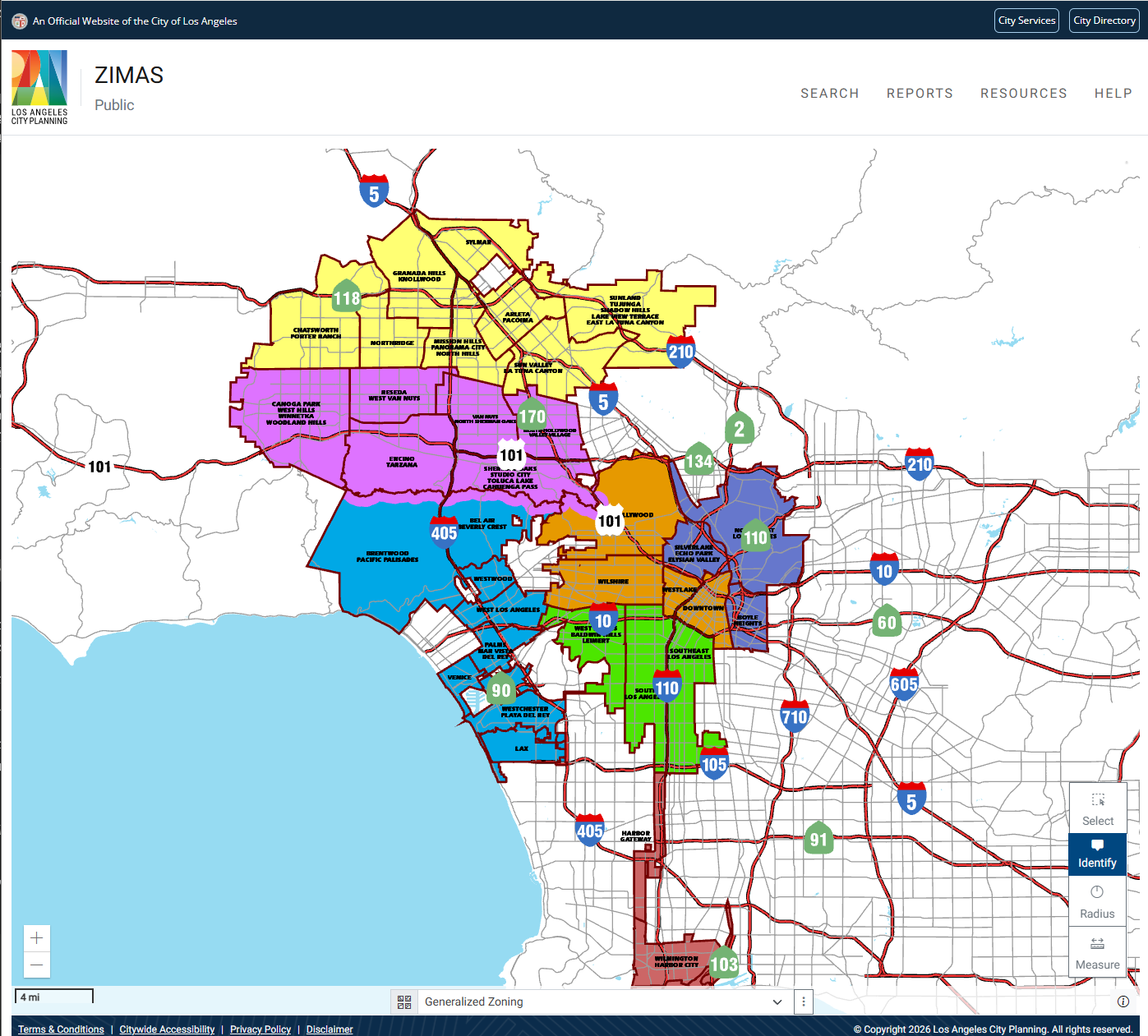
Most investors skip this step. They find a property they like, get into escrow, and then discover the lot doesn't qualify. That's a waste of everyone's time. Here's how to avoid it.
What Is ZIMAS?
ZIMAS (Zoning Information and Map Access System) is the City of Los Angeles's free online zoning tool. It lets you search any property in the city and pull up its zoning designation, overlays, specific plan areas, and — most importantly for our purposes — its SB9 eligibility status.
Think of it as the property's zoning report card. You type in an address, and ZIMAS tells you everything the city knows about what you can and can't build there.
Why SB9 Eligibility Matters Before You Buy
SB9 allows you to add a second primary unit onto a single-family lot — and unlike an ADU, that second unit is valued as a primary residence, not an accessory. That distinction matters at appraisal and resale.
But not every single-family lot qualifies. The property has to meet specific criteria under state law, and the fastest way to check is ZIMAS.
Step-by-Step: How to Check SB9 Eligibility on ZIMAS
Step 1: Go to ZIMAS
Open your browser and navigate to zimas.lacity.org. You'll see a map of Los Angeles with a search bar at the top.
Step 2: Search the Property Address
Type in the full street address of the property you want to check. ZIMAS will zoom into the parcel and display a summary panel on the left side of the screen.
Step 3: Open Planning and Zoning
In the left-side panel, look for the section labeled Planning and Zoning. Click to expand it. This is where the city stores all the zoning overlays, specific plans, and eligibility flags for the property.
Step 4: Find "SB 9 Eligibility"
Scroll down within the Planning and Zoning section until you see SB 9 Eligibility. Next to it, there's a View link. Click it.
Step 5: Read the Checklist
ZIMAS will display a checklist with four to five criteria. Each one will show a yes or no answer. The checklist covers:
Zoning designation — The property must be in a single-family residential zone. In the City of Los Angeles, the eligible zones are A1, A2, RA, RE, RS, R1, RU, RZ, and RW. If the property sits in R2, RD, C1, M1, or any other zone, it does not qualify.
Transit proximity — The property must be within half a mile of a major transit stop or a high-quality transit corridor.
Hazard zones — The property cannot be in a protected hazard area such as wetlands or a floodway. Note that properties in a Very High Fire Hazard Severity Zone or earthquake fault zone may still qualify depending on the specific overlay.
Historic designation — Properties listed in the State Historic Resources Inventory, designated as a Historic Cultural Monument, or located within a Historic Preservation Overlay Zone (HPOZ) are not eligible.
If every criterion passes, the property qualifies for SB9 development. If even one fails, it does not.
What to Do After ZIMAS Says "Yes"
A passing ZIMAS checklist means the property is eligible — but it doesn't mean you should automatically buy it. You still need to evaluate the deal the same way you would any ADU investment property: lot size, site plan feasibility, rental income projections, and total capital required.
Here's my recommended sequence after confirming SB9 eligibility:
Run the rent comps. Don't use the listing agent's projected income. Pull actual rents from the same neighborhood. When I evaluated an SB9 property on Hedda Street in Lakewood, the listing projected $12,800 per month. The real comps came in closer to $11,200 — a $1,600 per month difference that completely changes the cap rate math.
Check which SB9 path makes sense. There are two options: SB9 with a lot split and SB9 without a lot split. The lot split version requires you to intend to reside in one of the units for at least three years and typically takes about a year to process. The no-lot-split version keeps the parcel intact and usually takes around six months. If you want to understand how this pairs with ADUs, the City of LA memorandum (ZA Memo 143) lays out how combining SB9 with ADUs can get you up to four units on a single lot.
Get a feasibility report during escrow. I always have my ADU designer pull a feasibility study before we close so we know exactly what's buildable. This is especially important with SB9 because the unit placement, setbacks, and access requirements are stricter than a standard detached ADU build.
Common Mistakes Investors Make with ZIMAS
Assuming county properties work the same way. ZIMAS only covers the City of Los Angeles. If the property is in unincorporated LA County, you need to check LA County Planning's SB9 page instead. Different jurisdiction, different process.
Ignoring the hazard overlays. A property can sit in a single-family zone and still fail SB9 eligibility because of a wetland overlay or floodway designation. Always check every line of the checklist, not just the zoning.
Skipping the income verification. ZIMAS tells you if you can build. It doesn't tell you if you should. I've seen investors get excited about SB9 eligibility on a property where the numbers don't pencil out once you run honest rent comps. The income approach is how appraisers value these properties, and inflated projections will catch up with you at resale.
The Bottom Line
ZIMAS is the fastest free tool for checking whether a Los Angeles property qualifies for SB9. It takes sixty seconds, it's publicly available at zimas.lacity.org, and it should be the first thing you check before touring any potential SB9 investment property in the city.
If you're evaluating SB9 opportunities in LA and want help running the actual numbers — rent comps, cap rate analysis, and build feasibility — reach out on Instagram or grab my ADU Buyers Guide to get started.
North Long Beach: The ADU Pocket You Need to Buy Into Before Everyone Else Does
If you're looking at LA County for an ADU investment property — especially as a first-time investor trying to start a real portfolio — North Long Beach is the market you need to be looking at right now. The entry prices are still accessible, the city is one of the most ADU-friendly in California, and the deals that pencil today won't pencil at this price point much longer.
Long Beach is already the highest per-capita producer of ADUs in California, according to the City of Long Beach Community Development Department. That's not a fluke — it's the result of years of pro-ADU policy, strong rental demand from a renter-heavy population, and lot characteristics that genuinely support ADU construction. North Long Beach is the pocket inside that broader market where the entry-price math still works for new investors.
Here's the full breakdown.
The North Long Beach Entry Price Advantage
This is the headline. North Long Beach is one of the only LA County markets where you can still buy:
Single-family homes in the $800K–$900K range
Small duplexes in the same $800K–$900K range depending on condition
Compare that to most of OC, where entry-level SFRs start around $1.2M and quickly climb. Compare it to Westside LA, where you can't touch a single-family home for under $1.5M. North Long Beach is the most accessible entry point into the LA metro for an ADU-focused investor.
That price difference is the whole game. When you're starting your portfolio, lower entry price means lower down payment, which means more dry powder for the ADU build itself. A 25% down payment on an $850K North Long Beach property is roughly $213K — versus $300K on a $1.2M Halecrest property in Costa Mesa. That $87K delta either reduces your cash-in-the-deal or funds a meaningful chunk of your detached ADU build.
This is exactly the underwriting framework I broke down in how experienced investors decide which properties are best for an ADU — your total project cost (purchase + ADU build) is what makes or breaks the deal, and North Long Beach is where that math is friendliest right now for a new investor.
Why This Is the Best LA County Pocket to Start a Portfolio
If I'm an investor building a real estate portfolio from scratch in LA County in 2026, I'm starting in North Long Beach. Here's why:
1. Cash flow with a lower down payment is actually possible. At $850K with the SFR renting in the $3,200–$3,500/month range, you can structure 25–30% down and get the main house close to break-even on PITI without putting a massive amount of cash on the table. Add a detached ADU producing $2,400–$2,700/month in long-term rent, and the property pays you to own it.
2. The dual-asset opportunity (SFR + duplex options). Most ADU markets only give you single-family options. North Long Beach gives you both — small duplexes are available in the same entry-price band, which means you can get a 2-unit property and add an ADU for a true 3-unit income setup on one lot. That's portfolio acceleration most cities can't match.
3. Long Beach is a proven ADU city. With Long Beach being California's per-capita ADU leader, the city's building department actually knows how to process these projects. Permitting timelines are more predictable than in cities that handle 5 ADU permits a year. The city also offers a Pre-Approved ADU Program (PAADU) that further shortens timelines for buyers willing to use city-approved plans.
4. State law backstop. Long Beach currently applies California state ADU law directly while local ordinance updates work through the system. That means you get the full state-level homeowner protections — by-right ADU buildability, parking exemptions, setback minimums — on every property in the city.
5. Tenant pool is deep and consistent. Long Beach is a renter-majority city with steady demand from CSULB students, downtown workers, port-area workers, and LA-South Bay overflow tenants. North Long Beach specifically attracts working-class and young-professional renters who pay reliably and stay long-term when the unit is quality.
The Single Biggest ADU Tip for North Long Beach: Build New Detached. Don't Convert.
Here's the most important strategic decision you'll make on a North Long Beach property — and most new investors get it wrong.
Don't try to convert an existing structure into your ADU. Build a new detached unit instead.
The reason is the age of the housing stock. Most North Long Beach homes were built around 1940 — roughly 85+ years old. Conversions sound cheaper on paper because you're "just" reusing existing walls, foundation, roof, etc. But the ADU has to be built up to current code, not the code that was in place when the original structure went up.
When you bring a 1940 garage or back house up to current code, you're often dealing with:
Foundation that doesn't meet modern seismic and load requirements
Framing that doesn't meet current structural standards
Original electrical that has to be completely re-pulled
Plumbing that needs to be re-routed and brought up to current code
Insulation, fire separation, and energy compliance (Title 24) that didn't exist as standards in 1940
I've talked to multiple structural engineers about this exact scenario, and the verdict is consistent: bringing a 1940 structure up to current ADU code is often more expensive — and always more complicated — than building new. You strip the existing structure down to almost nothing, then rebuild it to current standards. At that point, you've spent conversion money and ended up with new construction anyway.
Compare that to a property built in the 1980s, where the underlying structure is much closer to current code already. There, an as-is conversion can save you significant money because you're not fighting decades of code drift. But North Long Beach isn't that market — the housing stock is too old.
The detached new-build path on a North Long Beach property gives you:
Predictable build costs (no surprise structural discoveries)
A modern unit that rents for top-of-market
Maximum resale value — both investors and owner-occupants pay the strongest premium for detached units, as I broke down in the 3 types of ADUs and why detached usually wins
Cleaner permit path through Long Beach's well-developed ADU process, which I covered the full sequencing of in how the ADU permitting and construction process works
This is the single most important strategic call on a North Long Beach property. Get it right and your deal pencils. Get it wrong and you're three months into a conversion realizing you should have just built new.
Pre-Purchase Tip: Check the Electrical Panel Before You Make an Offer
This is the property-level tip that saves more time, money, and headache than any other on a North Long Beach deal: check whether the electrical and main panel/sub-panel have been updated.
On a 1940-era home, the original electrical system is nowhere near sufficient to support both the existing main house load and a new ADU. You'll need to either upgrade the main panel or pull a separate service for the ADU — both of which cost real money and add real time to the project.
The properties where the previous owner already upgraded the panel save you:
$5K–$15K in panel upgrade costs
2–6 weeks of timeline waiting on the utility to schedule the upgrade
The hassle of coordinating the upgrade with construction
Permit complications from having to bring panel upgrades through inspection
Walk every property with this question in mind. Look at the panel. Ask the listing agent when it was last updated. If it's been done — that's a real, quantifiable advantage that should factor into how aggressive you can be on the offer. If it hasn't, build that cost and timeline into your underwriting from day one. Don't discover it post-close.
A Real North Long Beach ADU Math Example
Let's run the numbers on a typical North Long Beach SFR deal in 2026.
Buy a 3-bedroom SFR for $850,000. Put 25% down — that's $213K cash on a primary or investment loan, depending on whether you're house-hacking. The main house rents at $3,400/month, which roughly covers PITI on the remaining $637K loan plus taxes and insurance — close to break-even.
Build an 800 sq ft new detached 2-bedroom ADU at $350/sq ft (Long Beach build costs) — that's $280K in build cost. Total cash in the deal: roughly $493K all-in.
Rent the new detached ADU at $2,500/month (achievable in North Long Beach for a quality, modern unit). After property tax bump, insurance, and reserves, you net roughly $2,100/month in ADU cash flow.
That's ~$25K/year in cash flow on $493K invested — about 5% cash-on-cash, on top of:
Appreciation on a $1.13M all-in property in California's per-capita ADU capital
Principal paydown on the loan
~$200K–$400K in equity added by the permitted detached ADU itself
A property whose dual-income story will attract a strong investor buyer pool when you eventually sell
The fact that Fannie Mae now lets buyers count projected ADU rental income toward loan qualification means your eventual buyer pool — both investors and house-hackers — is wider than it has ever been. Long Beach's status as California's leading ADU city only strengthens that exit story.
Don't Sleep on the Duplex Plays
One thing that makes North Long Beach genuinely special: duplexes show up in the same $800K–$900K price band. That means you can buy a 2-unit property already producing rental income from both sides, and add a detached ADU for a 3-unit income property on a single lot.
The math on a duplex + ADU here is exceptional for portfolio building. You're buying two existing income streams plus adding a third. Cash flow stacks fast. Just keep in mind that duplexes built in the same 1940 era have the same conversion limitations as SFRs — build a new detached ADU on the lot rather than trying to add a unit by converting an existing structure.
Common North Long Beach ADU Mistakes I See
Trying to convert a 1940 garage to save money. As covered above — it's the most expensive "savings" move you can make. Build new detached. The math actually favors it once you account for code compliance.
Skipping the electrical inspection. Don't tour, write an offer, and discover post-close that you're staring down a $12K panel upgrade plus a 4-week utility delay. Check the panel during the showing.
Pricing the eventual sale off your construction cost. This trap shows up in every market, North Long Beach included. Buyers don't pay for your construction receipts — they pay for income, comps, and what the market supports today. I broke down the full pricing framework in how a home with an ADU is valued when you sell.
Buying on a lot that won't fit a real detached ADU. Some North Long Beach lots are tighter than others. If the only ADU option on a given property is a 500 sq ft junior unit, the cash flow math changes dramatically. Tour with someone who can evaluate the lot for actual buildability — not just guess from the listing photos.
Inheriting unpermitted units. A lot of older North Long Beach properties have garage conversions, back houses, or extra units that were never permitted. You need to know what you're buying and have a clear plan — legalize under California's AB 2533 pathway, or build a new permitted detached ADU instead. I walked through the legalization mechanics in how to sell a home with an unpermitted ADU. The same path applies to LA County properties — and it's especially relevant in a market this old.
What to Do Next
If North Long Beach is your market, the playbook is clear:
Lock in your full project budget before you tour. Purchase + ADU build + electrical/system upgrades + reserves. New investors who try to "figure it out as we go" lose money. Plan first.
Decide SFR or duplex. Both can work. Duplex accelerates portfolio cash flow faster, SFR is simpler operationally for a first deal.
Use the Long Beach Pre-Approved ADU Program if it fits your lot. It shortens permitting and reduces design fees substantially.
Walk the property with electrical and lot buildability in mind. These two checks during the showing prevent the most expensive surprises.
Move quickly on the right deals. North Long Beach prices are still accessible, but they're not staying there forever. The deals that pencil today are exactly why investors are going to be priced out of this market within the next few years.
If you want help finding the right North Long Beach property, evaluating it for ADU buildability, or running the numbers on a specific listing — that's exactly what I do. Let's talk.
Book a Free ADU Buyer Strategy Session
Or if you want a custom property search built around your North Long Beach ADU criteria: Customized ADU Property Search
For more on the Long Beach market overall: Long Beach ADU Market Page
Dylan Serna is a Realtor (DRE# 02217359) with eXp Realty specializing in ADU and investment real estate across Orange County and LA County. Learn more at adurealtor.net.
Eastside Costa Mesa: The Best Place to Live and Build an ADU That Actually Cash Flows
If you've spent any time in Costa Mesa, you already know Eastside is the lifestyle pocket of the city. Walkable, food-and-coffee-rich, minutes from Newport Beach, and full of the kind of mid-century cottage homes that buyers fall in love with on the first showing. It's one of the most desirable places to live in all of Orange County.
What most buyers don't realize is that Eastside is also one of the strongest cash-flow ADU markets in OC — but only if you understand how it works. The numbers don't pencil the way they do on Westside or in Halecrest, where lower entry prices do the heavy lifting. Eastside is a different play entirely. Here's why it works, who it works for, and how to actually build a deal that cash flows here.
Why Eastside Costa Mesa Commands Premium Pricing
Let's start with what you're paying for. Eastside Costa Mesa is roughly the area east of Newport Boulevard and south of the 55 freeway, anchored by the 17th Street corridor — one of the most walkable, food-and-coffee-dense commercial streets in Orange County. Eastside residents walk to grab coffee, walk to dinner, walk their dogs to the bars on Newport Boulevard, and bike to Back Bay or the beach in under 10 minutes.
That lifestyle is why Eastside trades at a premium. Single-family homes here run $1.8M–$2.5M+ depending on size, condition, and lot. The cottage homes near 17th Street and Orange Avenue can fetch top of the range when remodeled. The slightly larger homes deeper into the neighborhood — toward the Mesa del Mar border — hold value just as well.
This is the most desirable Costa Mesa pocket for owner-occupants, which means it's the most desirable Costa Mesa pocket for the kind of buyer who's going to pay you the strongest price when you eventually sell.
The Eastside ADU Rental Advantage — This Is Where the Cash Flow Lives
Here's what most ADU investors don't realize about Eastside: the rental rates here are dramatically higher than the rest of Costa Mesa.
A 2-bedroom detached ADU that rents for $3,000/month in Halecrest can rent for $3,800–$4,500/month on Eastside. A high-end 1-bedroom detached unit with quality finishes near 17th Street can push $3,500/month all by itself. The reason is the tenant pool — Eastside attracts:
Young professionals priced out of Newport Beach who still want the lifestyle and are willing to pay near-Newport rents to get it.
Newport Beach overflow tenants who want walkability, beach proximity, and quality finishes without the Newport price tag.
Couples and small families who specifically want a detached unit (not a condo, not an apartment) in a walkable pocket.
Remote workers who can live anywhere and choose Eastside for the lifestyle.
This tenant pool doesn't price-shop the way budget renters do. They want quality, they want location, and they pay accordingly. Build a quality detached ADU on Eastside and you're not competing with the broader OC rental market — you're competing with Newport Beach rentals at half the cost. That gap is where the cash flow lives.
The Lot Reality — Smaller, But Workable
Eastside lots are generally smaller than what you find on Westside, and noticeably smaller than the bigger Halecrest corner lots. A typical Eastside SFR lot runs roughly 5,000–6,500 sq ft, which is tighter than the rest of Costa Mesa.
That means a few things for ADU investors:
You'll typically build in the 700–1,000 sq ft range, not the full 1,200 sq ft maximum that Costa Mesa allows under the city's ADU ordinance.
Setbacks are tight. You'll need to design carefully to fit a detached ADU without variance. The state framework from California HCD sets baseline rules that protect ADU buildability, but Eastside's smaller lots mean every foot matters.
Garage conversions and JADUs become more attractive on the smallest Eastside lots. If you genuinely can't fit a detached ADU, a converted garage with proper permits can still produce strong rent — though detached almost always wins the resale battle, as I broke down in the 3 types of ADUs and why detached usually wins.
Lot selection is everything. The difference between a "this works" Eastside lot and a "this doesn't quite fit" Eastside lot is often a few hundred square feet of backyard depth. Tour with someone who knows what to measure before you write an offer.
The good news: the smaller ADU footprint isn't a deal-breaker on Eastside, because the per-square-foot rent here is so much higher than the rest of Costa Mesa. An 800 sq ft Eastside ADU at $3,800/month is producing more monthly income than a 1,200 sq ft Halecrest ADU at $3,000/month — same lot effort, better cash flow per square foot.
Why Eastside Is the Perfect House-Hacker Play
The buyer who wins on Eastside more than anyone else is the house-hacker — someone who's going to live in the main home, rent the ADU, and let the rental income offset the mortgage on a lifestyle home they actually want to live in.
The math here is genuinely powerful. You're not trying to make the property cash flow on day one as a pure investment. You're using the ADU to subsidize the cost of living somewhere you'd want to live anyway. And on Eastside, where the lifestyle is the whole point, that subsidy turns a $2M home from "out of reach" into "affordable when you factor in the ADU income."
The fact that Fannie Mae now lets buyers count projected ADU rental income toward loan qualification makes this even more powerful. You can use the projected $3,800/month ADU rent in your loan application — meaning you can qualify for an Eastside home you couldn't otherwise touch.
This is the same total-project-cost framework experienced investors apply, just from the owner-occupant side. I covered the underwriting logic in detail in how experienced investors decide which properties are best for an ADU — and Eastside is the city pocket where that logic produces a true win-win: live where you want, build the ADU that makes it possible, and bank the appreciation and equity over time.
A Real Eastside Costa Mesa ADU Math Example
Let's run the numbers on a typical Eastside house-hacker deal in 2026.
You buy an Eastside cottage home — 3 bedrooms, decent condition, walkable to 17th Street — for $2,000,000. You put 25% down (you're owner-occupant, so you can): $500K cash. The remaining $1.5M is on a primary residence loan, which carries roughly $9,000–$10,000/month in PITI at current rates.
You build an 850 sq ft detached 2-bedroom ADU at Costa Mesa's quality build cost — $400/sq ft — that's another $340K in build cost. Total cash in: roughly $840K all-in.
The ADU rents at $3,800/month — call it $3,400/month net after property tax bump, insurance, and reserves.
That $3,400/month against your $9,500 PITI means you're effectively paying ~$6,100/month out of pocket to live in a $2M Eastside home that you couldn't otherwise touch. Compare that to renting a comparable Eastside cottage at $5,500–$6,000/month — you're roughly cash-flow equivalent to renting, but you're building equity, capturing appreciation, and owning a property whose ADU keeps the math working year after year.
When you eventually sell — to either an investor or another house-hacker — the updated lender rules around ADU income plus the dual-income story plus Eastside's location premium gives you the strongest possible buyer pool. That's the long game.
Costa Mesa's Short-Term Rental Ban Still Matters
One non-negotiable: don't underwrite Eastside ADUs to STR income. It's tempting because Eastside is so close to Newport Beach and the airport, and Airbnb rates here would be extraordinary. But the city's short-term rental ordinance prohibits rentals under 30 days in residential zones, and the city does enforce it.
The good news is you don't need STR upside to make Eastside work. Long-term ADU rents here are already exceptional — the highest in Costa Mesa. Build to long-term and the numbers work. Try to build to STR and you're risking fines, citations, and a strategy that doesn't survive contact with the city.
Common Eastside ADU Mistakes I See
Buying on a lot that physically can't fit a detached ADU. This is the biggest one. Eastside has lots that genuinely don't have the backyard depth for a 700+ sq ft detached unit. If the only ADU option is a junior ADU or a tight attached unit, the deal is meaningfully weaker — both for cash flow and for resale. Lot selection has to come first.
Underbuilding the ADU because Eastside is "premium enough already." Eastside ADU tenants are paying premium rent for premium quality. Skimping on finishes — bargain cabinets, basic flooring, generic appliances — leaves $400–$600/month in rent on the table forever. A $30K finish upgrade that adds $500/month in rent is a 20% return on that upgrade in year one alone.
Ignoring the comp data on resale. Eastside ADU comps are getting better every quarter, but the appraisal piece still matters. I covered the full pricing strategy in how a home with an ADU is valued when you sell — and Eastside is exactly the kind of premium pocket where pulling the right comps within a half-mile radius can swing your eventual sale price by $100K+.
Treating Eastside like Westside or Halecrest. Different neighborhoods, different math. The Eastside play is lifestyle + house-hacker subsidy + premium ADU rent. If you try to underwrite Eastside the same way you'd underwrite a pure cash-flow play in a cheaper city, the numbers won't pencil and you'll walk away from a deal that actually works for the right buyer.
Pricing the eventual sale off your renovation cost. This is the seller mistake I see across every OC pocket, and Eastside is no exception. Buyers don't pay for your construction receipts — they pay for the home, the lifestyle, and the income story. I broke the full pricing framework down in what your home with an ADU is actually worth.
What to Do Next
If Eastside is your target, the playbook looks like this:
Decide if you're house-hacking or pure investing. Eastside works far better as a house-hacker play than as a cash-flow-only investment. Be honest about which you are before you start touring.
Lot-shop, not house-shop. The right Eastside lot is more important than the right Eastside cottage. Tour with someone who knows where the ADU will physically go before you fall in love with the kitchen.
Lock in your total project budget early. Purchase + any renovation + ADU build + finishes. Eastside doesn't reward shortcuts on quality, so build the budget for what the neighborhood expects.
Build your ADU plans around the Costa Mesa ADU ordinance from day one. Setbacks, height, parking — Eastside lots leave less margin for error than the rest of the city.
If you want help walking specific Eastside properties, evaluating lots for ADU buildability, or running the house-hacker math on a real listing — let's talk.
Book a Free ADU Buyer Strategy Session
Or if you want a custom Eastside property search built around your ADU criteria: Customized ADU Property Search
For more on the Costa Mesa market overall: Costa Mesa ADU Market Page
Dylan Serna is an Orange County Realtor (DRE# 02217359) with eXp Realty specializing in ADU and investment real estate. Learn more at adurealtor.net.
Westside Costa Mesa: The Value Play for ADU Investors Willing to Take on a Fixer
If Halecrest is the polished, turnkey value play in Costa Mesa, Westside Costa Mesa is the fixer play with serious upside. Lower entry prices, bigger lots, and more rough-around-the-edges properties — which is exactly the combination that creates ADU opportunity for the right buyer.
Westside isn't for everyone. If you want a clean, easy, deliverable-on-day-one investment, this isn't it. But if you're willing to take on a property that needs work, you can get into Costa Mesa for meaningfully less than what Halecrest, Mesa Verde, or Eastside ask — and end up with a bigger lot and more ADU flexibility than any of those neighborhoods will give you.
Here's how to think about it.
The Westside Entry Price Advantage
Westside Costa Mesa is the lowest-entry-price pocket of Costa Mesa proper. While Halecrest sits in the $1.2M range, Mesa Verde pushes $1.6M+, and Eastside runs $1.8M–$2.5M, Westside fixers regularly trade in the high $900Ks to low $1.1M range depending on condition, lot size, and exact location.
That price gap matters. In a city like Costa Mesa where rental demand is strong and the long-term appreciation story is solid, every $200K you save on the entry price is $200K that can either go into the ADU build or stay in your pocket as buffer. The investors I work with who win in Costa Mesa are the ones who keep their all-in cost (purchase + renovation + ADU build) controlled — and Westside is one of the only neighborhoods left in the city where that's still possible.
This is exactly the framework I broke down in how experienced investors decide which properties are best for an ADU — start with total project cost, not the listing price. Westside gives you more headroom on that math than any other Costa Mesa neighborhood.
Bigger Lots Mean Bigger ADU Flexibility
Here's the part most investors don't realize about Westside: the lots are noticeably bigger than what you find in newer or more polished Costa Mesa pockets.
A lot of Westside was developed in earlier decades when lot sizes were more generous, and a meaningful portion of the housing stock sits on lots that give you real backyard depth, real side-yard width, and in many cases the kind of footprint where you can fit a full 1,200 sq ft detached ADU without fighting setbacks or lot coverage limits the whole way.
Why bigger Westside lots are a real advantage for ADUs:
You can build the maximum-allowed detached ADU. Costa Mesa permits detached ADUs up to 1,200 sq ft under the city's ADU ordinance and state law. On a tight Eastside lot, you might be capped at 800 sq ft just because of setbacks. On a Westside lot with real backyard depth, you can build the full unit.
Bigger ADU = higher rent. A 2-bedroom, 1,200 sq ft detached ADU rents for meaningfully more than a 1-bedroom 700 sq ft unit. The lot is the constraint, and Westside gives you the most room to work with.
Real separation between main house and ADU. Bigger lots mean you can place the ADU far enough from the main home to give both occupants genuine privacy, which drives longer tenancies and lower turnover.
Future flexibility. With state law also allowing a JADU plus a detached ADU on the same single-family lot, a bigger Westside lot gives you the option to build out further down the line.
This is the same logic I applied to Fullerton corner lots — extra lot footage is the single biggest driver of ADU upside. I covered the full breakdown in why Fullerton corner lots create the best ADU opportunities, and Westside operates on the same principle, just from a different geometric starting point.
The Fixer Reality — What You're Actually Buying
Let's be honest about what "Westside fixer" means in 2026, because this is where investors get into trouble if they're not clear-eyed.
Most Westside fixers are older single-family homes that haven't been updated in decades. Original kitchens. Original bathrooms. Sometimes original electrical panels. Often dated landscaping, older roofs, and HVAC that's at the end of its useful life. None of this is a deal-killer — these are exactly the kinds of properties that turn into great ADU plays — but you need to budget for them properly.
A few specific things to watch for on Westside:
Unpermitted garage conversions and back-house additions. Westside has a high concentration of older properties where previous owners converted garages, added back houses, or built additional living space without pulling permits. If you're buying one of these, you have a decision to make: legalize the existing structure under California's AB 2533 pathway, or tear it down and start fresh with a permitted detached ADU. Either path can work, but you have to know what you're buying.
Older systems that need to support a new ADU. Adding an ADU often means upgrading the electrical panel, sometimes the sewer line, and possibly the water service. On a Westside fixer with 1960s infrastructure, those upgrades are part of your build budget — not optional add-ons you discover halfway through construction.
Mixed-zoning blocks. Westside is in transition. Some blocks are clean residential. Others are residential-adjacent to industrial or commercial uses. Pull the actual zoning before you commit. The city's planning department can confirm what's permitted on any specific parcel.
Foundation and structural issues on older homes. A standard pre-purchase inspection won't catch everything. On a Westside fixer, a structural-specific inspection is worth the few hundred dollars — especially if you're planning a major renovation alongside the ADU build.
The fixer condition is what creates the value. But it's also what creates the risk. Going in with realistic numbers — purchase + main-home renovation + ADU build + system upgrades — is what separates the investors who make money on Westside from the ones who get stuck.
Why Detached ADUs Still Win on Westside
Just like Halecrest, the play on Westside is detached ADUs. The reasoning is even stronger here:
The lots support it. With more land to work with, you can build a real detached unit that functions like its own little single-family home — which is exactly what tenants pay premium rent for and what the next buyer values most. I covered the full type-by-type comparison in the 3 types of ADUs and why detached usually wins.
The main house often needs work anyway. When you're already renovating the primary home, building a separate detached structure is operationally simpler than trying to bolt an attached ADU onto a house that's mid-renovation.
Resale value is highest on detached. Future buyers — both investors and multigenerational families — pay the strongest premium for a detached ADU. On a Westside property where you're already underwriting to upside, this is the type of ADU that maximizes your eventual sale price.
Junior ADUs (carved from the existing main home) sometimes make sense if you're trying to add a small unit cheaply. But on a property where you have the lot for a real detached build and you're already doing significant renovation work, junior is rarely the highest-ROI move.
Costa Mesa's Short-Term Rental Ban Still Applies
Same rule as the rest of Costa Mesa: no short-term rentals. The city's short-term rental ordinance prohibits rentals under 30 days in residential zones, with very narrow exceptions. Don't underwrite your Westside ADU expecting Airbnb income — it doesn't work, the city enforces it, and you don't need it. Long-term rental demand in Costa Mesa is strong enough on its own.
A Real Westside Costa Mesa ADU Math Example
Let's run the numbers on a Westside fixer deal in 2026.
Buy a 3-bedroom Westside fixer on a generous lot for $1,000,000. Put 50% down — that's $500K cash to start. Budget $150K for main-house renovation (kitchen, bathrooms, electrical panel, paint, flooring, exterior touch-up). Build a 1,100 sq ft detached 2-bedroom ADU at $400/sq ft for quality finishes — that's $440K in build cost.
Total cash in the deal: roughly $1,090K. All-in basis: $1,590K.
Compare that to a turnkey Halecrest property at $1.2M plus a $400K ADU — $1,600K all-in. Roughly the same end-state cost basis, but on Westside you've ended up with a bigger lot, a fully renovated main home tailored exactly to your specs, and a maxed-out 1,200 sq ft–capable detached ADU instead of a smaller unit constrained by tighter lot dimensions.
Rent the renovated main house at $4,800–$5,200/month (the renovation matters here — fixer rents are dramatically lower than renovated rents). Rent the detached ADU at $3,200/month. After PITI, taxes, insurance, and reserves, you're netting meaningfully positive cash flow on the property — and you've built real equity through the renovation work itself.
The updated Fannie Mae rules letting buyers count projected ADU rental income toward loan qualification also widen your eventual exit buyer pool — both investors and house-hackers can finance this property when it's time to sell.
Common Westside ADU Mistakes I See
Underestimating the renovation budget. Westside fixers eat budgets when investors aren't realistic. Walk in assuming you'll spend more than the inspection suggests, not less. The properties that look like cosmetic fixes often have hidden electrical, plumbing, or structural work waiting underneath.
Buying in a mixed-zoning pocket without checking. Not every Westside block is created equal. Some sit next to industrial parcels or have zoning quirks that affect what you can build. Pull the actual zoning and talk to the city planning department before you commit. The state framework from California HCD sets the floor, but local zoning still controls the lot.
Ignoring the existing unpermitted structure. A lot of Westside fixers come with garage conversions, back houses, or extra units that were never permitted. You need to deal with that before — not after — you take ownership. The path forward depends on the specific structure, but pretending it doesn't exist or hoping the city won't notice isn't a strategy.
Pricing the eventual sale off your renovation cost. This is the trap I see most often with fixer-flippers. You spend $150K renovating the main house and $440K building the ADU, and you assume the sale price should reflect every dollar back. The market doesn't price that way. It prices on comps, income potential, and what buyers will pay today. I broke down the full pricing framework in what your home with an ADU is actually worth — read it before you set your eventual list price.
Underbuilding the ADU because the main house ate the budget. This happens constantly on fixer projects. You blow through your renovation budget on the main house, then try to save money on the ADU. Bad move. The ADU is the asset that creates the cash flow and drives the resale premium. If anything, it deserves the bigger share of your build budget — not the leftovers.
What to Do Next
If Westside is your target, the playbook is clear:
Get your full project budget locked in before you tour. Purchase + renovation + ADU build + system upgrades. All in. If a property doesn't pencil, walk.
Pull the zoning on every property you're seriously considering. Westside is mixed enough that a quick zoning check before you write an offer can save you from a major mistake.
Inspect like you mean it. Standard inspection plus structural plus sewer lateral on any Westside fixer. The few hundred dollars you spend up front saves tens of thousands down the line.
Build a relationship with a Costa Mesa contractor before you close. Knowing what your renovation and ADU build will actually cost, from someone who has built in the city, is what turns a Westside fixer from a gamble into a calculated investment.
If you want help running the numbers on a specific Westside property, walking the lot, or figuring out whether the deal pencils — that's exactly what I do. Let's talk.
Book a Free ADU Buyer Strategy Session
Or if you want a custom Westside property search built around your specific ADU criteria: Customized ADU Property Search
For more on the Costa Mesa market overall: Costa Mesa ADU Market Page
Dylan Serna is an Orange County Realtor (DRE# 02217359) with eXp Realty specializing in ADU and investment real estate. Learn more at adurealtor.ne
The Best Costa Mesa Neighborhoods for ADU Investing — Why Halecrest Wins on Value
Costa Mesa is one of the strongest ADU markets in Orange County, but that doesn't mean every neighborhood inside the city plays the same way. Eastside Costa Mesa runs you north of $2M for a tear-down. Mesa Verde wants $1.6M+ before you've spent a dime on an ADU. South Coast Metro is condo-heavy and not really an ADU play at all.
If you want the actual Costa Mesa neighborhood where the ADU math works in 2026, you want Halecrest. Here's why.
Halecrest: Costa Mesa's Best-Priced ADU Neighborhood
Halecrest is the pocket of Costa Mesa where the entry price still makes sense for an ADU investment. Single-family homes here are trading in the $1.2M range — which sounds like a lot until you compare it to the rest of Costa Mesa. Mesa Verde north of you is $400K–$500K more for a comparable-sized home. Eastside is closer to $2M. The coastal-adjacent pockets are fully out of reach for most ADU investors.
At $1.2M, Halecrest is the lowest realistic entry point into Costa Mesa proper for a single-family home with real ADU potential. That price point matters enormously, because in a city like Costa Mesa where rental demand is strong and the appreciation history is solid, getting your all-in cost (purchase + ADU build) under $1.5M is what separates a deal that cash flows from a deal that just sits there as an appreciation play.
This is the same underwriting logic experienced investors apply across OC — start with total project cost, not the listing price. I broke the full framework down in how experienced investors decide which properties are best for an ADU, and Halecrest is one of the few Costa Mesa pockets where that math actually works.
The Lot Dynamics — Curvilinear Streets and Corner Lots
Here's what most investors miss about Halecrest, and it's the reason this neighborhood is genuinely special for ADUs: the streets curve.
Halecrest was built in the late 1950s and early 60s with the curvilinear street planning that was popular in mid-century suburban tract development. Curving streets do something straight-grid streets don't — they create a much higher percentage of corner lots, irregular lots with extra side-yard space, and pie-shaped lots that fan out in the back.
For ADU investors, that's gold. Corner lots and irregular lots give you:
More buildable area. Extra side-yard space that interior straight-grid lots don't have, which means more room to fit a full 1,200 sq ft detached ADU without setback headaches.
Separate ADU access. When the lot fronts two streets, you can give the ADU its own entrance from the side street. Tenants pay a premium for that level of separation, and it shows up in your rent.
Real privacy between units. With the ADU oriented to a different street than the main home, both the homeowner and tenant get the kind of separation that drives long tenancies and low turnover.
Easier permitting. More lot footage usually means easier compliance with Costa Mesa's ADU setback and lot coverage rules — fewer variances, fewer plan check rejections.
This is the same dynamic I covered in why Fullerton corner lots create the best ADU opportunities — but Halecrest takes it further because the entire neighborhood was platted with curving streets, not just a few corners. There are simply more high-quality ADU lots per block in Halecrest than in almost any other Costa Mesa neighborhood.
Why Detached ADUs Win in Halecrest
Given the price point and the lot characteristics, detached ADUs are the right play in Halecrest almost every time.
Here's why. At a $1.2M entry price, you don't have a lot of margin to build something the market doesn't fully reward. Junior ADUs (carved from the existing home) and attached ADUs (sharing a wall with the main house) both trade at a discount to detached units in the rental market and in the resale market — they offer less privacy, less separation, and they don't function the way a true second residence does.
A detached ADU on a Halecrest corner lot can genuinely feel like its own little single-family home. That's what tenants want, that's what the next buyer wants, and that's what the appraiser will value highest. I broke down the full trade-offs in the 3 types of ADUs and why detached usually wins — and in Halecrest specifically, the lot characteristics tilt the scales even further toward detached.
A few specifics on what detached works well here:
800–1,200 sq ft, 2-bedroom layouts. Costa Mesa rental demand for 2-bedroom units is strong, and at this size you can hit market rents that justify the build cost.
Rear-yard placement with side-street access on corner lots. Maximum separation from the main home, easiest for tenants, highest rent.
Quality finishes that match a $1.2M+ home. This isn't the neighborhood for a budget build. Halecrest buyers and tenants expect quality, and the resale value of your ADU is going to depend on the next owner being able to defend the price as more than just "extra square footage."
The Other Costa Mesa Neighborhoods — A Quick Read
Halecrest is the value play, but Costa Mesa has other ADU-relevant neighborhoods worth knowing:
Mesa Verde — Premium Costa Mesa pocket north of the 405. Larger lots, golf course adjacency, and a quieter, more established feel. ADUs work here, but the entry price ($1.6M–$2M+) makes the cash flow math harder. Best for house-hackers and owner-occupants who want the ADU income to offset a mortgage they're going to carry anyway.
Mesa del Mar — Mid-century neighborhood adjacent to Halecrest with a similar curvilinear street layout. Slightly higher prices than Halecrest, but the same lot dynamics that make corner lots and detached ADUs the right play. If Halecrest is sold out, this is the next pocket to look at.
Eastside Costa Mesa — Close to the coast, walkable to 17th Street and the airport-adjacent restaurants. Premium prices ($1.8M–$2.5M) and smaller lots make ADUs harder to fit and harder to justify financially. Better as an owner-occupant lifestyle play than a pure ADU investment.
Westside Costa Mesa — Mixed-use industrial-adjacent area in transition. Lower entry prices but variable lot quality and zoning complexity. Worth looking at if you find the right specific property, but not a default ADU neighborhood.
South Coast Metro / South Coast Plaza area — Mostly condos, multi-family, and commercial. Not really an ADU play.
A Note on Costa Mesa's Short-Term Rental Ban
One thing every Costa Mesa ADU investor needs to know: Costa Mesa effectively bans short-term rentals citywide. The city's short-term rental ordinance prohibits rentals under 30 days in residential zones, with very limited exceptions.
What this means for your ADU strategy: you're underwriting to long-term rental income, not Airbnb. Don't build a Halecrest ADU planning to put it on STR platforms — the city enforces this, the fines are real, and the strategy doesn't work. The good news is that Costa Mesa's long-term rental demand is strong enough that you don't need STR upside to make the numbers work. A well-built detached ADU in Halecrest leases up fast at $2,800–$3,200/month for a 2-bedroom in 2026.
A Real Halecrest ADU Math Example
Let's run the numbers on a typical Halecrest deal in 2026.
Buy a single-family home on a Halecrest corner lot for $1,200,000. Put 50% down — that's $600K cash to get the main home close to break-even on PITI. The main home rents for around $4,200–$4,500/month, which roughly covers the carrying cost on the $600K loan, taxes, and insurance.
Build a 1,000 sq ft detached 2-bedroom ADU at Costa Mesa construction costs — call it $400/sq ft for quality finishes — that's $400,000 in build cost. Total cash in the deal: roughly $1,000,000.
Rent the detached ADU at $3,000/month (conservative for a quality 2-bed in Halecrest). After property tax bump, insurance, and a vacancy reserve, you're netting roughly $2,500/month — about $30K/year in cash flow on $1M invested.
That's ~3% cash-on-cash, on top of:
Appreciation on a $1.6M+ all-in property in one of OC's strongest cities
Principal paydown on both loans
~$300K–$500K of permitted square footage equity added by the ADU itself
A property that becomes much more valuable on resale to either an investor or a multigenerational family
Costa Mesa's appreciation history and the updated Fannie Mae rules letting buyers count ADU rental income toward loan qualification mean your eventual buyer pool is wider than it's ever been — both investor-buyers and house-hackers can get this loan done.
Common Halecrest ADU Mistakes I See
Buying an interior lot when a corner lot was available. The whole reason Halecrest works for ADUs is the high concentration of corner and irregular lots. If you're paying Halecrest prices for a standard interior lot, you've lost the structural advantage of the neighborhood. Be patient. Wait for the right lot.
Going with an attached or junior ADU to "save money" on the build. At a $1.2M entry price, the build cost difference between an attached unit and a detached unit isn't where you save money — it's where you maximize the upside. A detached ADU rents for more, appraises higher, and resells stronger. The math nearly always favors detached in this neighborhood.
Pricing the ADU build cheaply. Halecrest is a quality neighborhood. Buyers and tenants notice cheap finishes. Cheap builds rent for less, appraise for less, and create resale problems down the line. I covered this in detail in how a home with an ADU is valued when you sell — the ADU's quality is doing real work in your eventual sale price, and trying to save $30K on the build often costs you $80K on the back end.
Underwriting to STR income. It doesn't work in Costa Mesa. Build a long-term rental plan. The numbers are strong without needing STR upside.
Following the recent state ADU reforms loosely instead of locally. California's statewide ADU framework from HCD sets the floor, but Costa Mesa has its own setback, height, and lot-coverage rules layered on top. Check the city ordinance before you finalize plans — not after.
What to Do Next
If Halecrest is your target, the move is simple: get clear on what you can build, then go find the right lot.
Pull the Costa Mesa ADU planning resources so you understand the local rules. Get your total project budget locked in (purchase + renovation + ADU build) before you tour. And be ready to move fast when the right corner lot at the right price comes up — they don't sit long in Halecrest.
If you want help finding the property, running the numbers, or figuring out whether a specific Halecrest listing actually pencils out — that's exactly what I do. Book a free strategy session and we'll go through it together.
Book a Free ADU Buyer Strategy Session
Or if you want a custom property search built around your ADU criteria: Customized ADU Property Search
For more on the Costa Mesa market overall: Costa Mesa ADU Market Page
Dylan Serna is an Orange County Realtor (DRE# 02217359) with eXp Realty specializing in ADU and investment real estate. Learn more at adurealtor.net.
The Complete ADU Guide to Garden Grove: Why It's One of Orange County's Strongest ADU Markets
If you're looking at Orange County for an ADU investment property — or you already own a Garden Grove home and want to know what an ADU could do for it — this is the guide I wish existed when I started working with Garden Grove sellers and investors.
Garden Grove gets overlooked in a lot of OC real estate conversations. Anaheim gets the headlines for theme park proximity, Costa Mesa gets the South Coast money, Fullerton gets the lot size attention. But for ADUs specifically? Garden Grove is doing things right now that almost no other OC city can match — strong multigenerational buyer demand, deep rental demand from nearby job centers, a very ADU-friendly city government, and comp data that's finally starting to support real valuations.
I broke the basics down in this video — give it a watch, then let's go deeper:
The Garden Grove ADU Landscape in 2026
First, the ground truth on what you can build. Garden Grove follows California state ADU law (which is the most homeowner-friendly it has ever been thanks to the wave of recent state ADU reforms from HCD) and layers on its own local rules through Chapter 9.54 of the Garden Grove Municipal Code.
The headline numbers, straight from the City of Garden Grove ADU page:
One-bedroom ADUs can be up to 850 sq ft.
Two-or-more bedroom ADUs can be up to 1,200 sq ft.
Attached ADUs are capped at 1,200 sq ft or 50% of the primary home, whichever is less.
ADUs are permitted on any lot zoned for single-family or multi-family residential.
One ADU and one JADU are allowed on a single-family lot.
The single biggest practical advantage Garden Grove offers is the ADU Go! pre-approved plan program. The city offers four pre-reviewed, code-compliant ADU plans — for free — that dramatically shorten the permitting timeline. For first-time ADU builders, this is a real shortcut. You're not paying an architect to design from scratch and then wait months for plan check. You're picking a plan the city already approved and getting to construction faster.
If you want the city's quick-reference version, the Garden Grove ADU FAQ lays out setbacks, height rules, and parking requirements in plain language.
The Garden Grove Sub-Markets You Need to Know
Garden Grove isn't one market — it's at least three, and the ADU economics shift depending on which pocket you're in.
West Garden Grove
West Garden Grove is the premium pocket of the city. It sits west of Beach Boulevard, bordering Seal Beach and Cypress, and it's geographically separated from the rest of Garden Grove by the industrial corridor and the Joint Forces Training Base in Los Alamitos. That separation is the whole story — it's developed its own identity, its own pride of ownership, and its own price tier. Median single-family prices here are pushing close to $1M.
For ADU investors, West Garden Grove is the trickier play. The entry price is higher, which means the all-in cost (purchase + ADU build) eats into your cash flow margin. But the rental demand is strong, and the buyer profile when you eventually sell skews toward owner-occupants who pay full price for quality. If you're house-hacking — meaning you're going to live in the main home and rent the ADU — West Garden Grove can absolutely work. If you're a pure cash flow investor, the math is tighter and you need to be more selective.
East Garden Grove
East Garden Grove is where you find the renters. It's closer to the major job centers in Anaheim and Santa Ana, more affordable for tenants, and the demand for ADU rentals here stays strong year-round. Young professionals and families looking for value flock to this area, which is exactly the renter pool you want when you're underwriting an ADU investment.
For investors, East Garden Grove typically gives you a better entry price on the main home, which means the ADU rental income has a real impact on your monthly cash flow — not just a marginal one. This is the area where I see investors actually hit cash flow neutral or positive on the main house with ~50% down, which is the underwriting framework I covered in how experienced investors evaluate ADU properties.
Central Garden Grove (the Civic Center / Historic Main Street area)
Central Garden Grove around Main Street and the Civic Center is the multigenerational living capital of the city. This is where I see the strongest demand from buyers who want a home with an ADU specifically so a parent or adult child can live close by but separately. National data shows multigenerational buying is at an all-time high, and Garden Grove is one of the OC cities where that trend lands hardest.
For sellers, this is gold. A well-built, permitted ADU in central Garden Grove doesn't just attract investors — it attracts owner-occupant families who will pay a premium for a setup that solves their living situation. That dual buyer pool (investors + multigenerational families) is what drives the strongest sale prices.
Why Garden Grove Works So Well for ADUs
Three things stack up in Garden Grove's favor that you don't always get in other OC cities:
1. Lot characteristics. A lot of Garden Grove's housing stock is single-story ranch homes built in the 1950s and 60s on lots that were generous for their time. That means usable side and back yards, room for a detached ADU up to 1,200 sq ft, and often the ability to give the ADU its own entrance — which tenants love and which justifies higher rent. Corner lots are particularly strong here, for the same reasons I broke down in why Fullerton corner lots create the best ADU opportunities.
2. Rental demand from neighboring job centers. Garden Grove is sandwiched between Anaheim, Santa Ana, and Westminster, with quick access to the 22, the 5, and the 405. Renters who work in any of those areas — and that's a lot of renters — actively look in Garden Grove because it's central, affordable compared to the coastal cities, and has a real neighborhood feel. ADUs lease up fast here. I've had clients rent backyard units in under two weeks.
3. Comp data is improving fast. One of the biggest historical problems with selling an ADU property in OC was the thin comp data — appraisers couldn't find enough recent ADU sales to justify a real valuation, so they'd default to standard SFR comps and undervalue the property. That was a major problem I broke down in why ADU properties stall on the market. Garden Grove is one of the OC cities where ADU comps are now strong enough to actually defend a premium valuation. That changes the math for sellers in 2026 versus even a year ago.
The Garden Grove Buyer Pool Is Different
If you're buying a Garden Grove ADU property today, here's the buyer you're going to sell to in 5–10 years.
Multigenerational families. This is the dominant buyer profile in Garden Grove. The city has one of the highest multigenerational household rates in OC, and that demand isn't slowing. A permitted ADU is the perfect structure for parents living with adult children, grandparents living with families, or any household that wants togetherness without sharing a front door.
Income-focused investors. Investors looking at Garden Grove want one thing: cash flow. They're underwriting based on rent roll, cap rate, and cash-on-cash return. The way you position a property for this buyer is completely different from how you'd position it for a family. I went deep on this in how a home with an ADU is actually valued when you sell — the income story is what unlocks the strongest investor offers, and Garden Grove's rental demand makes that story easy to tell.
House-hackers. This is the buyer who's going to live in one unit and rent the other to offset the mortgage. Garden Grove works for them because the entry price is more accessible than Fullerton or Costa Mesa, and the rental demand is strong enough that the ADU income covers a meaningful chunk of the mortgage. With Fannie Mae now letting buyers count projected ADU rental income toward loan qualification, the house-hacker pool just got significantly bigger.
A Real Garden Grove ADU Math Example
Let me show you what the numbers actually look like on a typical Garden Grove deal in 2026.
You're buying a single-family home in East Garden Grove for $900,000. You put 50% down — that's $450K cash to stabilize the main house close to breakeven on PITI. The main house rents for around $3,400/month, which roughly covers the carrying cost on the $450K loan plus taxes and insurance.
Now you build an 800 sq ft detached ADU. At Garden Grove construction costs of roughly $300/sq ft, that's $240,000 in ADU build cost — call it $690K total cash in the deal.
The ADU rents for around $2,400–$2,600/month in East Garden Grove. Assume $2,500. After accounting for property tax bump from the ADU, insurance, and a vacancy reserve, you're netting roughly $2,000–$2,200/month in ADU cash flow.
That's $24K–$26K/year in cash flow on $690K invested — call it ~3.5% cash-on-cash return, on top of the appreciation, principal paydown on both loans, and the equity you've built by adding $200K–$350K of permitted square footage to a $900K property.
This is why Garden Grove works. The math actually adds up. In a city like Irvine where you're spending $2M on the main house, the ADU rental income barely moves the needle. In Garden Grove, it's the difference between a property that costs you money every month and one that pays you.
Common Garden Grove ADU Mistakes I See
Underestimating the unpermitted ADU problem. Garden Grove has a massive number of unpermitted garage conversions and backyard units built decades ago when families needed extra space. If you're buying one of these properties — or selling one — you have to deal with the permit status before it costs you. The good news: California's AB 2533 created a legalization pathway that lets you retroactively permit pre-2020 ADUs without penalties. I walked through the full process in how to sell a home with an unpermitted ADU. For Garden Grove sellers, this can be a $100K–$200K swing in your final sale price.
Below-market tenants in the ADU. Garden Grove has a lot of long-term tenants paying well under market rent — often family friends or extended family from the multigenerational housing tradition. That's a problem when you go to sell, because investor buyers immediately discount their offer to account for the below-market lease. Before you list, you need a clear tenant strategy. I broke this down in detail in whether to sell vacant or with tenants in place, and Garden Grove was one of the cities I specifically called out for this issue.
Pricing off construction cost instead of market value. This is the seller mistake that costs the most. You spent $250K building your ADU, so you assume your home should sell for $250K more than the comp without the ADU. The market doesn't work that way — it prices on income potential, comp sales, and what buyers are willing to pay today, not on your construction receipts. I covered the full pricing framework in what your home with an ADU is actually worth.
Picking the wrong ADU type for the lot. Garden Grove lots vary widely. On a smaller interior lot, a junior ADU or attached ADU might be the only thing that fits. On a generous corner lot in West Garden Grove, you can absolutely build a full 1,200 sq ft detached ADU and treat it as its own little single-family home. The ADU type drives the rent, the buyer pool, and the resale value — so getting it right matters. I broke down the trade-offs in the 3 types of ADUs and why detached usually wins.
What to Do Next If Garden Grove Is Your Market
If you're a buyer or investor — start with the city's ADU Go pre-approved plans before you even tour properties. Knowing what you can build (and how fast you can build it) changes which properties make sense. From there, build your numbers backwards from total project cost — purchase + renovations + ADU construction — not just the listing price. The investors I work with who win in Garden Grove are the ones who do this homework before the property tour, not after.
If you're a seller — get clear on your permit status, your tenant situation, and your comp data before you list. Garden Grove's ADU comps have improved enough in 2026 that a well-priced, well-positioned property can defend a premium valuation. But "well-positioned" is doing a lot of work in that sentence. Pricing strategy, marketing angle, and buyer targeting all have to be built around what the property actually is — a Garden Grove home with an ADU, not just a generic SFR.
If you want to talk through your specific situation — whether you're hunting for the right Garden Grove property to buy or you're sitting on a Garden Grove home with an ADU and trying to figure out what it's worth — that's exactly what I do. Book a free strategy session and we'll go through your numbers together.
Book a Free ADU Strategy Session
For sellers specifically: Get the Free ADU Seller Kit
Dylan Serna is an Orange County Realtor (DRE# 02217359) with eXp Realty specializing in ADU and investment real estate. Learn more at adurealtor.net.
East Garden Grove ADU Opportunity: Fixer Plays at $1M Entry (May 2026)
To round out the Garden Grove series — after central (the lot-size play) and west (the cash-on-cash play) — east Garden Grove is the third pocket, and I'll be straight with you: it's not my personal favorite of the three.
That doesn't mean there's no opportunity here. There absolutely is. It just means the buyer profile is different, and you have to walk in with your eyes open.
The deals that exist on the east side are fixer deals.
This is the pocket where you'll find $1M lots that need work — homes that have been sitting in the same family for 30+ years, properties that show their age, layouts that need to be reconfigured before any ADU strategy makes sense. If you're a turnkey buyer looking to close and start collecting rent next month, this isn't your pocket. If you're a value-add investor who's comfortable with construction and can underwrite a renovation alongside an ADU build, the math can get interesting.
The thesis here is simple: buy the fixer, add the ADU, capture the equity bump on both fronts. Done well, you can stack two value-add levers on the same property — the renovation forced appreciation on the primary home, plus the ADU income and resale lift. Done poorly, you'll blow your budget on surprise scope and end up with a property that doesn't pencil.
If you go this route, comp work is non-negotiable. Renovation comps and ADU comps both need to be honest. Don't underwrite to the best comp on the street — underwrite to the median.
Why I'm cooler on this pocket.
A few reasons, none of them dealbreakers, all of them worth knowing:
The lot quality is more inconsistent than central — you'll see solid 7,000 sq ft lots next to constrained 5,500s with weird setbacks. You have to evaluate parcel-by-parcel rather than trusting the pocket as a whole.
The rent ceiling isn't pulled up the way west Garden Grove's is. There's no Pacifica/Barker school-district premium doing free work for you on the rent side. Whatever you build here has to stand on its own merits.
And resale liquidity for ADU properties on the east side is thinner. That matters because ADU properties already take longer to sell than traditional multi-unit homes, and going thinner on the comp pool from the start makes the eventual exit harder.
Who east Garden Grove is for.
This pocket is for the investor who:
Has done a fixer before and knows how to bid scope honestly. Can stomach a 6–12 month timeline before any rent comes in. Is buying for long-term hold and equity capture, not quick cash flow. Has lender financing dialed in — current Fannie Mae ADU income guidelines help, but value-add deals need real reserves.
If that's you, the $1M entry on the east side is one of the few places in OC where you can still buy a property with two independent value-creation levers built in.
If you're newer to ADU investing or you want a cleaner play, start with central or west and come back to the east side once you've got a project under your belt.
Watch the walkthrough.
Same series, different pocket — tour and analysis on YouTube. I'll be honest in the video too about why this isn't my favorite zone, but where I do see the deals.
Bottom line.
East Garden Grove is the fixer-and-flip-into-hold play. Lower-quality starting product, $1M-ish entry, and the upside comes from the work you do — not from the lot or the school district doing it for you. It's not my first recommendation, but for the right buyer with the right experience, it's the cheapest way to play the city.
Before you write an offer, run the parcel-specific zoning and ADU eligibility check with Garden Grove Planning. On east-side fixers especially, older lots sometimes carry legal-nonconforming wrinkles that affect what you can permit. Verify before you waive.
If you want to talk through a specific east Garden Grove deal you're underwriting, here's how to prep before that conversation.
West Garden Grove ADU Strategy: Why Attached Units Win in This Pocket (May 2026)
If central Garden Grove is the lot-size play, west Garden Grove is the rent play. Different pocket, different strategy — and if you're shopping here, you need to walk in with a different ADU game plan.
Here's what's working on the west side in May 2026.
Smaller lots, but the rents make up for it.
Lots in west Garden Grove run noticeably smaller than what you'll find in the central pocket. A lot of the inventory is in the 5,000–6,000 sq ft range, which means detached ADU potential is limited. You'll find a few — but not enough to base a strategy on. If you're hunting specifically for big lots with backyard build-outs, central is your pocket.
But west Garden Grove has something most of the city doesn't: real renter demand. The school district is the engine. Properties feeding into Pacifica High School and Barker Elementary rent at a premium, and they rent fast. Families with kids will pay up to stay in those attendance zones, and they'll stay for years. That's exactly the renter profile you want backing an ADU income stream.
The play here is attached, not detached.
Because most lots can't accommodate a detached unit, the smart money on the west side is going into attached ADUs and conversions — converting an attached garage, building a junior ADU off the primary home, or adding a 1–2 bed addition that qualifies as an ADU under California's HCD ADU rules.
This is the same logic that drives the detached vs. attached ADU comparison in Costa Mesa, and it lands the same way here: when build cost is lower and rent is strong, attached units quietly outperform on cash-on-cash return.
The math on a 1-bed attached ADU.
In west Garden Grove right now, a clean 1-bed attached ADU is renting around $2,300/month thanks to the school district pull. That's roughly $27,600/year in rent before expenses.
Stack that against a build cost that's typically 30–50% lower than a detached new-construction ADU, and the cash-on-cash return story gets interesting fast — especially if you're financing the build. Lower principal means lower debt service, which means more of that $2,300 lands in your pocket every month. With current Fannie Mae ADU income guidelines recognizing rental income for qualifying purposes, the financing piece has gotten meaningfully friendlier in the last 18 months.
This is the part most investors miss when they compare neighborhoods on price-per-square-foot alone. Comp analysis matters, but so does the rent ceiling — and the rent ceiling on the west side is being held up by school demand, not market trends.
The trade-off.
Higher price-per-square-foot than central Garden Grove. Smaller lots. Less detached optionality. If you're a buyer who insists on a detached new-construction ADU, this isn't your pocket. If you're a buyer who wants the highest-yielding attached play in the city with a tenant pool that's already lined up at the door, west Garden Grove is the answer.
Watch the walkthrough.
I covered the lot patterns and the school-district dynamic in this video — tour and analysis on YouTube. (Worth subscribing to the channel — I'm posting a walkthrough for each side of Garden Grove this month.)
Bottom line.
West Garden Grove is the cash-on-cash play. Skip the hunt for big lots, accept the price premium, and build attached. The Pacifica and Barker school zones do the heavy lifting on the rent side, and the build cost on attached units keeps the return math attractive — especially leveraged.
Before you write an offer, confirm any specific parcel's attached-ADU eligibility with Garden Grove Planning. Setbacks, parking exemptions, and primary-home square footage rules all play into what you can actually permit.
Central Garden Grove Has the Best ADU Lots in the City — Here's Why (May 2026)
If you're hunting for ADU opportunity in Garden Grove, the sides of the city are not created equal. Garden Grove breaks roughly into three pockets — west, east, and central — and after working this market for the last few years, central is where the strongest ADU lots consistently show up.
Here's what the central pocket is offering buyers and investors in May 2026.
Lot sizes are the real story.
Average lot size in central Garden Grove sits around 7,000 square feet — already above what you'll typically find in tighter inland-OC neighborhoods. But the more interesting number is the ceiling. 10,000+ square foot lots come up regularly in this pocket, especially on corner positions. Corner lots are the holy grail for ADU builds: more setback flexibility, easier separate-entrance design, and cleaner detached unit placement. If you've ever run the comps before building, you know that lot geometry is half the deal.
For context on what's allowed, California's HCD ADU rules let you build a detached ADU up to 1,200 sq ft on most single-family lots — but the size of the primary lot is what unlocks whether you can also stack a JADU, add square footage, or design a rental-grade detached unit with real privacy. Bigger lots = bigger plays.
The Anaheim border is the sweet spot.
The pocket of central Garden Grove that runs up against the Anaheim border has the highest concentration of strong ADU lots. The reason is historical: when these tracts were originally developed, builders focused on larger lot sizes in this stretch, and that footprint never got subdivided. You can scroll the MLS up there and consistently see 8,000–10,000 sq ft lots in a market where most of OC has been chopped down to 5,500.
This is also why this band has more in common with Anaheim's ADU market than it does with the rest of Garden Grove. If you're cross-shopping the two cities, this border zone is where the lot data starts to look like Anaheim's better tracts.
The catch: prices.
Larger lots and corner positions don't come cheap. As of May 2026, expect to be in the $1.1M range for a quality ADU-potential lot in central Garden Grove. That's a real premium over the west and east sides of the city, and it's a number you have to underwrite carefully.
Whether the math works depends on rent assumptions and your build cost. With current Fannie Mae ADU income guidelines allowing rental income from an ADU to count toward qualifying for some loan programs, the underwriting picture has gotten friendlier — but it still requires honest comp work. ADU resale comps in OC are still thin, which is part of why ADU properties take longer to sell than traditional multi-unit homes.
Watch the walkthrough.
I broke down what I'm seeing on the ground in central Garden Grove in this video — tour and analysis on YouTube. Worth a watch if you want to see the lot patterns before you start touring in person.
Bottom line.
If you're an investor who wants the best lot quality Garden Grove has to offer and you can stomach the $1.1M entry, the central pocket — especially up against the Anaheim border — is the strongest ADU territory in the city. If you're more price-sensitive, the west and east sides have their own profile (covered in the next two posts in this series).
Before you write an offer, run a city-specific permit check with Garden Grove Planning and confirm any setback or zoning quirks on the specific parcel. ADU rules are state-floored but city-finished, and Garden Grove has its own front-yard and parking nuances worth verifying lot-by-lot.
Trade Your Tired Condo for a Long Beach Cash-Flow Machine: The 1031 Exchange Into a Home With an ADU (2026 Examples)
You bought the condo because it was the easy California rental play. One door, one tenant, HOA handles the roof. Then the HOA dues went from $385 to $710. Then a special assessment for the elevator. Then rent control capped your annual bump at 4% while your insurance went up 19%. Now you're staring at a 3% cap rate, a building full of investor-restriction creep, and a sinking feeling that the next ten years look exactly like the last three.
I want to show you a trade most agents won't pitch you because it requires actually understanding ADU income underwriting and the 1031 timeline at the same time: swap your underperforming condo for a Long Beach single-family home with a permitted ADU. Two income streams, zero HOA, full SFR appreciation, and a buyer pool that includes FHA owner-occupants when you eventually exit.
Below is the math, the mechanics, and three real-priced Long Beach example properties at three tiers so you can see what your equity actually buys in this market.
Why Your Condo Is the Worst-Performing Asset in Your Portfolio
Let me say the quiet part out loud. The average Los Angeles / Orange County / San Diego investor-owned condo built between 1975 and 2005 is currently the lowest-yielding piece of California real estate you can hold. Here's why:
HOA dues are eating your cap rate alive. Typical LA/OC condo HOA: $400 to $900/month. Westside, Marina, downtown SD, and Irvine high-rise buildings now routinely top $1,100/month. That's $4,800 to $13,200 a year of pure expense before you've paid a dime of property tax, insurance, or vacancy.
Special assessments are a recurring, uninsurable risk. Post-Surfside reserve study requirements (SB 326 / SB 721 follow-on enforcement) are forcing California HOAs to fund deferred maintenance the boards spent two decades ignoring. $8K, $15K, $30K assessments are now common — and they're due whether your tenant pays rent or not.
Lease restrictions are tightening. Many buildings now cap investor units at 25-30% of total. Some have moved to 12-month minimums, some have flat-out banned new rentals. If your building's CC&Rs change, your exit strategy changes with them.
Rent control + smaller rent base = squeezed margins. A condo's rent ceiling is whatever a comparable apartment rents for. You can't add square footage. You can't add a unit. There is no value-add lever to pull.
Appreciation lags SFR. Over the last 20 years across Southern California, condos have appreciated roughly 60-70% of what comparable SFRs have appreciated in the same submarket. Limited land, limited differentiation, abundant supply.
Your exit buyer pool is shrinking. Fannie Mae's project-eligibility list and FHA's condo approval list are both more restrictive than they were five years ago. Non-warrantable buildings = cash-only buyers = a 10-15% haircut at sale.
Run the math on a typical Westside one-bedroom condo:
Purchase price: $700,000
Rent: $4,200/month = $50,400/year
HOA: $650/month = $7,800/year
Property tax: ~$8,750/year
Insurance (HO-6): $600/year
Maintenance/vacancy reserve: ~$2,500/year
Net Operating Income: ~$30,750/year
Cap rate on purchase price: ~4.4%
Real cap rate after a $12K special assessment in year three: closer to 3.0%
That's worse than a 10-year Treasury with none of the liquidity.
Why a Long Beach Home With an ADU Is the 1031 Upgrade No One's Pitching You
Now look at what the same equity does in Long Beach when you re-deploy it into a single-family home with an attached or detached ADU:
Two income streams from one APN. Main house rents to one tenant, ADU rents to another. You've effectively bought a duplex on SFR-zoned land — without paying duplex prices.
Zero HOA. No board, no dues, no assessments, no rental restriction creep.
Full SFR appreciation. Long Beach SFR has appreciated faster than LA County condos in 18 of the last 20 years.
AB 1033 optionality. California now permits cities to allow ADUs to be sold separately from the primary as condos. Long Beach hasn't fully opted in yet, but if it does (the trajectory is clear), you'd own two separately saleable units. That's a future liquidity event your condo will never offer.
Bigger exit buyer pool. When you sell, you can hit FHA owner-occupant buyers (with 75% of ADU rent counted toward qualifying income — see Fannie Mae guidance), VA buyers, conventional, and investors. Larger demand = better price.
Cap rate after debt service in current LB market: typically 5-7%. Not 3%. Five-to-seven.
This trade isn't being pitched to you because it requires an agent who understands ADU rental underwriting, 1031 timing, and the Long Beach submarket. Most condo listing agents are not that agent.
Quick 1031 Refresher in 90 Seconds
If you're new to 1031s or it's been a few years, here's the no-fluff version:
Relinquished property must be held for investment. Your rented condo qualifies. (We'll cover the mixed-use scenario in the FAQ.)
Like-kind = any other US investment real estate. A condo to an SFR-with-ADU is fully like-kind. So is condo to multifamily, condo to land, condo to NNN retail. The IRS doesn't care about asset type — only that it's investment real property.
45-day identification window. From the day your condo closes, you have 45 calendar days to formally identify replacement properties in writing to your Qualified Intermediary.
180-day close window. From the same start date, you have 180 days total to close on at least one of your identified properties.
Equal-or-greater rule. To fully defer tax, your replacement property must have equal-or-greater value and equal-or-greater debt. Trading down on either creates "boot" — and boot is taxable.
You must use a Qualified Intermediary (QI). You cannot touch the proceeds. The QI holds the funds between sale and purchase. Pick one before you list.
Authoritative sources: IRS Section 1031 overview, IRS Form 8824, and the Federation of Exchange Accommodators for vetted QI search.
Real Long Beach Examples at Three Price Tiers (Currently Available)
These three illustrative properties show what your 1031 equity buys at the entry, mid, and premium tiers in Long Beach today. The price points, rent estimates, and ADU configurations all reflect what we're actively seeing on the LB MLS in spring 2026.
Entry Tier: $750,000 — North Long Beach / Wrigley / Cambodia Town
[ILLUSTRATIVE EXAMPLE — Dylan: replace with current MLS pull]
Address/Area: 56xx Linden Ave, North Long Beach 90805
Price: $749,000
Main house: 3 bed / 1 bath, 1,180 sqft, 1948 build
ADU: Permitted garage conversion, 1 bed / 1 bath, ~440 sqft
Estimated rent: Main $2,800 + ADU $1,750 = $4,550/month
Target buyer profile: Condo investor trading from a $600K-$750K Westside one-bed, Mid-City duplex condo, or Mar Vista studio
Why this works for a 1031 from a comparable condo: You replace one $4,200 rent stream (paying $650 HOA) with two streams totaling $4,550, with zero HOA and full SFR land ownership. Cap rate jumps from ~3.2% to ~5.5%.
Mid Tier: $1,075,000 — Bixby Knolls / California Heights / Lakewood Village
[ILLUSTRATIVE EXAMPLE — Dylan: replace with current MLS pull]
Address/Area: 38xx Cedar Ave, California Heights 90807
Price: $1,075,000
Main house: 3 bed / 2 bath, 1,650 sqft, 1929 Spanish, restored
ADU: Permitted detached, 2 bed / 1 bath, 750 sqft, built 2023
Estimated rent: Main $3,800 + ADU $2,650 = $6,450/month
Target buyer profile: Investor trading from a $900K-$1.1M OC two-bed condo (Irvine, Newport, Costa Mesa) or downtown SD high-rise
Why this works for a 1031 from a comparable condo: Trades a single $4,000-$4,500 condo rent (with $750+ HOA) into $6,450 gross, no HOA, in a neighborhood with the strongest 5-year appreciation in Long Beach. Cap rate ~5.9% before any value-add work.
Premium Tier: $1,575,000 — Belmont Heights / Park Estates / Naples-adjacent
[ILLUSTRATIVE EXAMPLE — Dylan: replace with current MLS pull]
Address/Area: 22xx E 2nd St, Belmont Heights 90803
Price: $1,575,000
Main house: 4 bed / 3 bath, 2,200 sqft, 1925 Craftsman, fully renovated
ADU: Permitted detached, 1 bed / 1 bath, 600 sqft, premium finishes, separate yard
Estimated rent: Main $5,400 + ADU $3,100 = $8,500/month
Target buyer profile: Investor trading from a $1.3M-$1.6M Marina del Rey, Manhattan Beach, La Jolla, or Newport Coast luxury condo with $1,000+ HOA and rent restriction creep
Why this works for a 1031 from a comparable condo: Premium condo in a coastal submarket with 0.5-mile beach access, comparable lifestyle, but ZERO HOA, two income streams, and full appreciation participation. Cap rate ~5.4% — and you're still in walking distance of the water.
All three properties marked [VERIFY ACTIVE BEFORE PUBLISHING — listing data subject to change]
The Cash Flow Math: Your Westside Condo vs. Long Beach SFR + ADU
Let me show you the spread on a side-by-side, all-in basis. Westside one-bedroom condo at $700K vs. our Entry Tier Long Beach SFR + ADU at $850K (we're moving up slightly to use full equity + a little additional debt — typical 1031 trade-up).
Line ItemWestside Condo ($700K)Long Beach SFR + ADU ($850K)Purchase price$700,000$850,000Down payment (25%)$175,000$212,500Loan amount$525,000$637,500Gross monthly rent$4,200 (1 unit)$5,600 ($3,200 + $2,400)Annual gross rent$50,400$67,200HOA$7,800$0Property tax (~1.25%)$8,750$10,625Insurance$600 (HO-6)$1,800 (full SFR)Maintenance/vacancy (~5%)$2,520$3,360Property mgmt (8%, optional)$4,032$5,376NOI (no mgmt)$30,730$51,415Cap rate on purchase~4.4%~6.0%Cap rate after $10K avg annual special assessment risk~3.0%~6.0%Annual debt service (7% interest-only equiv.)$36,750$44,625Cash flow before tax (no mgmt)-$6,020+$6,790
The Long Beach property cash-flows by $6,800/year. The Westside condo bleeds $6,000/year before you've even priced in a special assessment. That's a $12,800/year swing on roughly equivalent equity, plus you've upgraded into an asset class that appreciates faster, has no HOA risk, and has a deeper buyer pool on exit.
You can also reference my deeper writeup on how a home with an ADU is valued when you sell to understand the appreciation side of this trade.
Condo-Specific Gotchas at the Sale End
Before you list the condo, know what slows these closings down so we plan the 1031 timeline around them:
HOA estoppel certificate: Required for almost every condo closing. Many HOA management companies take 2-3 weeks to produce, and some charge $300-$600. Order it the day we open escrow, not the day before contingencies clear.
Special assessment timing: Per most CAR contracts, special assessments billed before close are seller-paid; assessments billed after close are buyer-paid. If your HOA is in the middle of voting on one, the timing of announcement matters. We'll review your HOA minutes during prep.
Right-of-first-refusal clauses: Some older buildings, especially in the Marina, Park La Brea, and parts of WeHo, give the HOA a 30-day right to match any offer. Read your CC&Rs before pricing.
Lender condo questionnaire delays: If your buyer is using financing, their lender will require a full condo questionnaire from your HOA. This can take 2-4 weeks. If your building isn't FHA/VA approved, your buyer pool shrinks to conventional + cash, which affects pricing.
Investor-cap delays: If the building is at or near its rental cap, some HOAs require board approval of the new owner if they intend to continue renting. Your buyer pool shrinks again.
The 1031 doesn't care about any of this — but your 45-day clock starts the day the condo closes, so anything that delays the close compresses the window to find replacement.
How I Help With This Trade Specifically
This isn't a transaction I do once a year. It's a core part of my Long Beach + OC ADU practice. Here's what working with me looks like for a 1031-into-ADU trade:
Pre-list QI engagement. I'll connect you with two or three vetted Qualified Intermediaries before we list — so the moment your condo goes pending, the QI is already documented and onboarded.
Parallel buy-side search before you list. I start curating Long Beach SFR + ADU candidates the week we sign your listing agreement — not after escrow opens. By the time your condo is in contract, you should already have 5-10 active candidates and 2-3 favorites under soft watch.
Off-market access in LB. A meaningful share of Long Beach ADU-equipped properties trade pocket / coming-soon / private network. I see those before they hit the public MLS.
Lender coordination on ADU rental income. Not all lenders include ADU rental income in DTI calculations the same way. I have a short list of LB-friendly lenders who properly apply the Fannie Mae 75% rule on appraiser-determined ADU rent.
Full coordination with your CPA and QI. I run the timeline as a project plan with all parties looped — so nothing falls through the cracks during the 45-day or 180-day windows.
For more on the local market trajectory, see my Long Beach April 2026 ADU market update and the broader Long Beach city page.
What to Do This Week
If you're ready to move, here's the 5-step pre-list checklist:
Pull your latest condo HOA financials. Last 12 months of statements, current reserve study, last 6 months of board meeting minutes. We need to see any pending assessments before we price.
Get a current condo BPO or AVM. I'll run one for you free — text me. We need an honest number, not the Zillow number.
List your top 3 must-haves for the replacement. Cap rate floor (e.g., 5.5%+), neighborhood (e.g., "anywhere except North LB" or "Belmont Heights only"), and ADU permit status (permitted only vs. permitted-or-permittable).
Call me for a pre-list strategy session. Free, 30 minutes, no commitment. We'll talk timeline, target replacement profile, and lender pre-approval.
Line up a Qualified Intermediary before closing. I'll send you my short list. Engage one before your condo closes — it cannot be done after.
If you're still on the fence, my post on whether to sell now or build an ADU first walks through the build-vs-buy decision for sellers already in Long Beach. And if you want to see how local financing tools like the Backyard Builders Loan play in, that's covered separately.
Free 30-Minute "Condo to ADU Swap" Strategy Call
Bring your HOA statement, your current rent roll, and your rough mortgage balance. Within 24 hours of our call, I'll send you a custom-curated list of 8-12 active Long Beach SFR + ADU properties matched to your equity, cap rate target, and neighborhood preferences — plus a draft 1031 timeline mapped against typical LA-area condo close timelines.
Dylan Serna | adurealtor.net | dylanjserna@gmail.com
Book the call: /long-beach
FAQ
Q: Does a condo qualify as 1031 relinquished property? Yes — as long as it's held for investment or productive use in a trade or business. A rented condo (long-term lease) clearly qualifies. A vacation rental you never personally use qualifies. A condo you've been Airbnb-ing without personal use qualifies. The form doesn't matter; the holding intent does. See IRS guidance on like-kind exchanges.
Q: What if I owner-occupied the condo at one point? Mixed-use is workable but adds complexity. The general guideline (per IRS safe harbor in Rev. Proc. 2008-16) is the property should have been rented at fair-market rent for at least 24 months prior to exchange, with personal use not exceeding the greater of 14 days or 10% of rented days in each of those years. If you lived in it more recently than 24 months ago, talk to your CPA about whether to wait, do a partial exchange, or consider a Section 121 + 1031 combination.
Q: Can I 1031 from one condo into TWO Long Beach properties? Yes. The IRS lets you identify replacement properties under either the 3-Property Rule (identify up to 3 properties of any total value) or the 200% Rule (identify any number of properties as long as total fair market value doesn't exceed 200% of relinquished value). For most condo-to-LB trades, the 3-property rule is the cleaner path — and many of my clients buy two LB SFRs (one with ADU, one without) to diversify.
Q: What if the 45-day window catches me before I find the right LB property? Two backup paths. First: DST (Delaware Statutory Trust) — a passive fractional interest in a larger institutional-grade property. You can identify a DST as a backup on day 45, then close into it on day 180 if no LB property has come together. Second: soft-list strategy — we identify 2-3 candidate properties on day 1, get them under LOI or soft pending, and use the full 180 days to close. This is exactly why I start the buy-side search the week we list, not after escrow opens.
Q: Can the ADU rental income help me qualify for the new mortgage? Yes — and this is one of the underappreciated wins. Per Fannie Mae guidelines, lenders can count 75% of the appraiser-determined fair-market rent of a permitted ADU toward your qualifying income on an investment property purchase. FHA has similar provisions for owner-occupied scenarios. This means the ADU literally helps you afford the property that includes the ADU. Not all lenders apply this consistently, which is why my preferred LB lender list matters.
Q: What if AB 1033 activates in Long Beach and I want to split-sell the ADU later? Then you have a future liquidity event your condo could never offer. AB 1033 lets cities permit ADUs to be sold separately from the primary as condos. Long Beach is studying it. If/when LB opts in, you could sell your ADU separately to an owner-occupant FHA buyer while keeping the front house as a long-term rental. Your condo, by contrast, can only ever be sold once — for whatever your building's restricted buyer pool will pay. For broader context on California's framework, see the California HCD ADU page.
Selling an Inherited Long Beach Home With an ADU — Probate, Tax Step-Up, and What to Do About the Tenant
You inherited Mom's house off Atlantic, or your dad's bungalow near Bixby Knolls, and there's an ADU in the back. Maybe your aunt has been living in it rent-free for six years. Maybe there's a Section 8 tenant you've never met. Maybe it's just sitting empty with somebody's stuff still in it. You're trying to grieve, you're trying to figure out what your siblings want, and a stack of mail keeps growing on the kitchen counter — property tax notices, utility bills, a letter from someone who wants to buy the place "as-is, all cash, today."
Take a breath. There's an order of operations here, and following it in the right sequence saves heirs in Long Beach tens of thousands of dollars in taxes, repair costs, and legal fees. I'm Dylan Serna — I'm an ADU-specialist agent in Long Beach and Orange County, and I work with heirs and executors a few times a month. This post is the conversation I have at every kitchen table, written down. Read it once, share it with your siblings, then call your estate attorney. Here's where to start.
Step 1: Probate or Trust? Different Path, Different Timeline
The single biggest variable in your timeline is whether your parent had a revocable living trust or just a will (or nothing at all). They look similar on paper. They are not the same thing in practice.
Trust Administration — No Court Needed
If the property was titled in the name of a trust, you skip probate entirely. The successor trustee (often you) can sell the home as soon as practical — sometimes within 30-60 days of getting a death certificate, EIN for the trust, and a trust certification. No judge, no court filings, no four-month creditor window. This is the fast path.
Full Probate — 6 to 12 Months in LA County
If there's a will but no trust, or no estate plan at all, the property goes through probate in LA County Superior Court. Realistically, that's 6-12 months from filing the petition to final distribution, sometimes longer if there are creditor claims or sibling disputes. You can sell during probate — it's called a probate sale, and it requires court confirmation in many cases (the "overbid" auction you may have heard about). I've coordinated several of these in Long Beach; they're not scary, but they take a specialist team.
Small Estate / Summary Procedures
California Probate Code allows simplified procedures for small estates. As of 2026, the threshold for real property transferred via affidavit (Probate Code 13200) is around $208,850, and the personal property small-estate affidavit threshold (Probate Code 13100) sits near $184,500 — these numbers are inflation-adjusted every three years, so verify the exact current figure with your attorney. Almost no Long Beach home with an ADU comes in under $208K, so you're usually looking at full probate or a Heggstad petition if the property was supposed to be in the trust but never got retitled.
Bottom line: Before you do anything else, find out which path you're on. Your timeline, your tax picture, and your selling options all flow from that one answer.
Step 2: The Step-Up in Basis Is Your Best Friend (Don't Mess It Up)
This is the single most valuable thing in this whole post. Pay attention.
What Step-Up Actually Means
When your parent bought that Long Beach house in 1987 for $185,000, that's their cost basis. If they sold it during their lifetime for $1.1M, they'd owe capital gains tax on roughly $915K of appreciation (after exclusions). That's a six-figure tax bill.
But they didn't sell. They died owning it. Under IRS Publication 551 and IRC Section 1014, the basis steps up to fair market value as of the date of death. So if the house was worth $1.1M on the day Mom passed, your new basis is $1.1M. If you sell it three months later for $1.1M, your taxable gain is $0.
That's not a loophole. That's the law. And it's why heirs who sell within a year or two of inheriting almost never owe capital gains tax on a California home.
Get a Retroactive Appraisal — Now
Here's where heirs mess this up: they don't document the date-of-death value, and the IRS later asks "prove it." You want a retroactive appraisal from a licensed appraiser, dated as of the date of death, in writing, kept in your files forever. Cost: $500-$800. Value: priceless if you ever get audited or if the sale takes longer than expected and the market moves.
If you want a deeper dive on how appraisers and buyers value these properties, I wrote a full breakdown on how a home with an ADU is valued when you sell.
Step 3: Dealing With the Tenant in the ADU
This is the part that keeps heirs up at night. Let's separate it into two scenarios.
Scenario A: A Family Member Lives in the ADU
Your cousin. Your sister-in-law. Your dad's old friend from the union. They've been in the ADU for years, paying nothing or $400/month under the table. Now you need to sell.
This is hard. Be kind but be clear, and put it in writing. A short letter: "We love you. We're selling the property by [date]. We'd like to help you find your next place. Here's the timeline." Even with family — especially with family — you need a paper trail. A handshake agreement and an unwritten move-out date is how lawsuits start.
If they've been there long enough to have established residency (and in California, that can happen quickly), they may have legal tenant protections regardless of whether they're family. Talk to a landlord-tenant attorney before you give any notice.
Scenario B: A Non-Family Tenant
Now you're in California Tenant Protection Act (AB 1482) territory, plus Long Beach's local just-cause ordinance. Key points for 2026:
60-day notice required if the tenant has lived there a year or more (30 days if less).
Just cause required to terminate — "owner move-in" and "withdrawal from rental market" are options, but each has rules and relocation-payment requirements.
Relocation assistance in Long Beach can be one to three months' rent, depending on the tenant's circumstances.
Section 8 tenants have additional procedural protections through the housing authority.
Check the City of Long Beach tenant protection page (longbeach.gov, search "tenant protection") for current relocation amounts and forms — they update annually.
Sell Occupied or Sell Vacant?
This is a real question, not a rhetorical one. I've written a full post on the vacant vs occupied ADU sale tradeoff, but the short version:
Vacant ADU typically sells for 5-15% more because the buyer pool widens (owner-occupants and FHA buyers come back into play, and inspections are easier).
Occupied ADU with a paying tenant on a documented lease attracts investors who want immediate cash flow. Lower price, faster close, fewer contingencies.
There's no universally right answer. It depends on the rent the tenant is paying (if it's near market, occupied isn't a big discount; if it's $400/month for a 1BR, the discount is real), how confrontation-tolerant the heirs are, and how fast you need to close.
Step 4: Repairs, Cleanout, and What Not to Spend Money On
The biggest mistake I see heirs make: they spend $40,000 fixing up a house that needed $8,000 of fixes, and they spend it on the wrong things.
What's Actually Worth Doing
Cleanout. A junk-removal company costs $1,500-$4,000. Do this first. You cannot stage, photograph, or show a house full of 30 years of memories.
Curb appeal. Mow, edge, mulch, paint the front door, replace the porch light. Maybe $1,500 for an enormous return.
Main house cosmetics. Wall paint in neutral colors, deep clean carpets or refinish floors if they're trashed, replace any obviously broken light fixtures.
Targeted safety items. Smoke and CO detectors, GFCI outlets in kitchens/baths, water heater straps. These come up on inspection regardless.
What's Almost Never Worth Doing
Renovating the ADU. Buyers want the ADU as a rental-income unit, and they have their own preferences. Resist the urge.
New kitchens. Unless the existing kitchen is non-functional, you'll rarely recoup the cost on a probate timeline.
Permitting old work. If the ADU was permitted, great. If it wasn't, retroactively permitting it during a probate sale is a six-month rabbit hole. Disclose, price accordingly, and let the buyer decide. The California HCD ADU page outlines current state law if you're curious about pathways.
If the property has been sitting and a previous listing didn't sell, I sometimes write a post-mortem for heirs on what went wrong — that pattern is the subject of my expired listing recovery post.
Step 5: Pricing and Listing — The ADU Changes the Buyer Pool
A standard Long Beach SFR sells to one type of buyer: an owner-occupant, often a first-time buyer or a move-up family. A Long Beach SFR with an ADU sells to three distinct buyer pools, and you market to all of them differently.
Buyer Pool 1: Investors
Cash, fast close, lower offer. They run cap-rate math. Your job: present a clean rent roll, current leases, P&L if available, and Long Beach-specific rent comparables.
Buyer Pool 2: Multi-Generational Families
Adult kids housing aging parents. Aging parents housing adult kids. They pay the most and emotionally connect to the floor plan. Your job: photograph and stage the ADU as livable, comfortable, and private.
Buyer Pool 3: FHA Buyers Using Rental Income to Qualify
This is the secret sauce. FHA allows buyers to count 75% of documented ADU rental income toward their qualifying ratios. That puts a $1.1M Long Beach property within reach for buyers who couldn't touch a $1.1M home without the ADU. Your job: have leases, rent comps, and proof-of-rent ready for their lender on day one.
For a current sense of pricing and absorption rates, see my Long Beach April 2026 market update.
What If There Are Multiple Heirs Who Disagree?
Three siblings. One wants to sell now. One wants to rent it out and split the income. One wants to move in. This is more common than you'd think.
Voluntary Resolution
Always try this first. A neutral mediator or the estate attorney can usually get to a workable answer in one or two meetings. Common landing spots:
Buyout. One sibling refinances and pays the others their share at appraised value.
Delayed sale. Hold for 12-24 months with a written agreement on expense splits and a firm sunset date.
Sell now, split now. Cleanest, hardest emotionally.
Partition Action — The Nuclear Option
If you can't agree, any co-owner can file a partition action and force a sale through the court. California's partition statute was reformed in 2022 (the Partition of Real Property Act) to favor buyout options before forced sale. Costs $15K-$50K in legal fees, takes 6-12 months, and burns family relationships in ways that don't heal. Avoid if humanly possible.
How I Help
I work with heirs and executors on probate and trust sales across Long Beach and Orange County. I coordinate with your estate attorney, your CPA, and any landlord-tenant counsel. I bring an appraiser who does retroactive date-of-death valuations. I handle the tenant communication so you don't have to.
Free 30-minute probate sale consult — no pressure, no listing pitch on the first call. We'll map out your specific situation, identify the next three things to do, and you decide whether you want help.
Email me at dylanjserna@gmail.com or visit adurealtor.net/long-beach to schedule.
Mini-FAQ
How long after my parent's death do I have to sell to get the step-up benefit?
There's no deadline on the step-up itself — your basis is locked at date-of-death value forever. The practical issue is that if you hold for years and the market rises, new appreciation above that stepped-up basis is taxable. Most heirs who plan to sell do it within 12-18 months.
Do I have to evict the tenant before I can list the property?
No. You can list and sell with a tenant in place. You just need accurate disclosures, current lease documents, and a buyer who's comfortable with an occupied ADU (often an investor). Selling vacant typically nets 5-15% more — run the math both ways before deciding.
What's the property tax situation in California after I inherit?
Proposition 19 (effective 2021) significantly limited the parent-child exclusion. If you don't move into the property as your primary residence within one year, the property gets reassessed to current market value, which usually means a much higher property tax bill. If you're selling within a year, this matters less, but talk to the assessor's office.
Can I sell during probate, or do I have to wait until it closes?
You can sell during probate. It's called a probate sale, and depending on the executor's authority (full or limited under the Independent Administration of Estates Act), it may or may not require court confirmation. An agent who's done these before is worth their weight in gold here.
What if the ADU isn't permitted?
Disclose it, price accordingly, and let the buyer decide whether to permit it post-close. Trying to retroactively permit during a probate timeline almost never works. State law has gotten more ADU-friendly under recent HCD guidance, but Long Beach's review process still takes months.
Selling a Long Beach Home With an Unpermitted Garage Conversion or Bootleg ADU — Your Three Real Options in 2026
If you landed here, odds are one of three things just happened. A buyer's agent asked for permits you don't have. A neighbor or a code enforcement officer left a notice on your door. Or you finally pulled the property records, ran your finger down the page, and realized that "guest unit" your dad built in 1994 — or that beautiful studio above the garage you bought already converted in 2017 — was never permitted in the first place.
Take a breath. This is not a death sentence for your sale. It's not a scandal. And it's not rare — somewhere between a quarter and a third of the calls I take from Long Beach sellers involve some flavor of unpermitted square footage. What it actually is: a fork in the road with three legitimate paths. The right path depends on the unit, the lot, the timeline, and what your equity looks like. Below is the same walkthrough I give clients on a discovery call, minus the sugarcoating. Read it, then decide which path is yours.
First, Confirm What You Actually Have
Before you panic-call a contractor or list as-is, you need to know exactly what's sitting on your lot. The rules — and the price impact — are very different depending on the category.
The four common scenarios in Long Beach
Permitted ADU or JADU. Permits pulled, final sign-off, on the assessor's record. If this is you, you're not reading this article — you're reading my Long Beach ADU market update.
Unpermitted garage conversion. Original detached or attached garage, drywalled, plumbed, sometimes with a kitchenette. Often built in the 80s–2000s. By far the most common call I get.
Bootleg detached ADU. Standalone structure in the backyard with a bathroom and kitchen, built without permits — sometimes recently, sometimes 40 years ago.
Interior conversion / "stealth" JADU. Half the house was carved into a separate unit with its own entrance, no permit pulled.
Each of these has different setback exposure, different fire-separation issues, and different odds of qualifying for legalization. Pull your property profile from the assessor, pull permit history from the City of Long Beach Development Services portal, and confirm before you make a move. If you don't know how to read the records, that's a 15-minute call — I'll do it with you.
Option 1: Legalize via AB 2533 Amnesty (Long Beach 2026 Status)
This is the option most sellers don't know exists, and it's why the panic is usually overblown.
AB 2533 went into effect January 1, 2025. In plain English: if your unpermitted ADU was built before January 1, 2020, the city cannot force you to bring it up to current code as a condition of legalization, as long as the unit doesn't pose a "threat to health and safety." That phrase is doing a lot of work — but in practice it means you don't have to rip out walls to add Title 24 insulation, you don't need current Energy Code HVAC, and you generally don't need to retroactively meet today's setback rules.
This was a sea change. Pre-2025, legalization usually meant a near-rebuild. Post-2025, in many Long Beach cases, it means inspections, modest corrections, and a permit stamp.
Pros of legalization
Full value capture. A legal 1-bed ADU in Long Beach in 2026 is adding $150K–$300K to a sale price depending on the neighborhood. As-is, that same unit might add $40K–$80K.
Buyer pool expands dramatically. FHA, VA, and conventional financing all become available. Cash-only listings cut your buyer pool by roughly 70%.
Appraisal credit. Appraisers can comp a legal ADU. They cannot comp an unpermitted one — they can only note it as a contributory feature with limited weight.
No future code-enforcement risk for the buyer, which removes the single biggest negotiation lever they have against you.
Cons of legalization
Cost. Plan on $8K–$30K in soft costs (permit consultant, plans, city fees) plus whatever physical corrections the inspector flags. Older units sometimes need electrical panel upgrades or sewer lateral work, which can push it higher.
Timeline. Realistic window in Long Beach in 2026 is 90–180 days from first permit application to final sign-off. Faster if your unit is clean. Slower if Building & Safety is backed up — which they currently are.
Risk of discovery during the process. Once you open a permit, the city is now in your business. If the inspector finds a structural problem you didn't know about, you can't put the genie back in the bottle. This is rare but real.
For most pre-2020 garage conversions on standard Long Beach lots, AB 2533 legalization is the highest-ROI path. If your unit was built post-2020, you don't qualify, and Option 2 or 3 becomes more relevant. See the California HCD ADU page for state-level guidance, and check my pre-listing checklist for what to gather before you call a permit consultant.
Option 2: Sell As-Is With Full Disclosure
Sometimes legalization doesn't pencil. The unit was built in 2022. The setbacks are impossible. You inherited the house and need to close in 60 days. You're in a hot probate situation. Whatever the reason — selling as-is is a completely valid path, and it's the one I recommend more often than people expect.
What "as-is" actually means in California
It does not mean "I don't have to disclose anything." That's the single most expensive misconception I see. Under California Civil Code §1102, the seller's Transfer Disclosure Statement (TDS) requires you to disclose known unpermitted work, additions, or alterations. Section II.C explicitly asks about "room additions, structural modifications, or other alterations or repairs made without necessary permits." Lying here isn't a slap on the wrist — California seller liability for non-disclosure is among the most plaintiff-friendly in the country. I've watched sellers get sued two years after closing for repair costs plus attorney's fees plus punitive damages.
You'll also fill out an Agent Visual Inspection Disclosure (AVID) and almost always a Seller Property Questionnaire (SPQ). All three need to match, and all three need to tell the truth.
What as-is sale looks like in Long Beach in 2026
Buyer pool: mostly cash investors, fix-and-flip operators, and a small slice of conventional buyers willing to take the risk with extra reserves. Realistically, 25–30% of the normal buyer pool.
Price haircut: typically 10–25% below comparable permitted properties. The number depends on how usable the unit is, how flagrant the violation, and whether code enforcement has already opened a file.
Time on market: sometimes faster than you'd expect, because cash investors move quickly when the math works.
The hidden upside: zero capital outlay from you, and you don't take on the discovery risk of opening a permit. For sellers who are tight on cash, time-pressured, or holding a unit that genuinely can't be legalized, this is often the right answer.
Option 3: Demolish Back to Garage
This is the option I bring up last because it's the rarest fit — but when it fits, it really fits.
When demolition makes sense:
The unit has structural problems that would cost more to cure than to remove.
Setbacks make legalization legally impossible (e.g., the unit sits on the property line with zero rear yard).
Code enforcement is already actively involved and the cheapest exit is removal.
You're selling in a neighborhood where buyers actually want garage parking — parts of Belmont Shore, Naples, and Bluff Heights, for example.
What it costs
Detached unit demo back to bare slab: $8,000–$15,000.
Garage conversion reverted back to functional garage: $12,000–$25,000 (because you're rebuilding a garage door, framing, electrical).
Add $2K–$5K for permit and disposal fees.
What it does to your comps
You lose the contributory value of the unit, but you also lose the disclosure risk and the buyer-pool restriction. In neighborhoods where parking is gold, the math can come surprisingly close to a clean wash. In neighborhoods where ADUs are pure value-add, demolition is almost always the worst of the three options.
How to Decide: A Short Decision Tree
Here's the framework I walk clients through:
Was the unit built before January 1, 2020?
Yes → AB 2533 amnesty is on the table. Go to question 2.
No → Skip to question 4.
Are the setbacks legal, and is the unit structurally sound?
Yes → Option 1 (legalize) is almost certainly the highest-ROI move.
No / unsure → Get a permit consultant inspection before deciding. Go to question 3.
Do you have 4–6 months and $15K–$40K of working capital?
Yes → Option 1.
No → Option 2.
Is code enforcement already involved?
Yes → Option 3 may be the fastest exit. Talk to an attorney first.
No → Option 2 (as-is sale to a cash buyer) is usually cleanest.
This is the simplified version. Real situations have more nuance — your equity position, your tax basis, whether you're in a 1031, whether the unit is currently tenanted. That's why the consult exists.
What NOT to Do
I've seen all of these, and they all end badly.
Don't lie on the TDS. It's the single most reliable way to get sued after closing. Section II of the TDS form is not optional. "I forgot" is not a defense.
Don't list at full permitted-comp price hoping nobody notices. Buyer's agents notice. Appraisers notice. The deal falls apart in escrow, you've burned 30 days, and now your listing has a stink on it. I cover this pattern in detail in my expired-listing post for Long Beach sellers.
Don't "fix it yourself" without a permit consultant. Pulling permits on a unit with hidden problems can convert a $5K issue into a $50K issue overnight. A consultant pre-inspection costs $400–$800 and tells you what you're walking into.
Don't ignore code enforcement notices. They don't expire, they compound, and they show up in title searches. If you have a notice, deal with it before you list — not during escrow. The City of Long Beach Code Enforcement page is a useful starting point.
Don't believe the agent who tells you "we just won't disclose it." That agent is exposing you to six-figure liability for their commission. Walk away.
Bottom Line + How I Help
Selling a Long Beach home with an unpermitted ADU or garage conversion is a solvable problem. It's been solved thousands of times. The trap isn't the unit — it's the panic move, the bad advice, the agent who doesn't know AB 2533 from AB 1482.
I specialize in this. Most weeks I'm working at least one Long Beach or North OC seller through one of these three paths. I'll tell you which option fits your house, your timeline, and your equity — straight, in plain English, in about 15 minutes. No pitch, no pressure, and if Option 2 is right for you I'll say that even though Option 1 pays me more.
Book a free 15-minute consult → Email me directly at dylanjserna@gmail.com or use the contact form on the Long Beach landing page. Bring your address and whatever permit history you've got. I'll tell you which of the three options is yours.
For more on the disclosure mechanics specifically, see my deeper post on ADU disclosures when selling in California and my walkthrough on selling a home with an unpermitted ADU.
Mini-FAQ
Will the buyer's lender automatically kill the deal if there's an unpermitted unit?
Not automatically, but most conventional, FHA, and VA loans require the appraiser to flag unpermitted square footage. The lender then decides whether to lend on the legal portion only, require the unit be removed before closing, or walk. This is why so many unpermitted-ADU sales end up cash-only.
How does Long Beach actually find out about unpermitted units?
Three main ways: a neighbor complaint, an aerial-imagery sweep (yes, the city does these), or a buyer pulling permit history during escrow and reporting the discrepancy. Once code enforcement opens a file, you have a fixed timeline to respond — usually 30–60 days.
Can I just take down the kitchen and call it a "rec room"?
Sometimes, yes — if the unit was never permitted as a dwelling unit and you remove the cooking facilities (stove, sink-as-kitchen), you can disclose it as non-conforming bonus space. This is a real strategy but it has to be done right and disclosed accurately. It's a hybrid of Options 2 and 3.
Does AB 2533 apply if my unit was built in 2021 or 2022?
No. AB 2533's amnesty provision applies only to units constructed before January 1, 2020. Newer unpermitted units have to legalize under current code, which is a much heavier lift.
How long does the typical as-is unpermitted-ADU sale take in Long Beach right now?
In the current 2026 market, I'm seeing as-is unpermitted listings move in 21–45 days when priced correctly for cash buyers. Mispriced ones sit for 90+ days, take a price cut, and then sell. The pricing on day one matters more here than almost any other listing scenario.
Dylan Serna is a Long Beach and Orange County real estate agent specializing in ADU and unpermitted-unit transactions. This post is informational and not legal or tax advice — for that, talk to an attorney or CPA.
What Is My Long Beach Home With an ADU Actually Worth in 2026? (Real Comps from Belmont Shore, Bixby Knolls, Naples, and North Long Beach)
If you've built or bought an ADU in Long Beach and you've been refreshing Zillow every Tuesday morning hoping the number finally catches up to reality, I have bad news and good news. The bad news: it won't. Zillow's Zestimate and Redfin's algorithm are still routinely underpricing Long Beach homes with ADUs by 15% to 30% in 2026. I've seen a Bixby Knolls duplex-ADU combo Zestimate at $912K sell for $1.21M last quarter. The good news? The market knows. Buyers know. Appraisers know. The automated valuation models are the last ones to figure it out.
I'm Dylan Serna, and I sell ADU homes in Long Beach and Orange County for a living. This post is the honest version of what your Long Beach ADU home is actually worth right now, broken down by the four pockets where most of my clients live: Belmont Shore, Naples, Bixby Knolls, and North Long Beach. Real ranges, real buyer profiles, no fluff.
Why Zillow and Redfin Get Long Beach ADU Homes Wrong
Here's the core problem in one sentence: automated valuation models (AVMs) are trained on tax assessor data and MLS square footage fields, and neither of those reliably captures ADU value.
When the Long Beach assessor records your detached 720 sq ft ADU, it often shows up as a "secondary structure" with a depreciated cost-basis value of $80K to $120K. Meanwhile, the actual market is paying $250K to $400K of premium for that same ADU because a buyer can either rent it for $2,400/mo or move grandma in. Zillow scrapes the assessor record. The assessor record is wrong. Therefore Zillow is wrong. It's not personal — it's just garbage in, garbage out.
Redfin's a little better because they pull the agent remarks field, but if your previous listing agent typed "ADU" into the description without listing it as a separate dwelling unit with its own bed/bath count, the algorithm still misses it. I see this constantly. If you want a deeper breakdown of how this works on the appraisal side, I wrote a longer piece on how a home with an ADU is valued when you sell that walks through the math.
How Appraisers Actually Value a Long Beach Home With an ADU
This is where it gets interesting, because appraisers are not using Zestimates. They're using one of three methods, and which one they use can swing your value by six figures.
1. Gross Living Area (GLA) inclusion. If your ADU is attached and permitted, an appraiser can sometimes roll the ADU square footage into the main home's GLA. A 1,400 sq ft house plus an attached 600 sq ft permitted ADU becomes a 2,000 sq ft comp. That's the most generous treatment and it requires permits.
2. Separate line-item adjustment. More common for detached ADUs. The appraiser comps your main house against similar non-ADU homes, then adds a dollar adjustment for the ADU. In Long Beach in 2026 I'm seeing those line-item adjustments range from $180K (basic studio conversion) to $425K (new-construction 2BR detached with private yard).
3. Income approach / rent comp method. This is the one Fannie Mae actually wants appraisers to use on ADU properties now. The appraiser pulls market rent for the ADU, applies a gross rent multiplier, and that becomes part of the value. Fannie's official ADU appraisal guidelines lay out exactly when this method applies. If your ADU rents (or could rent) for $2,500/mo, that income meaningfully boosts both the appraisal and the buyer's loan qualification.
Permitted vs unpermitted matters a lot. An unpermitted ADU is treated by most appraisers as "bonus space" — they'll give you something, but not full ADU value. A fully permitted ADU with a final sign-off from the City of Long Beach can pull 2x to 3x the value adjustment. If you're not sure of your permit status, the City of Long Beach ADU information page and the state's HCD ADU resource are your starting points.
AB 1033 and separate-sale value. California's AB 1033 lets cities opt in to allowing ADUs to be sold separately as condos. Long Beach hasn't fully adopted this yet as of April 2026, but the conversation is live at City Hall. If/when LB opts in, expect another 8-12% bump on permitted detached ADUs because the buyer pool widens to investors who can sell the ADU off later.
Long Beach ADU Comps by Neighborhood (2026 Numbers)
These are the four pockets I work in most. Ranges are based on closed sales Q4 2025 through Q1 2026 plus active pendings I'm tracking.
Belmont Shore
Main house range: $1.8M to $2.4M for a 2-3BR SFR on a standard 2,500-3,000 sq ft lot. ADU premium: 12% to 18%. Typical buyer: Empty-nester downsizers from PV or Manhattan Beach using the ADU as a guest house, plus a smaller slice of high-income buyers who want a second-home-feeling property with rental optionality for the summer.
Belmont Shore ADU value is more about lifestyle than rental yield. Buyers here are not pulling out spreadsheets — they're picturing in-laws visiting from Phoenix. So a beautifully finished, separated ADU with its own gated entry and a slice of patio outperforms a tucked-in JADU even at the same square footage. I closed a Park Ave property in March at $2.31M with a 540 sq ft detached ADU; the non-ADU comp three doors down sold at $1.97M. Eighteen percent premium, clean.
Naples
Main house range: $2.4M to $4M+ depending on canal frontage. ADU premium: 8% to 14%. Typical buyer: Same demographic as Belmont Shore but wealthier and more amenity-driven. ADUs here often function as boat-storage-adjacent guest quarters or pool houses with bedrooms.
Naples is the one neighborhood where I tell sellers to manage expectations on ADU premium. Lot constraints mean ADUs eat into yard space, and Naples buyers prize outdoor living. A poorly-placed ADU can actually slightly hurt value if it cuts into the patio. A well-designed second-story ADU above a garage, on the other hand, can add $400K+ on a $3M property because it preserves the yard.
Bixby Knolls
Main house range: $1.05M to $1.45M for a classic 1940s-1950s 3BR. ADU premium: 15% to 22%. Typical buyer: Mix of move-up families using the ADU for an aging parent or a returning college kid, plus a meaningful chunk of house-hackers who want $2,400-$2,800/mo of rent helping cover a $1.3M mortgage.
Bixby Knolls is my favorite ADU market in Long Beach right now because the buyer pool is the widest. Both the lifestyle buyer and the income buyer are bidding on the same homes, which compresses days-on-market and pushes premiums to the top of the range. If your Bixby Knolls home has a permitted detached ADU with separate utilities and its own address, you're looking at the high end of that 22% range. For more on what's moving in this pocket specifically, see my Long Beach April 2026 ADU market update.
North Long Beach
Main house range: $750K to $950K for a 3BR SFR. ADU premium: 18% to 25%. Typical buyer: Almost entirely income-focused. House-hackers, small investors, and multi-generational families pooling resources to buy.
North LB is where the rent-comp / income approach to appraisal matters most, because the buyer pool is doing the math. A $850K house with a permitted ADU pulling $2,200/mo of rent isn't priced like a single-family — it's priced closer to a small multifamily. That's why the premium range here is the highest in the city in percentage terms. The Long Beach Backyard Builders Loan Program has financed a lot of these ADUs over the past few years, and those properties are now hitting the resale market with documented permit packages — which is exactly what appraisers and buyers want to see.
The Three Things That Most Affect Your Long Beach ADU Home's Resale Value
If you only remember three things from this post, make it these.
1. Permits. A permitted ADU with a Certificate of Occupancy is worth 2x-3x an unpermitted one. If you're sitting on an unpermitted unit, talk to me before you list — sometimes there's a path to legalize, sometimes there isn't, but you need to know which one you're on before pricing.
2. Separation and privacy. Buyers (and appraisers) reward ADUs that feel like a separate residence. Separate entry, separate utility meter, separate address, fenced or landscaped privacy from the main house. A studio ADU with its own gas/electric/water meters is worth meaningfully more than the same ADU on shared utilities.
3. Rentability. Even if your buyer doesn't plan to rent it out, the ability to rent drives value. That means a real kitchen (not a kitchenette), a full bathroom, in-unit laundry hookups, and ideally one off-street parking spot. These features unlock the income approach in appraisal and widen your buyer pool.
How to Get a Real Number, Not a Zestimate
Here's my actual process when a Long Beach ADU homeowner calls me for a valuation:
I pull every comp within a 1-mile radius that has any ADU notation in the last 12 months.
I cross-reference Long Beach permit records to confirm which of those comps had permitted vs unpermitted units.
I model your property three ways: GLA-inclusion, line-item adjustment, and income approach. Then I show you all three numbers and explain which one a Fannie-conforming appraiser is most likely to use.
I walk your property and tell you which $5K-$30K pre-list improvements actually move your number, and which are vanity spends that won't pencil.
You get a one-page valuation, no pressure, no listing-agreement-attached.
It takes me about 90 minutes of work per property and I do it for free for Long Beach owners who are seriously considering selling in the next 6 months. There's a longer version of my methodology on the what is my home with an ADU worth post if you want to read before you reach out.
Get Your Custom Long Beach ADU Valuation
If you want a real number — not a Zestimate, not a Redfin guess, not a "neighbor sold for X so you must be worth Y" — I'm an email or a text away. No pressure, no obligation, no auto-enrollment in a drip campaign. Just an honest read on what your Long Beach ADU home is worth in this specific market right now.
Reach out through the Long Beach page on adurealtor.net or text me directly. If your home was on the market and didn't sell, the your Long Beach home with an ADU didn't sell post covers what usually went wrong and how to fix it before relisting.
Mini-FAQ
Q: How much does an ADU add to a Long Beach home's value in 2026? A: Between 8% and 25% depending on neighborhood, permits, and ADU quality. Beach markets like Belmont Shore and Naples land in the 8-18% range; inland markets like Bixby Knolls and North Long Beach land in the 15-25% range due to stronger rental income weighting.
Q: Does an unpermitted ADU still add value when I sell my Long Beach home? A: Yes, but typically only 30-50% of what a permitted ADU would add. Most lenders won't let appraisers fully credit unpermitted square footage, which limits your buyer pool to cash buyers or buyers willing to accept a lower appraisal.
Q: Why is Zillow's estimate so much lower than what my neighbors' ADU homes are selling for? A: Zillow pulls from the county assessor, which records ADUs at depreciated cost basis (~$80K-$120K), not market value (~$250K-$400K of premium). The algorithm has no way to see your ADU's rental income or finish quality.
Q: Should I sell my Long Beach home with the ADU rented or vacant? A: Depends on the buyer pool for your neighborhood. North Long Beach and Bixby Knolls — keep it rented (income buyers want to see real lease). Belmont Shore and Naples — deliver vacant and beautifully staged (lifestyle buyers don't want a tenant on day one).
Your Anaheim Home with an ADU Didn't Sell. Here's Exactly Why and What to Do Next.
Your listing expired. The calls stopped coming. And somewhere in the back of your mind you're wondering how a home with an ADU — in a market the size of Anaheim — couldn't find a single buyer.
Here's the honest answer: Anaheim is the largest city in Orange County, which means it's also the most competitive market for agents who don't specialize. There are more listings, more buyer types, and more variables than in smaller surrounding cities. A generalist agent can get lost in that complexity fast. And ADU properties add another layer that most agents simply aren't prepared for.
This post covers the five most common reasons ADU homes expire in Anaheim — and what a smarter relisting strategy looks like.
The Anaheim Market Right Now
The median home price in Anaheim is hovering around $880,000 in 2026, and homes are sitting for an average of 47 to 54 days before selling — noticeably longer than some surrounding OC markets. That extended timeline isn't a sign of weak demand. It's a sign that buyers here have options and are being deliberate. When a listing is positioned incorrectly, they don't make lowball offers — they just move on.
Anaheim also has more internal market variation than people realize. West Anaheim and east Anaheim (including Anaheim Hills) attract different buyer profiles, price at different levels, and respond to different marketing. An ADU home in the flatlands near the stadium district is a completely different sell than one in the hills. Treating them the same way is the first mistake many agents make.
5 Reasons Your Anaheim ADU Home Didn't Sell
1. Your agent pulled the wrong comps
This is the most common reason ADU properties expire. Most agents simply don't know how to price them. A common mistake is pulling duplex or multi-unit comps — which is the wrong approach entirely. ADU homes need to be priced against other ADU sales in the same neighborhood, not against income properties with a different ownership structure.
Anaheim has a reasonable history of ADU sales, which means comps exist for a specialist who knows where to find them. That specialist also needs to explain the pricing in terms buyers care about — cash-on-cash return, monthly income offset, gross rent multiplier — not just price per square foot.
2. The listing spoke to the wrong buyer
Anaheim's ADU buyer isn't browsing for a standard single-family home. They're house hackers who want to offset their mortgage with rental income, multigenerational families who need the unit for a parent or adult child, and buy-and-hold investors running numbers on their next acquisition. These buyers read a listing completely differently — they want to know the rent, the tenant situation, the lease terms, and whether utilities are separated. They don't care about the kitchen remodel.
If your listing led with the primary home and mentioned the ADU in passing, you were invisible to the exact buyers who would have paid your price.
3. An unpermitted unit killed the deal at inspection
Anaheim has a significant inventory of older homes — many built in the 1950s through 1970s — where garage conversions and bonus room additions happened informally over the decades. If your ADU was one of those, the deal likely died when the buyer's inspector flagged it, or when the appraiser noted the unpermitted square footage.
What most Anaheim sellers don't know is that the city has an ADU Express Program that offers one-day permitting and zero design costs for qualifying detached ADUs. For sellers with unpermitted conversions, this can be a faster and less expensive path to legalization than expected. But it has to happen before the listing goes live — not after a deal collapses in escrow.
For a full breakdown of Anaheim's ADU approval process, the city's official ADU planning page is the most current resource.
4. The appraisal didn't support the price
Even with a willing buyer at your number, a low appraisal can unwind the deal. Fannie Mae's appraisal guidelines allow for ADU income to be reflected in appraised value — but only with documented rental history and properly selected ADU comps. Without that documentation prepared and packaged in advance, the appraiser defaults to primary-residence comps and the number comes in short.
In Anaheim's more investor-heavy pockets, this documentation gap is one of the most preventable deal-killers there is.
5. The buyer's financing fell apart
Buyers who plan to use rental income to qualify for a larger loan have to meet Fannie Mae's rental income guidelines — and most lenders aren't fluent in those rules. If the buyer's lender didn't understand how to document ADU income, the financing fell apart mid-transaction, often after you'd already been off market for weeks.
The fix here isn't finding a different buyer. It's ensuring that your agent is actively directing buyers toward lenders who specialize in income-property financing from the start.
What Changes When You Relist
Before your Anaheim home goes back on the market, three things need to happen.
First, resolve the permit question. If your ADU was converted informally, find out what legalization actually costs. Anaheim's ADU Express Program exists specifically for situations like this, and many sellers are surprised how straightforward the process is. Knowing your status eliminates the inspection ambush that kills so many second listings.
Second, build the income file. Pull together the current lease, rent amount, lease start date, and security deposit. If the unit is vacant, get a rental comps analysis showing the realistic rent range for your area of Anaheim. This file gets shared with buyers upfront and packaged for the appraiser before the deal even begins.
Third, find a specialist. Ask any agent you interview how they price ADU income into a list price, and what their plan is for directing buyers to lenders who can use rental income to qualify. If they give you a vague answer, they'll run the same playbook that just expired your listing. For a detailed look at what to prepare before that conversation, the ADU seller pre-sale checklist covers every step.
Anaheim Has the Demand — Your Listing Didn't Tap It
Anaheim is a large, liquid market. The buyers are here — the same profile you see across OC markets like Garden Grove and Santa Ana is active in Anaheim too. Investors, house hackers, and multigenerational families are all searching. They didn't buy your property because the listing didn't reach them, didn't speak their language, or fell apart on mechanics that a specialist would have handled before the first showing.
That's fixable.
Ready to Talk?
If your Anaheim ADU listing expired and you're ready to approach it differently, I offer a free ADU seller strategy session — no pressure, no pitch. Just a straight conversation about your property, what went wrong, and what a realistic second approach looks like.
Book a free strategy session or call me directly at (714) 860-2868.
Dylan Serna is an ADU specialist agent serving Anaheim and the greater Orange County and LA County markets. He works exclusively with sellers and buyers of ADU properties.
Your Lakewood Home with an ADU Didn't Sell. Here's Exactly Why and What to Do Next.
Your listing expired. The sign is down. And the ADU that was supposed to be your biggest selling point — the reason you priced it the way you did — didn't seem to matter to a single buyer who walked through.
That's a frustrating place to be, especially in a market like Lakewood where homes with income potential should move.
Here's what I want to tell you: the problem almost certainly wasn't your home. It wasn't the ADU. And it wasn't the market. It was how the property was positioned, priced, and presented to the wrong buyers, by an agent who didn't know how to sell this specific type of property.
This post walks through the five most common reasons ADU homes expire in Lakewood — and what needs to change before you relist.
The Lakewood Market Context
Lakewood is a competitive market. The median home price is hovering around $888,000 in 2026, and well-priced properties are still seeing multiple offers. That's not a slow market. That's a market where a bad listing strategy genuinely costs you — because serious buyers have options and they will move on quickly if a listing doesn't make sense to them on first look.
ADU properties add a layer of complexity that most agents aren't trained to handle. The buyer pool is narrower. The financing dynamics are different. And the way you communicate value has to speak directly to investors and house hackers, not just families looking for more bedrooms.
When an agent prices and markets an ADU home the same way they'd market any other Lakewood property, they're essentially ignoring the most important feature of what you're selling.
5 Reasons Your Lakewood ADU Home Didn't Sell
1. Your agent used the wrong comparable sales
This is the most common reason ADU properties expire. Most agents simply don't know how to price them. A common mistake is pulling duplex or multi-unit comps — which is the wrong approach entirely. ADU homes need to be priced against other ADU sales in the same neighborhood, not against income properties with a different ownership structure.
The good news for Lakewood sellers is that the city has a solid ADU sales history, which means comparable sales exist and a specialist can find them. That same specialist needs to be able to explain the pricing to buyers in terms they care about — cash-on-cash return, gross rent multiplier, monthly income offset — not just price per square foot.
2. The listing targeted the wrong buyers
Lakewood's ADU buyer is not the same person shopping for a standard single-family home. The buyers who are willing to pay a premium for an income-producing property are house hackers (typically first-time buyers who want to offset their mortgage with rental income), multigenerational families, and buy-and-hold investors. These buyers read listings differently. They're looking for rental income numbers, tenant status, lease terms, and utility separation — not open floor plans and new kitchen cabinets.
If your listing description focused on the primary home's features and buried the ADU in a single sentence at the bottom, you were essentially speaking the wrong language to the buyers who would have paid your price.
3. An unpermitted conversion killed the deal at inspection
Lakewood was built primarily in the late 1940s and 1950s — a wave of postwar tract homes on small lots. Over the decades, a significant number of those original garages and bonus rooms have been informally converted by owners who never pulled permits. If your ADU falls into that category, there's a good chance the deal died at inspection when a buyer's agent flagged it, or during the appraisal when the appraiser noted the unpermitted space.
California's current ADU laws actually give owners of older unpermitted conversions a cleaner path to legalization than most people realize — in many cases you can regularize an existing conversion for far less than building new. But that conversation has to happen before the listing goes live, not after a deal falls apart in escrow.
4. The appraisal came in low
Even if you found a willing buyer at your price, the appraisal may have dragged the deal back to earth. ADU comps in Lakewood are thinner than in larger ADU markets like Long Beach or Garden Grove, which means appraisers sometimes struggle to justify the income premium in their adjustments.
Fannie Mae's appraisal guidelines allow appraisers to account for ADU rental income in their adjustments, but it requires documented rental history and active comps. Without that documentation prepared in advance — actual lease agreements, rent rolls, comparable ADU sales pulled and packaged for the appraiser — the appraisal will default to a lower figure that reflects the primary residence only.
5. Buyers couldn't get the financing to work
This one surprises sellers the most. A buyer who wants to use the ADU's rental income to qualify for a larger loan has to meet Fannie Mae's rental income guidelines — and those rules are specific. The unit generally needs a documented rental history (typically 12–24 months of tax returns showing the income), or the appraiser needs to complete a rent schedule as part of the appraisal.
Buyers who came in without a lender who understood these requirements ran into financing walls mid-transaction. In some cases, the deal didn't just fall apart — it fell apart late, after you'd already taken the home off the market for 30-plus days.
What the Relisting Strategy Needs to Look Like
Before your home goes back on the market, three things need to happen.
First, get a permit status check on your ADU. If it was built or converted without permits, find out what it would cost to legalize it. In Lakewood, the city's ADU FAQ and planning resources outline the process — and depending on the construction, you may qualify for a streamlined approval path. Knowing this number upfront changes your pricing conversation and eliminates the inspection ambush.
Second, document the income. Pull together the current lease, the rent amount, the security deposit, and the tenant's move-in date. If the unit is vacant, get a rental market analysis showing what it would realistically rent for in today's Lakewood market. This documentation gets packaged for both the listing and the appraiser before the deal even starts.
Third, interview agents who specialize in ADU properties — not general residential agents who have "sold a few" with ADUs. Ask them specifically how they price ADU income into a list price, and what their plan is for finding buyers who are pre-qualified to use rental income in their financing. If they can't answer those questions concretely, they're going to run the same playbook that just expired your listing.
For a full walkthrough of what to prepare before you have that conversation, the pre-sale checklist for ADU sellers covers everything in detail.
Lakewood Isn't a Soft Market — Your Listing Was
If you look at what's happening in comparable LA County markets like Long Beach — where ADU properties move when they're priced and positioned correctly — the pattern is consistent. The homes that expire aren't overpriced in a down market. They're well-priced homes that were marketed to the wrong audience by an agent who didn't know how to sell income-producing real estate.
Lakewood buyers are out there. The house hacker who wants to use a $2,000/month rental to bring their effective mortgage payment down to something manageable — that person is actively searching. The multigenerational family who needs the ADU for a parent and wants to stay in the area — that buyer exists. The small investor looking for a foothold in LA County — they're watching Lakewood because it's one of the last affordable entry points in the region.
They didn't see your listing. Or they saw it and moved on because it didn't speak to them.
That's the problem worth fixing.
Ready to Talk?
If your Lakewood ADU listing just expired — or if you're thinking about relisting and want to do it differently this time — I offer a free ADU seller strategy session. No pressure, no pitch. Just a straight conversation about your property, your timeline, and what a realistic second approach looks like.
Book a free strategy session here or call me directly at (714) 860-2868.