How Investors Are Engineering $10K/Month Triplexes in LA County with SB9 and an ADU
There's a specific playbook that's been working quietly in Los Angeles County. It involves a large single-family home, a combination of state law and smart construction, and in most cases a detached garage sitting between the house and the backyard.
The end result: three income-generating units on one lot. Total monthly rent: often $9,000–$10,000. Sometimes more.
Here's exactly how it works.
The Setup: Start with the Right SFR
The properties that work best for this strategy are large, older single-family homes — typically 3-bedroom, 2-bath or larger, built in the 1950s through 1980s, on standard R1 lots of 6,000–8,000 square feet. These are common across unincorporated LA County and in cities like Long Beach, Inglewood, Compton, Hawthorne, and parts of the San Gabriel Valley.
The specific physical features investors are looking for:
A large main home (1,600+ sq ft) that can be functionally divided into two independent living areas
A detached garage that sits along the rear of the lot or adjacent to an alley
Clear rear yard depth behind the garage
If those three things are in place, the property is a candidate.
Step One: Convert the SFR Into Two Units Under SB9
California's SB 9 — the Housing Opportunity and More Efficiency Act — gives property owners the right to build or convert up to two dwelling units on a single-family zoned lot without requiring a full discretionary approval or conditional use permit.
The most investor-relevant provision here is the two-unit development option: you can convert an existing single-family home into a legal duplex, or build a second unit on the same lot, as a ministerial right — meaning the city can't block it with subjective findings if you meet the objective standards.
What this looks like in practice:
The existing SFR is physically split into two separate units. In a large older home, this often means converting one wing or floor into an independent unit with its own kitchen, bathroom, and entrance. In some cases, investors add square footage to one side — a modest addition — to make the unit configurations more functional. Each unit gets its own entrance, and ideally, independent utility meters.
Unit 1 (front/main portion of the original home): 2 bed / 1 bath → $3,200–$3,800/month
Unit 2 (converted rear or secondary wing): 1–2 bed / 1 bath → $2,200–$2,800/month
That's $5,400–$6,600/month from the main structure alone.
For a deeper look at how the SB9 duplex conversion process works in California, including the objective standards you need to meet, that post covers the mechanics in detail.
Step Two: Build the ADU Over the Detached Garage
This is where the deal gets interesting.
Under California's ADU law, a detached garage can be converted into a legal ADU — or demolished and rebuilt as a new ADU structure in the same footprint. In either case, the setback relief provided by state law means the ADU can be built within 4 feet of the rear and side property lines, as long as the structure is 800 sq ft or under.
A 2-car detached garage that runs 400–500 sq ft on the ground floor can be:
Converted as-is into a studio or 1-bedroom ADU
Built up to two stories to add a second floor, reaching 800–1,000 sq ft total
Demolished and rebuilt as a new ADU with modern layout, insulation, and finishes in the same footprint
The backyard position of most detached garages gives the ADU good separation from the main structure, its own clear access path, and a genuinely independent feel that tenants pay a premium for.
Unit 3 (detached ADU — garage conversion): 1–2 bed / 1 bath → $1,800–$2,800/month
The LA County 2026 ADU ordinance updates have continued to streamline what's permittable on these parcels — particularly around setbacks, height, and lot coverage — making the garage-to-ADU conversion more straightforward than it was even two or three years ago.
What the Income Stack Looks Like
Let's run the numbers on a realistic scenario in a market like Long Beach, Inglewood, or unincorporated LA County:
UnitTypeMonthly RentUnit 1Converted main wing (2 bed / 1 bath)$3,500Unit 2Converted rear wing or addition (1–2 bed / 1 bath)$2,500Unit 3Detached ADU — garage conversion (1 bed / 1 bath)$2,000Total$8,000–$10,000/month
At $9,000–$10,000/month in gross rents, you're looking at $108,000–$120,000 in annual gross income from a property that was originally a single-family home. That kind of income transforms how the property underwrites — both for current financing and when you eventually sell.
The three wealth-building levers that stack behind every SoCal income property — cash flow, principal paydown, and appreciation — all run simultaneously on a three-unit configuration like this, and they compound faster when your NOI is strong.
What Makes This Work Financially (and What Doesn't)
The economics of this strategy work when the acquisition price is right. These deals don't pencil everywhere at today's prices — they require finding a large SFR that's priced as a single-family home before the three-unit income potential is priced in.
That gap exists. It exists because:
1. Most listing agents don't flag SB9 potential. The property hits the MLS as a 3-bed SFR. Buyers shopping for their primary residence don't know what to do with a 1,800 sq ft home they plan to split. The investor who does know walks in with different eyes.
2. The SFR price baseline is lower than multi-unit. A comparable income property already configured as a triplex in the same neighborhood would sell at a meaningfully higher price. Buying the SFR and creating the triplex through construction is a value-add play — you're buying at the lower basis.
3. The construction costs are predictable. Interior duplex conversions on large homes can run $60,000–$120,000 depending on scope and whether an addition is needed. A garage ADU conversion typically runs $150,000–$250,000. These numbers are real and not cheap — but they're finite. You know the project cost before you close if you run pre-offer feasibility correctly.
The financing is also worth understanding. Investors who aren't occupying typically look at DSCR loans for ADU and multi-unit properties in California, which underwrite to the property's income rather than the buyer's personal DTI — useful when the rent roll is strong. For construction financing specifically, comparing DSCR loans, HELOCs, and construction loans on ADU projects is worth reading before you commit to a structure.
How the Property Appraises Once It's Done
This is where investors either win big or leave money on the table.
A completed three-unit configuration appraises as a single-family home with an ADU plus an additional unit created under SB9. The appraiser uses both the income approach and the sales comparison approach.
Under Fannie Mae's current ADU income guidelines, the rental income from a permitted, separately metered ADU can be counted toward qualifying income on refinances of primary residences. A clean, permitted build-out with documented rents gives you the strongest possible position at appraisal and at the cash-out refi that many investors use to pull equity and recycle it into the next deal.
How a property with multiple units and an ADU gets valued when you sell depends heavily on whether everything is permitted and whether the income is documented. Unpermitted conversions — even if tenanted and producing rent — are a liability at resale, not an asset.
The Owner-Occupancy Question on SB9
One nuance worth knowing: the urban lot split provision of SB9 requires the owner to sign an affidavit committing to occupy one of the resulting units for at least three years. This makes the lot split path a homeowner tool first, not a pure investment play.
The two-unit development option — converting the existing home into a duplex or adding a second unit — does not carry the same owner-occupancy requirement in most cases. Investors who want to use SB9 without the owner-occupancy commitment typically pursue the two-unit development path rather than the lot split, which is what most of the strategy described in this post relies on.
The HCD ADU Handbook covers how ADUs interact with SB9 units on the same lot — including how many total units are permitted and how each is classified — which is worth reviewing if you're structuring a project with both.
The Markets Where This Works in LA County
Not every LA County city handles SB9 and ADUs the same way. This strategy is most viable in:
Long Beach — strong rental demand, ADU-friendly city policy, active SB9 permitting
Inglewood, Hawthorne, Gardena — large SFR stock, lower acquisition basis, strong rent growth
Unincorporated LA County — subject to county rules directly, which have continued to streamline the process
Parts of the San Gabriel Valley (Alhambra, El Monte, Rosemead, Monterey Park) — large lot sizes, established multi-unit rental demand
The Bottom Line
The investors who are doing this well aren't doing anything exotic. They're finding large single-family homes that have the right physical layout — a main house that splits cleanly, a detached garage in the back — and using SB9 plus California's ADU law to create three income-generating units from one parcel.
The income math works. The construction costs are finite and knowable. The permitting path is ministerial, not discretionary. And the exit — whether a cash-out refi or an eventual sale — reflects the income a three-unit property generates.
If you're evaluating LA County properties for this strategy and want to run the numbers on a specific address, reach out directly. I work specifically in this space and can help you evaluate whether the layout supports the conversion before you write an offer.
Dylan Serna | ADU Specialist | DRE 02217359 | adurealtor.net | (714) 860-2868
SB 684 and the Starter Home Revitalization Act: What ADU Investors in OC and LA Need to Know
Most investors have heard of SB 9 — California's urban lot split law. Fewer have heard of SB 684. That's a mistake, because for property owners who want to add density without fighting City Hall, SB 684 may be the most powerful tool on the table right now.
Here's what it does, why it matters specifically if you own or are buying in Orange County or LA County, and how it interacts with ADUs in a way that most investors haven't worked out yet.
What SB 684 Actually Is
SB 684 (2023) amended the Starter Home Revitalization Act (SHRA) — a state law that creates a ministerial approval pathway for subdividing a single property into up to 10 parcels, each with its own residential unit.
The updates from SB 684 took effect July 1, 2024. Since then, the law has been expanded further by SB 1123 (2024) and AB 130 (2025), both effective July 1, 2025. Together, these amendments represent the most significant loosening of the subdivision approval process in California in decades.
What "ministerial" means in practice: no discretionary review, no public hearing, no CEQA, no right to appeal. The city reviews your application against objective standards only — think heights, setbacks, lot size minimums — and must approve or deny within 60 days of receiving a complete application. If they miss the deadline, the application is deemed approved by operation of law. That's the same protection SB 9 projects gained through SB 450 — applied now to a pathway that allows up to 10 units instead of two.
For investors who have dealt with LA City's planning counter or who've watched a project sit in discretionary review for 18 months, that 60-day hard cap is not a small thing.
The Eligibility Basics
Before you get excited about a specific property, you need to check the eligibility criteria. The California HCD's ADU and housing law guidance is the authoritative source on how these state laws interact — but here's the summary version:
Site size: Multifamily-zoned lots must be under 5 acres. Single-family zoned lots must be under 1.5 acres and vacant (no permanent structure, or existing structure is abandoned and uninhabitable).
Maximum subdivision: Up to 10 new parcels and 10 residential units. ADUs and JADUs are excluded from both counts. More on this in a moment.
Minimum parcel sizes after subdivision: 600 sq ft in multifamily zones, 1,200 sq ft in single-family zones. These minimums are tiny. They're intentionally small to allow the maximum number of units the law permits.
Surrounding context: The site must be substantially surrounded by qualified urban uses. Properties in prime farmland, wetlands, high fire hazard severity zones, habitat for protected species, or lands under conservation easements are not eligible.
Demolition protections: You can't use SB 684 on a property where a tenant has lived within the last five years, where rent-controlled or covenant-restricted affordable units exist, or where an Ellis Act withdrawal occurred within 15 years. These protections are real and enforced — check ZIMAS before you assume a property qualifies.
The Objective Standards That Get Waived
Here's where the law gets interesting for investors. SHRA projects aren't just approved faster — several local restrictions simply don't apply.
Density limits: Local zoning density caps can't be used to prohibit what the SHRA's parcel size minimums allow. HCD's Technical Assistance letters to Oakland and Morro Bay have confirmed this explicitly. If the math works at 600 sq ft per parcel in a multifamily zone, you can build to that density whether or not local zoning would normally permit it.
Building separation requirements: No zoning setbacks or building separation requirements between units may be enforced — including the passageway requirements that normally apply under the LA Municipal Code. Units can be built right next to each other (California Building Code fire separation requirements still apply, but local setback rules between units do not).
Side and rear setbacks from original lot lines: Local agencies can't require setbacks greater than four feet from the original side or rear property lines.
Parking: No more than one parking space per unit can be required. And if the site is within half a mile of a high-quality transit corridor or major transit stop, zero on-site parking can be required at all. In a city like Long Beach or parts of LA, that's a lot of properties where parking requirements evaporate entirely.
Floor area ratio (FAR) floors: Local agencies can't impose a FAR below 1.0 for 3–7 unit projects, or below 1.25 for 8–10 unit projects. In single-family zones where local zoning might cap FAR at 0.45 or 0.65 (think the BMO in LA City), the SHRA overrides that.
Minimum lot size, width, frontage, and depth: Beyond the SHRA's own minimums, the city can't impose any of these. The standard 20-foot frontage requirement in LA's definition of a "Lot"? Gone for SHRA projects.
The ADU Angle — And Why It Changes the Math Completely
Here's the detail most people miss: ADUs and JADUs are excluded from the SHRA's 10-unit cap.
That means on a qualifying lot, you can potentially build up to 10 primary residential units through the SHRA subdivision process — and then add ADUs on top of those. This is the same stacking logic that makes buying multi-unit properties in LA County and then adding ADUs such a compelling strategy right now — except with SB 684, you're creating the multi-unit structure from scratch on a single parcel.
In LA City's implementation, the rules work like this: in fee-simple SHRA projects (individually owned lots), one attached ADU or JADU is allowed on each newly created parcel. In multi-family SHRA projects, all normally applicable provisions of California's state ADU law apply.
So the income stack on a correctly structured SHRA project looks like this: start with the maximum number of primary units the site can support. Add ADUs where eligible. The result is a unit count that would have been impossible — or required years of discretionary entitlements — before this law existed. That kind of density is exactly what drives the income-approach valuations that make multi-unit ADU properties so valuable at sale.
Stacking SHRA With the State Density Bonus
SHRA projects can be filed concurrently with a State Density Bonus application. If you're providing affordable units and want to push unit count above what the SHRA alone allows, these programs run in parallel — with no public hearings required under either. The density bonus calculation uses the greatest number of units allowed by local zoning or the general plan, not the SHRA's density — so the two programs don't cannibalize each other.
What This Looks Like in Practice for OC and LA Investors
The SHRA is a statewide law. The detailed implementation memo is LA City's — but the law applies throughout California, including OC cities like Anaheim, Garden Grove, Long Beach, and Costa Mesa.
For an investor looking at a qualifying multifamily lot today, the path looks like this:
Check ZIMAS (in LA) or your city's equivalent eligibility tools to confirm the site qualifies. In LA, the SHRA Eligibility Criteria Checklist lives under the "Planning and Zoning" tab at zimas.lacity.org.
Submit a parcel map or tentative tract map application with the housing development concurrently.
The city has 60 days to approve or deny — and can't require a hearing or CEQA review.
Get your early-start building permits once the tentative map is approved (you don't have to wait for final map recordation to start building).
Stack ADUs on each fee-simple parcel where eligible.
The financing side also shifts once units are in place and generating documented rent. That documented rental income changes how lenders look at you — both for refinancing the original acquisition and for qualifying on your next purchase. If your personal income isn't the right vehicle for qualification, DSCR loans underwrite the property's cash flow directly — which is exactly the structure a stabilized SHRA project is built for.
What to Watch Out For
The SHRA is powerful, but it's not a blank check.
Demolition protections are strict. If there's been a tenant in the building within the last five years — including housing that was demolished and tenants who vacated — the site doesn't qualify. LA City is reviewing multifamily building permits issued since January 2023 to verify compliance. This is one of the things I check before any offer goes in, and it's covered in the pre-offer due diligence framework I run on every investment property in OC and LA.
Housing Element sites have minimum density requirements. If your target parcel is listed in the City's 2021–2029 Housing Element, you must build at least as many units as the City projected for that site. If the site was identified to accommodate lower-income RHNA units, you have to include those too.
The 60-day clock starts on a complete application — meaning complete including payment of all fees. An incomplete notice from the city resets the clock. The more airtight your application, the harder it is for a city to toll the timeline.
Single-family zone height requests require extra justification. While height limits are generally preempted when they conflict with the protected density rules, LA City retains discretion to deny height relief requests in single-family zones specifically. This is one area where the SHRA doesn't offer complete protection.
The Bottom Line
SB 684 and the Starter Home Revitalization Act represent the most meaningful shift in California subdivision law in a generation. The 60-day ministerial approval pathway, the elimination of hearing rights and CEQA, and the removal of most standard setback, parking, density, and FAR requirements — stacked on top of the ADU law — create a unit-addition pathway that investors in LA and OC should be running the numbers on now, not after the next round of regulatory changes.
The three wealth-building levers that run simultaneously on Southern California income property — cash flow, principal paydown, and appreciation — all get compressed into a single parcel when the SHRA math works. The investors building the strongest income positions in markets like Anaheim, Garden Grove, and Long Beach right now are not finding bigger lots. They're finding the right lots — and understanding which laws give them the maximum development potential on those lots before they write the offer.
If you're looking at a specific property and want to understand what the SHRA, SB 9, and the ADU law actually allow on that parcel, that's exactly the kind of pre-offer analysis that separates a good deal from a great one.
Dylan Serna | ADU Specialist | DRE #02217359 Call or text: (714) 860-2868 | adurealtor.net | Book a Strategy Session
Why Your Detached Garage Can't Be a Junior ADU (And What It Can Be Instead)
I get this question constantly from Orange County and LA homeowners: "Can I convert my detached garage into a Junior ADU?"
The answer is no — and it's not a gray area. It's written directly into California law. But the good news is that your detached garage isn't a dead end. It just qualifies for something different, and in many cases that something different is actually better.
Here's what you need to understand.
What Is a Junior ADU, Exactly?
A Junior Accessory Dwelling Unit (JADU) is a specific unit type defined under California Government Code. It has two hard requirements that never move:
500 square feet or less — no exceptions
Contained entirely within the existing single-family residence — including an attached accessory structure like an attached garage
That second requirement is where the detached garage issue lives. By definition, a JADU has to be part of the home itself — carved out of existing living space, an attached garage, a finished attic, or a basement. The unit has to share a wall with the primary dwelling.
A detached garage doesn't share a wall with the house. It's a separate structure on the lot. That one fact is why it doesn't qualify.
The Attached vs. Detached Distinction Isn't Arbitrary
California didn't make this distinction randomly. JADUs were designed as a lower-barrier unit type — simpler permitting, no separate utility meters required, no owner-occupancy restriction in most jurisdictions as of recent updates. In exchange, the law limits them to space that's already part of the home's envelope. Regulators aren't creating a new building footprint — they're allowing a reorganization of space that already exists.
The moment you step outside that envelope — even into a structure that's physically close to the house — you're in standard ADU territory, not JADU territory.
This is a distinction that matters at appraisal, too. How an appraiser treats your ADU depends heavily on how the unit was permitted and classified, and misclassifying a garage conversion as a JADU can create real problems at resale.
What Qualifies as a JADU Then?
If you're working within an existing single-family home, here are the conversion types that can qualify:
Attached garage conversion — The garage is physically part of the house and shares a wall. This qualifies.
Bedroom or bonus room conversion — Already inside the home's envelope. This qualifies.
Finished attic or basement — Same principle. This qualifies.
First-floor addition attached to the home — A new room built as part of the house structure, not a standalone structure. This qualifies.
What doesn't qualify: any detached structure. Detached garages, backyard workshops, pool houses, detached guesthouses — none of these can be permitted as JADUs.
Your Detached Garage Has a Better Path Anyway
Here's where the conversation shifts. If you have a detached garage, you don't need JADU status — and you probably don't want it.
A detached garage converted into a standard ADU can go up to 1,200 square feet under California state law (with some city variation). That's more than double a JADU's 500-square-foot ceiling. More space means more rental income, a stronger appraisal, and more flexibility if you ever sell.
Detached garage conversions are one of the most common and cost-effective ADU projects in OC and LA right now. They typically cost less than new construction because the shell is already standing — you're adding insulation, windows, HVAC, a bathroom, and a kitchen rather than framing from scratch.
If you're considering financing a garage conversion ADU, there are several lending products designed for exactly this kind of project, including HELOCs, construction loans, and renovation loans.
The Unpermitted Garage Problem
A lot of homeowners in Long Beach, Garden Grove, and Anaheim have garage conversions that were done without permits years ago. These are often marketed informally as JADUs — but that's not how the city or a lender will see it.
Unpermitted ADUs and garage conversions get treated differently at appraisal than permitted units, and the income often can't be counted by lenders even when tenants are in place. If you're thinking about selling a property with an unpermitted garage conversion, that's a conversation worth having before you list.
What to Do If You're Not Sure
If you're not certain whether your garage is attached or detached under your city's building code, the answer usually isn't as obvious as it sounds. Some garages have a covered walkway or breezeway connecting them to the home — those are still typically treated as detached.
The right move is to pull your property's assessor records and look at how the structure is classified, then confirm with your city's planning department before assuming JADU eligibility.
If you have a property in Orange County or LA County and want to figure out the fastest permitted path for your specific structure — whether that's a JADU, a standard ADU, or something else — I'm happy to walk through it with you.
Dylan Serna is an ADU specialist real estate agent serving Orange County and LA County. He works with landlords, investors, and homeowners navigating ADU sales, purchases, and conversions.
How to Get 2 Fully Approved Detached ADUs in Orange County (And Push Toward $10K/Month)
Most Orange County homeowners who build an ADU think that's the move. One unit, renting for $3,000–$4,000 a month, and they call it done.
What they don't realize is that California law now gives them a path to two detached rental units on the same lot — without a lot split, without discretionary review, and without going in front of a planning commission. The income picture changes significantly when you're running two units instead of one.
Here's how it actually works.
The Two Units You Can Build
These are separate legal authorities, and both require ministerial approval under state law — meaning no public hearings, no neighborhood discretion, no CEQA. The city has to say yes if the project meets objective standards.
Unit 1: The ADU (Up to 1,200 Square Feet)
Under California's state ADU law, any single-family residential lot in California can support a detached accessory dwelling unit up to 1,200 square feet. Cities can set their own standards within that ceiling, but they can't reduce the maximum below what state law allows.
For a detached ADU in Orange County, the baseline rules look like this:
Maximum size: 1,200 sq ft (state floor — cities can't go lower)
Setbacks: 4 feet from side and rear lot lines (standard for detached ADUs; zero setback if you're converting an existing structure)
Height: Up to 16 feet standard; up to 18 feet in some circumstances
Parking: No replacement parking required if you're in a half-mile walking distance from transit, or if you're converting a garage
Owner-occupancy: Not required under current state law
Approval timeline: Cities have 60 days to approve or deny
A 1,200 sq ft detached ADU in a market like Garden Grove or Anaheim — three bedrooms, private entrance, own utility meters — is currently renting in the $3,500–$5,000/month range depending on the finish level and exact location. That unit alone pencils well. But it's not where the strategy ends.
The HCD ADU Handbook (updated January 2026) is the clearest reference for understanding what state law requires cities to allow. If any OC city tries to reduce your allowable ADU size below 1,200 sq ft or impose setbacks larger than 4 feet, that ordinance is out of compliance with state law.
Unit 2: The SB9 Unit
Senate Bill 9, signed into law in 2021 and now fully embedded in California Government Code Section 65852.21, created a separate path to add a second primary residential unit on a single-family lot. This is distinct from ADU law — it's not an accessory unit, it's a second primary dwelling — and it comes with its own ministerial approval process.
Key parameters for an SB9 second unit:
Minimum size cities must allow: 800 sq ft (cities cannot impose objective standards that would physically preclude an 800 sq ft unit)
Setbacks: Up to 4 feet from side and rear lot lines; zero setback if building in the same location/footprint as an existing structure
Approval: Ministerial — no discretionary review, no hearing, no CEQA
Short-term rentals: Not allowed — rentals must be for terms longer than 30 days
Owner-occupancy: Not required for the SB9 second unit itself (though if you're doing an SB9 lot split simultaneously, owner-occupancy rules apply — more on that below)
The SB9 second unit is where investors are leaving money on the table. Most OC property owners know about ADUs. Far fewer are layering in the SB9 second unit as a separate, additive income stream on the same parcel.
An 800–1,000 sq ft SB9 unit in the same OC markets is running $2,800–$3,800/month. At 1,000+ sq ft with two bedrooms, you're pushing $4,000+ in markets like Costa Mesa or central Anaheim.
The Income Math
Put both units on one lot — the 1,200 sq ft ADU and the SB9 second unit — and you're looking at the following in a market like Garden Grove or Anaheim:
ADU (1,200 sq ft, 3BR): $3,800–$5,000/month
SB9 unit (1,000 sq ft, 2BR): $3,000–$3,800/month
Combined: $6,800–$8,800/month
Push into Costa Mesa, central Anaheim, or a neighborhood with strong school comps, and a well-finished 1,200 sq ft 3BR ADU starts approaching $5,000+/month on its own. The combined total on two quality units in those markets can cross $9,000–$10,000/month.
This is what the permit surge happening across Orange County is pointing toward: property owners are realizing that the income math on ADU-enabled lots looks nothing like it did five years ago.
The Critical Distinction: SB9 Duplex vs. SB9 Lot Split
Before you proceed, you need to understand a distinction that trips people up.
SB9 gives you two separate tools:
Section 65852.21 (the duplex provision): Add a second primary unit to your existing single-family lot. This is what we're describing above — no lot split, no new parcel, just a second unit on your current property alongside your existing ADU rights.
Section 66411.7 (the urban lot split): Divide your lot into two separate parcels (each at least 1,200 sq ft), then build up to 2 units on each parcel. This does trigger an owner-occupancy requirement — you must sign an affidavit stating you'll occupy one of the units as your primary residence for at least 3 years.
The restriction you need to know: If you use both the SB9 duplex provision (65852.21) AND the lot split (66411.7) on the same parcel, cities are no longer required to also permit an ADU or JADU. You'd lose the ADU layer.
The two-detached-ADU strategy described in this post relies on the duplex provision only — no lot split. You keep your lot intact, which preserves your full ADU rights under state law. The result is: original house (owner-occupied or rented separately) + 1,200 sq ft detached ADU + SB9 second unit. Three residential units, one parcel, fully compliant with California state law.
The Approval Process in Orange County
Both units go through the same general path, though they're filed under different code authority:
Step 1: Verify lot eligibility. Your property needs to be in a single-family residential zone for SB9 to apply. ADU law is broader, but SB9's duplex provision requires R-1 or equivalent zoning. Confirm this before planning either unit.
Step 2: Check city-specific standards. Every OC city has ADU standards that layer on top of state law — setback specifics, height limits, design standards. The ADU cannot be smaller than 1,200 sq ft maximum or have setbacks wider than 4 feet for the sides and rear, but cities have flexibility within those bounds. Pull the relevant ordinance for your specific city. For the SB9 unit, the city can impose objective design and zoning standards as long as those standards don't physically prevent construction of at least an 800 sq ft unit.
Step 3: Engage a designer or architect. For a 1,200 sq ft ADU, you'll want fully engineered plans — foundation, framing, mechanical/electrical/plumbing — that meet current California Building Code (Title 24). The SB9 second unit goes through the same building permit process. Some OC cities have pre-approved ADU plans that can shorten your plan check timeline.
Step 4: Submit ADU and SB9 permits separately. The ADU permit is filed under ADU authority (Government Code 65852.2). The SB9 unit is filed under SB9 authority (65852.21). They're reviewed separately by the building department. Neither requires a hearing or planning commission approval.
Step 5: Plan check and permit issuance. Under state law, cities have 60 days to approve or deny an ADU permit application. For SB9 units, there's no explicit statutory timeline but the ministerial standard means no discretionary delays. Most OC cities are processing these on a similar timeline.
Step 6: Construction and inspections. Standard building permit inspections — foundation, framing, rough electrical/plumbing, insulation, drywall, final — apply to both units. The city issues a certificate of occupancy upon final inspection.
Step 7: Utility connections. A detached ADU and SB9 unit each need separate utility connections or submetering. For independently rentable units, separate meters for gas, electric, and water are strongly preferable — it reduces the landlord's utility management burden and makes the income story cleaner for lenders and future buyers.
What This Does to Your Property Value
Two permitted, separately metered detached rental units don't just generate income — they fundamentally change how your property is underwritten by appraisers and investor buyers. A property with documented multi-unit rental income at market rents is appraised differently than a single-family home with a bonus room.
How an ADU affects what your home is worth when you sell in Orange County covers the appraisal mechanics in detail. The key point: if you're ever selling, a buyer using conventional financing through Fannie Mae can count the ADU's rental income toward mortgage qualification under Fannie Mae's ADU income guidelines — but only if the unit is permitted, separately addressed, and documented with lease agreements. The SB9 unit, as a separate primary dwelling, is treated similarly.
For investors using a cash-out refinance or acquisition financing, DSCR loans for ADU investment properties let the property qualify on its own income — which means the combined rent roll from three units (main house + ADU + SB9 unit) does the heavy lifting on underwriting rather than your W-2.
The Markets in OC Where This Works Well
The two-unit strategy works anywhere in Orange County where SB9 applies — which is any single-family R-1 lot in a city that's within an urbanized area or urban cluster (essentially every OC city). But the income math looks best in markets where rents support both units at real market rates.
Markets with strong comp data and tenant demand that makes this pencil cleanly: Garden Grove, Anaheim, and Costa Mesa. These are markets where 3BR units regularly rent at or above the ADU math, tenant demand keeps vacancy low, and lot sizes are frequently sufficient to build a detached ADU and a separate SB9 unit without major setback complications.
Markets with thinner comp data — Cypress, Buena Park, Fullerton — can still work, but the rent ceiling on an ADU in those markets is lower. The income math is still positive, just with a smaller margin before you're pulling from your own pocket to cover the note.
What to Think About Before You Start
Lot coverage. Two detached structures on one lot can eat through your allowable lot coverage quickly. Most OC cities permit 40–50% lot coverage. Before you design either unit, run coverage calculations against your lot size and existing footprint.
Utility capacity. Adding two new structures means new load on your electrical service, water meter, and possibly sewer lateral. Some lots need upgraded service before construction starts. Factor this into the cost model.
Financing the build. Construction on two units simultaneously can run $300,000–$600,000 depending on size and finish. Using ADU rental income to qualify for your mortgage covers how lenders treat future ADU income at the application stage — the short answer is that income from units not yet built typically can't be counted until they're operational and documented.
The permit record matters. Every unit you build should have a clean permit history before you go to sell. What you need to know before buying a property with an existing ADU covers the due diligence framework from the buyer's side — which is exactly what your future buyer will be running. A permitted ADU and a permitted SB9 unit both hold their value. An unpermitted one creates liability and financing complications that your buyer's lender will flag.
The Bottom Line
Most OC homeowners are underbuilding what their lots can legally support. State law gives you a clear path to two detached rental units — one under ADU authority, one under SB9's duplex provision — on a standard single-family lot with ministerial approval and no public hearing.
The combined rental income from a 1,200 sq ft ADU and a well-built SB9 unit, in a market like Garden Grove or Anaheim, is pushing toward $8,000–$10,000/month. In tighter coastal markets, it goes higher. Viewed as a wealth-building vehicle, the three-layer return you build on a SoCal income property — income, appreciation, and depreciation — runs on all three lanes at the same time.
This is a strategy that needs to start with the right property. Lot size, existing coverage, zoning, city-specific ordinance — these all factor in before you can build the pro forma. If you want to look at whether your current lot supports this, or if you're looking for a property in OC that does, reach out.
Dylan Serna | ADU Specialist Agent | DRE #02217359 📞 (714) 860-2868 | adurealtor.net
Buying a Teardown in Los Angeles? SB 8 Is the First Thing You Need to Understand
You found a property in Los Angeles. The location is right, the lot is big enough, and the existing structure isn't worth saving. Your plan: buy it, demo it, build something new. Clean lot, clean slate.
Here's what most buyers in this position don't find out until they're already in escrow — if that property was previously rented, the State of California and the City of Los Angeles have something to say about what you can build, when you can build it, and what you owe to whoever is living there now. That's SB 8, and it's not optional.
This post is written for the buyer standing in front of a teardown opportunity, trying to figure out whether the deal actually works. Because the compliance costs and timeline delays that come with a previously rented teardown aren't hypothetical — they're real, they're significant, and they show up before you ever pull a permit.
What SB 8 Is and Why It Follows the Property, Not the Owner
SB 8 extended the Housing Crisis Act of 2019 (HCA) — California's framework that prohibits cities from approving a new housing development on a site that requires demolition of existing units unless those units get replaced under specific conditions. This law runs through 2034 for projects submitted before January 1, 2030.
The critical thing to understand as a buyer: SB 8 looks back five years. It doesn't matter that you weren't the one who rented the units. It doesn't matter that the seller cleared the tenants out before listing. If the property had renters within the past five years, those units may qualify as "Protected Units" — and that status follows the parcel, not the person who owned it when they were rented.
Before you write an offer on any teardown in the City of LA, the due diligence checklist needs to include a hard look at the rental history of every unit on that lot.
What Makes a Unit a "Protected Unit"
Under the HCA, a unit qualifies as a Protected Unit if, within the five years prior to the date of a Replacement Unit Determination (RUD) application, any of the following were true:
It was subject to the City's Rent Stabilization Ordinance (RSO)
It was rented by low or very low income households
It was subject to an affordable housing covenant or law restricting rents
It was withdrawn from the rental market through the Ellis Act (within the past 10 years)
If the property you're looking at had tenants — any tenants — the seller needs to be able to tell you whether those units fall into any of these categories. If they can't, or won't, that's a material gap in your due diligence and a cost that could land entirely on you post-close.
What You're Taking On: The Accommodation Requirements
If the teardown has occupied Protected Units — meaning tenants are still in place when you buy — SB 8 imposes a specific set of obligations on whoever owns the property at the time of the project application. As the buyer and future developer, that's you.
Right to Remain. You cannot push existing tenants out to fast-track your project. They have the legal right to stay in their units until six months before construction begins. Not six months after closing. Six months before the first shovel goes in — which means if you're buying an occupied property and you want to break ground 12 months from now, the notice clock needs to start almost immediately.
Six-Month Written Notice. Before existing occupants must vacate, you are required to provide written notice of the planned demolition, the vacate date, and the tenant's rights — at least six months in advance. This isn't a courtesy — it's a legal requirement, and the clock doesn't start until the notice is properly delivered.
Relocation Benefits. Existing lower-income occupants of Protected Units are entitled to monetary relocation assistance under Government Code Section 7260. This is a real cost line in your budget, not a footnote.
Right of First Refusal (Right to Return). Lower-income occupants of Protected Units generally have the right of first refusal to a comparable unit in the new building you build — at a rent capped at the lower of their most recent lawful rent or an affordability level tied to their income. If the existing unit was RSO-covered, that rent cap carries forward into the new project.
These obligations attach to whoever holds the property when the development application goes in. If you buy an occupied teardown and move quickly toward a project, you are the entity responsible for all of it.
How the Rules Change Based on What You're Buying
Not all teardowns trigger the same requirements. The City of Los Angeles uses a project-type matrix to determine what's required, and the category your deal falls into changes the process significantly.
One Single Unit
If you're buying a single-family home that was previously rented — the classic teardown scenario — your project falls into the "One Single Unit" category under the City's applicability matrix. This qualifies as a Housing Development Project, which means SB 8 applies, but it does not require a formal Replacement Unit Determination (RUD) from the LA Housing Department. A Preliminary Zoning Assessment (PZA) is also not required.
The simpler path is a No Net Loss Declaration (NNLD) — a form filed with LA City Planning or LADBS instead of a RUD — but you only qualify if the project doesn't involve removal of any units and the site hasn't had units removed in the past five years. A demo-rebuild removes a unit by definition, so the NNLD path usually closes. Plan for replacement review regardless.
The Right to Return exception for single-family: This is the one place where buyers of single-family teardowns get a meaningful carve-out. The right of first refusal — the tenant's right to move into the new building — does not apply when the project consists of a single residential unit on a site where a single Protected Unit is being demolished. In plain terms: you demo a previously rented house, you build a new house, and the former tenant cannot claim a right to rent that new home from you. They are still entitled to relocation benefits and proper notice if they're a lower-income occupant — but the new building is yours to rent at market.
Replacement requirement: the new project must provide at least as many units as the greatest number that existed on the property in the last five years. One-for-one on a single-family teardown means one unit in the new build.
Multiple Single Units
If the lot you're buying has more than one structure — a house plus a garage conversion, multiple detached units, or a configuration involving abutting lots being developed together — the picture gets more complex.
The City matrix breaks this into sub-types, and RUD requirements vary:
ADU + ADU/JADU only (no primary structure): No RUD required
Multiple detached units on the same lot: RUD required
Multiple units on abutting lots developed together: RUD required
SFD + ADU/JADU: RUD required
If you're buying a property that has an unpermitted garage conversion or a backyard structure that was being rented, those units count. If the seller rented them and they've been vacant for less than five years, they are still potentially Protected Units — and they still factor into your replacement obligations.
For projects that require a RUD application to LAHD, the standard processing time is 12 to 16 weeks from receipt of all required documents. That's four months of calendar time just for the determination — before your six-month notice period, before permits, before construction. If you're underwriting a 12-month build timeline, the SB 8 compliance runway alone can push you to 18 or 20 months from purchase to groundbreaking on a previously occupied multi-unit property.
If you're buying a property that already has an existing ADU or secondary unit, the permit status of that unit matters here too. An unpermitted unit that was rented can still trigger affordability replacement requirements — potentially at HUD CHAS default percentages if income documentation isn't available. The City presumes lower-income occupancy when documentation is missing, which generally means more restrictive replacement.
Multi-Family
Buying a duplex, triplex, fourplex, or larger multi-family building as a teardown is the scenario where SB 8 compliance has the most teeth. Every multi-family type in the City's matrix — apartments, duplexes, mixed-use buildings with 2+ units, SB 9 two-unit developments, SROs — is a Housing Development Project that requires a RUD, requires a PZA for City Planning applications, and qualifies for the optional HCA Vesting Preliminary Application.
The RUD process on multi-family is more intensive because it involves tenant income collection. LAHD will send a third-party contractor to contact every existing tenant and collect Tenant Income Certification (TIC) forms. Tenants have 30 days to respond; the contractor follows up with calls and letters if they don't. That income data determines which units are affordable Protected Units and what affordability levels the replacement units in your new project must meet.
If documentation is missing or tenants don't respond, the City applies HUD CHAS defaults — which as of the most recent data assume 49% of units at very low income for standard projects. That default triggers more replacement affordability requirements than actual tenant incomes often would. Sellers who cleared tenants out before listing and have no income documentation are handing you that default. Price accordingly.
Right to Return fully applies in multi-family. Unlike the single-family carve-out, lower-income occupants of Protected Units in a multi-family demo have the right of first refusal to a comparable unit in whatever you build. If the prior unit was RSO-covered, their rent in the new building is capped at the most recent lawful RSO rent — with future increases limited to RSO-allowable rates. That's a tenant you're taking on at a regulated rent in a brand-new building, potentially for years.
Bedroom-for-bedroom replacement is required. A 3-bedroom Protected Unit must be replaced with a 3-bedroom unit — not three studios. Replacement units must also be dispersed throughout the new project; you can't cluster all the affordable units on the same floor or in the same stack.
For buyers looking at multi-unit properties in LA County as a value-add play, the difference between adding ADUs to an existing structure versus tearing down and rebuilding is significant — the demolition path triggers the full HCA replacement framework; the addition path generally doesn't.
The RUD Process: What the Timeline Actually Looks Like
For any teardown project that requires a Replacement Unit Determination, here's the realistic sequence:
You submit the RUD application to LAHD with existing tenant contact information
LAHD or a contractor contacts tenants; they have 30 days to respond
LAHD processes the determination — 12 to 16 weeks for standard projects
You receive the RUD confirming which units are Protected, which are affordable Protected, and what replacement requirements your new project must meet
You issue six-month written notice to any existing occupants
Occupants vacate; construction can begin
On a standard multi-family or multiple-unit project in LA with occupied protected units: that's roughly 9 to 12 months of compliance runway before a single wall comes down. If you're financing the acquisition and carrying the property during that period, those holding costs belong in your underwriting — not discovered after close.
One accelerated path exists: projects qualifying under Executive Directive 1 (ED 1) — 100% affordable housing projects meeting specific criteria — can get their RUD processed in 30 days rather than 12 to 16 weeks. Executive Directive 7 projects (at least 20% of units at Low Income or 40% at Moderate Income) get expedited processing. If your new build has a significant affordable component, these pathways are worth evaluating.
The Questions to Ask Before You Make an Offer
If you're seriously evaluating a teardown in the City of LA, these are the questions that determine whether the SB 8 compliance picture is manageable or a deal-killer:
Has this property had any residential tenants in the last five years? If yes, which units, for how long, and at what rents?
Were any units subject to the RSO? Buildings built before 1978 in the City of LA are generally RSO-covered. This determines whether replacement units must follow RSO rent rules going forward.
What are the income levels of current or prior tenants? Missing documentation means HUD CHAS defaults, which skew toward lower income assumptions. If tenants were actually moderate or above-income, documentation now saves you money on the new project.
Are there any unpermitted units? Unpermitted structures that were rented still count. Unpermitted ADUs create appraisal problems on the buy side and replacement compliance problems on the build side.
Has a RUD application already been submitted? If the seller has already started the process, that clock is running and the findings are partially complete. Find out.
What is the lot's zoning and what does the new project look like? ZA Memorandum No. 143 creates a pathway to put up to 4 units on a single-family lot in the City of LA without a lot split — and understanding what the finished project looks like is the only way to know whether the replacement requirements for the demolished units actually fit the new design. A 3-bedroom replacement unit requirement changes your floor plan.
Is the property in the City of LA or unincorporated LA County? The SB 8 / HCA framework applies statewide, but the City's specific RUD process, RPO ordinance, and RSO rules apply only within City of LA limits. LA County has its own ADU ordinance and separate rules for unincorporated areas. Verify jurisdiction before you assume the same process applies.
The Bottom Line for Teardown Buyers
A previously rented teardown in the City of Los Angeles is not the same deal as a vacant lot. The unit history follows the parcel, and SB 8 gives that history teeth — replacement obligations, affordability requirements, mandatory tenant accommodation, and a compliance timeline that can add six months to a year to your project before construction starts.
None of this means the deal doesn't work. Plenty of teardown projects in LA pencil out even with SB 8 compliance factored in. But the ones that don't are the ones where buyers didn't model these costs upfront — where the seller's vacancy cleanup looked like a clean slate, but the five-year lookback said otherwise.
The analysis starts before the offer. If you're looking at a teardown in LA and want to work through what SB 8 means for that specific property — tenant history, unit type, RUD requirements, timeline, and whether the new project design absorbs the replacement obligations — that's the conversation worth having early.
For official guidance, consult the LA City Planning HCA/RPO page and the LA Housing Department's RUD resources. This post is for informational purposes and does not constitute legal advice.
What You Need to Know Before Going Under Contract on a Full Demo Project in LA County

If you're looking at a property in LA County with the intent to tear it down and start fresh — full demolition, new construction, clean slate — there's a law that can stop your project cold if you haven't accounted for it before you're in contract.
SB 8. Most buyers have never heard of it. And most agents don't bring it up until you're already deep in escrow.
Here's what it is, how it applies to full demo projects, where the exemptions are, and one strategic move — parcel separation — that can change how SB 8 affects your deal entirely.
What SB 8 Is
SB 8 is not a new law. It's an extension of an existing one.
In 2019, California passed SB 330, the Housing Crisis Act of 2019. The stated purpose was to protect existing housing stock from being demolished without replacement during a period when California was critically short on housing. Among other things, SB 330 required that when existing residential units are demolished as part of a development project, those units must be replaced — unit for unit — with new housing at the same affordability levels for anyone who was a protected tenant.
SB 330 was originally set to expire in 2025. SB 8, signed in 2021, extended that expiration date to 2030. The underlying rules didn't fundamentally change — the clock just got reset. What that means practically: the replacement and tenant protection requirements that SB 330 established are in full effect through the end of this decade.
How SB 8 Applies to Full Demolition Projects
When you apply for a demolition permit in LA County on a property that has — or has recently had — residential units, SB 8's requirements activate. Here's what that means in practice.
1:1 replacement requirement. Any unit that was occupied by a renter at or below 80% of Area Median Income (AMI) within the past five years must be replaced with a new unit at the same affordability level. If the seller had low-income tenants, you're not just building whatever you want on the cleared site — you're contractually obligated to include replacement units at matching affordability levels in whatever you build. This isn't a fee or a penalty. It's a unit count requirement. You have to build the replacement housing.
Relocation assistance. If tenants currently occupy any of the residential units being demolished, you are required to provide relocation assistance — typically equivalent to several months of rent. This applies whether you purchased the property with tenants in place or they were there when your project timeline started. The tenant doesn't have to be low-income for relocation assistance to kick in; that requirement is broader.
Right of first refusal. Any tenant displaced as a result of the demolition has the right to be offered a unit in the new project at the rent they were paying — or at the restricted affordable rate, whichever is lower. You have to notify them, give them the opportunity, and document the process.
The combined effect: a full demo project on a previously tenanted property in LA County is not a blank slate. It comes with legally mandated costs and obligations attached to what was there before.
Who It Actually Affects — and How Much It Costs
The replacement and relocation requirements add real cost to a demolition project. How much depends on what was on the property before.
A vacant, owner-occupied house that hasn't been rented in years is a fundamentally different situation than a six-unit apartment building with long-term tenants paying below-market rents. The first may have minimal SB 8 exposure. The second has full-weight obligations across every unit.
Before you write any offer on a full-demo project, you need to know: how many residential units currently exist or existed on the property within the last five years; whether any were rented (and at what income levels); whether any current tenants remain; and the current AMI for the relevant LA County submarket, which HCD publishes annually.
Those four answers determine what SB 8 actually costs you — in replacement units, relocation assistance, and project constraints. This is the same framework I walk through in the pre-offer analysis I run on every LA County investment property — SB 8 exposure is one of the first boxes I check.
SB 8 Exemptions: Where They Apply
SB 8's requirements have specific carve-outs. These are the ones that actually matter in the LA County context.
Vacancy of 5+ years. If no tenant has occupied any unit on the property for at least five consecutive years before you submit your demolition permit application, the relocation assistance and right of first refusal requirements do not apply. This is one of the most commonly cited exemptions — and the one sellers and their agents sometimes misrepresent or misunderstand. Five years is the threshold. Three years doesn't count. Document the vacancy history carefully, because you'll be asked to prove it.
Uninhabitable structures. Units that have been declared uninhabitable by a local health or building official are exempt from the replacement and tenant protection requirements. This isn't a self-certification — it requires an official determination from the city or county. Properties in severe disrepair that have been formally red-tagged may qualify.
Owner-occupied without rental history. A property that was owner-occupied — not rented, no tenants in the lookback period — sits in a cleaner position under SB 8. The protections are specifically designed around displaced renters. If there are no renters to displace, the most significant obligations don't attach.
What doesn't exempt you: the fact that the property "looks abandoned," that the seller says it hasn't been rented recently, or that the tenants have already vacated since you opened escrow. SB 8 looks backward. The occupancy history in the five years preceding your application is what determines your exposure.
The Lot Split Strategy: Separating Parcels to Narrow SB 8's Reach
Here's the part most buyers don't know.
SB 8 applies to the parcel where the residential units exist. If a property is made up of multiple parcels — or if you can legally separate a larger lot into distinct parcels before applying for demolition permits — you can potentially isolate SB 8's reach to only the parcel that contained the residential units.
The practical version of this: say you're buying a large lot that has a small existing residential structure on one portion and otherwise undeveloped land adjacent to it. If that property can be split into two legal parcels — one containing the residential structure, one vacant — you can pursue demolition on the parcel with the structure while keeping the adjacent parcel clean of SB 8 obligations.
California's SB 9 created the urban lot split pathway for qualifying single-family parcels. But traditional lot splits and parcel map applications through the city's planning department are available across a broader set of property types. The mechanism matters less than the outcome: if you can legally establish separate parcel identities before the demolition application goes in, the replacement and tenant protection requirements follow the parcel history — not the combined lot.
This isn't a loophole. It's proper project sequencing. The parcel separation has to be legitimate, legally completed, and documented before the demolition permit application. You can't retroactively apply it after you've already triggered SB 8 obligations.
Whether a specific lot qualifies for a parcel split depends on the local jurisdiction's subdivision rules, lot size minimums, and access requirements. In LA County's unincorporated areas, that's the County Planning Department. In the City of Los Angeles, it's the Bureau of Engineering. The LA County 2026 ADU ordinance updates have also expanded flexibility around how parcels can be developed — worth reviewing if you're working in unincorporated county territory. And for City of LA parcels specifically, ZA Memorandum No. 143 creates additional pathways for density that may interact with your overall project strategy.
Corner lot configurations — which already offer natural lot separation advantages for ADU and SB 9 projects — can also make the parcel split geometry cleaner. Two street frontages make it easier to establish independent access to both resulting parcels without creating easement dependencies.
What to Do Before You Write the Offer
Full demo projects in LA County require more pre-offer due diligence than a standard acquisition. Here's what to verify before you're in contract.
Pull the permit history. The LA County Building & Safety portal and the City of Los Angeles's LADBS portal (for city parcels) will show you what was permitted on the site, whether there were residential units, and any code enforcement actions. This is public record.
Get the occupancy history in writing. Ask the seller — via your agent, in writing — for a declaration of the occupancy status for each residential unit for the past five years. If they can't produce that, factor the uncertainty into your offer.
Identify the parcel configuration. Is this a single APN or multiple? If it's a large lot with a single APN, understand whether a parcel split is viable before you're committed to the deal. That analysis happens before the contract, not after.
Talk to a land use attorney. SB 8 is fact-specific. The exemptions and obligations depend on precise facts about the property's history, and those facts need to be reviewed by someone who knows California housing law — not just your contractor or your agent.
Model the replacement cost. If SB 8 applies and you're required to replace affordable units, those replacement units need to go into your pro forma as a real cost. Don't close on a deal where you've assumed the requirement away.
If you're buying multi-unit properties in LA County with the intent to add density, the SB 8 analysis is especially important — the more units that existed on the property, the greater the potential replacement obligation.
The Bottom Line
Full demolition projects in LA County can absolutely pencil — and for the right investor, they're the path to building exactly what the market needs on the right site. But SB 8 is a real constraint that doesn't show up in the listing description.
Know it before you write the offer. Model it into your costs. And if the lot configuration allows for a parcel split that narrows the law's reach, that's a strategic conversation to have with your team before you're in escrow — not after you're already committed.
If you're evaluating a demo project in LA County and want to understand how SB 8 affects that specific deal — what it costs, whether the exemptions apply, and what the parcel options look like — reach out before you're in contract. That's where the analysis actually matters.
Ready to Start?
Call or text Dylan Serna for an LA Investor Call at (714) 860-2868
Dylan Serna | ADU Specialist | DRE #02217359 Call or text: (714) 860-2868 | adurealtor.net | Book a Strategy Session
Why SB 9 Might Now Be the Best Play in Huntington Beach
Huntington Beach is one of the most desirable coastal markets in Orange County. It's also one of the most hostile cities in California when it comes to getting anything permitted that involves new housing density — ADUs included.
That history matters before you plan any project here. But if you understand how state law has changed the leverage in this equation, SB 9 has quietly become one of the stronger paths forward for property owners who want to add density in HB — precisely because of how the state has responded to the city's obstruction.
Here's what you need to know before you submit anything to Huntington Beach's permitting counter.
Huntington Beach's Track Record: Deliberate Delay Is the Strategy
This isn't a city that just moves slowly due to limited staff. Huntington Beach has taken an active, documented stance against California's state housing laws — and they've used permit processing as the weapon.
In early 2023, the Huntington Beach City Council formally ordered staff to stop processing both ADU applications and SB 9 applications. Not slow-walk them. Stop processing them entirely. Approximately 100 ADU applications were sitting unprocessed when the state stepped in.
California sued Huntington Beach on March 8, 2023, and the Attorney General's office didn't mince words. AG Rob Bonta described it as a "willful, intentional refusal" to comply with state housing law. Huntington Beach reversed course within two weeks — voting March 21 to resume processing. But the city's underlying posture toward density permitting hasn't changed.
Huntington Beach then filed its own federal lawsuit challenging the constitutionality of California's housing laws. That lawsuit was dismissed with prejudice. The Ninth Circuit Court of Appeals upheld the dismissal in 2024. The financial consequences have continued to stack: court-ordered penalties of $10,000 per month since January 2025, escalating to $50,000 per month starting June 2026 for ongoing housing element violations.
The pattern is clear. Huntington Beach doesn't welcome this process. If you're planning an ADU or SB 9 project here without factoring in resistance, you're planning wrong.
So Why Is SB 9 the Better Path?
SB 9 — California's Urban Lot Split and Duplex Law — allows qualifying single-family parcels to be split into two lots, with each lot permitted to carry up to two units. On the right parcel, that's a path to four residential units on what you bought as a single-family home.
The reason SB 9 has become the stronger play in Huntington Beach specifically comes down to two things: the ministerial approval requirement and the deemed-approved protection that now comes with it.
Ministerial approval means no discretionary review. Under California's ADU and density law framework, SB 9 applications must be processed ministerially — meaning the city cannot require design review, public hearings, or conditional use permits. They cannot impose findings-based denials. They review the application against objective standards only. For a city like Huntington Beach, which has shown it will use every available lever to slow housing approvals, stripping out the discretionary review layer removes one of the primary tools for obstruction.
SB 450 created a firm 60-day clock. Effective January 1, 2025, SB 450 applied a hard 60-day approval deadline to SB 9 applications for charter cities — which Huntington Beach is. If you submit a complete SB 9 application and the city doesn't approve or deny it within 60 days, the application is deemed approved by operation of law. Not conditionally approved. Approved.
This is a meaningful shift. Before this rule existed, a city could use bureaucratic slowdowns — incomplete application notices, internal routing delays, staff unavailability — to effectively park applications indefinitely. The 60-day deemed-approved rule closes that gap. It doesn't eliminate delay, but it caps how much delay a city can impose before the applicant wins by default.
For a property owner in Huntington Beach, this means: if you submit a complete, compliant SB 9 application and the city sits on it past 60 days, you have an approved project.
You Still Need to Factor in Real Delays
None of this means SB 9 in Huntington Beach is smooth or fast. Be clear-eyed about what you're walking into.
The 60-day clock starts when you submit a complete application. Huntington Beach can — and likely will — use the completeness review process to slow initial progress. If they issue an incomplete notice, the 60-day clock resets once you cure the deficiency. The more precisely you prepare your application package upfront, the harder it is for the city to find grounds to toll the clock.
Budget for longer timelines than the law technically requires. Factor in attorney review costs if you need to assert your deemed-approved rights. Plan your construction and financing timeline around a realistic range — not the theoretical minimum.
Other markets in Orange County move faster and with less resistance. Cities like Garden Grove, Anaheim, and Costa Mesa — where the ADU permitting environment is measurably more cooperative — have structural advantages for investors who are optimizing for speed to rental income. In a straightforward ADU project, there's an argument that a cooperative city is worth more than a premium zip code.
The reason you still consider Huntington Beach — and specifically SB 9 in Huntington Beach — is the underlying asset quality and the income stack available on the right parcel. Coastal OC land is expensive and constrained. If you already own in HB, or you're evaluating a purchase where the SB 9 math genuinely works, the state-mandated timeline protections have materially changed the risk/reward calculation in your favor.
What to Look for in a Huntington Beach SB 9 Candidate Property
Not every HB lot qualifies for SB 9. The parcel must be in a single-family residential zone, meet minimum lot size requirements post-split, and fall outside a historic district, fire hazard zone, or other statutory exclusion. The HCD SB 9 fact sheet lays out the full qualification criteria.
What you're evaluating specifically in Huntington Beach:
Lot depth and width. A lot split under SB 9 must produce two parcels, each at least 1,200 sq ft. You want enough lot to support a meaningful structure on each post-split parcel, not just the legal minimum. Standard HB lots vary significantly — this is due diligence you run before you get attached to any specific address.
Existing structure configuration. If there's an existing home that converts cleanly to one side of a split, you're starting from a stronger position. The two-unit allowance on each post-split parcel can include the primary structure plus a new construction unit, which is where the income stack gets meaningful.
Ownership history. SB 9 lot splits carry an ownership requirement — the applicant must have owned the property as a primary residence for at least three years at the time of application. If you're buying as an investor with the intent to lot-split immediately, this requirement changes your timeline significantly. Know this before you model the deal.
Financing the buildout. Once units are operational, using documented rental income to qualify for your next mortgage becomes the compounding move — especially if you're building toward additional acquisitions. For investors whose personal income isn't the right qualification vehicle, DSCR loans underwrite based on the property's rental income rather than your W-2, which can change what's possible once units are in-place and generating documented rent.
The Bottom Line
Huntington Beach has made it harder than it needs to be to add housing density. That posture is documented, litigated, and penalized — and it hasn't fundamentally changed. If you walk in expecting a standard permit process, you'll be surprised.
What has changed is the legal architecture around SB 9 — specifically the ministerial approval requirement and the 60-day deemed-approved rule under SB 450 — that limits how much the city can weaponize delay. The state has systematically removed the tools Huntington Beach relied on to block this type of application.
SB 9 isn't a workaround. It's the law. And in Huntington Beach specifically, it may be the most legally protected path available for property owners who want to add density to a coastal OC parcel — as long as you go in with eyes open about what the process actually looks like here.
If you're evaluating a specific HB property and want to know whether the lot qualifies and whether the income math holds up, the pre-offer analysis is where that work happens — before the contract, not after.
Ready to Start?
Call or text Dylan Serna for a consult call at (714) 860-2868
Dylan Serna | ADU Specialist | DRE #02217359 Call or text: (714) 860-2868 | adurealtor.net | Book a Strategy Session
The Long Beach Multi-Unit Market in July 2026: Why Buyers Are in the Driver's Seat
If you've been watching the Long Beach multi-unit market for any length of time, you know how rarely the pendulum swings toward buyers. For most of the last decade, this city has been a seller's game — tight inventory, compressed cap rates, and investors willing to accept thin yields on the bet that appreciation would carry the return.
That's changed. Not across the board, and not in every property type — but in the 5+ unit segment specifically, Long Beach has entered one of the most genuine buyer's markets it has seen in at least a decade. Here's what the data shows, why it happened, and what it means if you're thinking about buying or selling a multi-unit property in Long Beach right now.
The Split Market: What's Actually Happening
The first thing to understand about Long Beach's current multi-unit market is that it isn't uniform. There are effectively two different markets operating at the same time.
Smaller multi-unit (2–4 units): Still a seller's market. Duplexes, triplexes, and fourplexes in Long Beach continue to move. Buyer demand for these properties remains strong because they're financed as residential real estate — which means conventional Fannie Mae and FHA loans, lower down payments, and the ability for buyers to qualify using their personal income. Sellers in this tier can still command reasonable prices.
5+ unit buildings: A buyer's market. This is where the story changes. Five-unit and larger properties are classified as commercial real estate for lending purposes, and that distinction has driven their values down 10–20% from their 2021 peak. Motivated sellers, extended days on market, and meaningful price reductions are widespread in this tier right now.
Understanding why those two markets have diverged is the key to understanding what to do about it.
Why the 5+ Unit Market Dropped
The short answer is interest rates — but the mechanics are more specific than that.
When an investor buys a 5+ unit building, the bank doesn't qualify them based on their W-2 income. The bank underwrites the property itself as a business. The building has to cash flow on its own at today's debt service — typically at a minimum debt coverage ratio of 1.20, meaning $1.20 of net operating income for every $1.00 of debt payment.
In 2020 and 2021, buyers were financing these buildings at historically low interest rates. Many took out bridge loans or adjustable-rate commercial notes to close quickly. Those notes have since adjusted up — or matured entirely. Owners who need to refinance are running into a hard wall: the income their building generates isn't enough to support a new loan at today's rates.
That math has forced sellers to price 10–20% below what the same buildings traded for four or five years ago. As of July 2026, apartment loan rates in the LA market start around 5.50% and commonly price into the mid-sixes depending on loan structure and building size. That's not catastrophic — but it's roughly double the 2021 baseline, and that gap directly compresses what the market will pay.
Long Beach's citywide average cap rate for apartment buildings has moved to approximately 6.0% over the trailing twelve months, per CoStar data. That's meaningfully higher than the sub-5% environment buyers were accepting in 2021 — and that compressed cap rate environment is what drove the price correction.
What Buyers Are Actually Finding Right Now
The data is concrete. Recent activity in Long Beach's 5+ unit market shows:
A 19-unit Downtown brick building asking $3.7M — the seller bought it for $4.2M in 2021, made improvements, and is pricing it $500K below their original purchase price. At $1M down, it pencils to a 6.5% cap rate (above the citywide 6.0% average), a 1.38 debt coverage ratio, and approximately $66,000 in annual cash flow, conservatively underwritten.
A 12-unit Art Deco property in Alamitos Beach, less than a block from the beach. Long-term owner, major systems already upgraded, garage ADU conversion in progress. Going-in cap rate of 5.8%, climbing to mid-6s once the ADU is online and rents are at market.
A 21-unit Downtown building that closed at $3,050,000 — listed at $3.2M, sold below ask — with a going-in cap rate of 6.0% and a path to 7.5% with below-market rents brought to current. A 7.5% cap in Long Beach was not a number investors were seeing two or three years ago.
A 20-unit building that sold as a short sale at $3,005,000 — the previous buyer purchased it for $3.75M in 2022 with a bridge loan, renovated throughout, then couldn't refinance when the market shifted. Fully renovated studios renting around $1,400, cleaning at under 9x gross. Deals like this don't appear in normal market cycles.
These aren't fringe assets in distressed condition. These are real buildings with real tenants and documented income — being sold at prices that reflect the seller's cost of capital, not the market peak.
For buyers who understand what to check before making an offer on a multi-unit investment property, this is the environment where careful underwriting gets rewarded.
5+ Unit Financing: How It Actually Works
One reason the 5+ unit buyer's market is opening up for more investors than usual is that the financing structure rewards properties that are correctly priced. If the bank underwrites the building as a business and the deal pencils at a 1.2 DSCR, the numbers work for you — without requiring your personal income to carry the debt.
This is a meaningful shift from the 2–4 unit market. DSCR loans, which are specifically designed for investment properties and qualify based on the building's income rather than your personal W-2, are increasingly common at the 5+ tier. When a seller has corrected their price to where the property genuinely cash flows at today's rates, the bank confirms it — and the buyer doesn't need exceptional personal income to close.
The flip side: overpriced listings at this tier simply don't move. The bank's underwriting enforces market discipline in a way that the 2–4 unit market doesn't always see.
The ADU Angle in Long Beach Multi-Unit
One of the more interesting dynamics in Long Beach's multi-unit market right now is the layering of California ADU law on top of existing multi-family assets.
California's state ADU framework, which has been systematically expanded over the past several years, allows qualifying multi-family properties to add detached ADUs in existing setback areas or underutilized parking spaces. For a buyer purchasing a 10- or 15-unit building in Long Beach today, that means potential for incremental NOI on top of what the existing building already generates.
The 12-unit Alamitos Beach building mentioned above is an example: a garage ADU conversion already in progress, and the math shows the cap rate climbing from 5.8% going in to mid-6s once that unit is online. Long Beach ADU rents in 2026 range from roughly $1,600 to $2,950 per month depending on bedroom count, neighborhood, and finish quality — so an additional permitted unit on a multi-family parcel represents real, documentable income.
For buyers evaluating multi-unit acquisitions, it's worth running the ADU analysis on every lot before you close. The entitlement risk is lower in Long Beach than in many other LA County cities, and the income upside can meaningfully improve a going-in yield.
Rent Control: What Long Beach Multi-Unit Investors Need to Know
Long Beach doesn't have a local rent control ordinance — which distinguishes it from LA City, where the RSO governs most pre-1979 rental properties. In Long Beach, rent increase limits are set entirely by California's AB 1482 Tenant Protection Act, which applies to most multi-family buildings built before 2005.
As of August 1, 2026, the AB 1482 maximum annual rent increase for the Los Angeles-Long Beach-Anaheim CPI region moves to 8.7%. Through July 31, 2026, the cap is 8.0%. These limits apply per unit, per lease period, and require proper written notice — 30 days for increases under 10%, 90 days for 10% or more.
For buyers underwriting a Long Beach 5+ unit building with below-market rents, AB 1482 doesn't prevent you from capturing that upside — but it does set the pace at which you can close the gap. If you're building a value-add model around rent bumps of 20–30%, understand that you're executing over multiple years, not in a single lease cycle. That's not a deal-breaker; it's a timeline you need to model accurately.
For any building where rent control status affects your underwriting, verify it before you're in contract. Properties flagged as rent-controlled in an MLS listing require a closer look at what that designation means for the specific asset, not just the general rule.
What This Market Is Saying to Sellers
If you own a 5+ unit building in Long Beach and you've been watching values over the past two years, the data is sending a clear message: buyers are active, but the window where you could price to the 2021 peak has closed.
The sellers getting deals done right now are the ones pricing to verifiable income and honest cap rate math — not to what their building was worth at a 3.5% cap with 2021 interest rates. Price reductions, extended days on market, and buildings returning to MLS after failed escrows are all symptoms of the same underlying issue: the market's cost of capital has repriced, and asking prices that don't reflect that are getting passed over.
The strategic opportunity for sellers who own smaller multi-unit assets — duplexes, triplexes, fourplexes — is different. Those properties are still moving at reasonable prices, financed residentially. Understanding why Long Beach multifamily listings don't sell comes down to pricing methodology and income presentation — and fixing those before you list is how you avoid joining the inventory that's been sitting.
What This Market Is Saying to Buyers
The case for buying Long Beach multi-unit right now isn't complicated.
You're looking at 6%+ cap rates on 5+ unit assets in a market with strong, structurally driven renter demand — a port-adjacent, transit-served, workforce-housing city where vacancy doesn't spike and lease-up happens. You're buying at prices 10–20% below the cycle peak. And if rates come down — which many economists expect over the next 24–36 months — the buildings you buy today at a 6.0–6.5% cap will reprice upward. You'll have locked in today's discount with tomorrow's tailwind.
The three wealth-building levers that run simultaneously on income property — cash flow, principal paydown, and appreciation — are all present on a correctly priced Long Beach 5+ unit building today. The cash flow side is genuinely there in a way it hasn't been for years. The appreciation case is a bet on a city that has never been cheap and is only getting harder to build in.
The buyer's market in Long Beach multi-unit is real. But it won't last forever. When rates drop and cap rates compress back toward 5% or below, the buildings that are sitting on the clearance rack today will be priced accordingly.
The Bottom Line
Long Beach's multi-unit market in July 2026 is bifurcated. The 2–4 unit segment is still competitive. The 5+ unit segment has corrected 10–20% off peak values and is offering cap rates, cash flow, and price-per-unit figures that haven't been available since before 2020.
The reason is structural, not speculative: commercial interest rates doubled from their 2021 lows, and the bank's income-based underwriting on 5+ unit buildings enforced a price correction that the residential-financed market never had to absorb. That correction is the opportunity.
If you're a buyer with the capital and the appetite to own real commercial real estate in one of LA County's strongest rental markets, the window is open. If you're a seller trying to understand where your asset stands relative to this environment, the answer starts with honest income underwriting — not the number you could have gotten two years ago.
I track this market weekly and work with buyers and sellers across the Long Beach multi-unit spectrum. If you want to run the numbers on a specific building or understand what your asset is worth in today's market, reach out directly.
Dylan Serna | ADU Specialist | adurealtor.net | (714) 860-2868
Corner Lots Are the Best Layout for ADUs and SB 9 in Orange County — Here's Why
If you've been searching for the ideal property to add an ADU or pursue an SB 9 duplex in Orange County, most of the advice you'll find focuses on lot size or zoning. Both matter. But the variable that separates a smooth, profitable build from an expensive, complicated one is something most buyers overlook entirely: corner lot configuration.
Here's what the market actually looks like when you understand why corner lots win.
Why Corner Lots Work Better Than Interior Lots for ADUs and SB 9
The defining advantage of a corner lot is this: the existing single-family residence is almost always situated toward one side or one corner of the parcel. That's not an accident — it's how corner lots were laid out when these neighborhoods were built in the 1950s through the 1970s across cities like Anaheim, Garden Grove, and Buena Park. The builder placed the home against one property line, leaving the adjacent yard and the rear of the lot as open, usable space.
For an ADU or SB 9 project, that configuration is as close to a clean canvas as you'll find on an existing residential parcel.
The Separation Advantage: Build Without Disrupting the SFR
On an interior lot with the home centered on the parcel, you're threading between setbacks on both sides to find a buildable footprint. On a corner lot where the house is already pushed to one side, the open portion of the lot — whether that's the side yard facing the secondary street, the rear yard, or both — is substantially clear.
That matters in two important ways:
First, you can rent out the existing SFR while you build. Because the ADU or SB 9 unit is going up on the open side of the lot, the main house tenant is never living in an active construction zone. They can stay in place. You keep the rental income running while you're building the second income stream — a meaningful cash flow advantage over the months a typical ADU build takes to complete.
Second, the separation creates natural privacy between units. One of the most common mistakes in ADU projects is building a unit that feels like an afterthought — stuck behind the main house, sharing a backyard, or accessible only through a narrow side gate. A corner lot with the primary structure on one side allows you to design the ADU or SB 9 unit with its own entrance, its own setback from the main home, and its own address-facing presence on the secondary street. That's a meaningfully more rentable unit, and it directly affects how the property gets valued when you eventually sell.
Retaining Walls: Turning Grade Into an Asset
Many corner lots in Orange County have grade changes — a slight slope from the street grade down into the lot, or from the primary residence level down to the adjacent open yard. What looks like a complication is actually an opportunity.
A well-placed retaining wall lets you level the buildable pad for the ADU or SB 9 unit. You're not fighting the grade — you're defining a clean, level platform on which to build. Done right, the retaining wall also creates a physical and visual separation between the two structures, reinforcing the sense of separate living spaces without requiring additional fencing or landscaping work to achieve privacy.
The cost of a retaining wall is real, but in the context of an ADU build — where construction in OC typically runs $150,000–$400,000 or more depending on size and finish — a correctly scoped retaining wall is a relatively modest line item that pays back through a better-built, more leaseable unit.
Utilities Are Closer — and That Saves Real Money
This is the piece most investors underestimate until they're already in the permit process.
Every ADU or SB 9 unit needs its own utility connections: electrical service, water supply, and sewer lateral. On an interior lot where the only street frontage is the front of the property, those utility runs often have to travel the full length of the lot to reach the back where the ADU is being built. Trenching, upgraded panels, and extended sewer laterals add cost quickly — and in Orange County, can easily add $15,000–$30,000 or more to the project budget depending on the configuration.
A corner lot changes that math. With frontage on two streets, utilities are accessible from both sides. The California HCD's ADU guidelines require separate utility connections for permitted ADUs, and on a corner lot, the secondary street frontage typically puts you much closer to the distribution lines you need. Shorter runs mean lower trenching costs, simpler permitting of the utility connections, and fewer complications with the utility company's point-of-connection requirements.
Over the course of a project, that difference can be $10,000–$25,000 in savings — before you factor in the reduced timeline from fewer utility delays.
SB 9 and Corner Lots: Why the Configuration Matters Even More
California's SB 9 — the urban lot split law — lets qualifying single-family owners split their parcel into two and develop each resulting parcel separately. The practical result on the right lot is up to four legal residential units where a single-family home used to stand.
Corner lots are among the best candidates for SB 9 lot splits for one straightforward reason: the geometry works.
When a lot split divides a corner parcel, each resulting piece can often retain frontage — the original primary street frontage stays with the main structure, and the secondary street frontage (the corner street) goes with the new lot. That means both resulting parcels have legitimate street access without requiring an easement, a shared driveway, or any dependency on the neighboring parcel.
This is not a minor point. The mechanics of accessing a rear parcel after a lot split are one of the most common complications in SB 9 projects on interior lots. On a corner lot, the configuration often resolves that problem before you even file the application.
If you're evaluating whether a specific corner lot qualifies — lot size, zoning, fire hazard designation, and tenant protections all factor in — here's what to check before buying an investment property in Orange County is the right framework to run through before you're in escrow.
What This Looks Like in Practice: The Income Stack
Let's put numbers to it. A corner lot SFR in a market like Anaheim or Garden Grove — two of the stronger ADU comp markets in Orange County right now — might purchase for $900,000–$1,000,000 today. The existing house rents for $3,200–$3,600 per month while you build.
You complete an SB 9 unit or detached ADU over 8–12 months. That new unit — separately metered, with its own entrance facing the secondary street — rents for $2,000–$2,400 per month.
Combined gross income: $5,200–$6,000 per month. That's a fundamentally different investment than a standard single-family rental, and it's the income structure that makes the wealth-building math of a SoCal property actually compound — cash flow, principal paydown, and appreciation running simultaneously.
And if the SB 9 lot split path is viable, you're looking at the potential for two fully separate parcels, each with its own legal unit — a completely different exit strategy and asset structure than a single-parcel ADU play.
Finding the Right Corner Lot in Orange County
Not every corner lot qualifies — and not every corner lot that qualifies is a good deal. What to look for:
Lot depth on the secondary street side. You need enough setback from the property line on the secondary street to build a legal unit with required setbacks. California's current ADU law sets a 4-foot minimum rear and side setback for detached ADUs — but your build footprint and unit size are directly constrained by how much depth you have to work with.
Location of the existing structure. The house should be clearly on one side, leaving the other portion of the lot open. A house centered on the lot removes the advantage, even on a corner.
Utility access from the secondary street. Verify where the water and sewer mains are before you underwrite the build cost. This is a conversation with the city's public works department — not something to leave to the permit process.
Permit status of any existing structures. If there's already a converted garage or a granny flat on the lot, verify the permit history before you close. An unpermitted unit gets treated very differently at appraisal — and the financing complications can kill a deal or significantly reduce your options.
The Bottom Line
Corner lots are not just a nice configuration to have in Orange County's ADU market — they're a strategic advantage that reduces cost, reduces construction complexity, and produces a better final product. The separation between units, the natural access for utilities, and the geometry that makes SB 9 lot splits cleaner all point to the same conclusion: if you're buying for an ADU or SB 9 play, put corner lot configurations at the top of your search criteria.
The investors who are building the most efficient income stacks in markets like Buena Park, Anaheim, and Garden Grove right now are not finding the nicest house — they're finding the right lot and running the ADU or SB 9 project as the core of the investment thesis.
If you want to run the numbers on a specific corner lot you're looking at — or want me to identify corner lot candidates in your target OC market — reach out. This is exactly the kind of analysis I do before any offer goes in.
Dylan Serna | ADU Specialist | adurealtor.net | (714) 860-2868
Why FHA Is Usually the Wrong Move for Multi-Unit Properties in Orange County
If you're buying a multi-unit property in Orange County — a duplex, triplex, or fourplex — and you're considering FHA financing, here's something sellers already know that most buyers don't: your FHA offer is starting at a disadvantage before anyone even reads the price.
That's not a knock on FHA as a loan product. For the right property and the right buyer, it has its place. But in the multi-unit world, the way FHA works creates friction that shows up at every stage of escrow — and sellers have learned to price that friction into how they evaluate offers.
What Makes FHA Harder on Multi-Unit Deals
The core issue isn't the interest rate or the down payment. It's the appraisal process.
FHA appraisal guidelines require the appraiser to do more than establish market value. They're required to inspect the property for specific health, safety, and habitability conditions — and flag anything that doesn't meet HUD's minimum property standards before the loan can close. On a well-maintained single-family home, this often goes smoothly. On an older multi-unit — which describes most of the inventory in Orange County — it's a different story.
Peeling paint, roof condition, exposed wiring, water heater straps, broken windows, deferred maintenance on any of the units: these are the kinds of items an FHA appraiser is required to flag as conditions of the loan. The seller then has to fix them before the lender will fund — or negotiate who pays for them. That's the source of the headache sellers talk about, and it's why multi-unit sellers in OC have a strong preference for conventional offers when they have a choice.
The Seller's Perspective
When a seller on a duplex or triplex in Anaheim or Garden Grove is reviewing offers, they're thinking about escrow risk as much as they're thinking about price. A conventional offer at the same number as an FHA offer represents a materially different transaction — fewer mandated repair conditions, no minimum property standard checklist, and a lender that isn't going to condition the loan on items the appraiser circled.
Before you write an offer on any multi-unit in Orange County or LA, it's worth understanding how sellers are reading your financing type — because it affects not just whether your offer wins, but how sellers negotiate once you're in escrow.
The conventional appraiser is still going to value the property, and they're still going to note obvious defects. But they're not running down a federally mandated checklist of minimum property conditions. The seller knows that difference. In a competitive situation with multiple offers, FHA is often the deciding factor that puts your offer in second place — even if the price is the same.
When FHA Might Still Work
None of this means FHA is impossible on a multi-unit. It means you need the market conditions to be working in your favor.
In a heavily buyer-sided market — more inventory than demand, properties sitting, sellers cutting prices — you have real leverage. Sellers who've had their listing expire or who've already made multiple price reductions are in a different position than a seller fielding four offers in the first week. When a seller's alternative is waiting another 60 days or accepting less, an FHA offer starts to look more reasonable. You're still carrying the appraisal condition risk into escrow, but the seller may be willing to absorb it if the deal is the only viable path to closing.
The math also changes if you're buying a property that's genuinely in good condition. A newer build, a recently renovated multi-unit, or a property where the seller has already done deferred maintenance — these are the FHA scenarios that tend to close without drama. The appraisal conditions only become a problem when there's something to flag.
The Alternative Worth Understanding
If your personal income creates a ceiling on what conventional financing qualifies you for, there are products designed specifically for multi-unit investment situations. DSCR loans for ADU and multi-unit investment properties in California underwrite based on the rental income the property generates rather than your personal W-2 or tax returns — which changes the picture significantly if in-place rents are documented and the coverage ratio works.
If you're using rental income from the units to help qualify, how lenders count that ADU or multi-unit rental income at underwriting is a specific calculation that varies by loan type. FHA and conventional treat rental income differently — and that difference can affect both how much you can offer and how the seller reads your financing.
Fannie Mae's guidelines for conventional multi-unit financing lay out what conventional appraisers are actually required to assess, which is a useful comparison if you want to understand exactly what you're escaping by going conventional instead of FHA.
The Bottom Line
In most Orange County multi-unit situations, FHA is a competitive disadvantage — not because there's anything wrong with the buyer, but because of what it signals about escrow risk to a seller who's seen these deals go sideways before. If you have the ability to go conventional, go conventional. If FHA is your only path, make sure the market conditions are giving you enough leverage to overcome that disadvantage, or target properties where the condition risk is minimal.
The financing decision on a multi-unit is as strategic as the offer price. Understanding what you're actually taking on before you write the offer — including how your loan type positions you competitively — is the difference between an offer that wins and one that comes in second.
Why Investors Are Buying Multi-Unit Properties in LA County Right Now — And Then Adding ADUs
There's a strategy quietly spreading through the LA County investment market that most people outside the space haven't noticed yet: investors are specifically hunting for multi-unit properties — duplexes, triplexes, and fourplexes — with the intent to add one or two ADUs after closing.
It's not complicated. But the math is surprisingly powerful once you see it.
The Property Already Cash Flows on Day One
When you buy a single-family home as a rental, you're often starting at a deficit or barely breaking even. The mortgage is high, there's one tenant, and any vacancy stings.
Multi-unit properties change the math entirely. A duplex in LA County might generate $3,500–$4,500/month in gross rents across both units before the ADU is ever built. That income is working for you from the day you close.
This matters for two reasons: cash flow and qualifying.
You Can Put Less Down Because the Income Carries More of the Loan
Lenders price multi-unit properties differently than single-family. When you buy a 2–4 unit building, lenders are allowed to count a portion of the existing rental income toward your qualifying income — which means you can often get approved for more loan with less personal income required.
The result: your effective down payment threshold to stay cash flow positive is lower than it would be on a comparable SFR deal. The existing rents are doing part of the heavy lifting.
If you're using a DSCR loan on an ADU investment property in California, this gets even more interesting. DSCR lenders underwrite almost entirely on the property's income — not your personal W-2 — which means a cash-flowing multi-unit is exactly the type of asset these loan products were designed for.
And if you want a direct comparison of DSCR loans, HELOCs, and construction loans for multi-unit ADU plays, that breakdown lays out exactly which tool fits which scenario.
Then You Build the ADU — and Nearly Double Your Unit Count
Here's where it gets interesting. Once you own the property and are stabilized, you add an ADU. In many cases in LA County, you can add two — a primary ADU and a Junior ADU (JADU) on the same lot.
So if you bought a duplex, you just went from 2 units to 3 or 4 units on the same parcel. You didn't buy another property. You didn't take on a second mortgage. You expanded the asset you already own.
This is especially powerful in Los Angeles, where ZA Memorandum No. 143 creates a pathway to put up to 4 units on what was originally a single-family lot — with no lot split required. For investors who bought a duplex in an LA city neighborhood, the ceiling on units is higher than most people realize.
LA County's 2026 ADU ordinance amendments have also made this easier — reduced setbacks, streamlined permitting, and broader eligibility for attached and detached ADUs have removed several barriers that used to slow this strategy down.
Under California's current ADU law, cities cannot deny a compliant ADU application on most grounds, and the state has been progressively tightening local discretion over approvals. That's a tailwind for this exact play.
The Numbers Stack in a Way That's Hard to Replicate With Any Other Strategy
Let's run through a simplified example.
You buy a duplex in a solid LA County neighborhood — say, the South Bay or a pocket of the SGV. Both units are rented. You're cash flowing modestly from day one. A year later, you pull a construction loan or HELOC to build a 1-bed ADU in the backyard.
That ADU adds another $1,600–$2,200/month in rent. Your total unit count just went from 2 to 3. Your gross rents might jump 40–50% on the same parcel.
Now run the math on what that does to the property's value at a 5.5–6.0% cap rate. The income approach to valuation is exactly how multi-unit ADU properties get appraised — and adding $1,800/month in rent can add well over $300,000 in appraised value depending on the market.
That forced appreciation is the real reason investors are chasing this strategy right now.
What to Watch Out For
This strategy works — but it requires doing your homework before you buy.
Not every lot in LA County can support an ADU. Setbacks, lot coverage limits, easements, and utility access can all kill a project that looked viable on Zillow. If you're buying with the intent to build, you need to know the ADU potential of the specific property before you close — not after.
There's also the question of what the existing units look like before you buy. Deferred maintenance on a triplex can eat your ADU construction budget fast. The due diligence checklist for multi-unit ADU plays is different than a standard investment property.
And if there's already an unpermitted unit on the property, that adds a layer of complexity — unpermitted ADUs get treated differently at appraisal, and not in your favor. That's a whole conversation worth having before you make an offer.
Why LA County Specifically
LA County is one of the most permissive ADU environments in California right now. Between the state ADU law, LA County's own ordinance updates, and ZA Memo 143 for city-of-LA parcels, the unit density potential on a single parcel is higher here than almost anywhere in Southern California.
Add chronic housing undersupply, strong rental demand, and a rental market that has historically maintained low vacancy, and you have a market where the fundamentals support this strategy over a long hold.
If you're looking at the broader set of stacking income benefits that SoCal ADU properties offer — rent income, value appreciation, and tax treatment — multi-unit ADU plays hit all three levers simultaneously.
The Bottom Line
Investors buying multi-unit properties in LA County to add ADUs aren't doing anything exotic. They're buying a cash-flowing asset at a lower effective barrier to entry, using the existing income to support the financing, and then expanding the unit count through a legal and increasingly streamlined ADU process.
The result is a single property that behaves like a small apartment building — without ever having to buy one.
If you're looking at multi-unit properties in LA County and want to understand what the ADU potential actually looks like on a specific lot before you write an offer, that's exactly what I do. Reach out and let's run the numbers.
Ready to Start?
Call or text Dylan Serna for our Multi Unit Consult at (714) 860-2868
Dylan Serna | ADU Specialist | adurealtor.net
Month-to-Month vs. 1-Year Lease: What Every New Multi-Unit Owner in LA County Needs to Decide First
You just closed on a multi-unit property in Los Angeles County. Congratulations — that's a big deal. Now comes the decision most new owners don't think about hard enough: should you put tenants on a month-to-month agreement or a 1-year lease?
The answer matters more than you think, and it's not just about stability. It affects the quality of who rents from you, how much rent you can charge over time, and ultimately what your property sells for when you're ready to exit.
Here's how to think through it.
What Month-to-Month Actually Signals to Prospective Tenants
A month-to-month (M2M) agreement gives both parties flexibility. You can give notice to end the tenancy (following LA County's tenant protection rules), and the tenant can leave with relatively short notice too.
That flexibility sounds appealing — but think about who is attracted to it.
Tenants who specifically want M2M are usually in a transitional situation. They're not sure where they'll be in six months. They're waiting on something — a job offer, a relationship, a visa. They may have credit or income that wouldn't pass screening for a long-term commitment. That's not a blanket statement about every M2M applicant, but as a pattern, it holds. The tenants who seek out M2M are often the ones who know they'll be leaving, or who sense they might not qualify for something more permanent.
If you're a new owner who just put a significant down payment into this property and is figuring out how to make the numbers cash flow, you want tenants who are in it for the long haul — not someone running out the clock.
The Case for a 1-Year Lease (and Annual Renewals)
A 1-year lease signals stability — to your tenants, to your lender, and to any future buyer of your property.
When you lease for a year, you get applicants who are planning to put down roots. They're looking for somewhere to live, not a temporary landing pad. That tenant pool screens better: more consistent income, stronger rental history, cleaner credit. You're not the last stop before they figure out their situation. You're someone's actual home.
Beyond tenant quality, a 1-year lease also gives you a structural advantage: the renewal.
When the lease comes up, you have a natural decision point. If they want to stay — great. Renew it. But renew it with a rent increase every single time.
This isn't about being aggressive with tenants. It's about running your property like the investment it is. LA County (particularly in unincorporated areas) has rent stabilization rules that cap how much you can increase rents for covered units — as of 2025, the cap in unincorporated LA County is 60% of the average CPI change. Know whether your property falls under those rules. If it does, you can still increase rent annually up to the allowable amount. If it doesn't (newer construction, single-family, etc.), you have more flexibility under state law.
Either way, the principle is the same: don't let rent go flat.
Why Raising Rent Every Year Is Non-Negotiable
Here's the thing most new landlords get wrong. They find a good tenant, they don't want to rock the boat, and they keep the rent the same for three or four years. It feels like being a good landlord. It's actually leaving money on the table in two ways.
First, the obvious one: you're undercharging for the unit. Market rents in LA County move. North Long Beach, Anaheim, Long Beach — rents have moved significantly over the past few years in multi-unit markets. If you're not raising rent, you're drifting further below market every year.
Second — and this is the one that really stings when you're ready to sell — rental income is how your property gets valued.
Multi-unit properties in LA County are not priced like single-family homes. Buyers and their agents run the numbers on Gross Rent Multiplier (GRM) or cap rate. That means the asking price is directly tied to the rent roll. If your property could rent for $2,800/month per unit but you've been charging $2,200 for three years, a buyer is looking at your actual income and offering you less than the property is worth.
We wrote about how rental income gets factored into property value in detail — the same principle applies on the multi-unit side. Below-market rents suppress your sale price. Annual increases protect it.
The Strategy in Practice
Here's how to run it:
When you buy: Place tenants on a 1-year lease. Screen hard. Look for income at 2.5–3x the monthly rent, solid rental history, and someone who talks about where they want to be in a year (not someone who's clearly in flux).
At renewal: Renew with a rent increase. Know what the market is doing. Know whether your property is covered under LA County's Rent Stabilization and Tenant Protections Ordinance. Increase to the maximum allowable amount if covered, or to a defensible market rate if not.
If a tenant leaves: Don't fill it fast with whoever walks in. This is your chance to get a unit up to market rent and set the right terms from the beginning. The vacancy cost is real, but the cost of the wrong tenant on a M2M agreement is worse.
When you're thinking about selling: Buyers look at your rent roll and your lease terms. Tenants in the middle of a 1-year lease at market rent make your property easier to finance and more attractive to buyers evaluating cash flow. M2M tenants at below-market rents are a red flag in due diligence — it raises questions about why, and it deflates the offer.
One More Thing: Know What You Bought
Before you set lease terms, make sure you understand what you're actually working with as a new multi-unit owner. Is the property in the city of LA? In unincorporated LA County? In a city like Long Beach or Compton with its own rent control rules? The answer changes what you can do at renewal time.
If you're not sure where your property falls, that's the first thing to figure out before you sign anything with a tenant.
The lease structure decision comes right after that. And now you know which way to go.
How Utilities Work for Multi-Unit Properties in Orange County
If you own or are thinking about buying a duplex, triplex, or fourplex in Orange County, utilities are one of those details that can quietly cost you money or quietly make you money — depending on how the property is set up. Most buyers don't ask the right questions about this until they're already in escrow, and some sellers don't even fully understand how their own property is metered.
Here's a clear breakdown of how gas, electric, and water work on multi-unit properties in OC, what you can charge tenants for, and a legal disclosure requirement that trips up a lot of new landlords.
The Three Utilities You Need to Understand
Gas and Electric: Usually Split — and That's Good for You
For most multi-unit properties in Orange County, gas and electric service is separately metered for each unit. That means each unit has its own account with Southern California Edison and SoCalGas, and each tenant pays their own utility bills directly to the utility company.
This is the setup you want as an owner. When tenants pay their own gas and electric, your operating expenses go down, your net operating income goes up, and your property is worth more on an income-based valuation. Before you write an offer on any multi-unit in Orange County or LA, utility metering is one of the first things to verify — a property where the owner pays gas and electric for multiple units is bleeding money every month that a separate-meter setup would keep in your pocket.
On older properties, especially pre-1970s stock in cities like Garden Grove or Anaheim, you'll occasionally run into a building where one meter covers multiple units. That's a problem you need to price into your offer — or budget to fix — because you're on the hook for utility costs you can't pass through.
Water: Usually One Line, Usually the Owner's Bill
Water is where multi-unit owners typically do carry the expense. Most duplexes and small multi-family properties in Orange County run on a single water meter that feeds the entire property. The owner pays the Orange County water district or the relevant municipal utility, and the water cost is just part of running the building.
That's normal and expected. Sophisticated investors build the water bill into their operating expense assumptions when they underwrite a deal — it's not a surprise, it's a line item.
The exception: some multi-unit properties have a separate water meter for each unit, or a submeter system that tracks individual unit usage. If the water is separately metered or submetered, you can charge each tenant for their actual consumption. California's submetering law (Senate Bill 7) allows landlords to bill tenants for individual water use if the property has a functioning submeter and you meet certain disclosure and billing requirements. It's not common in the existing small multi-unit stock, but it does come up — particularly on newer properties or buildings that have been renovated.
The Disclosure Rule Most Landlords Don't Know About
Here's the part that catches people off guard: if a tenant's gas or electric meter also serves areas outside their unit, you are required by California law to tell them.
California Civil Code Section 1940.9 is explicit on this. If a tenant's meter covers anything beyond their own unit — the hallway lights, the exterior outlets, a shared water heater, laundry machines in a common area, another unit — you must disclose that in writing before they sign the lease. And if you don't have a separate agreement about how that shared usage gets handled, you're required to pay the tenant for the cost of any utility that their meter is covering for you.
This comes up more often than you'd think. A duplex where one unit's meter powers the exterior lights and the shared gate is a classic example. A triplex where one tenant's gas line feeds the water heater that serves two units is another. These setups aren't necessarily dealbreakers — they just have to be disclosed, and the landlord and tenant need a written agreement about how the cost gets split.
If you're buying a property with an existing ADU, this is one of the utility questions you should be asking before you close: does the ADU have its own electric meter, or is it drawing off the main house? If it's on the main house meter, that affects your rental income math, your disclosure obligations, and — if you ever want to rent it independently — your eventual cost to install a separate meter.
Why This Matters When You're Buying
Utility setup is one of the key variables that separates a well-structured multi-unit investment from one that's quietly underperforming. Separate gas and electric meters mean tenants handle their own utility bills. Shared meters or owner-paid utilities mean those costs hit your NOI every month.
When a seller presents income figures on a multi-unit, you need to know what utilities are included. A "gross income" number that looks clean might actually have the owner paying gas and electric for one or more units — which means the true NOI is lower than what's advertised. The top reasons Anaheim multifamily listings don't sell often trace back to income numbers that don't hold up to scrutiny — and utility costs are one of the places where seller-stated income diverges from reality.
The flip side is true too: if you find a multi-unit with shared meters and you know what it costs to install separate service, that's a value-add opportunity. Fix the utility setup, reduce your operating expenses, and increase your NOI — which increases what the building is worth on an income valuation. How a home with an ADU is valued at sale in Orange County depends heavily on whether the unit is separately metered and independently rentable — and that same logic applies to each unit in a multi-unit building.
If you're underwriting a multi-unit purchase and want to understand how utility structure affects your return, or if you're selling a multi-unit and want to make sure your income documentation holds up to investor scrutiny, reach out. This is the kind of detail that changes how a deal is priced — and it's worth getting right before you're in contract, not after.
Ready to Start your Investment Journey?
Call or text Dylan Serna to schedule a multi-unit consult at (714) 860-2868
Dylan Serna | ADU Specialist | adurealtor.net | (714) 860-2868
Long Beach Multi-Units: Why 1960s Buildings Are the Sweet Spot for Investors
If you're shopping for a multi-unit in Long Beach, one of the first questions I get is: does the year the building was built actually matter?
It does — a lot. And if I had to point investors to one vintage that consistently delivers the best balance of price, condition, and low-friction upgrades, it's buildings from 1960 and newer.
Here's why.
The Problem With Pre-War and Early Post-War Stock
Long Beach has a ton of 1940s multi-units. They're charming, they're priced attractively, and on the surface they can look like a great buy. But what you can't see in the listing photos is what's inside the walls — and that's where the cost surprises live.
Buildings from the 1930s and 1940s were commonly built with knob and tube wiring. This is an older electrical system that runs ungrounded, cloth-insulated wire through porcelain knobs and tube insulators. It was the standard of the era, but by today's code it's considered a liability. Insurance carriers often won't write a policy on a property with active knob and tube, or they'll charge significantly more. And if you ever pull permits for a renovation — adding units, converting a garage, updating a kitchen — the city can require you to bring the entire electrical system up to current code before they'll sign off. That's not a small cost.
The plumbing in 1940s buildings tells a similar story. Galvanized steel pipe was the norm. After 80+ years, galvanized corrodes from the inside out, restricting water flow and eventually failing. Replacing it isn't optional — it's a matter of when, not if.
If you want to dig into what buying a 1940s Long Beach multi-unit actually looks like — the full inspection checklist and where costs tend to pile up — I broke all of that down here.
Why 1960+ Changes the Equation
Buildings constructed from 1960 onward hit a meaningful generational shift in materials and code requirements.
Wiring: By the early 1960s, knob and tube was largely phased out. Most buildings from this era were wired with a grounded electrical system using modern conductors — not cloth-wrapped wire running through open cavities. That means you're not walking into a property that needs a full rewire before an insurance company will touch it, and you're not triggering a code upgrade the moment you file your first permit.
Plumbing: Copper became the dominant residential plumbing material starting in the late 1950s and through the 1960s. Copper is durable, resistant to corrosion, and still acceptable under current California plumbing code. A 1962 building with its original copper lines is in a completely different position than a 1945 building with original galvanized. You may still see some repairs needed, but you're not looking at a full repipe as a baseline assumption.
Foundation and framing: 1960s construction also benefited from updated building codes in California following post-WWII housing expansion. You still want to do your due diligence, but structurally these buildings tend to be more predictable than pre-war stock.
The Code Upgrade Trap
Here's the thing most buyers don't think about until it's too late: building permits trigger compliance reviews.
If you buy a 1940s multi-unit and want to add an ADU, convert the garage, upgrade a unit's bathroom, or do anything that requires pulling a permit with Long Beach Building and Safety, the city inspector is going to look at the whole property — not just the scope of your project. And if they find active knob and tube wiring or failing galvanized plumbing, they can require you to remediate those systems before approving your permits.
This is what I call the code upgrade trap. The buyer budgets $50,000 for an ADU conversion and ends up spending $80,000 because $30,000 went to electrical and plumbing remediation that had nothing to do with the original project.
With a 1960s building, that trap is almost always already cleared. The systems are code-compliant enough that permits flow without triggering the same chain of mandatory remediation. Your renovation dollars go toward what you actually planned.
This Matters Even More for ADU Plays
Long Beach is one of the best cities in LA County for ADU rental income. The rents support it, the permitting environment is workable, and the market continues to compress on inventory which means buyers are competing for the same limited pool of quality multi-units.
If your strategy involves adding or legalizing an ADU after purchase, the vintage of the building directly affects your timeline and budget. A 1962 four-plex where I can get you into the permit process without surprises is worth meaningfully more than a 1943 four-plex where I know we're going to spend the first six months clearing code issues before we even start the project.
Under California's AB 2221 and SB 897 ADU reforms, local agencies have to act fast on ADU permits — but those timelines only kick in once your application is complete and code-compliant. A building with outdated systems puts you in a pre-permit remediation phase that no state law can accelerate.
What to Look for in a 1960s Building
Even within the 1960–1979 range, you want to do a real inspection. A few things I always flag:
Panel age and capacity: 1960s panels were often 100-amp service. Fine for the era, possibly undersized today depending on how you're running the units. Budget for a panel upgrade if needed — it's a few thousand dollars, not a catastrophe.
Copper plumbing condition: Copper is great, but older copper with poor water chemistry can pit and develop pinhole leaks. Have a plumber scope it during inspection.
Roof age: A building from 1962 that's never had a roof replacement is overdue. Factor that in.
Soft-story risk: Many 1960s–1970s LA County multi-units fall under California's soft-story retrofit mandate for older wood-frame buildings with open ground-floor parking. Long Beach has its own retrofit program — check whether the building has already completed compliance or if it's still on the city's list.
None of these are deal-killers in the way that knob and tube wiring or full-building galvanized repipes are. They're budgetable, predictable costs.
My Take
If you're buying a multi-unit in Long Beach as an investment — whether you're an owner-occupant covering your mortgage with rental income or a straight investor looking for cash flow — I consistently steer people toward 1960 and newer.
You're not paying a massive premium for it. The price gap between a 1945 building and a 1963 building in many Long Beach neighborhoods doesn't fully price in the cost delta of what's inside the walls. That's your edge as a buyer who knows what to look for.
Here's the full checklist I run before recommending any multi-unit purchase in OC or LA County — vintage is just one of the boxes, but it's one of the most important ones.
Why Long Beach Multi-Units in Desirable Neighborhoods Sell Above Their Income Value
If you've looked at multi-unit properties in Long Beach and noticed that some buildings sell for significantly more than the income math would suggest — you're not imagining it.
The standard framework for valuing income-producing property is the income approach: you take the gross rents, apply a market gross rent multiplier (GRM) or capitalize the net operating income (NOI) at a market cap rate, and you get a value. That's how most investors and lenders underwrite multi-unit deals, and it's the right starting point. But it's not always the ending point.
Appraisers Use Two Approaches on Multi-Unit Properties
When a licensed appraiser values a 2-4 unit property, they're typically required to run two approaches to value: the income approach and the sales comparison approach. The sales comparison approach works the same way single-family homes are valued — comparable sales of similar properties in the area, adjusted for square footage, lot size, unit count, condition, and location.
On a straightforward deal in a balanced market, both approaches land close to the same number. The income supports the comp value and vice versa. But in certain neighborhoods, those two numbers diverge — and the comp-based value wins.
This is something worth understanding whether you're buying or selling. How a multi-unit property gets valued when it goes to market covers the income side of that equation in depth — but the comp side is what catches people off guard.
The Artcraft Manor Effect
Artcraft Manor is a historic neighborhood in Long Beach roughly bounded by Atlantic, Cherry, Wardlow, and Market. The housing stock leans toward 1930s–1950s character architecture — craftsman duplexes, Streamline Moderne fourplexes, bungalow courts. Properties in this pocket don't come up often, and when they do, buyers pay up.
Here's what makes this interesting from a valuation standpoint: a duplex in Artcraft Manor might generate the exact same gross rents as a comparable duplex in a less desirable Long Beach submarket. Same unit count, similar square footage, similar condition. The income math produces nearly identical values.
But the comparable sales in Artcraft Manor — what similar buildings in that neighborhood have actually closed for — tell a completely different story. Those comps pull the appraised value well above what the income alone would justify.
The appraiser reconciles both approaches and gives weight to whichever methodology produces the more reliable indication of value for that asset type in that market. In a neighborhood where sales activity and buyer demand push comps above income value, the comp approach carries the day. Fannie Mae's appraisal guidelines require appraisers to consider and reconcile multiple approaches to value — which is exactly what creates this gap.
Why This Happens
A few forces drive it.
Scarcity. Character-architecture multi-units in established Long Beach neighborhoods are a finite inventory. You can't build new 1940s craftsman duplexes. When supply is constrained and demand from both investors and owner-occupants is strong, prices detach from pure income math. What to watch for structurally in 1940s Long Beach multi-units is a useful read if you're evaluating older stock in these pockets — the vintage creates value, but it also creates inspection priorities.
Owner-occupant buyers. In neighborhoods like Artcraft Manor, a meaningful share of buyers are owner-occupants purchasing a duplex or triplex to live in one unit and rent the others. They're not running a pure cap rate analysis — they're also paying for the neighborhood, the architecture, and the quality of life. That demand floor props up values even when an all-cash investor might not underwrite the same price.
Appreciation expectations. Areas with strong long-run appreciation attract buyers who are pricing in future value, not just current income. A buyer willing to accept a 4.5% cap rate in Artcraft Manor might require 6.5% in a less desirable submarket — and that spread is entirely explained by their confidence in what the asset will be worth in ten years. The three-benefit wealth stack that makes SoCal multi-units work is where that long-run appreciation sits alongside cash flow and tax treatment.
What This Means If You're Selling
If you own a multi-unit in a neighborhood where comp-based values are running above income-based values, you need an agent and appraiser who understand that dynamic. Pricing your property purely off income math — GRM multiplied by current rents — may significantly undervalue your asset.
What your multi-unit is actually worth and how to price it right walks through how that pricing conversation works in practice. The income approach is only part of the picture when comparable sales in your neighborhood consistently close above that number. The comp approach is what sets the ceiling — and sellers who don't know that leave money on the table.
What This Means If You're Buying
The inverse is also true. If you're underwriting a property in Artcraft Manor — or any Long Beach submarket where comps routinely exceed income value — you need to understand what you're paying for. Part of your purchase price is the neighborhood premium, not pure cash-flow yield.
That doesn't make it a bad buy. It makes it a different kind of buy. Lower cap rate, stronger comp support, more owner-occupant demand, more liquidity when you eventually sell. Before you run your numbers on any Long Beach multi-unit, knowing which valuation method will drive the appraisal on that specific property is worth the time.
Financing matters here too. Properties where the appraised value exceeds income-based value can create interesting dynamics for buyers using DSCR financing — since DSCR underwriting focuses on income coverage ratios rather than the comp-supported purchase price. Running those numbers before you make an offer is worth it.
The Broader Pattern
This isn't unique to Artcraft Manor. The same dynamic shows up in Belmont Heights, Carroll Park, and parts of Wrigley where architectural character and neighborhood identity drive buyer demand beyond what income supports. The broader Long Beach multi-unit market has multiple submarkets behaving very differently right now — North Long Beach (90805) is running hot on an income basis, while established West and Central Long Beach pockets are being pulled by comps.
The income approach is the right framework for most multi-unit markets. But knowing when and where comps tell a different story is what separates informed buyers and sellers from the ones who get surprised at the appraisal.
Ready to Get Started?
Book a Multi-Unit Buyer Consultation with Dylan Serna
Whether you're trying to figure out what a property is actually worth, how it'll appraise, or whether the numbers make sense for your situation — I'll walk through it with you.
Call or text Dylan directly at (714) 860-2868
What to Watch Out for During Escrow When Buying a Multi-Unit in Los Angeles County With Existing Tenants
Buying a multi-unit property in Los Angeles County with tenants already in place is one of the best ways to step into immediate rental income — but it's also one of the easiest ways to inherit someone else's problems. What happens during escrow determines what you're actually buying. Not just the building. The leases. The payment history. The tenant relationships. The security deposits. All of it transfers to you at close.
Most buyers focus on the inspection report and the cap rate. Those things matter. But the tenant file is where the real story lives — and most buyers don't read it closely enough.
Here's what I walk through on every tenant-occupied multi-unit purchase before close.
Pull Every Lease and Read the Actual Terms
The seller has to provide all existing lease agreements as part of the purchase process. Don't skim them. Read every page of every lease, because you're not just reviewing documents — you're understanding the legal obligations you're about to assume.
Four specific things to check in every lease:
When rent is due. Most leases say the 1st, but some say the 5th. Some have informal side arrangements the seller made with a tenant — arrangements that may not be written down anywhere but that the tenant absolutely knows about. The written lease is the controlling document once you take over, but you want to know if there are discrepancies between what's written and what's actually been practiced.
The late fee terms. California law caps late fees on residential tenancies — under Civil Code Section 1671, a late charge is only enforceable if it represents a reasonable estimate of the damage caused by the late payment. Read what the lease says and know whether it's actually collectable. Some sellers' leases have provisions they've never enforced, which matters when you're the new owner trying to establish standards.
How many people are authorized to reside in each unit. The lease should name occupants. If it doesn't — or if the number on the lease doesn't match what you see when you walk through — that's a flag. Unauthorized occupants complicate everything from notices to noise issues to eventual vacancy, and LA County's rent stabilization rules can affect how you handle tenants depending on whether their residency has been formally documented.
Month-to-month vs. fixed term. A tenant on a fixed-term lease has the right to stay through that term regardless of the sale. A month-to-month tenant has more flexibility — for both parties — but also requires proper notice procedures under California law before any changes can be made. Know what you're inheriting before you close.
Ask for Rental Payment Receipts or a Ledger
This is the step most buyers skip, and it's the one that tells you the most.
Ask the seller to provide a rent ledger or, if one isn't maintained, copies of payment receipts for the past 12 months. What you're looking for is a real picture of how each tenant actually pays. Not how they're supposed to pay — how they do pay.
A tenant who consistently pays on the 3rd when rent is due on the 1st isn't late if the grace period runs through the 5th. A tenant who pays on the 12th every month and has never been charged a late fee is telling you something about how that landlord-tenant relationship has been managed — and how hard it's going to be to change it.
You're also looking for months where payment didn't come at all. Gaps in the ledger, partial payments, or notes about "arrangement made" are all things you want to see before you're in contract, not after you close and send your first rent notice.
Before you write an offer on any tenant-occupied multi-unit in OC or LA, income verification is one of the most important steps in the process — and for tenant-occupied properties, payment history is the income verification that actually matters.
Know the Security Deposit Amounts for Every Unit
Every current tenant has a security deposit on file with the seller. Under California Civil Code Section 1950.5, the maximum security deposit on an unfurnished residential unit is two months' rent. The law also places specific obligations on landlords around how deposits are held and accounted for.
When you buy the property, you assume the lease — and with it, the obligation to return those deposits to tenants under the same statutory rules. The seller doesn't keep the deposits at close. You do.
Here's how it actually works: escrow will credit you for the security deposit amounts on the final closing statement. The seller is debited and you're credited, which means the funds effectively transfer to you through the transaction. You'll see it on your closing documents as a credit to buyer.
This is important to understand for two reasons. First, those funds aren't income — they're liability. They belong to your tenants and will need to be returned (less any legitimate deductions) when those tenants vacate. Second, knowing the deposit amounts before close helps you verify that what's in escrow matches what the tenants believe they paid. If there's a discrepancy, you want to find out before you're the one responsible for it.
Get the exact deposit amount for every unit in writing from the seller. Confirm it matches what's reflected in the lease. And keep those records somewhere you can find them — when a tenant moves out in three years and asks for their deposit back, you need to know exactly what you received.
Understand What You're Assuming Under LA County's Tenant Protections
Los Angeles County is one of the most tenant-protective jurisdictions in California, and that doesn't change when ownership transfers. If the property falls under LA County's Rent Stabilization Ordinance or the City of Los Angeles's RSO, those protections transfer with the property — not with the seller. You become the landlord bound by those rules on the day escrow closes.
California's AB 1482 Tenant Protection Act applies statewide to most multi-family residential properties built before 2005, capping annual rent increases at 5% plus local CPI (maximum 10%) and requiring just-cause for eviction. Most of LA County's multi-unit inventory was built decades before that threshold, which means you're almost certainly buying into AB 1482 coverage. If you're also in an area with a local ordinance, the stricter rule applies.
This matters when you're evaluating the income picture on a tenant-occupied property. How a multi-unit gets valued when you sell explains how below-market rents affect what a property is worth — and if you're buying a building where rents are significantly below market, your ability to close that gap is constrained by these protections. Model the rent normalization timeline realistically before you underwrite the deal.
What to Do If Something Doesn't Add Up
Sometimes you pull the leases and the payment history and something is off. A unit whose rent on the listing is stated at $1,800/month, but the lease you received says $1,500. A tenant whose deposit was listed as $2,400 but the receipt shows $1,200. A gap in the payment ledger that the seller can't explain.
Don't ignore it. Get it resolved in writing before you close. Request a seller estoppel or have the seller get tenant estoppel letters — written statements from each tenant confirming the lease terms, the current rent, the deposit amount, and that there are no side agreements or disputes with the landlord. It's not always standard practice on smaller deals, but it's exactly the kind of documentation that protects you if a dispute comes up after close.
The reasons multifamily listings don't sell — and what sellers do wrong often starts with sloppy income documentation. As a buyer, that same sloppiness is your leverage to negotiate or walk — but only if you find it during escrow.
The Bottom Line
Buying a multi-unit in LA County with existing tenants is a legitimate path to immediate rental income — and it's one of the core investment plays in markets like Long Beach, Anaheim, and Garden Grove right now. But the income is only as good as the leases behind it.
Read every lease. Get the payment history. Verify every deposit. And understand what you're assuming before escrow closes — because the day after closing, it's your tenant, your lease, and your obligation.
If you're looking at a specific multi-unit in LA County or Orange County and want to walk through the tenant file before you write an offer, call or text me directly.
Ready to Start?
Call or text to book our multi-unit buyer consult call with Dylan Serna at (714) 860-2868
Dylan Serna | ADU Specialist Agent | DRE #02217359 📞 (714) 860-2868 | adurealtor.net
Two-Story vs. Single-Story ADU: Which One Actually Makes Sense for Your Lot?
If you're building a ground-up ADU from scratch, one of the first decisions you'll face is whether to go one story or two. It sounds simple, but it's a choice that affects your budget, your lot, your rental income potential, and how much value the unit actually adds when you sell.
Here's what you need to know before you commit to either direction.
The Cost Difference Is Smaller Than Most People Expect
The number that surprises most property owners: a two-story ADU typically costs only about 10% more than a comparable single-story unit.
That's it. Not 30%, not 50% — roughly 10%.
The reason is that a lot of your construction costs don't change with height. The foundation, utility connections, permits, and site prep are largely the same whether you build up or out. What adds cost on a two-story is the framing for a second floor, the staircase, and additional structural requirements. When you spread that over the full project cost, it ends up being a modest premium.
So if a single-story 800 sq ft ADU costs $400,000 to build, you're looking at roughly $440,000 for the two-story version — but with a meaningfully larger, more livable unit.
Why Single-Story Still Makes Sense on the Right Lot
Single-story ADUs are the default for a reason. They're simpler to design, faster to permit, and easier to rent to a wider range of tenants — including older adults or anyone who prefers not to deal with stairs.
On a wide, deep lot where you have room to spread out, a single-story unit usually makes more practical sense. You get a comfortable layout without the added complexity of structural engineering for a second floor, and you're not paying for square footage you might not need.
Single-story units also tend to have fewer issues at appraisal — appraisers can comp them more cleanly against existing detached units in the market.
When Two-Story Is the Smarter Play — Especially on Narrow Lots
Here's where it gets interesting. For narrow lots — the kind you see frequently in parts of Orange County and LA — a two-story ADU isn't just an upgrade. It's often the only way to get the square footage that makes the project financially worthwhile.
Think about a lot that's 30 or 35 feet wide. Once you account for side setbacks, you may only have 20–25 feet of buildable width. A single-story unit at that width caps out at a pretty modest footprint. Stack a second floor on top of that same footprint and you've suddenly doubled your usable square footage — with only a 10% bump in construction cost.
That math matters a lot when you're thinking about rental income. A two-bedroom, two-bathroom two-story ADU on a narrow lot can rent for $2,000–$2,800/month in many parts of OC and LA, depending on the market. A smaller single-story unit in the same space might rent for $1,400–$1,800. That gap in income compounds quickly over time and affects what the property appraises for when you eventually sell.
The Square Footage Math Changes the ROI
Let's run through a simplified example. Say you're on a narrow lot and your buildable footprint allows for a 400 sq ft ground-floor plate:
Single-story: 400 sq ft — small studio or tight one-bedroom
Two-story: 800 sq ft — two-bedroom unit with full living space
The two-story costs ~10% more to build, but it can generate 30–50% more in monthly rent. That's not a close call.
Under California's current ADU state law, detached ADUs can be up to 1,200 sq ft — which means a two-story unit on many lots can reach the maximum allowed size that a single-story simply can't hit within the available footprint.
This is why two-story ADUs have become increasingly common in higher-density parts of LA County, where the LA County 2026 ADU ordinance amendments have continued to streamline what's allowed on these smaller footprint parcels.
What Two-Story Adds Beyond Square Footage
Beyond pure size, a two-story layout offers something most property owners don't think about upfront: physical separation between floors creates a more functional floor plan.
A common layout is living room, kitchen, and a half-bath on the ground floor with bedrooms and full baths upstairs. That's a genuinely livable unit that renters pay a premium for — it doesn't feel like a box crammed onto a back lot. It feels like a real home.
That perception of quality shows up in how lenders and appraisers treat the income. If you're planning to use your ADU rental income to qualify for financing, a higher-quality, higher-rent unit strengthens your case. The HCD ADU Handbook provides guidance on how these units are categorized, which can affect permit timelines and design requirements depending on your jurisdiction.
For investors using DSCR loans or other investment financing, the rental income from a two-bedroom two-story unit can meaningfully improve your debt service coverage ratio compared to a smaller single-story.
Things to Verify Before You Go Two-Story
A two-story ADU isn't automatically approved everywhere. A few things to check before you commit:
Height limits. Most California cities allow ADUs up to 16–25 feet in height, but your specific city or jurisdiction may have tighter limits. Check your local zoning before you design.
Shadow and privacy concerns. Some cities look more carefully at two-story ADUs because of potential privacy impacts on neighboring properties. This rarely kills a project but can affect design — you may be required to limit or recess second-floor windows on certain elevations.
Setbacks still apply. A two-story ADU has the same rear and side setback requirements as a single-story. Going vertical doesn't give you more horizontal space to work with.
Structural engineering. A two-story unit requires more detailed structural engineering, which adds some time and cost to the design phase. Budget for it upfront — it's predictable, not a surprise.
If you're comparing markets, areas like Garden Grove and Anaheim have seen enough ground-up ADU comps to give you a real sense of how two-story units pencil out at resale. Markets like Cypress and Buena Park are thinner on comps, which can make valuation trickier — but that's a conversation worth having before you finalize your plans. Understanding what lenders will actually count is covered in detail in this post on using ADU rental income to qualify for your mortgage.
The Bottom Line
If you have the lot width to go single-story and the square footage works for your income goals, a single-story ADU is a straightforward path. But if you're dealing with a narrow lot — or if you want to maximize the income and value potential of your ADU within the same footprint — the two-story option deserves a serious look.
The 10% cost premium is real, but it's often the best 10% you'll spend on the whole project.
If you're weighing these options on a specific property, reach out and let's look at the numbers together.
Long Beach Arts & Crafts Manor Market Update — July 2026: Why These Properties Often Sell Above What the Income Says They're Worth
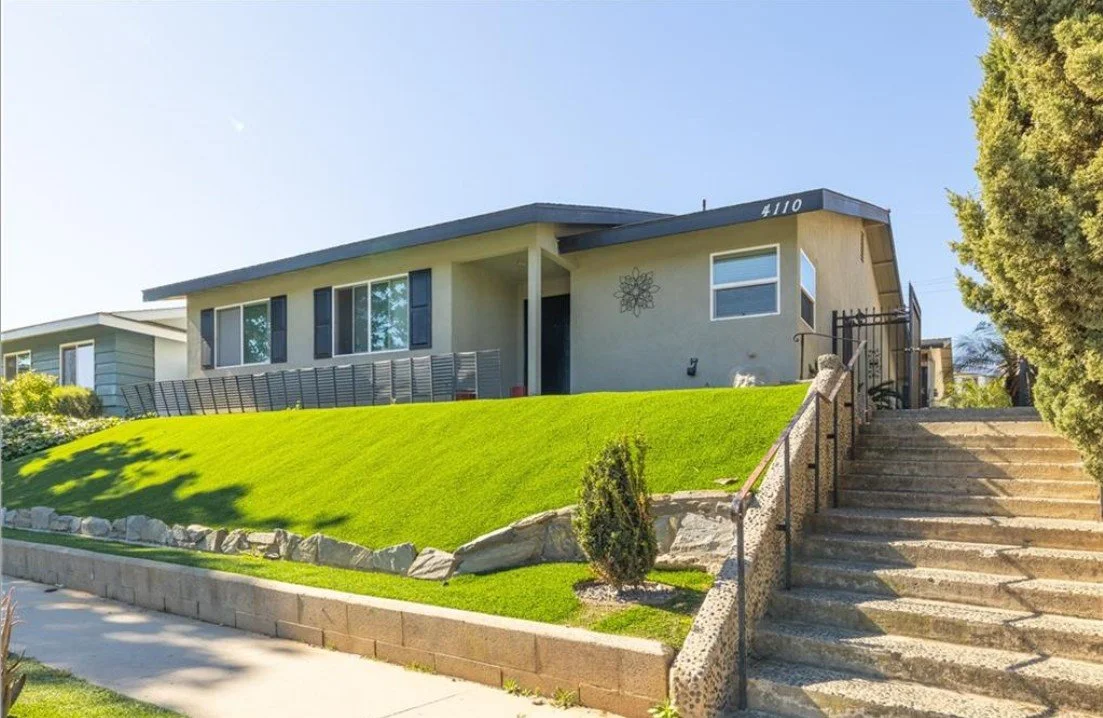
If you own a Craftsman or Arts & Crafts multi-unit in Long Beach — a duplex in Rose Park, a triplex in Bluff Heights, a bungalow court in Belmont Heights — you're sitting in one of the more interesting valuation environments in all of LA County right now. And the core reason comes down to a single concept that most sellers and buyers in this market don't fully understand: these properties don't trade on income. They trade on comps.
That distinction matters more than almost anything else when you're trying to understand what your property is worth, what a buyer will pay, and why the number that comes back from an appraiser might be meaningfully higher than what a pure income analysis would suggest.
What's Happening in the Market Right Now
Long Beach's July 2026 ADU and multi-unit market is showing the same split you see across most of LA County: the right properties at the right price are moving decisively, while anything mispriced or under-documented is sitting. Median days to contract on properties that are actually selling is running under 30 days. The actives that aren't selling are pushing 60.
In the Craftsman and Arts & Crafts neighborhoods specifically — Rose Park, Bluff Heights, Carroll Park, Belmont Heights, portions of the East Arts Village — inventory has stayed relatively thin. These neighborhoods don't turn over fast. When a property does come to market, it draws a different buyer pool than a standard income property in, say, North Long Beach or the 90805.
That buyer pool is the reason valuation works the way it does here.
Two Ways to Value an Income Property — and Why One Dominates Here
When you own a multi-unit, there are two ways an appraiser can approach valuation:
The income approach builds value from the bottom up. It looks at your gross rents, subtracts vacancy and operating expenses, and arrives at a net operating income (NOI). That NOI is then divided by a market cap rate to produce a value. If your property generates $60,000 in NOI and the market cap rate is 5%, the income approach puts you at $1.2 million. If rents are low or expenses are high, the number suffers.
The sales comparison approach — the comp approach — sets value based on what similar properties have actually sold for in the market. It looks at recently closed transactions: the same neighborhood, similar unit count, similar square footage, similar condition. The appraiser makes adjustments for differences and arrives at a value anchored to real buyer behavior, not a cap rate formula.
For standard investment properties — apartment buildings in functionally rental-only neighborhoods, commercial multi-units — the income approach carries the most weight. Buyers there are purely income-focused. Their underwriting is NOI-driven. Fannie Mae's appraisal guidelines reflect this: for one-to-four unit properties, the sales comparison approach is required and typically the primary driver — but the income approach runs alongside it, especially for investor-purchased properties.
In Long Beach's Arts & Crafts and Craftsman corridors, the comp approach wins. And the comps have been running ahead of what income math would produce on the same assets.
Why the Comp Approach Produces Higher Numbers in These Neighborhoods
A few things are converging.
Owner-occupants are in the buyer pool. A Craftsman duplex in Bluff Heights isn't being evaluated only by investors running cap rates. It's also drawing buyers who want to live in one unit and rent the other — house-hackers, people drawn to the architecture, buyers who want the neighborhood and are willing to accept a thinner return in exchange for living there. Owner-occupants don't underwrite cap rates. They look at what they can afford and what the neighborhood is worth to them. That expands what a willing buyer will pay.
Architectural character has standalone value. The Craftsman bungalow is essentially Long Beach's official home style — the dominant architectural form in the city's historic residential corridors. A well-maintained Craftsman duplex in a desirable Long Beach neighborhood carries value that a plain 1970s stucco duplex does not, even if the rents are identical. That value shows up in comps. It doesn't show up in NOI.
Rents in these neighborhoods are often below what the properties trade for. This is the key dynamic sellers need to understand. A Craftsman duplex with two units renting at $2,200 and $1,800 — $48,000 gross annual rents — might have an income value of $900,000 to $1.1 million at current cap rates. But if closed comps in that micro-market are running $1.3 to $1.5 million for similar properties, the appraiser is going to land closer to what the market is actually doing. The income approach doesn't control the outcome — the comp set does.
This is meaningful for sellers. Your property's value is not capped by what your tenants are paying. It's anchored to what buyers have been willing to pay for comparable assets in your neighborhood.
What This Means If You're Buying
If you're an investor evaluating an Arts & Crafts multi-unit in Long Beach purely on income metrics, you're going to struggle to make the numbers pencil — and you should understand why before you walk away from a deal or offer less than a seller is likely to accept.
The cap rates on these properties are often running 4% to 5% on current rents. At today's rates, that's not a cash-flow-from-day-one investment at standard down payments. But that's not the full picture. The three SoCal property benefits that stack quietly behind every income property — principal paydown, appreciation, and depreciation — are all running. And in neighborhoods like Bluff Heights or Carroll Park, the appreciation component has been consistent precisely because comp-based demand doesn't evaporate when cap rates compress.
Buyers who are going to win in this pocket are the ones who understand they're buying into a comp market, not an income market. That means underwriting the hold, not just the day-one return. It also means doing the full pre-offer checklist — permit status on any ADU or secondary unit, utility configuration, rent roll verification — because an unpermitted unit doesn't just affect the income; it affects what the appraiser can give value to in the comp approach as well.
For buyers using DSCR financing, the underwriting is tied to the property's actual rental income. On a Craftsman duplex where rents are below market, DSCR can get tighter than expected — which is one more reason to understand the income picture before you're in escrow.
The ADU Layer
Long Beach's official ADU development guidelines allow ADUs in all residential zones, with no owner-occupancy requirement — meaning you can add a unit and rent it without living on the property. In Craftsman neighborhoods where lots often have garages, rear structures, or underutilized space, the ADU potential can change the income picture materially.
A Craftsman duplex that currently generates $48,000 in gross rents with an attached permitted ADU renting at $1,800 is now generating $69,600. That shifts the income approach upward. But more importantly, it adds a third comparable data point — and in a market where ADU-equipped properties have been closing ahead of non-ADU equivalents, it shifts the comp approach too.
How a property with an ADU is valued when you sell comes down to whether the unit is permitted, separately metered, and generating documented income. In the Arts & Crafts corridors of Long Beach, a permitted, documented ADU is additive in both approaches — and the comp market is increasingly reflecting that. The HCD ADU Handbook covers what qualifies under state law, which is relevant if you're weighing whether an existing secondary structure can be legalized.
What doesn't help is an unpermitted conversion that a buyer's appraiser can't count. That's where the gap between seller expectation and appraised value tends to show up — and it's a consistent pattern in Long Beach's older housing stock. What to look for in a 1940s multi-unit in Long Beach covers exactly this issue — the Craftsman-era buildings in these neighborhoods often have additions and conversions with complicated permit histories.
The Bottom Line for Sellers
If you own a Craftsman or Arts & Crafts multi-unit in Long Beach, don't let a cap rate analysis talk you into underpricing. Your property is trading in a market where comparable sales — not income math — set the ceiling. Buyers who understand these neighborhoods know that. The ones who don't will offer less and lose to the ones who do.
The inventory in these micro-markets stays thin for a reason. When a well-maintained Craftsman duplex or triplex comes to market priced correctly and documented properly, it moves. What your multi-unit is actually worth and how to price it right — the process applies directly to Long Beach sellers navigating the same comp-versus-income valuation question.
If you want to talk through where your property sits in this market — what the comp set looks like, what an ADU addition might do to both your income picture and your exit value — reach out directly.
Dylan Serna is an ADU specialist agent serving Long Beach, LA County, and Orange County. For a property-specific valuation analysis, contact Dylan at adurealtor.net.
Ready to Get Started?
Book a Multi-Unit Buyer Consultation with Dylan Serna
Whether you're trying to figure out what a property is actually worth, how it'll appraise, or whether the numbers make sense for your situation — I'll walk through it with you.
Call or text Dylan directly at (714) 860-2868
1184 Dorset Lane, Costa Mesa: A Reimagined Single-Story with a Brand-New 2-Bed ADU and $2,800/Month Built In
This property just went Coming Soon. Here's what you need to know before the open house.
1184 Dorset Lane, Costa Mesa 92626
List price: $1,749,000
3 bed / 2 bath main house + 2 bed / 1 bath ADU
2,055 sq ft total | 6,500 sq ft corner lot
ADU: 655 sq ft | Built 2025 | Fully permitted | Separate entrance | Separate electric meter
Estimated rent: $2,800/month
A fully permitted, brand-new 2-bedroom ADU in Costa Mesa is a rare find at any price. On a corner lot in one of the city's most walkable neighborhoods, with the main house freshly renovated and owned solar already paid off, this one has a lot going for it at once.
The Main House
The original structure is a single-story California ranch from 1960, fully reimagined on the inside. The main house runs 3 bedrooms and 2 bathrooms, and the renovation didn't leave much untouched — wide-plank vinyl flooring throughout, recessed lighting, and a wide-open great room where the kitchen, dining, and living areas flow together without walls in the way.
The kitchen is the anchor: a quartz island with seating for four, shaker cabinetry, and stainless appliances including a gas range, microwave, dishwasher, and refrigerator. Both bathrooms were redone. There's a gas fireplace in the living room, central A/C and heat, and in-unit laundry (washer and dryer included). The exterior got fresh paint and low-maintenance turf landscaping, and there's a covered patio in the back.
The owned solar panels — already paid off, not leased — are built into the deal. No monthly solar payment eating into your cash flow from day one.
The ADU: 2 Bed / 1 Bath, $2,800/Month
The ADU was built in 2025 and is fully permitted through the City of Costa Mesa. At 655 square feet, it's a genuine two-bedroom unit — not a studio dressed up as a guest suite. It has its own separate entrance, its own kitchen (range, refrigerator, sink, stove), and its own electric meter, which is the configuration that matters most for how lenders treat the income at underwriting.
Under California's state ADU law, a separately metered, permitted ADU like this one can have its projected rental income counted by a lender when you're qualifying for a purchase loan. That means the $2,800/month can offset your mortgage qualification — which changes the real net cost of carrying a $1,749,000 property in a meaningful way.
At $2,800/month, that's $33,600/year in gross ADU income. The separate electric meter means utilities are the tenant's responsibility. Add in what the paid-off solar does to the main house's operating costs, and the monthly picture looks different than the sticker price suggests.
The Investment Case
Costa Mesa is not a market where 2-bedroom ADUs show up often in the MLS. The City of Costa Mesa's ADU program allows them, but between lot coverage limits, setback requirements, and the cost of new construction, most of what trades in this city is a garage conversion or a JADU — not a full two-bedroom unit with its own entrance and separate utilities. This one was built new in 2025 and fully permitted. That matters at appraisal and it matters at underwriting.
How a home with an ADU is valued when you sell in Orange County depends heavily on permit status and utility configuration — a permitted, separately metered ADU is worth more to a buyer's lender than an unpermitted unit that generates income but can't be formally counted. Fannie Mae's updated ADU income guidelines allow lenders to use projected market rent from a new ADU even before it's occupied, which is relevant here since the unit is currently vacant and not yet rented.
For an investor buyer, the numbers look like this: $1,749,000 purchase price, $2,800/month ADU income, and the option to rent the main house as well — or to occupy it while the ADU offsets the mortgage. The three benefits that stack behind every SoCal income property — cash flow, appreciation, and depreciation — all run simultaneously here. Costa Mesa appreciation is not speculative. It's durable, and this is a corner lot on a 6,500 sq ft parcel in a walkable pocket of the city.
For an owner-occupant, this is a house-hack setup that actually works. Live in the 3-bed main house, rent the ADU at $2,800/month, let the income reduce your effective mortgage payment. Before you write an offer on any property with an existing ADU, there are a few permit, utility, and financing questions worth running through — especially when ADU income will factor into your loan qualification. This property checks those boxes cleanly, but it's still worth knowing what to verify before you're in escrow.
Location
Mesa North is one of the more walkable pockets in Costa Mesa's 92626. The Westside Costa Mesa restaurant scene is minutes away. South Coast Plaza is close. The coast is a short drive. Newport Mesa Unified runs the schools. No HOA. No Mello-Roos. No shared walls between the main house and the ADU. Just a turnkey single-story on a corner lot with a brand-new income unit attached.
For market context, ADU-equipped properties in nearby Garden Grove and Anaheim have been moving decisively when the income story is clean and the permit status is clear. Costa Mesa carries a meaningful premium over those markets on a per-square-foot basis — which is exactly why a 2-bed permitted ADU at $2,800/month moves the math here in a way it wouldn't in every zip code.
Quick Look
Main HouseADUBedrooms32Bathrooms21Sq Ft~1,400 (approx.)655EntranceFrontSeparateUtilitiesOwned solarSeparate electric meterStatusVacantNot currently rented
List Price: $1,749,000 ADU Asking Rent: $2,800/month Open House: Sat July 26, 10am–1pm | Broker Preview Fri July 25, 11am–2pm
Interested in This Property?
Schedule a showing with Dylan Serna at (714) 860-2868
Dylan Serna | ADU Specialist | DRE 02217359 | adurealtor.net
ADU Homes Sell for More — Here's How to Buy One Before Everyone Else Does
Homes with ADUs in Orange County are not a category most buyers think to search for. They're looking for square footage, school districts, and garage count. That's exactly why the buyers who do understand what they're looking for — a house with a guest house for sale, a property with a permitted rental unit attached, a duplex alternative they can actually finance conventionally — tend to win those listings, and win them well.
Here's what the market actually looks like, and what it takes to position yourself ahead of the competition.
ADU Properties Command a Real Price Premium
This isn't a soft advantage. When a property has a permitted, separately metered ADU, it appraises differently, finances differently, and attracts a different buyer pool than a comparable property without one.
How appraisers value a home with an ADU in Orange County comes down to two approaches: the sales comparison approach (adjusted for the income-producing unit) and the income approach, which treats the ADU's rental income as a direct input to value. On a permitted, tenanted unit generating $1,800–$2,200/month in OC, the income approach alone can justify $200,000–$350,000 in additional value over a comparable non-ADU property.
That value is real, and buyers are starting to price it in. Properties with documented ADU income in markets like Garden Grove and Costa Mesa are consistently closing faster and at tighter discount-to-list ratios than standard SFRs in the same neighborhoods. The Garden Grove ADU market data for July 2026 reflects exactly this: permitted ADU inventory clears faster, and the buyers competing for it are more qualified and more decisive.
California's HCD has made it easier to add units to single-family lots over the last several years, but the supply of homes that already have permitted, built-out ADUs is still limited. Building from scratch takes time, money, and permits. Buying a property that already has it done is a meaningfully different value proposition — and the market is starting to price that gap accordingly.
Why "House with Guest House for Sale" Is Becoming the Most Valuable Search in OC
Most buyers who search for a house with a guest house in Orange County are thinking about family flexibility — a space for aging parents, a home office with separation, a place for adult kids. That's a real market.
But the investor logic is what's actually driving the ADU premium right now. A house with a permitted guest house is effectively a two-income property that finances like a single-family home. A first-time buyer who can offset $2,000/month in rent against a $6,500/month mortgage payment can compete at a significantly higher price point than their income alone would suggest.
Fannie Mae's current ADU income guidelines allow rental income from an existing, tenanted ADU to count toward qualifying income — which means the unit isn't just a lifestyle perk, it changes what you can borrow. Exactly how lenders count that ADU rental income at underwriting varies by loan type and whether the unit is currently occupied, but on a well-documented ADU with a lease in place, the income offset is real and lenders will use it.
That's why demand for this product type is structurally higher than supply. You're not just competing with buyers who want the same house. You're competing with buyers who specifically need the income offset to qualify at this price point, and investors who understand the three wealth-building levers that stack on income-producing properties in Southern California — appreciation, principal paydown, and depreciation running simultaneously.
ADUs as a Duplex Alternative: Why Buyers Are Making the Switch
A traditional duplex requires commercial-style underwriting, often demands 20–25% down, and carries a different financing profile than a single-family property with an ADU. An SFR with a permitted ADU finances conventionally with as little as 3–5% down on an owner-occupied purchase, qualifies under Fannie Mae's standard appraisal guidelines, and gives you rental income from day one without the regulatory complexity of a true multi-unit property.
For buyers who want the cash flow and income offset of a duplex without the financing friction, an ADU property is simply the better structure — and it's why "duplex alternative" is increasingly how sophisticated buyers are framing the search.
There's also a zoning reality to consider. SB 9 has created a path to convert single-family lots into legal duplexes in California, but that's a build-out project with a timeline. Buying a property that already has the income-producing unit in place — permitted, metered, and rented — compresses that timeline to zero. You close and the rent check comes in the following month.
What to Check Before You Make an Offer
Not every property listed as having a "guest house" or "bonus unit" is actually set up correctly. This is where buyers lose money — not on price, but on due diligence they skipped.
The most important distinction is permit status. An unpermitted ADU is an as-is liability, not an asset. How an unpermitted ADU gets treated at appraisal is a real number — and lenders may refuse to count the income, require the unit to be removed as a condition of loan approval, or simply not close. Buyers who didn't catch it until escrow often find out the hard way.
Beyond permits, the pre-offer checklist for an ADU property includes: utility configuration (is the unit separately metered?), existing lease terms if there's a tenant in place, setback compliance, and how the ADU type — attached, detached, garage conversion, JADU — affects your loan options. What to know before buying a property with an existing ADU covers all of this in detail. Run that checklist before you're in contract, not after.
How to Move Before Everyone Else Does
The buyers who are winning ADU listings right now are not finding them through Zillow filters. The MLS is slow to catch up to this search behavior — "ADU" isn't a standardized field in most searches, and listing agents use inconsistent language: guest house, casita, bonus unit, in-law suite, income property.
What works instead:
Get specific with your agent. Tell them you're specifically looking for homes with ADU for sale in Orange County, and that you're willing to look at properties that have a permitted secondary unit even if it's not flagged in the listing description. That's a different conversation than "I want a 4-bedroom in Anaheim."
Understand your financing before you're in the market. If ADU rental income is part of how you're qualifying, confirm with your lender how they underwrite it before you're in a multiple-offer situation. Showing up with that pre-work done signals a serious buyer.
Watch the right markets. Not every OC city has equal ADU inventory. Anaheim, Garden Grove, Long Beach — these are the markets where ADU-era development has been most active and where the supply of already-built, permitted ADUs is highest. Cypress and Fullerton have thinner comp sets by comparison.
If you're buying as an investor and your personal income creates a qualifying ceiling, DSCR loans designed for ADU and investment properties in California let the property's rental income do the qualifying work. That's a different underwriting path that opens up the eligible price range for buyers who don't want to be limited by W-2 income.
The window on ADU properties in Orange County at current pricing is real. These homes are not yet universally recognized for what they are — income-producing properties that finance like single-family homes. That mispricing window closes as more buyers figure out the same math. The buyers moving now are the ones who'll look back in three years and say they bought right.
If you're actively looking for homes with ADU for sale in Orange County, reach out directly — I track this inventory specifically and can help you evaluate the due diligence checklist before you write an offer.